When Climate Systems Outrun Corporate Timelines: The New ESG Reality of Carbon, Nature and…
Introduction: The End of Gradual Sustainability
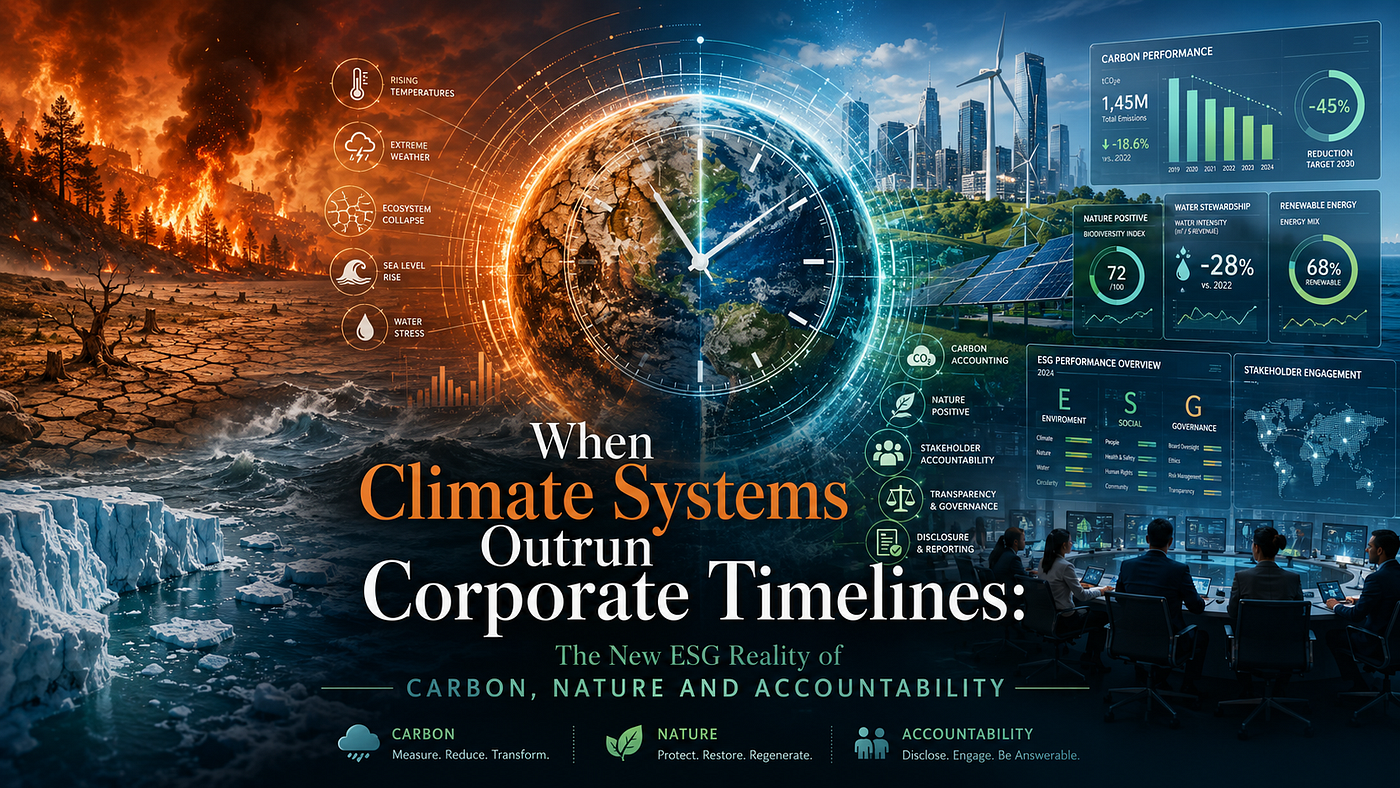
When Climate Systems Outrun Corporate Timelines: The New ESG Reality of Carbon, Nature and Accountability
Introduction: The End of Gradual Sustainability
For years, corporate sustainability strategies were built around a relatively comfortable assumption: climate change would intensify gradually, allowing companies, investors and policymakers enough time to adapt their business models, disclosure systems and transition plans. That assumption is now becoming dangerously outdated.
Recent warnings that the Atlantic Meridional Overturning Circulation, or AMOC, could weaken or collapse much faster than previously expected represent more than another climate science headline. They challenge the very architecture of corporate climate risk management. If a major Earth system can shift within timeframes shorter than normal corporate planning cycles, then 2030 and 2050 targets are no longer distant milestones. They become urgent stress tests of corporate resilience.
At the same time, the sustainability landscape is becoming more mature and more demanding. The Science Based Targets initiative is tightening expectations for credible net-zero pathways. ISO 14064 is becoming central to greenhouse gas accounting. ISO 14046 is gaining importance as water stress becomes a material business risk. Frameworks such as TCFD, TNFD, GRI, SASB, CSRD and ISSB are pushing companies toward broader, more integrated sustainability disclosure.
Yet the core challenge remains: our frameworks are improving, but the climate system is accelerating faster than our governance systems, reporting mechanisms and corporate action cycles.
This is the new ESG reality. Carbon accounting is no longer just about measuring emissions. It is about understanding systemic risk, ecosystem limits, supply chain fragility, community impacts and the credibility of every environmental claim a company makes.
A Planet Moving Faster Than Corporate Risk Models
The warning around AMOC is especially important because it exposes a major weakness in conventional corporate climate planning: most companies still model climate risk as a linear process. They assume that higher temperatures will gradually increase physical risks, regulatory pressures and operational costs.
But the real world is increasingly non-linear.
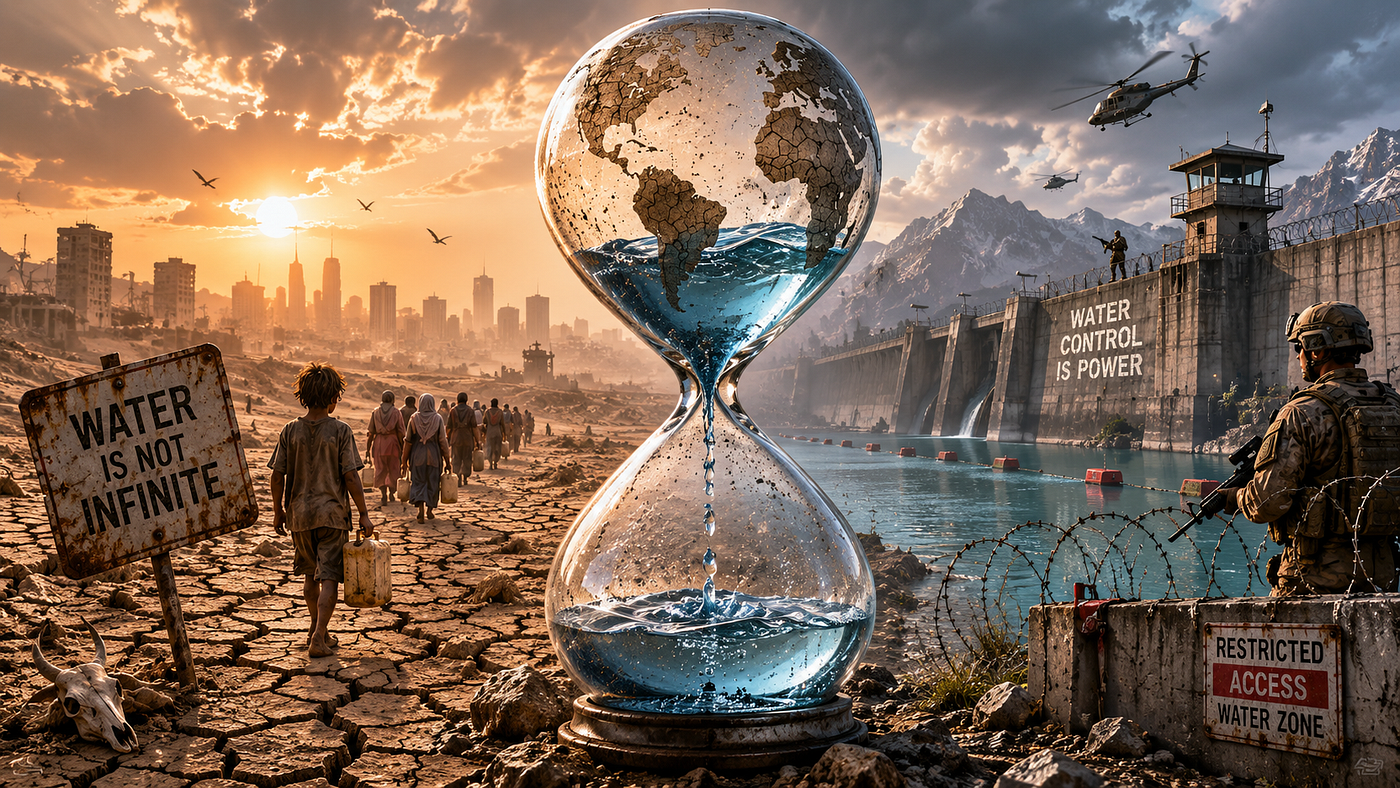
Ocean heat waves intensified by El Niño threaten marine ecosystems and fisheries that support food security for billions of people. Wildfires are reversing years of air quality improvements while releasing stored carbon back into the atmosphere. Water stress is becoming a direct operational constraint for agriculture, manufacturing, energy and data infrastructure. These are not separate events. They are connected feedback loops.
For companies, this means that traditional risk models are no longer enough. A business may have a net-zero target, a sustainability report and a climate policy, yet still be unprepared for abrupt shifts in rainfall patterns, regional cooling or warming anomalies, supply chain disruption, ecosystem degradation or sudden regulatory acceleration.
The implication is clear: climate scenario analysis must evolve from gradual warming pathways to rapid-transition and tipping-point scenarios. Boards should no longer ask only, “Are we aligned with 1.5°C?” They should also ask, “What happens if the climate system changes faster than our business model can adapt?”
The Credibility Test for Corporate Net Zero
The emergence of stronger science-based net-zero standards is a positive development. Companies need clear rules for near-term emissions reduction, long-term decarbonization and the treatment of residual emissions. Without credible standards, net-zero becomes a marketing phrase rather than a strategic commitment.
However, the credibility of net-zero depends on implementation quality.
That requires robust greenhouse gas accounting under ISO 14064, transparent Scope 1 and Scope 2 reporting, and far deeper Scope 3 measurement across the value chain. For many sectors, Scope 3 is where the real climate exposure sits: purchased goods, logistics, product use, waste treatment, land-use change and supplier practices.
But the next phase of ESG will go beyond carbon alone. Carbon remains essential, but it is not sufficient. A company can reduce emissions while increasing water stress. It can build renewable infrastructure while creating land-use conflict. It can claim circularity while exporting waste to countries where it is burned or poorly managed. It can expand digital infrastructure while creating local pressure through water consumption, noise, heat and higher utility demand.
This is why carbon accounting must become part of a broader environmental accounting system: carbon, water, biodiversity, waste, land use and community impact must be assessed together.
The Circular Economy Needs Proof, Not Promises
One of the strongest lessons from the two-day sustainability picture is the growing credibility crisis around circular economy claims.
For years, companies have used terms such as “recyclable,” “recycled,” “circular” and “zero waste” to signal environmental responsibility. But if plastic collected for recycling is later exported, burned or processed under weak environmental controls, the claim becomes not only misleading but materially risky.
This creates a new responsibility for companies: downstream verification.
It is no longer enough to sign a contract with a waste management provider and assume that materials are responsibly handled. Companies must verify where waste goes, how it is processed, under what environmental conditions, and what social impacts are created in recipient communities.
This is directly relevant to GRI 306 on waste, CSRD expectations on value chain transparency, and broader stakeholder demands for evidence-based sustainability claims. In the new ESG environment, circular economy performance must be auditable. Companies that cannot prove the final destination and treatment of their waste will face rising reputational, regulatory and financial risk.
Data Centers: The Hidden ESG Test of Digitalization
Digitalization is often presented as part of the climate solution. Artificial intelligence, satellite monitoring, carbon accounting platforms, smart grids and digital supply chain tools can all support the transition.
But the infrastructure behind digitalization has its own footprint.
Data centers consume large amounts of electricity and water. They can create local heat, noise and pressure on community infrastructure. In water-stressed regions, cooling requirements can become a serious social and environmental issue. This makes data centers a powerful example of why ESG analysis must move beyond narrow carbon metrics.
A data center powered by renewable electricity may still create material water risk. A technology company with strong climate targets may still face community opposition if local impacts are not addressed. This is where ISO 14046 water footprint assessment, environmental justice analysis and community engagement become essential.
The lesson is simple: climate technology must also be sustainable in practice. The tools that help companies measure the transition must not become blind spots within the transition itself.
Nature, Land and the New Materiality
The positive news is that environmental progress is possible. Brazil’s reduction in Amazon deforestation alerts to their lowest level in years shows that governance, enforcement and political will can deliver measurable outcomes. The UK-Japan clean energy partnership demonstrates that large-scale clean infrastructure investment is moving from ambition to implementation.
But even positive solutions bring trade-offs.
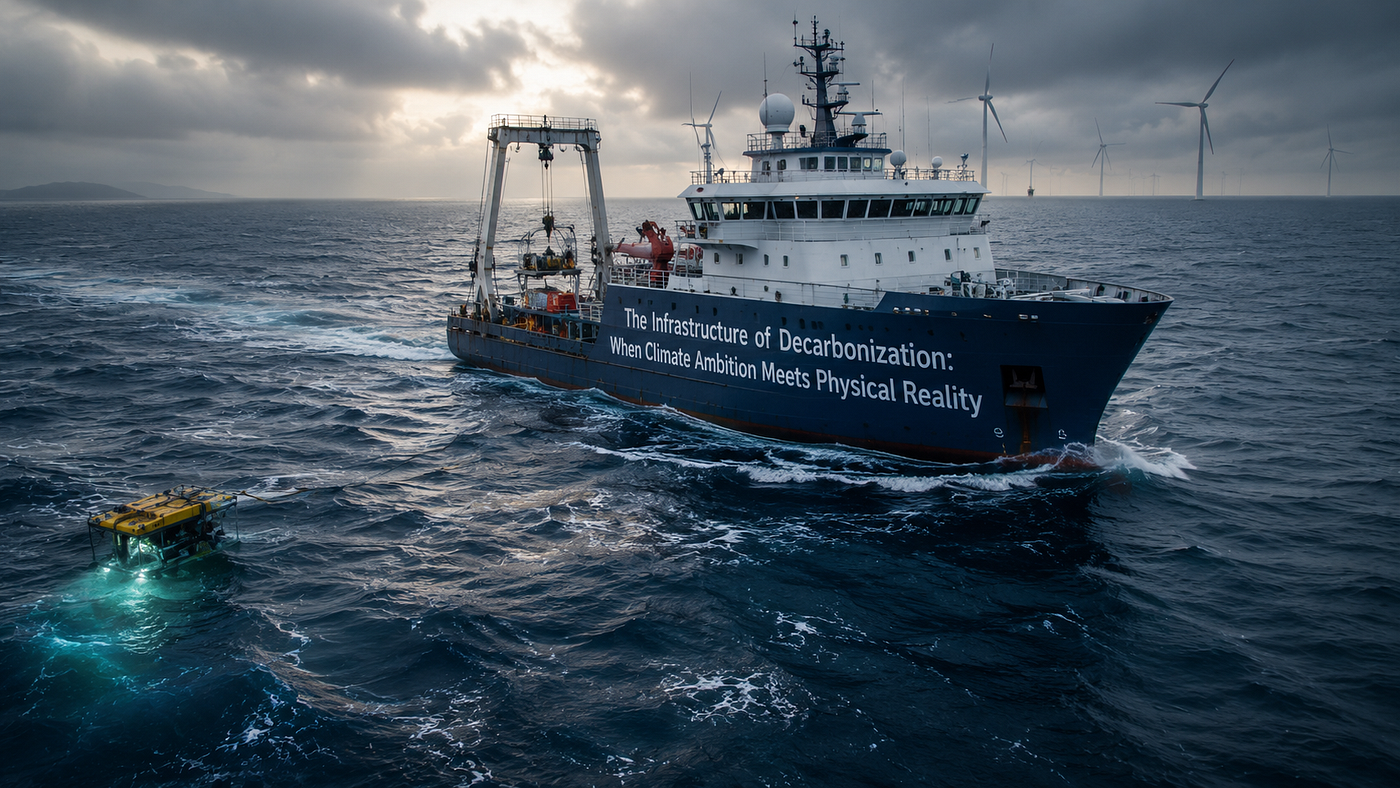
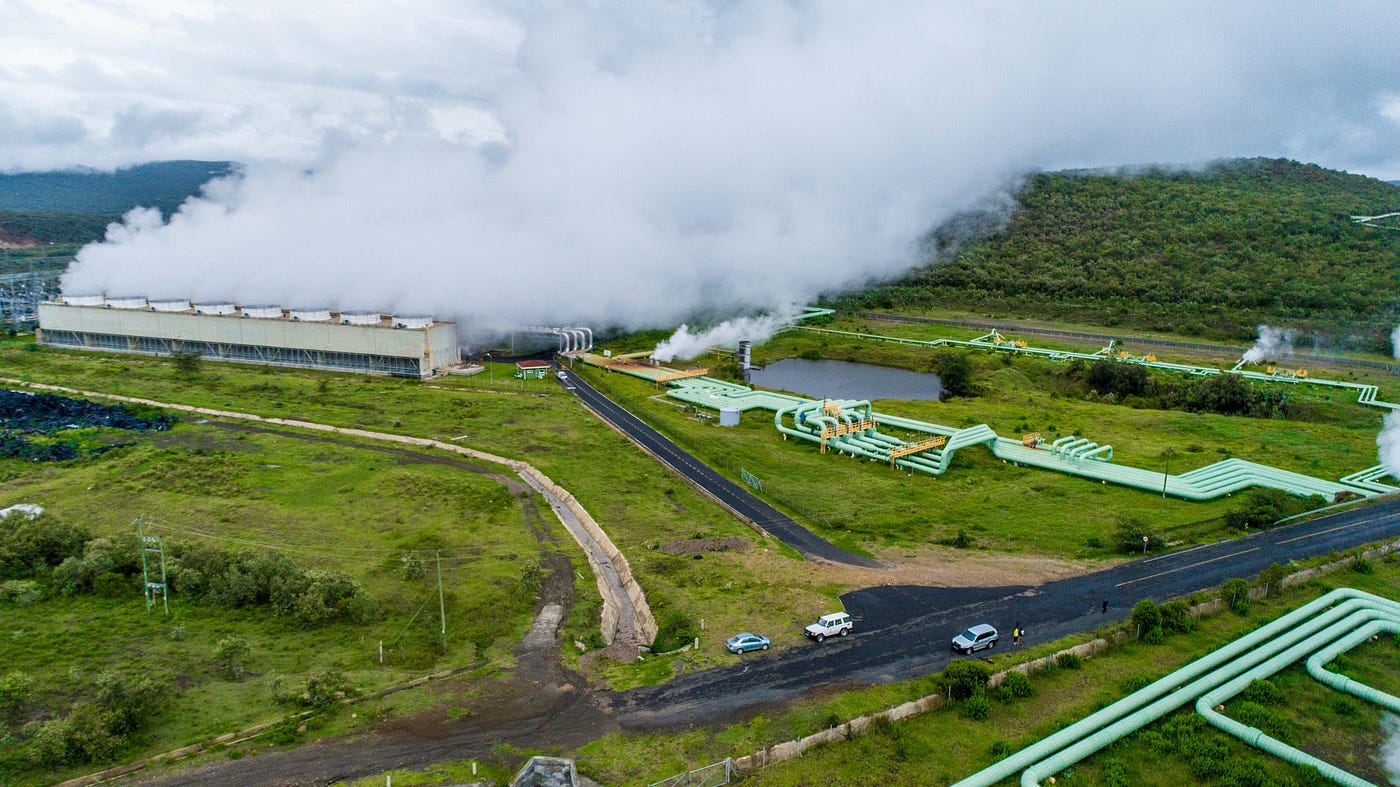
Renewable energy expansion requires land, minerals, grid infrastructure and community acceptance. Offshore wind can create major decarbonization benefits, but it must be planned alongside marine biodiversity, fisheries and coastal communities. Solar development can support clean energy goals, but it may compete with agriculture or conservation priorities if poorly designed.
This is why nature-related risk assessment is becoming central. TNFD-style thinking must be integrated with TCFD climate analysis. Companies should assess not only how climate affects the business, but also how the business affects ecosystems, water systems, land and communities.
Materiality must become dynamic. A static materiality matrix updated every few years is no longer adequate in a world of rapid climate shifts, regulatory acceleration and rising stakeholder scrutiny.
Emerging Markets: From Vulnerability to Strategic Opportunity
Emerging markets are at the center of this transition. They are often more exposed to climate risks, more dependent on natural resources and more vulnerable to supply chain regulations designed in developed economies.
The example of small-scale producers affected by deforestation regulation shows the challenge clearly. If new environmental rules are introduced without technical and financial support, they may exclude smaller suppliers from global markets. That creates both social risk and supply chain risk.
But emerging markets also hold enormous opportunity.
Climate finance, blended finance, green bonds and sustainability-linked loans can support clean energy, sustainable agriculture, domestic recycling infrastructure, climate adaptation and nature restoration. Countries with strong renewable resources can build new industries rather than simply import transition technologies. Coastal economies can benefit from offshore wind partnerships. Biodiversity-rich countries can attract investment through conservation, restoration and nature-based solutions.
However, this opportunity must be just. Indigenous communities and local populations cannot be treated as passive beneficiaries or obstacles. They are often the most important stewards of carbon-rich and biodiversity-rich ecosystems. Meaningful participation is not only a social requirement; it is a condition for environmental effectiveness.
What ESG Leaders Must Do Now
The message for companies, investors and sustainability professionals is direct: ESG must move from reporting to resilience.
Companies should immediately strengthen climate scenario analysis by including tipping-point and rapid-transition scenarios. They should align net-zero commitments with credible standards such as SBTi while building strong ISO 14064-based carbon accounting systems. They should expand Scope 3 analysis beyond emissions into supplier resilience, land use, waste, water and biodiversity impacts.
Waste and circularity claims must be verified through direct downstream traceability. Water footprinting under ISO 14046 should become standard for sectors exposed to water stress, including technology, agriculture, energy, food, textiles and manufacturing. Renewable energy strategies must include transparent land-use and biodiversity assessments. Community and Indigenous engagement must move from compliance to governance.
Investors should also update their approach. Portfolio stress testing must include non-linear climate risks. Capital allocation should prioritize companies that can prove transition credibility, not merely communicate ambition. Adaptation finance should be treated as seriously as mitigation finance, because climate impacts are no longer future risks; they are current operating conditions.
Conclusion: The Future of ESG Is Verifiable, Integrated and Urgent
The sustainability agenda is entering a more difficult but more honest phase.
The world is no longer dealing only with emissions reduction. It is dealing with climate instability, nature loss, water stress, waste failure, social inequality and the governance challenge of proving that corporate promises are real.
Carbon accounting remains the foundation, but it must now be integrated into a wider accountability system. The companies that lead in this new era will not be those with the most polished sustainability language. They will be those that can measure accurately, act quickly, verify transparently and adapt before disruption becomes irreversible.
The climate system is moving faster than corporate timelines. ESG must now move at the speed of reality.
Berat Arda Dedekoca MBA, Cekirdek GLOBAL
메타데이터
- post_id
- fb7bac3f9f39
- slug
- when-climate-systems-outrun-corporate-timelines-the-new-esg-reality-of-carbon-nature-and-fb7bac3f9f39
- url
- https://medium.com/cekirdek-global-insights/when-climate-systems-outrun-corporate-timelines-the-new-esg-reality-of-carbon-nature-and-fb7bac3f9f39
- canonical_url
- https://medium.com/cekirdek-global-insights/when-climate-systems-outrun-corporate-timelines-the-new-esg-reality-of-carbon-nature-and-fb7bac3f9f39
- author_url
- https://medium.com/@cekirdekglobal
- status
- ok
- fetched_at
- 2026-06-21 21:05:38