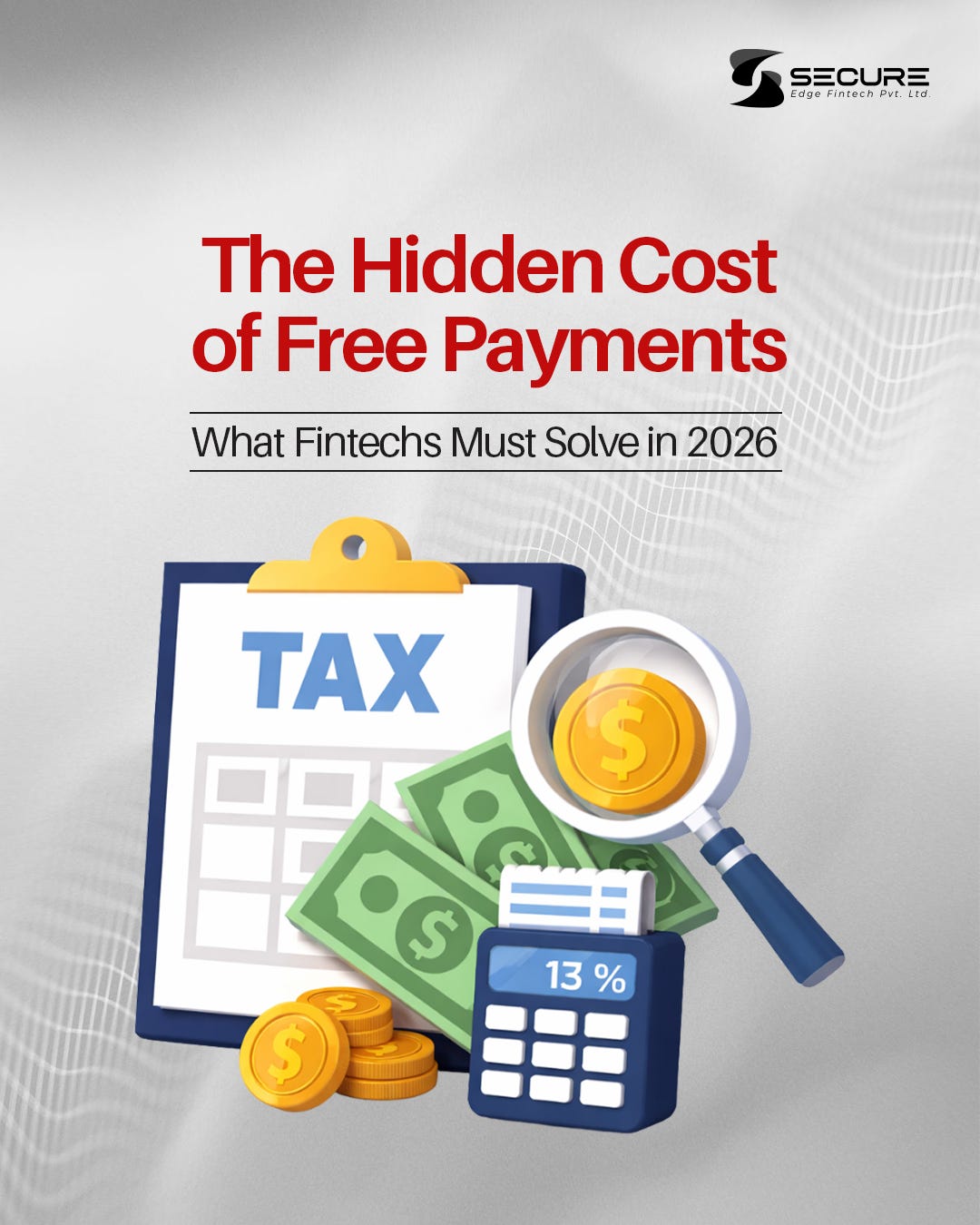
The Hidden Cost of Free Payments: What Fintechs Must Solve in 2026
The Rise of “Free” Digital Payments
The Hidden Cost of Free Payments: What Fintechs Must Solve in 2026
The Rise of “Free” Digital Payments
How Zero-MDR Changed the Game
Over the last decade, digital payments have gone from a convenience to a necessity. What truly accelerated this shift was the concept of “free payments”, especially in markets like India where UPI-based transactions eliminated merchant fees entirely. This zero-MDR (Merchant Discount Rate) policy created a massive behavioral shift — suddenly, both merchants and consumers could transact without worrying about costs. Sounds perfect, right?
But here’s the catch: nothing in finance is ever truly free.
The zero-MDR model allowed digital payments to penetrate deep into the economy — from urban malls to roadside vendors. According to recent data, digital payments now account for over 92% of retail transactions in India . That’s a staggering shift in just a few years. However, this growth came at a cost that was silently absorbed by banks and fintech companies.
Think of it like free shipping in e-commerce. You don’t pay for it directly, but someone else is footing the bill — and eventually, that cost finds its way back into the system.
Why Consumers Expect Free Transactions
Consumer psychology plays a huge role here. Once users get used to something being free, it becomes the baseline expectation. Charging even a small fee later feels like a loss. This phenomenon has locked fintechs into a tricky situation where monetization becomes politically and emotionally sensitive.
The average UPI transaction value has dropped significantly, hovering around ₹1,330, which indicates the dominance of micro-payments . These small-ticket transactions generate massive volumes but minimal direct revenue. So, fintechs are processing billions of transactions daily without earning from the core activity.
This creates a paradox: higher usage leads to higher costs, not higher profits.
The Economics Behind “Free” Payments
Who Actually Pays the Cost?
If users and merchants aren’t paying, who is?
The answer: banks, fintech companies, and indirectly, the ecosystem itself.
Reports suggest that each UPI transaction costs around ₹2 to process . Multiply that by billions of transactions, and you’re looking at a massive operational burden. In fact, Indian banks alone bear an estimated ₹8,500 crore annual cost to maintain digital payment infrastructure .
This includes:
- Server infrastructure
- Fraud detection systems
- Regulatory compliance
- Customer support
- Network maintenance
And none of this is optional. Payments require near-perfect uptime and security — there’s no room for compromise.
Real Cost Per Transaction in 2026
The illusion of “free” breaks down when you analyze the backend. Fintech companies deal with layered costs that users rarely see:
- Payment gateway processing
- API integrations
- Settlement cycles
- Chargebacks and disputes
Even when platforms advertise zero fees, they often charge for premium features like instant settlement or analytics tools . So technically, payments are free — but the ecosystem around them isn’t.
This model is similar to freemium apps. The basic service is free, but the real money comes from advanced features.
The Sustainability Crisis in Fintech
Rising Infrastructure and Compliance Costs
As digital payments scale, so do operational complexities. Fraud detection alone has become a billion-dollar challenge. Fintech companies must constantly invest in AI-driven systems to detect suspicious activity in real time.
On top of that, regulatory requirements are getting stricter. KYC norms, data privacy laws, and transaction monitoring systems all add layers of cost. These aren’t one-time investments — they require continuous updates and audits.
And here’s the kicker: these costs grow with scale.
Shrinking Incentives and Revenue Pressure
Government incentives were initially introduced to support the zero-MDR ecosystem. But as transaction volumes explode, these incentives are becoming insufficient.
For example, the government’s ₹2,000 crore incentive pool is now spread thin across billions of transactions, making it less impactful . Industry estimates suggest that sustaining the system could require over ₹6,000 crore annually .
This mismatch creates a financial squeeze. Fintech companies are expected to scale rapidly while operating on razor-thin margins — or no margins at all.
Hidden Costs Users Don’t See
Data Monetization and Cross-Selling
If payments are free, fintechs must earn elsewhere. One major strategy is data monetization.
Every transaction generates valuable insights:
- Spending patterns
- Creditworthiness
- Lifestyle behavior
This data fuels cross-selling opportunities like:
- Micro-loans
- Insurance
- Investment products
In simple terms, you’re not the customer — you’re the product.
Delayed Settlements and Hidden Fees
Another hidden cost comes in the form of delayed settlements. Many platforms offer free standard settlements but charge for faster payouts.
Additionally, businesses may encounter:
- Chargeback fees
- Refund processing costs
- Subscription charges for advanced dashboards
These indirect costs often go unnoticed but significantly impact profitability for merchants.
Impact on Fintech Solution Providers
Profitability vs Scale Dilemma
Every **Fintech Solution Provider** today faces a fundamental question: should you prioritize growth or profitability?
Scaling payments means higher infrastructure costs. But without monetization, growth alone doesn’t sustain the business. This creates a dangerous cycle where companies chase volume but struggle with revenue.
Shift Toward Value-Added Services
To survive, fintechs are evolving beyond payments. They’re building ecosystems that include:
- Lending platforms
- Wealth management tools
- Business analytics
Payments become the entry point — not the revenue driver.
Role of Digital Account Opening Platforms
Reducing Customer Acquisition Cost
A Digital Account Opening Platform plays a crucial role in reducing onboarding friction. Faster onboarding means lower acquisition costs and higher conversion rates.
Think about it — if a user can open an account in minutes, the chances of engagement increase dramatically.
Driving Monetization Through Ecosystems
These platforms also enable fintechs to bundle services. Once a user is onboarded, companies can offer multiple financial products, increasing lifetime value.
This is where the real monetization begins — not at the payment stage, but after it.
The Cross Border Payment Challenge
Why Free Doesn’t Work Globally
Domestic payments may survive on zero-MDR, but **cross border payment** systems operate differently. They involve:
- Currency conversion
- International compliance
- Settlement risks
These layers make “free” unsustainable.
Currency Conversion and Compliance Costs
Cross-border transactions include hidden charges like forex margins and intermediary bank fees. Fintechs must navigate complex regulations across countries, adding to operational costs.
This is why global payment systems rarely offer zero-cost transactions.
What Fintechs Must Solve in 2026
Smart Monetization Strategies
Fintechs need to rethink their revenue models. Some emerging strategies include:
- Tiered pricing for premium features
- Subscription-based services
- Merchant analytics tools
The goal is to monetize without disrupting user experience.
Balancing User Experience with Revenue
Charging users directly can backfire. The challenge is to introduce monetization subtly — without breaking the “free” perception.
This requires innovation, not just pricing changes.
Future Business Models for Fintech
Embedded Finance & Super Apps
The future lies in integration. Payments will be embedded into larger ecosystems like e-commerce, ride-hailing, and SaaS platforms.
Fintech companies are evolving into super apps that offer everything from payments to investments.
Subscription-Based Payment Models
Another emerging trend is subscription-based pricing. Instead of charging per transaction, fintechs may charge a flat monthly fee for premium services.
This creates predictable revenue while keeping transactions “free.”
Conclusion
The idea of free payments has powered one of the biggest financial revolutions of our time. But beneath the surface lies a complex web of costs that fintech companies must absorb or recover elsewhere. As we move into 2026, the focus will shift from growth at all costs to sustainable innovation.
The real winners will be those who can balance user expectations with smart monetization — without breaking the illusion of “free.”
FAQs
1. Are digital payments really free?
No, they are not truly free. While users don’t pay directly, banks and fintech companies absorb the costs and recover them through other revenue streams.
2. What is zero-MDR in digital payments?
Zero-MDR means merchants are not charged any fee for accepting digital payments, especially through UPI.
3. How do fintech companies make money if payments are free?
They earn through value-added services like lending, insurance, data analytics, and premium features.
4. Why are cross border payments not free?
They involve currency conversion, compliance costs, and multiple intermediaries, making free transactions unsustainable.
5. What is the future of fintech monetization?
The future lies in embedded finance, subscription models, and ecosystem-based services.
메타데이터
- post_id
- fb7e2f9ceeec
- slug
- the-hidden-cost-of-free-payments-what-fintechs-must-solve-in-2026-fb7e2f9ceeec
- url
- https://medium.com/@secureedge8/the-hidden-cost-of-free-payments-what-fintechs-must-solve-in-2026-fb7e2f9ceeec
- canonical_url
- https://medium.com/@secureedge8/the-hidden-cost-of-free-payments-what-fintechs-must-solve-in-2026-fb7e2f9ceeec
- author_url
- https://medium.com/@secureedge8
- status
- ok
- fetched_at
- 2026-07-11 01:06:15