The Death of the Petrodollar and the American Empire
One foundation of the American Empire, the petrodollar, is dying. The petrodollar’s demise could redirect the global finance system to…
The Death of the Petrodollar and the American Empire
One foundation of the American Empire, the petrodollar, is dying. The petrodollar’s demise could redirect the global finance system to China.
People think the term petrodollar refers to the use of the US dollar in the global oil market. The reality is more complicated. Essentially, petrodollars emerged in the 1970s when Gulf states began buying large numbers of US Treasury bonds through large international banks.
Historians date the petrodollar’s origin to 1974, when legendary US Secretary of State Henry Kissinger negotiated a secret deal with Saudi leaders. In the deal, the Saudis agreed to sell oil exclusively for US dollars. In exchange, US President Richard M. Nixon (R-California) agreed to defend Saudi Arabia, the largest, richest, and most powerful of the Gulf States, and supply the kingdom with weaponry and munitions.
Saudi Arabia creates and kills the Petrodollar
The Saudis were the basis of the Petrodollar system because Saudi Arabia has been the world’s largest oil exporter for decades. This forced most traders and oil companies to operate in dollars.
Saudi leaders accepted Kissinger’s deal because they were afraid of the Soviet Union and its Middle Eastern allies. In particular, the brutal Baathist (fascist) dictatorships in Iraq and Syria. Yes, Cold War politics made strange bedfellows, Baathists, or Arab nationalists who began as an imitation of the German Nazi Party, were Soviet allies.
The Saudis were also distrustful of America’s other Middle Eastern allies, such as Iran, Egypt, Israel, and Pakistan. All of which had powerful armed forces. Becoming a close and useful American ally was one way to keep those potential enemies in check.
Fear of Shiite Iran grew after the 1979 revolution replaced that nation’s emperor, the Shah, with an “Islamic Republic.” Moreover, the loss of the Shah, increased American dependence on Saudi Arabia as a friend and base in the Middle East.
The Petrodollar Empire
This deal forced all buyers to pay for Gulf Oil with US dollars. It benefited US banks because Gulf States deposited most of their profits in them. More importantly, they used petrodollars to buy US Treasury bonds, financing America’s national debt and the Cold War against the Soviet Union.
One advantage to this arrangement was that Congress could keep US taxes low while maintaining a massive military-industrial complex and spend enormous amounts on popular welfare schemes such as Social Security. Instead of high taxes, Congress borrowed the funds by generating debt which the Saudis and their neighbors willingly bought.
Indeed, US income taxes have fallen steadily since the Petrodollar deal. In 1974, the richest Americans paid a 70% income tax, Wolters Kluwer estimates. That fell to 50% in 1982, 38.5% in 1987, and 35% in 2003. Today, the wealthiest Americans pay a 37% income tax.
The Petroyuan Arrives
Petrodollars are already on shaky ground. In 2023, the People’s Bank of China and the Saudi Central Bank signed a currency swap agreement.
Under the agreement, the banks swapped ¥50 billion yuan ($6.93 billion) for 26 billion riyals, Reuters reports. The Saudi Central Bank is part of China’s mBridge currency swap system. The mBridge is a blockchain system that converts Digital Yuan (CNY), China’s official cryptocurrency, into other currencies.
Under mBridge, Chinese buyers pay the Saudi Central Bank in yuan. The Saudi Central Bank can convert this yuan into physical gold through the Shanghai Gold Exchange International. Interestingly, they store this gold in Saudi vaults, Pgurus reports.
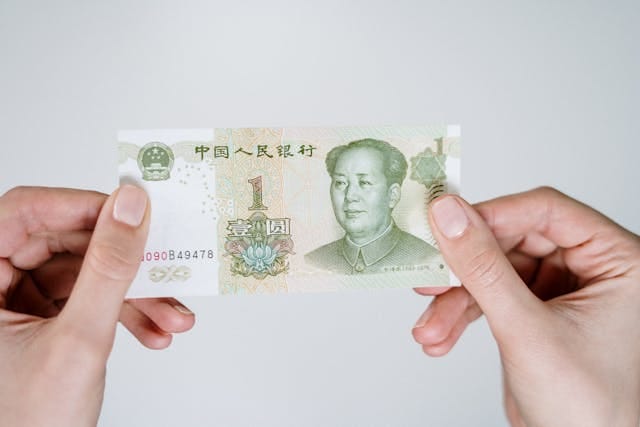
Chinese and Saudi financial links are growing. The Saudi sovereign wealth fund, the Public Investment Fund, has opened two offices in China, The Cradle reports.
Finally, Fortune claims that the Saudi government did not formally renew the informal commitment to use dollars for oil. Problematically, this agreement was secret and informal. Meaning the Saudi government could cancel it at any time. Indeed, the US government classified the details of Kissinger’s 1974 petrodollar deal until 2016, YouTuber Andrei Jikh observes.
The Biggest Change to the Dollar Since 1974
The demise of the petrodollar could be the biggest change in the world’s relationship to the dollar since 1974. This change is occurring because the world has a legitimate alternative to the US dollar for the first time since the 1930s.
The petrodollar system cemented the dollar’s status as the world’s reserve currency. The reserve currency is the money used by banks, governments, corporations, and other institutions for cross-border transactions. Before World War II, the British pound sterling was the reserve currency.
British defeats in 1940, 1941, and 1942 destroyed the pound sterling. Although pounds were widely used in cross-border transactions until the late 1950s. The Allied victory in 1945 cemented the dollar’s status as the reserve currency. Similarly, the US military’s failure in the Iran War could destroy the dollar.
Furthermore, America’s Cold War rival, the Soviet Union, lacked an internationally accepted currency. Indeed, many Soviet citizens distrusted their currency, the ruble. Meaning there was no viable alternative to the US dollar for almost 80 years.
What will replace the Petrodollar?
Hence, the big question investors and speculators need to ask is what replaces the US dollar and the petrodollar? Some scenarios include:
1. A Revival of the Gold Standard
Essentially, the gold standard is a scam. Under a gold standard, a bank or government claims that banknotes are redeemable in gold. That is you can take the notes to the gold window and exchange them for bullion.
The gold standard is a scam because the bankers know 99% of users will never try to redeem their notes for gold. Hence, they can create vast amounts of money by issuing far more banknotes than gold. Indeed, history shows every time large numbers of people tried to redeem banknotes for gold. They quickly closed the gold window. For example, in Germany at the beginning of World War I, and the US in 1971.
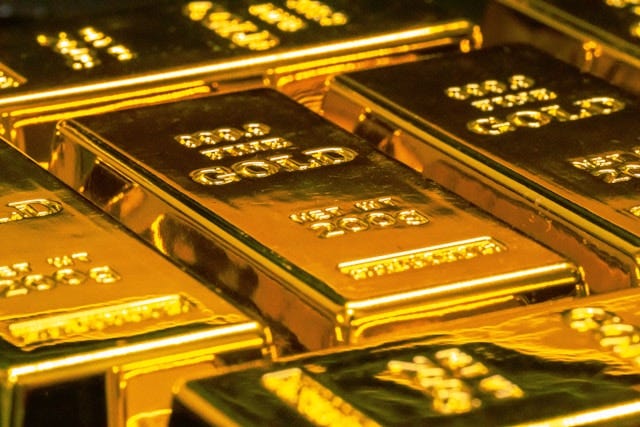
Yet, the gold standard has been the basis of international currencies. For example, at the Bretton Woods Conference in 1944, US delegates forced representatives of the other Allied powers to accept a gold. Ironically, the world’s greatest economist, Britain’s Lord John Maynard Keynes, attended the conference and argued against the gold standard.
However, US and Soviet delegates, who thought their countries could benefit from a gold standard, prevailed. They adopted the gold-backed dollar as the dominant currency. Ironically, Keynes proposed an international currency backed by a basket of commodities, the Bancor, as an alternative. That sounds a lot like the petrodollar to me.
In August 1971, President Richard M. Nixon (R-California) proved Keynes right by taking America off the gold standard. The President even quipped that “we are all Keynesians now” after announcing the decision.
Nixon closed the US gold window because France and other countries were draining America’s bullion reserves by redeeming dollars for gold. Another problem was that gold convertibility inflated the dollar’s valuation, creating price inflation and an economic drag leading to stagflation. Stagflation is when prices rise without economic growth, generating economic misery for ordinary people.
The Nixon Shock created an open market for gold and made the dollar a pure fiat currency.
However, the mBridge system shows there will be attempts to revive the gold standard, which will fail.
2. Multiple Reserve Currencies
Ultimately, the petrodollar and Kissinger’s secret deal with the Saudis were efforts to prevent the rise of multiple reserve currencies, weakening the dollar and American financial power.
There have been times in history when there were multiple reserve currencies. For example, the late 18th century when the Spanish dollar, Dutch guilder, and British pound all functioned as reserve currencies. This was possible because back then they still conducted a lot of trade with hard currency, coins or bullion.
However, there has usually been one reserve currency for the last 220 years. First it was the British Pound Sterling, and since World War II it’s been the US dollar. Generally, the world’s greatest manufacturing nation and dominant military power issues the reserve currency.
Today, many people think the Chinese yuan will become the reserve currency because China is the world’s manufacturing superpower. For Chinese factories accounted for 28.9% of global manufacturing output in 2023, the United Nations Statistics Division estimates. Thus, Chinese manufacturing was 12% larger than US manufacturing. The USA had 17.2% of global manufacturing in 2023.
However, the United States is the world’s dominant military power. Although the Chinese government is undertaking a massive military buildup.
One possibility is that both the yuan and the dollar will be accepted as reserve currencies. That was the case in the 1920s and 30s when Britain was still the dominant military power, but the US was the manufacturing superpower.
The Saudis want multiple reserve currencies. They want to play the US and China against each other to get the best deal. Multiple reserve currencies give Saudi leaders leverage over larger powers. For example, news reports indicate Saudi leaders forced US President Donald J. Trump Senior (R-California) to end the war.
Thus, I think the Saudis (and others) will try promoting the Yuan, dollar, and Euro as reserve currencies. Although Mr. Market will probably object.
3. The Yuan as Reserve Currency
Obviously, Chinese leaders want the yuan as reserve currency. So do bankers and financiers. To explain, a widely used reserve currency eliminates the need for foreign exchange fees, making transactions faster, simpler, and cheaper.
Thus, there will be enormous pressure to replace a failing dollar with the yuan. Only the future will show if Mr. Market goes along with those plans. Obstacles to yuan adoption will be yellow peril racism, and fear of Chinese Communism and imperialism. For example, fears that yuan use will put the People’s Bank of China in charge of your economy.
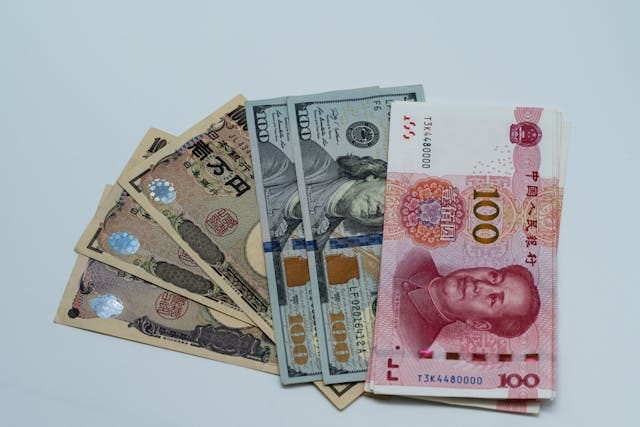
However, smaller and poorer countries like Argentina will have no choice but to accept yuan. Just as they accept dollars today. The conflict will come from great powers like the United States and the European Union which have the strength to block yuan use. One possibility is a period of multiple reserve currencies, with nations accepting both the dollar and the yuan as we transition to a yuan status quo. Much like the 1930s.
4. Some sort of global or international currency
A Black Swan possibility is an international or global currency backed by resources and issued by some sort of world bank. In other words, an effort to make Keynes’ Bancor a reality.
I think a real Bancor is improbable because I cannot imagine the EU, the People’s Republic of China, and the USA abandoning their economic power. Although there are efforts to create such a system. The so-called BRICS (Brazil, Russia, India, China, and South Africa) effort to create a dollar alternative.
BRICS fans see it as an effort to build a dollar alternative. However, I see BRICS as a Chinese scheme to make yuan more palatable to weaker nations. Governments can claim they are standing up to the Big Bad Americans, while selling out to China. My guess is the People’s Bank of China (PBOC) will end up running BRICS and its member economies.
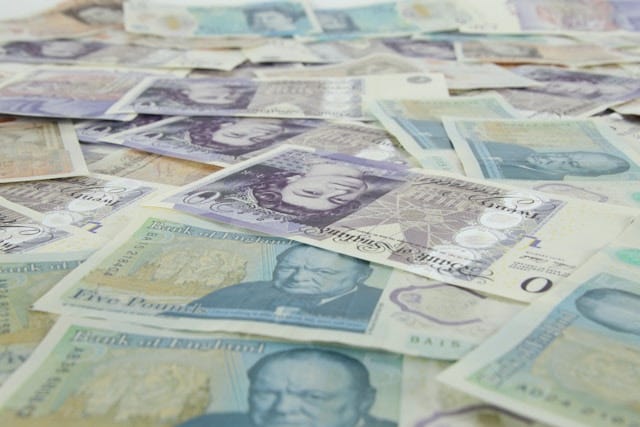
Yet, a global currency, perhaps run by the Bank of International Settlements, is possible. My guess is there will be efforts to create one, perhaps to block yuan usage. Remember, Keynes only suggested the Bancor as British financial power and empire were dying in 1944.
The death of the petrodollar is the beginning of a post-dollar and post-American world. We need to watch the petrodollar’s death because it could show who will be in charge of our economic future.
https://fortune.com/2026/04/07/what-is-petrodollar-petroyuan-saudi-china-dollar-strength/
https://www.worldbank.org/en/archive/history/exhibits/Bretton-Woods-and-the-Birth-of-the-World-Bank
https://www.federalreservehistory.org/essays/gold-convertibility-ends
https://www.wolterskluwer.com/en/expert-insights/whole-ball-of-tax-historical-income-tax-rates
https://www.taxresearch.org.uk/Blog/2025/04/05/is-it-time-for-the-bancor/
https://www.ipea.gov.br/forumbrics/en/learn-about-brics.html
메타데이터
- post_id
- fb841dff0a23
- slug
- the-death-of-the-petrodollar-and-the-american-empire-fb841dff0a23
- url
- https://medium.com/lessons-from-history/the-death-of-the-petrodollar-and-the-american-empire-fb841dff0a23
- canonical_url
- https://medium.com/lessons-from-history/the-death-of-the-petrodollar-and-the-american-empire-fb841dff0a23
- author_url
- https://medium.com/@marketmadhouse
- status
- ok
- fetched_at
- 2026-06-14 13:58:26