When You’re Too Independent: How to Depend on Others the Right Way
When a lack of healthy dependency is damaging your relationships, here is a strategy for change.
A GUIDE TO HEALTHY INTERDEPENDENCE
When You’re Too Independent: How to Depend on Others the Right Way
When a lack of healthy dependency is damaging your relationships, here is a strategy for change.
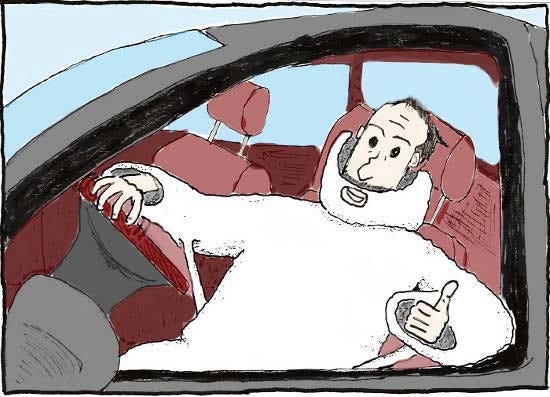
illustration by the author
This article looks at what leads people to be too independent in relationships, the sad results of it, and a strategy for change.
(Not a Member? Read the article here for free.)
There’s a lot out there on how unhealthy it is to be codependent in your relationship. But what hasn’t been explored nearly as much is the flip side: the toll it can take on your relationship when you actively avoid depending on your partner — or anyone.
I’ll start with some personal reflection. Growing up as the only child of a single, working mom I learned at a young age to be independent–emotionally and practically. As soon as I was old enough to be home alone I became a ‘latchkey kid,’ bussing home from school and letting myself in to get my own after school snack in front of the TV. My mom was devoted to her work as a university professor. She was devoted to me as well, but we connected mostly through having intellectual conversations in restaurants rather than a lot of emotional nurturing or physical cuddling. The basic lesson I learned is ‘my mom does love me and is an honest, reliable person, but if I let myself become dependent on her for emotional and physical comfort, I’m just going to end up frustrated and disappointed.’ That was my ‘too independent’ origin story. Maybe yours has some similarities.
Once I reached adulthood I went right ahead and applied the lessons I’d learned growing up to my marriage and my other close relationships: feel trust and connection, sure, just don’t become dependent on them. And honestly? It kind of worked for a long time. I have pretty good emotional intelligence so I was good at maintaining positive relationships with others while making sure not to depend on them for anything, big or small.
Here are some examples of what I mean by not depending on a partner for anything:

Even though you might long for daily physical touch, you don’t ask because you don’t want to set yourself up for disappointment by starting to count on receiving physical comfort.

Even though you frequently give support and take on extra jobs and chores to be supportive, you instantly turn down offers for them to do something for you to lighten your load. And eventually they give up and stop asking.

Even though your partner invites you to talk about your day, you always under-share. Not because you’re trying to be secretive or closed-off, but just because it might get you into a pattern of enjoying and depending on their support and validation.
Ok, it sounds pretty sad written out like that. And as you’ve probably already concluded, approaching your relationship like that eventually catches up with you and leads to some deeply painful feelings. The first is a perpetual, crushing feeling of disappointment in your partner–a deeply lonely feeling like they don’t really see or understand you.
The second is flashes of righteous anger whenever they express any kind of disappointment about something you did or failed to do. Because you’ve been so careful for so long to not ask anything of them that it feels like they are breaking the unspoken contract that they can’t reasonably ask any more of you. How dare they ask you to be more considerate or giving, because you literally ask zero of them.
And finally there’s the feeling that you’re always teetering on the edge of emotional burnout, always emptying out your cup everyday and never getting it refilled.
At the core of excessive independence is the deep-down sense of being undeserving of care and support. That kind of deep assumption about oneself is called a ‘self-schema’ — a difficult and painful “truth” (notice the quotes) about yourself that influences how you see situations. Often these self-schema started as mental adaptations we made when we were very young in order to emotionally survive and get through events like parental abandonment or neglect. Therapy is the best way to uncover and undo self-schema from the past that are hurting us in the present.
Now let’s explore how to move away from excessive independence toward a healthy model of balanced interdependence. Interdependence is a dynamic where both people in the relationship are able to maintain their sense of who they are and seek personal fulfillment with their partner’s support, while also relying on each other for practical and emotional support and physical intimacy. Maintaining clear boundaries and good communication is necessary for this healthy situation, and responsibilities and decision-making are shared.
One challenge is that the bulk of the advice on relationships is about how to move from codependency to interdependence. There is a lot less out there about moving toward healthy dependency. And what is out there is pretty vague, like “learn to trust and depend on your partner more.” Ok, but how? Especially if it’s not that you don’t trust your partner, it just feels uncomfortable to depend on their help and support. Moving past airy generalities about supporting each other, how do you make depending on your partner workable, realistic and fair?
Here are some concrete strategies to work on with your partner to ultimately teach yourself to accept and learn to rely on them.

Respond bigger and warmer than usual when your partner says “I love you” or something kind or complimentary, or gives you a casual affectionate touch. Give a kiss on the lips or back rub and tell them, “that was nice, thanks.” Keep up this bigger response, which will reinforce them over time toward more loving words and touch. Then, find a way to keep track–just privately for yourself–of each time they do something like this (Maybe on a phone app). This may sound weird but keeping track of positive things will naturally build your desire and anticipation for them.

Very often being too independent means you spend leisure time apart from your partner doing your own down time activities, while they have learned from you to do their activities apart from you. Come up in your mind with a ratio of how much of your total down time you spend on your own hobbies vs quality time with your partner. Now you need to invert that ratio and start spending significantly more time together with them. At first this will feel like yet another thing you’re doing for them or for the relationship. But stick with the new quality time allotment and gradually start exploring new activities neither of you have tried before, and/or adapting the traditional activity (e.g., watching shows together) to something you are genuinely interested in.

This shared time with them can’t feel like you are taking one for the team doing semi-boring activities with a pasted-on smile. It has to organically peak your interest. Over time your caring for your partner and your enthusiasm for the shared activity will create a great synergy that will make you both feel deeply connected, and you will start to ‘depend’ on the connection you feel with them when you do this activity together.
And what about depending on your partner for practical daily help, those little “Acts of Service” from The Five Love Languages? When you are overly independent it runs counter to your deepest instincts to ask for help with things you can do for yourself. Also, in many relationships, especially with kids, there is already a complex ecosystem around which partner is expected to do which family labor tasks.
And yet that feeling of loneliness and being uncared-for persists, and creates distance from your partner in your mind. But you can’t just walk up to them and say, “Hey, even though we’ve already talked about which nights I cook, I wish I could depend on you to cook on Saturdays, too,” or “It would make me feel more cared about if you could start washing the bed sheets every week.” That’s not going to provoke a good reaction in your partner.
However, the good news is that with interdependence, it really is the thought that counts more than how extensive the help is. Try utilizing the research-supported method of habit stacking (first described in Tiny Habits). Habit stacking is when you successfully build a new habit by stacking it directly on top of a current habit you already do everyday. So think about your partner’s daily habits. Is there a small ask you could make for them to add something that feels helpful and kind for you onto something they are already doing? Not just taking over some little thing you usually do, but a small act that would truly “spark joy” in you (as Marie Kondo would say). Here’s a few examples to get you thinking:
- Extending their regular walk to the neighborhood store into walking the dog together?
- Getting your favorite morning coffee mug out of the cupboard along with theirs, and leaving it sitting in front of the coffee maker?
- When you’re getting into the car together, they alternate between queuing up their playlist and your playlist–or a song they thought you’d like.
There’s a funny line in Superbad that Michael Cera’s character says, in a perky voice, to the girl he likes. He’s just paid for something for her and when she protests he says “No no, it’s my treat. And it’s the first of many, too, so get used to it, sister!” It can be so hard to learn to open ourselves up and “get used to” interdependence with our partners. No matter how much we love them. But it’s so worth the difficulty of trying. Good luck.
메타데이터
- post_id
- fb8e2a7ee03b
- slug
- when-youre-too-independent-how-to-depend-on-others-the-right-way-fb8e2a7ee03b
- url
- https://medium.com/beloved/when-youre-too-independent-how-to-depend-on-others-the-right-way-fb8e2a7ee03b
- canonical_url
- https://medium.com/beloved/when-youre-too-independent-how-to-depend-on-others-the-right-way-fb8e2a7ee03b
- author_url
- https://medium.com/@drjaywilkinson
- status
- ok
- fetched_at
- 2026-06-10 08:17:25