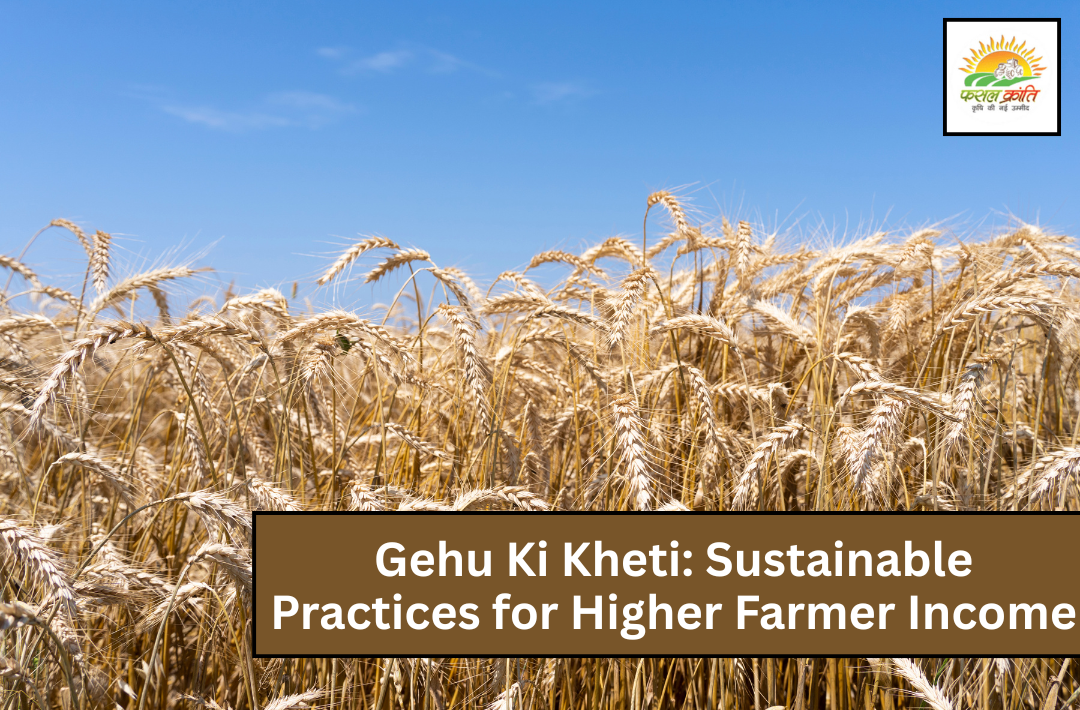
Gehu Ki Kheti: Proven Methods for Maximum Output
Gehu Ki Kheti remains one of the most reliable and widely practiced farming systems in India, playing a crucial role in ensuring food…
Gehu Ki Kheti: Proven Methods for Maximum Output

Gehu Ki Kheti remains one of the most reliable and widely practiced farming systems in India, playing a crucial role in ensuring food security as well as supporting the livelihoods of millions of farmers. Over the years, wheat cultivation has evolved from traditional practices to more advanced and scientific methods that help improve productivity while also reducing input costs.
Today, farmers are increasingly adopting modern techniques such as improved seed varieties, balanced nutrient management, and efficient irrigation systems to achieve better results. To maximize output, it is essential to understand each stage of the crop cycle, starting from proper soil preparation and timely sowing to effective pest control and smart marketing strategies, and apply these proven methods with proper planning and consistency.
Understanding the Right Climate and Soil
The success of Gehu Ki Kheti begins with selecting the right environment. Wheat is a cool-season crop that performs best when sown in moderate temperatures and grown under stable climatic conditions. During the early stages, cool weather supports germination and tillering, while slightly warmer temperatures during grain filling help in proper development.
Equally important is soil quality. Loamy soil with good drainage and balanced nutrients offers the best results. Soil that retains moisture without becoming waterlogged creates ideal conditions for root growth. Farmers who invest time in soil testing are able to understand nutrient levels and make better decisions about fertilizer use, which directly improves yield and crop health.
Choosing the Right Seed for Better Productivity
Seed quality plays a major role in determining the final output in Gehu Ki Kheti. Farmers who use certified and improved varieties often see better germination rates, stronger plants, and higher resistance to diseases. Selecting seeds that are suitable for local climatic conditions ensures that the crop can adapt well and perform consistently.
Treating seeds before sowing adds another layer of protection. This simple step helps prevent early-stage diseases and promotes uniform growth. When seeds are healthy and well-prepared, the crop gets a strong start, which is essential for achieving maximum yield.
Land Preparation and Timely Sowing
Proper land preparation sets the stage for a successful crop. Fields should be well-ploughed and leveled to create a fine soil structure that supports root development. A level field also ensures uniform irrigation, which is crucial for consistent plant growth.
Timely sowing is equally critical. Delays in sowing can expose the crop to unfavorable temperatures later in the season, which can reduce grain formation and overall yield. Farmers who follow the recommended sowing window for their region are more likely to achieve better results. Modern methods like zero tillage are becoming popular because they save time, conserve soil moisture, and reduce labor costs without compromising productivity.
Balanced Nutrition for Strong Crop Growth
Nutrition management is one of the most important aspects of Gehu Ki Kheti. Wheat requires a balanced supply of nutrients throughout its growth stages. Nitrogen supports leafy growth, phosphorus strengthens roots, and potassium improves resistance to diseases and environmental stress.
In addition to these major nutrients, micronutrients such as zinc and sulfur play a key role in improving grain quality. Farmers who rely only on chemical fertilizers may see short-term gains, but combining organic inputs like compost with fertilizers helps maintain soil health in the long run. Applying nutrients in stages, rather than all at once, ensures that the crop receives the right support at the right time.
Efficient Irrigation Management
Water management directly affects the yield of Gehu Ki Kheti. Wheat does not require excessive irrigation, but it does need water at specific growth stages. Providing irrigation during critical phases like root development, flowering, and grain filling ensures that the crop develops properly and produces healthy grains.
In recent years, many farmers have started using modern irrigation systems such as sprinklers and Drip Irrigation methods. These systems not only save water but also deliver it more efficiently to the roots. Proper irrigation management helps in maintaining soil moisture, preventing stress, and ultimately increasing productivity.
Controlling Weeds for Better Results
Weeds can significantly reduce the output of Gehu Ki Kheti if not managed properly. They compete with the crop for nutrients, water, and sunlight, which affects growth and yield. Early-stage weed control is particularly important because this is when wheat plants are still developing.
Farmers who regularly monitor their fields and take timely action are able to keep weed growth under control. A combination of manual methods and selective herbicides can be used effectively. Maintaining a clean field allows wheat plants to grow without competition, leading to better results.
Managing Pests and Diseases
Pest and disease management is another critical factor in achieving maximum output. Wheat crops can be affected by pests such as aphids and termites, as well as diseases like rust and mildew. These problems can reduce both yield and grain quality if not addressed in time.
Regular field inspection helps in identifying issues at an early stage. Farmers who adopt preventive measures, such as using resistant varieties and maintaining proper field hygiene, can reduce the risk of outbreaks. A balanced approach that combines biological and chemical control methods ensures that the crop remains healthy without harming the environment.
Role of Modern Techniques in Gehu Ki Kheti
Modern farming techniques are playing an increasingly important role in improving wheat production. Technologies like laser land leveling help in even water distribution, while zero tillage reduces soil disturbance and preserves moisture. The use of drones for spraying and digital tools for weather updates allows farmers to make more informed decisions.
These innovations not only increase efficiency but also reduce input costs. Farmers who adopt modern methods often find that they can achieve higher yields with fewer resources. This shift toward smart farming is helping Gehu Ki Kheti become more sustainable and profitable.
Harvesting at the Right Time and Post-Harvest Care
Harvesting is the final step that determines the quality of the produce. Wheat should be harvested when the grains are fully mature and have low moisture content. Harvesting too early can affect grain quality, while delays can lead to losses due to shattering or weather conditions.
After harvesting, proper drying and storage are essential. Grains should be kept in clean and dry conditions to prevent damage from pests and moisture. Good post-harvest management helps farmers maintain quality and secure better prices in the market.
Market Awareness and Profit Maximization
In Gehu Ki Kheti, production alone does not guarantee profit. Farmers also need to understand market trends and pricing. Selling the crop at the right time and exploring different selling channels can make a significant difference in income.
With the rise of digital platforms and e-mandis, farmers now have more options to reach buyers directly. This reduces dependency on middlemen and allows them to negotiate better prices. Awareness of government procurement systems and minimum support prices also helps farmers make informed decisions.
Conclusion
Gehu Ki Kheti has the potential to deliver high yields and stable income when managed with the right approach. From selecting quality seeds and preparing the land properly to adopting modern techniques and understanding market dynamics, every step plays a role in maximizing output.
Farmers who follow timely practices, use resources wisely, and keep learning new techniques achieve better results in Gehu Ki Kheti. With changing agriculture trends, wheat farming will continue to be a stable and profitable option for those who adapt and improve their methods over time.
메타데이터
- post_id
- fb8ee3ccfe4b
- slug
- gehu-ki-kheti-proven-methods-for-maximum-output-fb8ee3ccfe4b
- url
- https://medium.com/@hatoliya50/gehu-ki-kheti-proven-methods-for-maximum-output-fb8ee3ccfe4b
- canonical_url
- https://medium.com/@hatoliya50/gehu-ki-kheti-proven-methods-for-maximum-output-fb8ee3ccfe4b
- author_url
- https://medium.com/@hatoliya50
- status
- ok
- fetched_at
- 2026-07-11 12:25:54