The “It Worked on My Machine” Syndrome Is Killing Your Team
If you’re still debugging environmental drift, you aren’t an engineer — you’re a firefighter. Here is how to stop the madness.
The “It Worked on My Machine” Syndrome Is Killing Your Team
If you’re still debugging environmental drift, you aren’t an engineer — you’re a firefighter. Here is how to stop the madness.

I once spent three days trying to replicate a production crash that only happened on one specific node in our cluster. It wasn’t the code. It wasn’t the database. It was a subtle difference in the version of a shared library that had been manually updated by a system admin during a late-night maintenance window two months prior.
That is the hidden tax of modern software engineering. When your environments aren’t identical, your testing is a lie.
The Illusion of Consistency
We have Docker. We have Kubernetes. We have Terraform. Why does “it works on my machine” still dominate our Slack channels?
Because we treat our infrastructure like a living pet that we nurse back to health when it gets sick, instead of treating it like cattle that we replace the moment they act up. If you are logging into a production server to run a yum update or apt-get install, you have already lost the war.
If your infrastructure drifts, your production stability is just a matter of luck. If you’re tired of guessing why your services are failing, the Linux War Room contains the exact command-line diagnostics to identify environmental inconsistencies before they become outages.
Why Your Pipelines Are Failing You
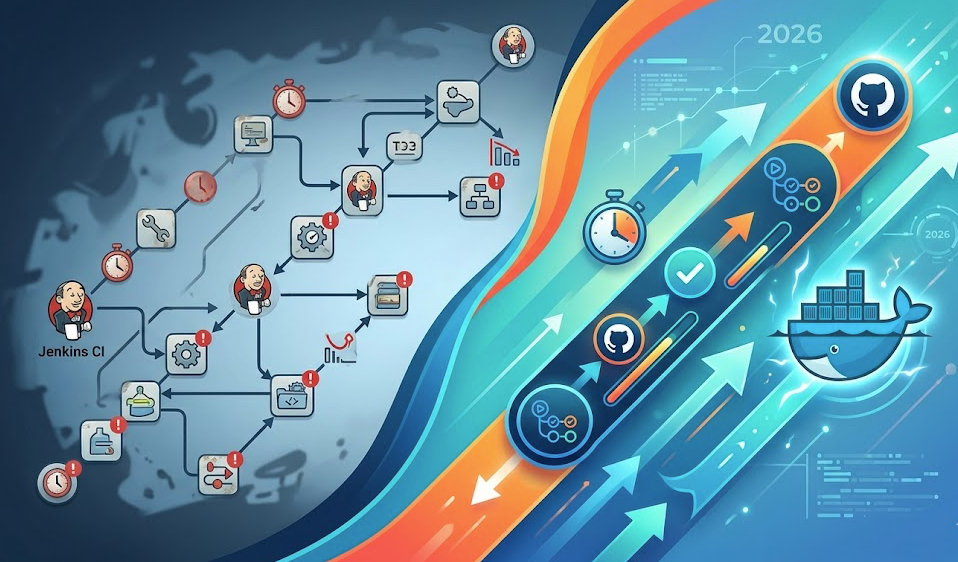
A deployment pipeline that takes 45 minutes to run is a failure. Period. If your developers have to wait nearly an hour to see their changes in a staging environment, they will stop running tests. They will stop linting. They will start pushing “quick fixes” directly to production.
- Fail Fast: If your linter takes 30 seconds, it should run on every commit.
- Caching: If your pipeline isn’t caching layers (for Docker) or dependencies (for your language of choice), you are wasting your own time.
- Ephemeral Environments: Can you spin up a full replica of your production environment for a single feature branch? If you can’t, you aren’t testing in production-like conditions.
If your containers are failing to spin up or your Docker builds are dragging on, you need to tighten the loop. Master Docker in Minutes is the fastest way to get your team on the same page regarding Dockerfile best practices and multi-stage builds.
The Cost of Manual Configuration
Every time a human touches a server configuration, a probability of error is introduced. It’s not because humans are stupid; it’s because we are inconsistent. We forget to document the change. We make a typo in the config file. We forget to restart the service.
If you aren’t using configuration management (Ansible, Chef, Puppet) or strictly declarative infrastructure (Kubernetes, Terraform), you are essentially playing Russian roulette with your uptime.
How to Reclaim Your Sanity
- Adopt GitOps: If your infrastructure state isn’t in a Git repository, it doesn’t exist. Period.
- Standardize your base images: Stop using whatever
node:latestimage you found online. Pin your versions to the digest. - Automate your health checks: If the system doesn’t know it’s unhealthy, it can’t self-heal.
- Invest in the tools that matter: When the heat is on, you need the right references to guide your hands.
If you’re ready to stop fire-fighting and start engineering, make sure your team has the right references. When the production environment decides to turn against you, these guides are your best line of defense:
- Docker War Room: The battle-tested commands to fix container issues in 5 minutes.
- Linux War Room: Because every container runs on Linux, and you need to know how to debug it.
- DevOps War Room Bundle: All the emergency commands you’ll ever need in one comprehensive package.
Stop relying on luck. Stop relying on “the way we’ve always done it.” Build systems that are reproducible, observable, and — most importantly — boring.
Froquiz has 10,000+ questions across SQL, Docker, Git, AWS, JavaScript, Java, Python, React, Microservices and more — plus a Senior Dev Challenge with real scenario-based questions, not syntax drills. → **Froquiz**
메타데이터
- post_id
- fb95d04a2aef
- slug
- the-it-worked-on-my-machine-syndrome-is-killing-your-team-fb95d04a2aef
- url
- https://medium.com/@tercanyldz/the-it-worked-on-my-machine-syndrome-is-killing-your-team-fb95d04a2aef
- canonical_url
- https://medium.com/@tercanyldz/the-it-worked-on-my-machine-syndrome-is-killing-your-team-fb95d04a2aef
- author_url
- https://medium.com/@tercanyldz
- status
- ok
- fetched_at
- 2026-06-09 15:37:30