Sticks and Stones: Einstein’s Most Terrifying Prophecy and Why It Still Haunts Us?
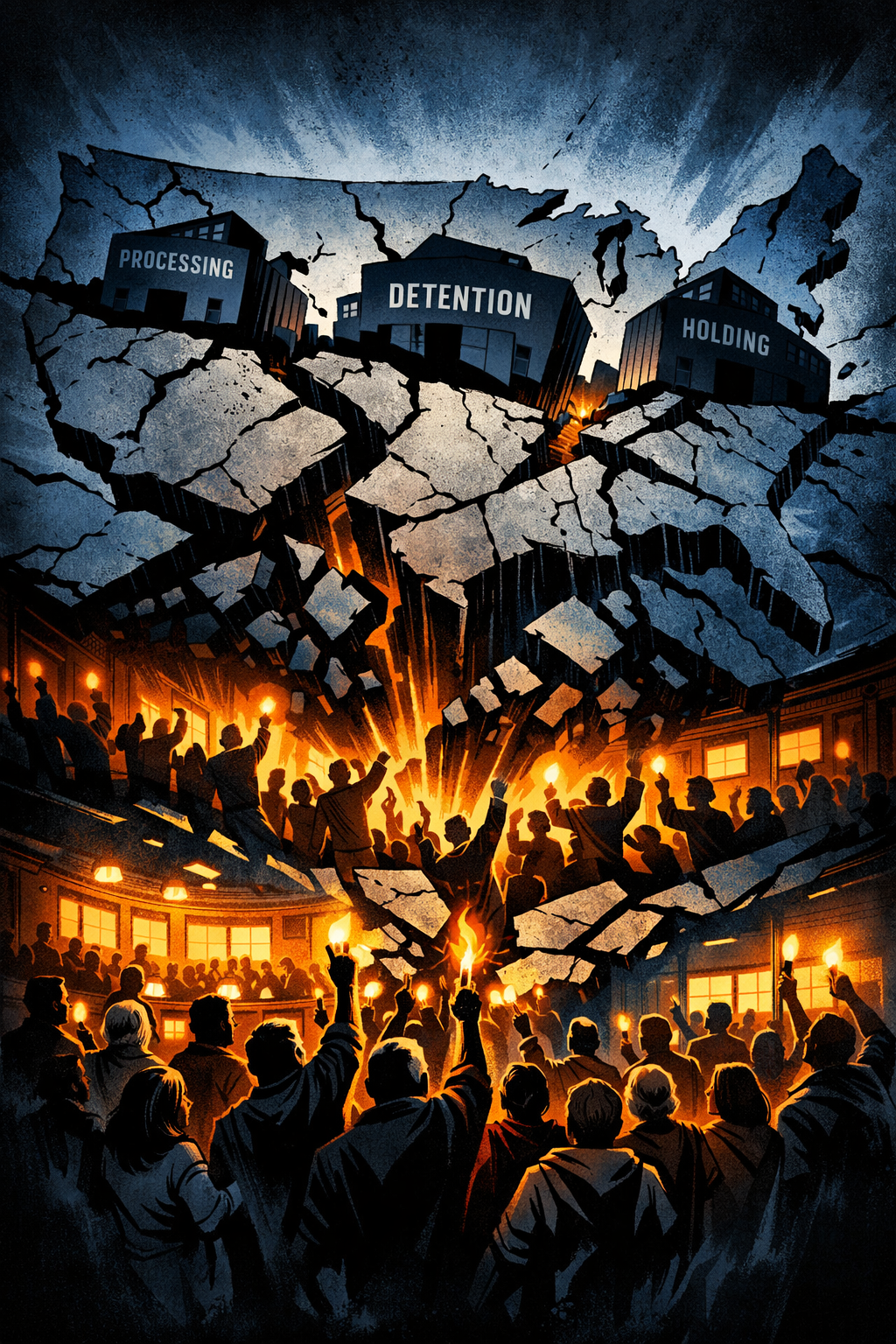
“I know not with what weapons World War III will be fought, but World War IV will be fought with sticks and stones.”
The most terrifying sentence a physicist ever spoke contained no science at all.
Sticks and Stones: Einstein’s Most Terrifying Prophecy and Why It Still Haunts Us?
“I know not with what weapons World War III will be fought, but World War IV will be fought with sticks and stones.”
Photo by Hannes Richter on Unsplash
It is perhaps the most chilling sentence ever attributed to a physicist. It contains no numbers, no equations, no technical jargon. It is a sentence built entirely from the vocabulary of a child, and that is precisely what makes it so devastating.
Albert Einstein, the man whose theoretical work made the atomic bomb possible, spent the last decade of his life trying to stuff the genie back into the bottle.
This quote:
“I know not with what weapons World War III will be fought, but World War IV will be fought with sticks and stones.”
which surfaced in the late 1940s, was his most potent attempt. It is a prophecy dressed as a punchline, and seventy-seven years later, the world has done remarkably little to prove him wrong.
The Man Behind the Warning

Manhattan Project | Definition, Scientists, Timeline, Locations, Facts, & Significance | Britannica generated (2026)
To understand the weight of this sentence, you have to understand the conscience that produced it. Einstein was not a weapons scientist. He never set foot inside the Manhattan Project. He never saw the inside of Los Alamos. But he was, by his own tortured admission, the man who lit the fuse.
In August 1939, with war consuming Europe and intelligence suggesting that Nazi Germany was pursuing nuclear fission research, Einstein signed a letter to President Franklin D. Roosevelt.

Leó Szilárd: A Forgotten Father of the Atomic Bomb — Priceonomics generated (2026)
The letter, drafted by Hungarian physicist Leo Szilard, warned that recent scientific developments made it possible to construct
“extremely powerful bombs of a new type”
and urged the United States to begin its own nuclear research program. Einstein was a lifelong pacifist who had once declared that killing under the cloak of war was nothing but an act of murder.
But he could not, as he later explained, let his inaction hand Adolf Hitler sole possession of such destructive power.
The Einstein-Szilard letter is widely considered the catalyst for the Manhattan Project.
Einstein had no direct involvement in building the bomb, had no prior knowledge of plans to use it, and learned of the bombing of Hiroshima the same way most of the world did, through the news.
His reaction, as documented by those around him, was anguish. He later called the letter his
In his 1950 book:
“Out of My Later Years,”
he wrote that had he known the Germans would never succeed in developing an atomic bomb, he would have done nothing.
That anguish is the crucible from which the sticks and stones prophecy emerged. It was not the detached musing of a philosopher. It was the haunted testimony of a man who believed he had helped crack open the door to human extinction.
The Quote Nobody Can Quite Pin Down
Here is something the popular internet does not tell you about this famous quotation:
its origins are murkier than the mythology suggests.
The version most commonly circulated,
“I know not with what weapons World War III will be fought, but World War IV will be fought with sticks and stones,”
is attributed to a 1949 interview with journalist Alfred Werner, published in the periodical Liberal Judaism. That interview is catalogued in the Albert Einstein Archives at the Hebrew University of Jerusalem under reference number 30–1104, and it is cited in Alice Calaprice’s “The New Quotable Einstein.”
But the sentiment was already circulating before Einstein’s name was attached to it. The earliest known version appeared in September 1946, when syndicated columnist Walter Winchell relayed a quip from reporter Joe Laitin about an unnamed U.S. Army lieutenant at Bikini Atoll, the Pacific island chain where nuclear weapons were being tested.
According to Laitin, reporters were questioning the lieutenant about what weapons would be used in the next war. The lieutenant reportedly replied that he did not know, but that in the war after the next one, they would surely be using spears.
By June 1948, a version of the remark appeared in The Rotarian magazine, attributed directly to Einstein. In that account, someone asked Einstein what weapons would be used in a third world war. His reply, as printed, was characteristically dry:
“I don’t know. But I can tell you what they’ll use in the fourth. They’ll use rocks.”
By 1949, the same basic idea had also been attributed to General Omar Bradley, then Army Chief of Staff, who allegedly said that World War IV would be fought with bows and arrows.

Omar Bradley | WWII General, Army Chief of Staff | Britannica generated (2026)
A Toastmaster’s Handbook from that year credited the rocks version to Einstein via a U.S. Senator. The quote was, in other words, a shared anxiety of the immediate postwar period, a dark joke that crystallized a terror so enormous it could only be expressed through understatement.
Whether Einstein originated the thought or simply gave it its most memorable phrasing is, at this point, almost beside the point. The quote endures because it is Einstein’s name that is synonymous with the physics that made the bomb possible.
When Einstein says it, the warning carries the weight of authorship. He is not merely predicting what could happen. He is confessing what he helped make possible.
The Logic of the Prophecy
The brilliance of the quote is not in what it says about World War III. It is in what it refuses to say. Einstein does not speculate about the weapons of the next great war because the speculation itself is irrelevant. The weapons do not matter.
What matters is the outcome. The real prediction is not about war. It is about civilization.
Einstein is telling us that the destructive capacity already available in 1949, to say nothing of the thermonuclear weapons that would arrive by 1952, was sufficient to end the entire enterprise of human technological progress. Not damage it or set it back a century. End it!
The survivors of such a war, if there were any, would not be rebuilding. They would be scavenging. They would have lost not only cities and infrastructure but the accumulated knowledge, institutional memory, and industrial capacity that makes modernity possible. The sticks and stones are not a metaphor for primitive warfare. They are a literal description of what would be left.
This is what separates Einstein’s warning from ordinary anti-war rhetoric. He is not arguing that war is tragic, or costly, or immoral, though he believed all of those things. He is arguing that nuclear war is categorically different from every other kind of war humanity has ever fought.
Previous wars destroyed nations. Nuclear war could destroy the capacity to be a nation. It is the difference between losing a house and losing the knowledge of how to build one.
The Russell-Einstein Manifesto and the Last Public Act
Einstein did not stop at a single memorable sentence. In the final months of his life, he collaborated with the British philosopher and mathematician Bertrand Russell on a document that would become one of the most important political statements of the twentieth century.

The English philosopher’s message to the future # generated (2026)
The Russell-Einstein Manifesto, released on July 9, 1955, several months after Einstein’s death on April 18, was signed by eleven of the world’s most prominent scientists and Nobel laureates. Einstein’s signature was among the last public acts of his life.
The Manifesto went further than any previous statement by scientists on the nuclear question. It framed the choice facing humanity in the starkest possible terms:
“Shall we put an end to the human race, or shall mankind renounce war?”
Russell and Einstein were not content to call for arms reduction or test ban treaties, though they supported both. They were arguing that the existence of nuclear weapons had rendered war itself obsolete as an instrument of policy.
Not undesirable. Obsolete.
A species that possesses the means to extinguish itself cannot afford to settle its disputes through organized violence, no matter how limited the initial intentions.
The Manifesto gave birth to the Pugwash Conferences on Science and World Affairs, a series of international meetings that brought together scientists from both sides of the Iron Curtain to discuss nuclear disarmament. The Pugwash movement was awarded the Nobel Peace Prize in 1995.
Joseph Rotblat, the only scientist to leave the Manhattan Project on moral grounds, was among its founding members and shared the Nobel that year.
Eighty-Five Seconds to Midnight

Beating the Doomsday Clock | STANFORD magazine generated (2026)
Einstein died in 1955, but the institution he helped create continues to measure how seriously the world takes his warning.
In December 1948, Einstein helped form the Board of Sponsors of the Bulletin of the Atomic Scientists, the organization that maintains the Doomsday Clock. J. Robert Oppenheimer served as its first chair.
The Clock, introduced in 1947, uses the imagery of midnight to represent global catastrophe. Its hands are set each year by the Bulletin’s Science and Security Board.
In January 2026, the Clock was set at 85 seconds to midnight, the closest it has ever been in its seventy-nine-year history.
The Bulletin cited the near-total collapse of arms control communication between nuclear powers, the continued war in Ukraine and Russia’s repeated nuclear saber-rattling, the absence of international frameworks governing artificial intelligence in warfare, and the growing normalization of nuclear risk across all nine nuclear-armed states.
The Bulletin’s president, Alexandra Bell, called it a “failure of leadership.”
Eighty-five Seconds
When Einstein first spoke of sticks and stones, the Clock stood at three minutes to midnight. It had been set there in 1949, the year the Soviet Union successfully tested its first nuclear device.
In the decades that followed, the Clock moved backward and forward, reaching its farthest point from midnight in 1991, at seventeen minutes, when the Cold War ended and the United States and Russia began deep cuts to their arsenals.
Since then, it has moved almost exclusively in one direction.
Today, approximately 12,500 nuclear warheads remain in global arsenals. Nine countries possess them. The New START treaty between the United States and Russia, the last remaining bilateral arms control agreement, has been suspended.
The architecture of restraint that was painstakingly constructed over half a century is being dismantled faster than it was built.
Why This Quote Will Not Leave Us Alone
Famous quotations persist for many reasons. Some are beautiful. Some are wise. Some capture a historical moment. Einstein’s sticks and stones prophecy persists because it has never stopped being true.
Every year that passes without nuclear disarmament is a year in which the prophecy remains unfulfilled but fully possible. The quote does not describe a past event. It describes a standing threat. It is not history. It is a forecast that has yet to expire.
What makes the quote particularly ruthless is its refusal to offer hope within its own framework. There’s no escape clause. There’s no “unless.”
Einstein does not say that World War IV will be fought with sticks and stones unless we act wisely, or unless we negotiate in good faith, or unless we develop better international institutions.
He states the consequence as if it were already decided. The only way to avoid the sticks and stones is to avoid World War III entirely, and the only way to avoid World War III is to fundamentally change how human civilizations resolve their conflicts with one another.
That demand, as Russell and Einstein acknowledged in their Manifesto, requires
“distasteful limitations of national sovereignty.”
It requires countries to surrender something they have never been willing to surrender. It requires what Einstein, the physicist, would have recognized as a phase transition, a fundamental change of state rather than an incremental adjustment.
We are now seventy-seven years into the nuclear age. The weapons Einstein helped make theoretically possible have been refined, miniaturized, multiplied, and distributed across nine nations.
The international institutions designed to contain them are weakening. The conversations about using them have become, in certain capitals, disturbingly casual.
Albert Einstein spent the last ten years of his life trying to tell us something. He used the simplest words he could find. Sticks. Stones. He chose those words because the warning had to be understood by everyone, not just physicists, not just diplomats, not just generals.
Everyone.
Because the consequences, if they come, will belong to everyone.
The question is not whether we heard him. The question is whether we listen.
If this piece made you think twice about a quote you thought you already understood, give it some claps. If it reminded you that the man who helped make the bomb possible spent his final years trying to undo what he started, and that the Doomsday Clock is now closer to midnight than at any point in its seventy-nine-year history, share it. Einstein chose the simplest words he could find because the warning had to reach everyone. Help it reach a few more.
Sources
“Einstein at 70,” interview with Alfred Werner, Liberal Judaism 16, April-May 1949. Einstein Archive 30–1104, Hebrew University of Jerusalem.
Alice Calaprice, “The New Quotable Einstein,” Princeton University Press, 2005.
Snopes, “Did Albert Einstein Say World War IV Will be Fought ‘With Sticks and Stones’?” May 2023.
Walter Winchell, syndicated column, September 1946 (Bikini Atoll attribution via Joe Laitin).
The Rotarian, Vol. 72, №6, June 1948.
Russell-Einstein Manifesto, July 9, 1955. National Museum of Nuclear Science and History.
Pugwash Conferences on Science and World Affairs, Russell-Einstein Manifesto Statement.
Bulletin of the Atomic Scientists, 2026 Doomsday Clock Statement, January 27, 2026.
Bulletin of the Atomic Scientists, 2026 Doomsday Clock Statement: Nuclear Risk, January 27, 2026.
Biography.com, “Albert Einstein Regretted His Role in the Atomic Bomb’s Creation,” January 2024.
19FortyFive, Stephen Silver, “War Quote of the Day from Albert Einstein,” March 2026.
메타데이터
- post_id
- fb97468daebb
- slug
- sticks-and-stones-einsteins-most-terrifying-prophecy-and-why-it-still-haunts-us-fb97468daebb
- url
- https://medium.com/illumination/sticks-and-stones-einsteins-most-terrifying-prophecy-and-why-it-still-haunts-us-fb97468daebb
- canonical_url
- https://medium.com/illumination/sticks-and-stones-einsteins-most-terrifying-prophecy-and-why-it-still-haunts-us-fb97468daebb
- author_url
- https://medium.com/@jusbouey
- status
- ok
- fetched_at
- 2026-06-27 07:40:21