The Silent Washer Killer: Why Your Premium Laundry Detergent Is Ruining Your Machine
You invested a significant amount of money into a high-end LG or Samsung washing machine. You buy premium detergent, pour a generous capful…
The Silent Washer Killer: Why Your Premium Laundry Detergent Is Ruining Your Machine
You invested a significant amount of money into a high-end LG or Samsung washing machine. You buy premium detergent, pour a generous capful into the drawer, and expect pristine clothes. But behind the steel drum, out of sight, you are slowly destroying the bearings, the rubber seals, and the electronic drive motor.
That is the harsh engineering truth most homeowners discover far too late. Using the wrong detergent, or even over-dosing the right one, in a high-efficiency (HE) washer does not just leave your clothes less clean. It creates chemical scum, breeds black mold, triggers cryptic motor error codes, and completely voids your manufacturer's warranty.
If you want your machine to survive the decade, the fix starts with understanding the physics of modern low-water laundry cycles.
The Low-Water Math Trap
Traditional top-load washing machines are water hogs, flooding the tub with 40 to 45 gallons of water per cycle. Modern HE washers, like LG’s TurboWash 360° or Samsung’s EcoBubble units, are fundamentally different. They operate on a strict low-moisture principle, using only 13 to 15 gallons of water to achieve the same level of structural cleanliness. That is a massive 65% reduction in total water volume.
When you introduce standard, high-sudsing laundry detergent into this low-water environment, the formula cannot physically dissolve or rinse away. Instead, it transforms into a thick, gooey film that coats the outer wash tub and the internal drainage pipes. Within weeks, this chemical layer acts as an adhesive, trapping fabric lint, hair, and biological waste, creating a literal petri dish for musty bacteria right inside your appliance.
Fluid Dynamics: TurboWash vs. EcoBubble
Choosing the right HE detergent requires matching the fluid dynamics of your machine’s specific injection system:
- LG’s Multi-Jet Speed Wash: Premium LG front-loaders utilize high-pressure water jets that spray directly into the tumbling load to maximize chemical penetration instantly. Because the cycle relies on rapid, aggressive water movement, the detergent must dissolve completely in under 30 seconds. Thick, poorly formulated liquids will fail to distribute evenly, confusing the internal AI DD (Direct Drive) weight sensors and triggering an LE (Motor Overload) error code.
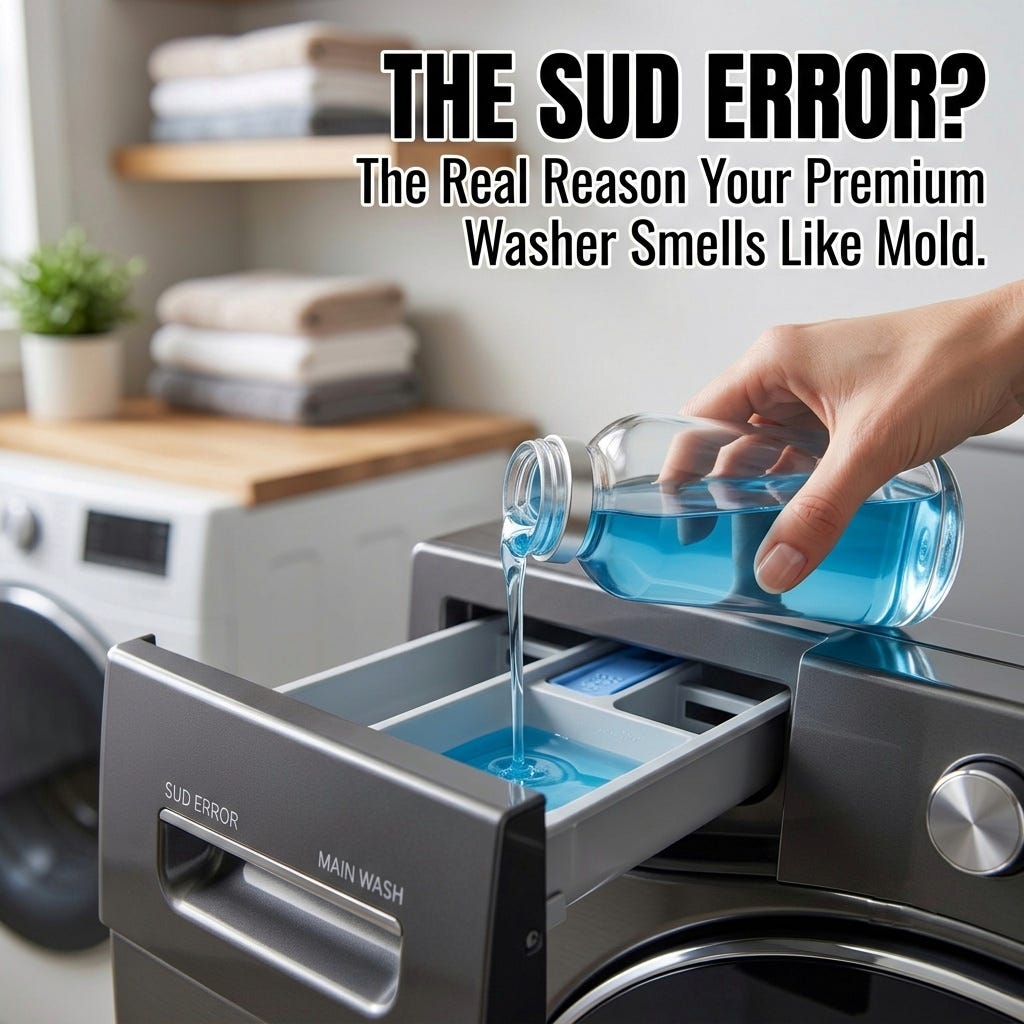
- Samsung’s Pre-Mix Bubble Chamber: Samsung approaches the problem by pre-dissolving detergent. Before a drop of water touches your clothes, the EcoBubble generator forces air, water, and liquid detergent together to create a dense layer of micro-bubbles. Because this system mechanically amplifies the soap, even a fractional overdose of detergent will instantly over-suds the drum. The machine will freeze mid-cycle, throw a SUD or 5UD error on the digital display, and lock itself into an endless, water-wasting rinse loop.
The Goldilocks Dosing Rule
The single biggest mistake consumers make is treating the detergent cap like a measuring cup. The lines printed inside plastic caps are designed by marketing teams to maximize consumption, not appliance efficiency.
According to manufacturer testing data, up to 70% of standard household laundry loads are perfectly clean at the bare minimum dose. For a standard medium-sized load in an HE machine, you only need 1 to 1.5 tablespoons of concentrated liquid HE detergent. If you fill the cap to the top line out of habit, you are pouring triple the necessary chemistry into your machine, guaranteeing mechanical buildup.
Protecting Your Mechanical Investment
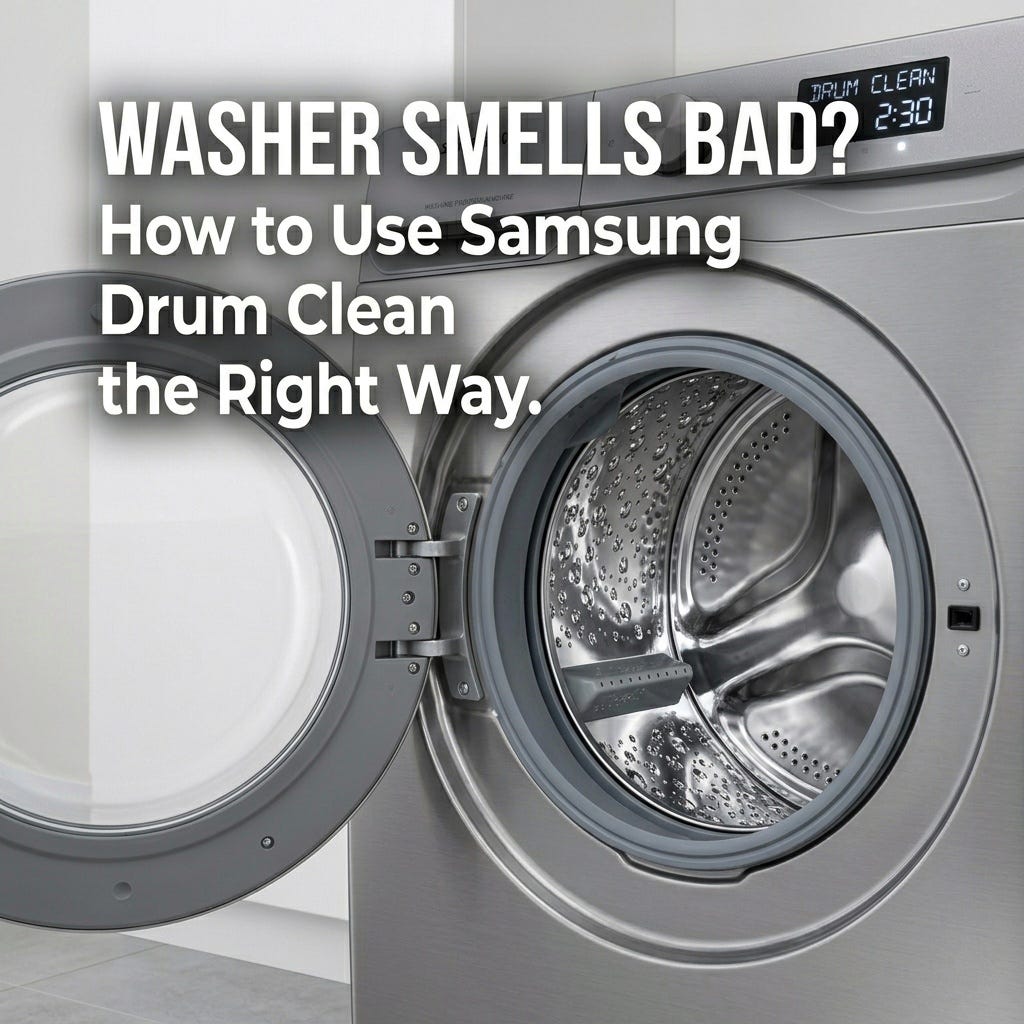
If your front-loader has already developed that dreaded, sour locker-room odor, running a standard rinse cycle will not clear it. The chemical film must be stripped.
Appliance technicians recommend a strict monthly reset: run a dedicated Tub Clean cycle at the maximum temperature setting (typically 140°F) using a dedicated oxygenated cleaning tablet. More importantly, leave the washer door and the detergent drawer cracked open after every single load. Allowing ambient air to dry out the internal drum completely is the only way to stop mold spores from anchoring into the rubber door gasket.
I document comprehensive mechanical diagnostics and DIY appliance maintenance frameworks over on my website.
If you want to maximize the lifespan of your home infrastructure, head over to explore our detailed technical libraries:
- The Inverter Compressor Manual: Deciphering the electronic error codes of modern smart appliances.
- The Direct Drive Diagnostic: How to clear motor lockouts without calling a field technician.
- The Hard Water Chemical Matrix: Choosing the right chelating agents to neutralize mineral scale in your water lines.
- The Front-Load Gasket Rebuild: Step-by-step instructions for swapping degraded rubber seals yourself.
👉 [Read the Full HE Detergent & Washer Maintenance Guide: CLICK HERE]
메타데이터
- post_id
- fb9c3b2be780
- slug
- the-silent-washer-killer-why-your-premium-laundry-detergent-is-ruining-your-machine-fb9c3b2be780
- url
- https://medium.com/@techelectroniclive/the-silent-washer-killer-why-your-premium-laundry-detergent-is-ruining-your-machine-fb9c3b2be780
- canonical_url
- https://medium.com/@techelectroniclive/the-silent-washer-killer-why-your-premium-laundry-detergent-is-ruining-your-machine-fb9c3b2be780
- author_url
- https://medium.com/@techelectroniclive
- status
- ok
- fetched_at
- 2026-07-08 01:19:27