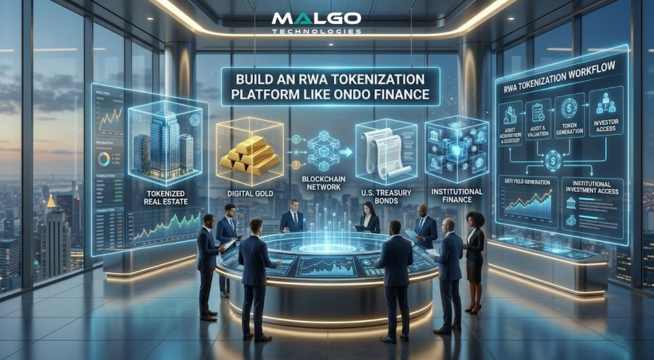
The Complete Legal Guide to Tokenizing Real World Assets Without Compliance Risks
Real-world asset tokenization is the process of converting ownership rights of physical or financial assets — such as real estate, precious…
The Complete Legal Guide to Tokenizing Real World Assets Without Compliance Risks
Real-world asset tokenization is the process of converting ownership rights of physical or financial assets — such as real estate, precious metals, corporate debt, or private credit — into digital tokens on a blockchain ledger. These digital tokens represent legally binding claims to fractions of the underlying physical asset, allowing individuals to hold, transfer, and trade fractional property interests on shared digital networks. This mechanism translates real-world legal entitlements into programmable on-chain units that operate within traditional capital-market regulations.
What is Real-World Asset Tokenization?
To state it clearly, asset tokenization takes an investment that is typically hard to split up, like an entire commercial building or a rare piece of art, and divides it into small digital pieces. Each piece is a token that functions as a secure digital certificate of ownership, confirming that the token holder owns a specific percentage of that asset. Every single transfer of ownership is recorded on a shared digital database known as a blockchain, which serves as a highly accurate, permanent ledger that reduces administrative errors.
The physical asset itself does not move onto the internet; instead, the legal rights, rental revenues, or interest payments associated with that asset are bound to the token via legally enforceable contracts. For institutions looking to enter this space, building a secure infrastructure requires specialized development teams that integrate programmatic rule sets directly into the token structure.
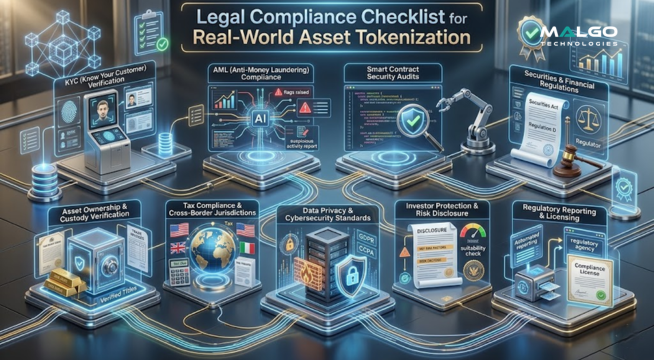
Legal Compliance Checklist for Real-World Asset Tokenization
Why Asset Tokenization is Dominating Modern Capital Markets
Traditional asset classes often suffer from high transaction friction, long settlement times, and steep capital barriers that exclude a broad base of qualified market participants. Paper-based title systems require extensive manual verification from intermediaries, which adds administrative delays and increases operational overhead for asset managers. By moving these processes onto a digital ledger, issuers can streamline the lifecycle management of securities and automate tedious administrative workflows.
Market participants are shifting toward digital representations because on-chain assets offer immediate clearing and settlement, minimizing counterparty risks during cross-border transfers. Fractionalization enables asset owners to unlock liquidity from traditionally illiquid assets by opening investment opportunities to smaller, accredited tranches. This systemic shift toward programmable finance helps organizations optimize capital efficiency and improve asset utilization across international borders.
Looking to issue digital assets with native legal compliance? **Speak with a solution architect at Malgo today for a tailored architecture review.**
Features of a Compliant RWA Tokenization Platform
A legally compliant RWA tokenization platform must be built on technical architecture that enforces compliance rules at the smart contract level rather than relying solely on post-trade manual reviews. This means that token transfers are automatically blocked if the recipient does not meet the necessary regulatory criteria programmed into the network.
- Embedded Identity Verification Logic: Utilizing open token standards like ERC-3643 allows the platform to verify investor identities against approved registries before completing any transaction.
- Automated Transfer Restrictions: The underlying smart contracts restrict token velocity and maximum holder counts to maintain compliance with specific regulatory exemptions.
- Clawback and Reissuance Capabilities: In cases where private keys are lost or a court mandates asset seizure, the issuer retains the technical ability to burn and reissue tokens to keep the digital ledger aligned with physical property deeds.
- Real-Time Dashboard Integration: Built-in reporting interfaces provide asset managers and regulatory bodies with a transparent view of current token distribution, asset performance, and reserve balances.
Benefits of Securitizing Real-World Assets via Blockchain
Securitizing tangible properties through distributed ledgers offers deep structural advantages over legacy administrative systems, especially regarding asset tracking and operational transparency. The integration of programmable rules reduces reliance on traditional middle-office infrastructure, dropping processing times from several days down to a few seconds.
Benefit CategoryImpact on OperationsLong-Term AdvantageOperational EfficiencyReplaces manual paper verifications with automated smart contracts.Drops administrative overhead and processing friction.Global Fractional AccessDivides high-value assets into low-minimum investment units.Expands the pool of eligible accredited market participants.Permanent AuditabilityRecords every transaction, transfer, and corporate action on an immutable ledger.Lowers regulatory reporting friction and audit expenses.Collateral ProgrammabilityAllows tokens to be verified as collateral through clear regulatory frameworks.Enhances asset utility across decentralized and traditional markets.
Legal Compliance Checklist for Real-World Asset Tokenization
Before deploying capital or writing code, asset owners must complete a rigorous legal verification process to establish a compliant legal bridge between the physical asset and the digital token. Failing to align the technological layer with traditional property laws exposes the project to severe regulatory enforcement actions.
1. Corporate Structuring and Special Purpose Vehicles (SPVs)
Asset owners must establish a remote legal entity, such as an LLC or a private limited company, to hold the deed or title of the underlying physical asset. This setup ensures that the asset is isolated from the bankruptcy risks of the primary issuing firm, offering clear legal protections to token holders. The tokens issued by this vehicle represent equity, debt, or profit-participation rights within this specific legal entity.
2. Regulatory Asset Classification
The issuer must determine whether the digital token falls under standard capital-markets regulations or alternative digital-asset acts. Under regulatory frameworks like the SEC guidelines in the United States or MiFID II in the European Union, tokens that offer economic returns based on the efforts of others are treated as investment contracts or transferable securities. This classification mandates the drafting of standardized disclosure documents, whitepapers, or formal prospectuses depending on the target jurisdiction.
3. Investor Onboarding and Identity Frameworks
To prevent financial fraud and meet global financial standards, platforms must integrate strict Anti-Money Laundering (AML) and Know Your Customer (KYC) processes. Investors must submit verified government identification and proof of accreditation status before their public wallet addresses can be whitelisted on the network. The token architecture must block any incoming or outgoing transfers from addresses that have not successfully completed these compliance steps.
4. Property Registry and Ledger Reconciliation
The token framework must establish a clear legal priority showing that traditional government asset registries take precedence over the blockchain ledger in the event of a dispute. Project teams must implement verified oracle networks to feed accurate off-chain data — such as property valuations, title updates, and independent third-party audits — directly onto the on-chain platform. This continuous reconciliation ensures that the digital ledger remains a precise reflection of physical property rights.
Ready to launch your compliant platform? Discover how Malgo can build your production-ready tokenization framework.
Why Choose Malgo for RWA Tokenization Platform Development Services
Developing a stable infrastructure for digital assets requires deep technical knowledge of smart contract development and a thorough understanding of secure token design. Malgo specializes in providing comprehensive RWA Tokenization Platform Development Services that blend secure blockchain engineering with strict compliance requirements.
The development teams at Malgo prioritize the creation of secure, audit-ready smart contracts that incorporate necessary compliance rules directly into the network architecture. Malgo focuses on deploying production-ready platforms using recognized token standards that support necessary enterprise features like identity management, transaction whitelisting, and secure administrative overrides.
By working with Malgo for your RWA Tokenization Platform Development, your organization gains access to enterprise-grade system integrations that link your legacy internal databases with public or private blockchain networks. Malgo ensures that every phase of token issuance, asset tracking, and wallet management is built with modern security protocols to give your institutional participants maximum confidence.
Key Jurisdictional Frameworks Shaping Asset Digitization
The regulatory environment for digital assets has matured significantly, with major financial centers establishing specific guidelines to govern the issuance of on-chain securities. Navigating these regional regulations is essential for structuring cross-border offerings without running into compliance issues.
- The European Union (MiCA & MiFID II): While the Markets in Crypto-Assets Regulation (MiCA) provides clear licensing guidelines for digital asset providers, tokenized real-world assets that mimic traditional financial instruments are governed under MiFID II as transferable securities, requiring formal disclosures.
- The United States (SEC & UCC Article 12): The SEC continues to apply traditional securities standards to digital assets, meaning issuers must rely on specific registration exemptions like Regulation D or Regulation S. Concurrently, updates to the Uniform Commercial Code (UCC) allow institutions to perfect security interests in digital assets through formal control mechanisms.
- India (SEBI SM REIT Framework): Following updated SEBI amendments, platforms offering fractional real estate ownership must register as Small and Medium REITs (SM REITs). This rule applies to schemes with specific asset values and requires that the vast majority of funds be tied directly to completed, income-generating properties.
Conclusion
Successfully launching a real-world asset tokenization platform requires a balanced approach that combines legally sound corporate structuring with secure, automated blockchain engineering. By establishing remote special purpose vehicles, verifying the precise regulatory status of the token, and embedding compliance rules directly into smart contracts, issuers can safely open up illiquid assets to a global market. Working with an experienced engineering team ensures that your digital architecture remains fully aligned with traditional property laws and evolving financial regulations.
Secure Your Digital Asset Infrastructure
Build a compliant, institutional-grade issuance platform tailored to your specific regulatory requirements. Contact Malgo today to consult with our specialized blockchain engineering team and review your system architecture.
메타데이터
- post_id
- fb9c4b095913
- slug
- the-complete-legal-guide-to-tokenizing-real-world-assets-without-compliance-risks-fb9c4b095913
- url
- https://medium.com/@jonathanmatthew121/the-complete-legal-guide-to-tokenizing-real-world-assets-without-compliance-risks-fb9c4b095913
- canonical_url
- https://medium.com/@jonathanmatthew121/the-complete-legal-guide-to-tokenizing-real-world-assets-without-compliance-risks-fb9c4b095913
- author_url
- https://medium.com/@jonathanmatthew121
- status
- ok
- fetched_at
- 2026-06-09 15:37:30