1947: The Day Pakistan Was Born Into Crisis
Independence gave Pakistan freedom — but not ease. On its very first day, the new nation was fighting to survive.
1947: The Day Pakistan Was Born Into Crisis
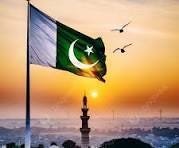
Independence gave Pakistan freedom — but not ease. On its very first day, the new nation was fighting to survive.
On 14 August 1947, Pakistan appeared on the world map as an independent state. For Muslims of the subcontinent, it was the realization of a long-awaited dream. Streets echoed with celebration, prayers were offered in gratitude, and hopes for a secure future filled countless hearts.
Yet behind the celebrations lay a harsh reality.
Pakistan was not born into stability. It was born into crisis.
From the very first day, the country faced challenges so severe that survival itself seemed uncertain. Unlike many new states, Pakistan had to build itself while already under pressure — administratively, financially, socially, and militarily.
An Empty State: The Administrative Challenge
At independence, Pakistan inherited almost no functioning administrative structure. Most government offices, records, and experienced civil servants remained in Delhi. There were no established ministries, no complete files, and no permanent government buildings.
Karachi, chosen as the capital, lacked the infrastructure needed to run a state. Government offices operated from temporary spaces — schools, rented buildings, even private homes. Decisions affecting millions had to be made without systems, experience, or time.
Running a country under such conditions required extraordinary discipline and leadership.
A Nation Without Money
Financially, Pakistan started its journey nearly bankrupt. Its share of British India’s cash reserves was delayed and only partially released. The new state struggled to pay salaries, manage departments, and meet basic expenses.
Quaid-e-Azam Muhammad Ali Jinnah himself set an example of simplicity and austerity. Luxury had no place in a nation fighting for survival. Pakistan had to operate with limited resources but unlimited responsibilities.
The Refugee Tragedy
Perhaps the greatest challenge was the humanitarian crisis triggered by Partition. Millions of Muslims migrated from India to Pakistan, many arriving with nothing but the clothes they wore.
Violence, loss of life, and displacement accompanied this migration. Pakistan, on its first day, was already responsible for sheltering, feeding, and protecting millions of refugees — without prepared camps, welfare systems, or sufficient supplies.
It was a tragedy of historic proportions, yet one faced with resilience, compassion, and collective sacrifice.
Security Without Strength
Pakistan also inherited a very limited share of military resources. Equipment was scarce, organization was weak, and defense planning had to begin immediately.
At the same time, security threats emerged almost instantly. The Kashmir issue surfaced within weeks, testing Pakistan’s military and diplomatic capacity. Defending sovereignty with minimal resources demanded courage, unity, and resolve.
Economic Weakness at Birth
Economically, Pakistan was at a disadvantage. Most industries, factories, and financial centers were located in India. Pakistan was largely agrarian, with little industrial base to support economic growth.
Trade routes were disrupted, markets were unstable, and dependence on imports was unavoidable. Building an economy from scratch — while managing political and social crises — was an immense challenge for a newborn state.
Leadership That Held the State Together
Despite overwhelming odds, Pakistan survived because of visionary leadership. Quaid-e-Azam Muhammad Ali Jinnah, supported by leaders like Liaquat Ali Khan, provided clarity, integrity, and direction during the nation’s most vulnerable phase.
Jinnah’s emphasis on constitutionalism, unity, and rule of law gave Pakistan a moral and political foundation when chaos threatened to overwhelm it.
Why This History Still Matters
The story of Pakistan’s first day is not merely a historical account — it is a reminder.
It reminds us that Pakistan did not begin with comfort or privilege. It began with sacrifice, discipline, and faith. The challenges of 1947 reveal what this nation has already endured — and what it is capable of overcoming again.
Pakistan was born into crisis. It survived through courage.
메타데이터
- post_id
- fbaa8b4eb1b2
- slug
- 1947-the-day-pakistan-was-born-into-crisis-fbaa8b4eb1b2
- url
- https://medium.com/@syedabdurrafay823/1947-the-day-pakistan-was-born-into-crisis-fbaa8b4eb1b2
- canonical_url
- https://medium.com/@syedabdurrafay823/1947-the-day-pakistan-was-born-into-crisis-fbaa8b4eb1b2
- author_url
- https://medium.com/@syedabdurrafay823
- status
- ok
- fetched_at
- 2026-07-08 16:01:05