kuih Kuih Sago Lapis
Kuih Sago Lapis, a delightful traditional dessert, is a beloved staple in Malaysian and Indonesian cuisine. Known for its vibrant colors…
Kuih Sago Lapis
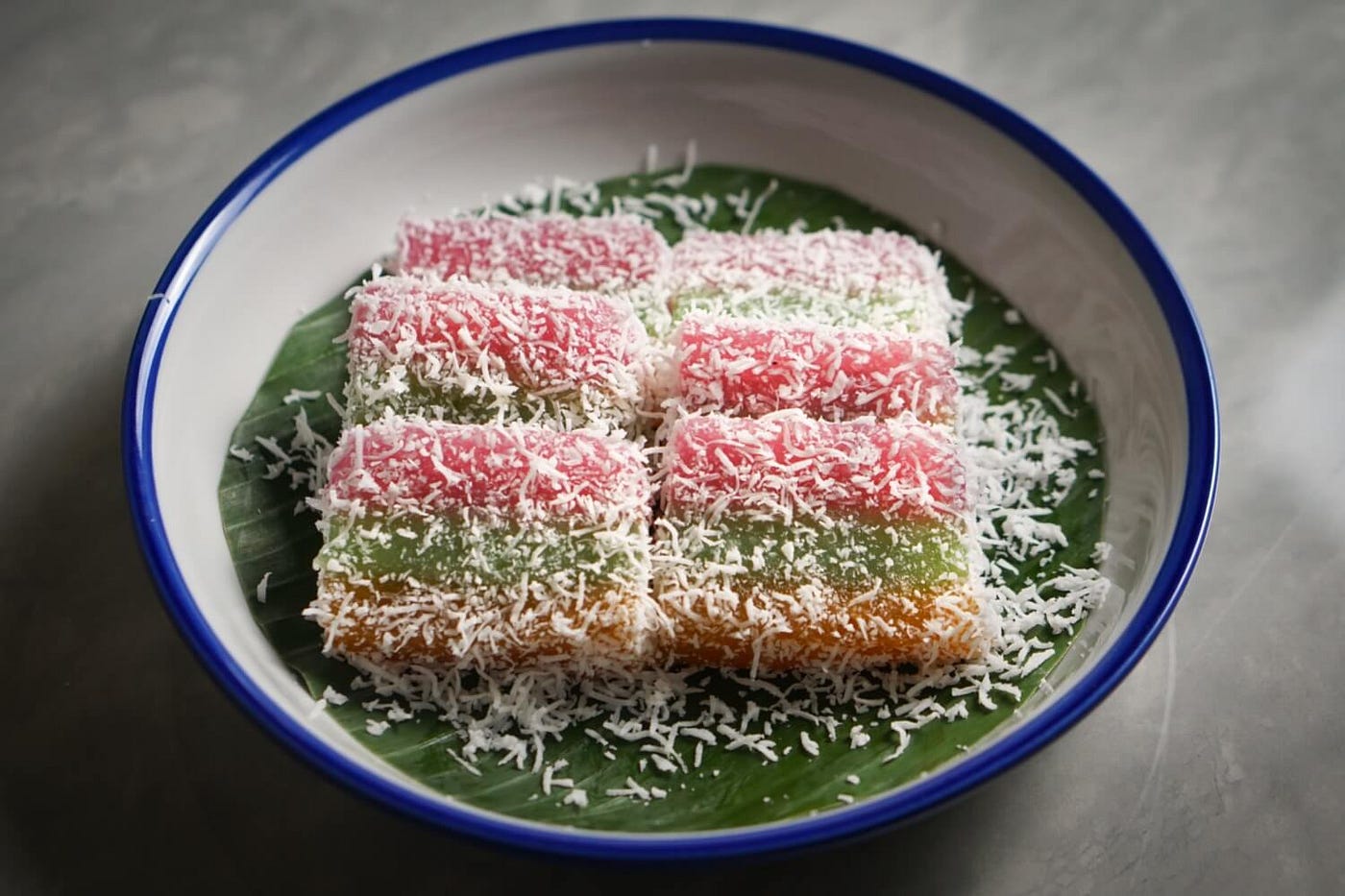
The full recipe of Kuih Sago Lapis can be found here.
Kuih Sago Lapis, a delightful traditional dessert, is a beloved staple in Malaysian and Indonesian cuisine. Known for its vibrant colors and layered appearance, this steamed cake is not only a feast for the eyes but also a treat for the palate. The term “kuih” refers to a broad category of bite-sized snacks and desserts in Malay culture, with Kuih Sago Lapis representing one of the most visually striking examples of this culinary art. Kuihs can be sweet or savoury. Some of the other popular kuihs include sweet potato onde onde, kueh dadar, kueh kosui, ang ku kueh, and soon kueh.
Historical Background
The origins of Kuih Sago Lapis can be traced back to the rich cultural tapestry of Southeast Asia, particularly within the Indonesian archipelago. The dessert is deeply rooted in the culinary traditions of the region, having evolved from various influences over centuries. The name “lapis” translates to “layers” in Indonesian, aptly describing the cake’s signature characteristic of colorful, alternating layers. While its exact origins are debated, it is widely accepted that Kuih Lapis was influenced by both indigenous practices and colonial introductions, particularly during the Dutch colonial period in Indonesia.
As this dessert traveled across borders, it found its way into Malaysian cuisine, where it has become an integral part of festive celebrations and family gatherings. In Malaysia, Kuih Sago Lapis is often served during significant occasions such as Hari Raya Aidilfitri and Chinese New Year, symbolizing prosperity and good fortune due to its layered structure.
Cultural Significance
Kuih Sago Lapis holds a special place in Malaysian culture, representing unity and togetherness. It is commonly shared among family and friends during festive occasions, reinforcing bonds and fostering community spirit. The act of preparing and serving this kuih is often associated with familial love and tradition, making it more than just a dessert; it is a symbol of cultural heritage.
The vibrant colors of Kuih Sago Lapis are not merely for aesthetic appeal; they carry cultural meanings as well. For instance, green layers often come from pandan leaves, which are cherished in Southeast Asian cooking for their fragrant aroma and flavor. Other colors may represent different flavors or simply add to the visual delight of the dish. This colorful presentation makes it a popular choice for celebrations where visual appeal is as important as taste.
Ingredients and Preparation
The primary ingredients in Kuih Sago Lapis include sago pearls, coconut milk, sugar, salt, and sometimes food coloring to enhance its visual appeal. The preparation process involves soaking sago pearls until they become translucent before mixing them with coconut milk and sugar. This mixture is then steamed layer by layer to achieve its characteristic structure.
The steaming process is crucial; each layer must be cooked thoroughly before adding the next to prevent them from mixing together. This meticulous layering not only contributes to the cake’s texture but also creates a delightful contrast between the chewy sago layers and the creamy coconut base. The result is a dessert that offers a unique mouthfeel — sticky yet tender — making each bite an enjoyable experience.
Variations Across Regions
While Kuih Sago Lapis is widely recognized in Malaysia and Indonesia, variations exist across different regions. In some areas, additional ingredients such as pandan juice or even fruit purees may be incorporated to create distinct flavors. For example, some versions may feature layers infused with sweet potato or yam for added richness.
In Singapore, this dessert has also gained popularity among diverse communities, often enjoyed during tea breaks or as a snack. The multicultural nature of Singapore’s society has led to unique adaptations of Kuih Sago Lapis that reflect local tastes while maintaining traditional elements.
Conclusion
Kuih Sago Lapis is more than just a delicious dessert; it embodies the rich cultural heritage of Southeast Asia. Its layered structure symbolizes prosperity and unity, making it a cherished treat during festive occasions. The intricate preparation process highlights the skill involved in creating this delightful delicacy, ensuring that each layer contributes to its overall appeal.
As culinary traditions continue to evolve, Kuih Sago Lapis remains a beloved favorite among Malaysians and Indonesians alike — a testament to the enduring legacy of this traditional dessert that brings people together through shared experiences and flavors. Whether enjoyed at celebrations or as an everyday indulgence, Kuih Sago Lapis continues to capture hearts with its beauty and taste.
메타데이터
- post_id
- fbae10cfeedd
- slug
- kuih-kuih-sago-lapis-fbae10cfeedd
- url
- https://medium.com/@beautifulvoyager/kuih-kuih-sago-lapis-fbae10cfeedd
- canonical_url
- https://medium.com/@beautifulvoyager/kuih-kuih-sago-lapis-fbae10cfeedd
- author_url
- https://medium.com/@beautifulvoyager
- status
- ok
- fetched_at
- 2026-07-25 18:10:40