Fab City Zagreb: Building local STEAM ecosystems as drivers for development
Roberto Vdović | Fab City Zagreb
Fab City Zagreb: Building local STEAM ecosystems as drivers for development
Roberto Vdović | Fab City Zagreb
From the capital of Zagreb to Grobnik and the island of Prvić, Fab City Zagreb has been developing a distributed model for building local STEAM ecosystems as drivers of community development. What began in 2013 as the country’s first Fab Lab evolved into a long-term effort to activate underused spaces, empower local NGOs, and connect education, innovation, and civic participation across diverse territories.
The process of establishing local STEAM ecosystems, developed and implemented through various initiatives, is a project on which the team has been working to promote the concept of Fab Lab through activities across Croatia and the wider region. Although it reaches communities throughout the country, there is still only one official Fablab, alongside initiatives such as the Adriatic GreenLab and the Mobile Popup Fablab.
Through participation in several European projects, extensive networking with partners, and support from the national program “Thematic Systematic Support for STEM as a Driver for Development,” a structured methodology began to take shape, one focused on building networks of local STEAM ecosystems as engines for community growth.
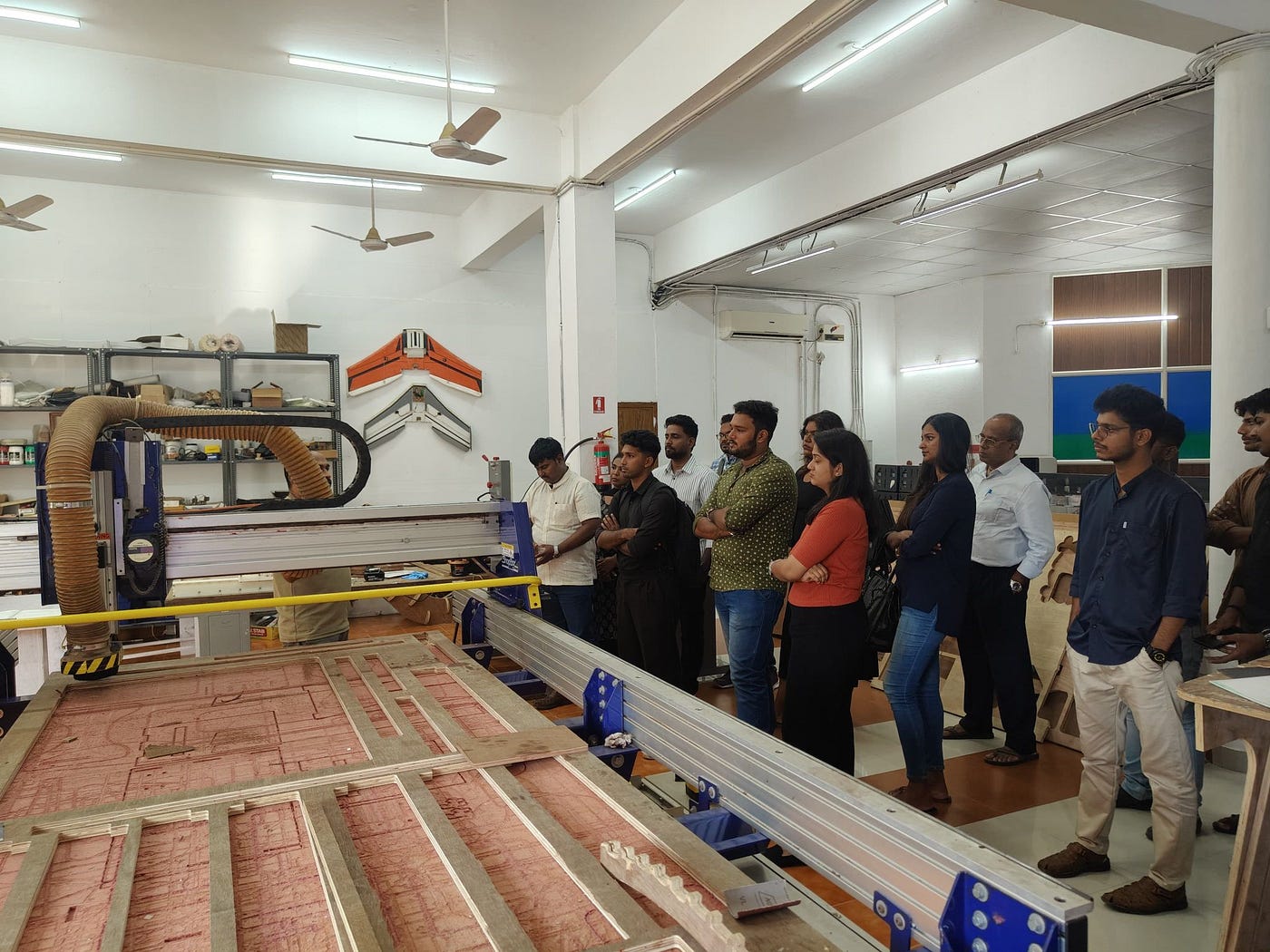
Fab Lab in Zagreb. Photo: fablab.hr
The STEAM process unfolds in several stages
It begins by sparking interest within communities through visits and small workshops, ideally in collaboration with local NGOs, which are seen as long-term leaders of local activities. While invitations sometimes come from local governments or public institutions, inspiration from the Fab City philosophy encourages a stronger orientation toward NGOs as anchors of civic activation.
Before launching public-facing initiatives, a co-design phase is conducted with local actors. Together, they identify a specific phenomenon related to their territory, something unique and recognizable. This could be a local weather phenomenon such as Croatia’s first tornado, a meteorite fall site, or even a former meat factory. These phenomena often become part of local branding and emotional storytelling, forming the foundation for community activities and identity-building.
The next stage is a public event. Drawing on experience organizing Maker Faire events in Zagreb and annual STEAM Week gatherings for facilitators, Fablab supports communities in mobilizing primary and secondary schools, VET centers, universities, craftspeople, and artists to share their work locally. Organizations from other parts of Croatia are often invited to join, expanding the network horizontally.
Both the phenomenon and the event serve as tools for community building, promoting inclusivity, openness, and shared learning. As activities grow throughout the year and more actors become involved, one annual event is no longer sufficient to represent the ecosystem’s dynamism.

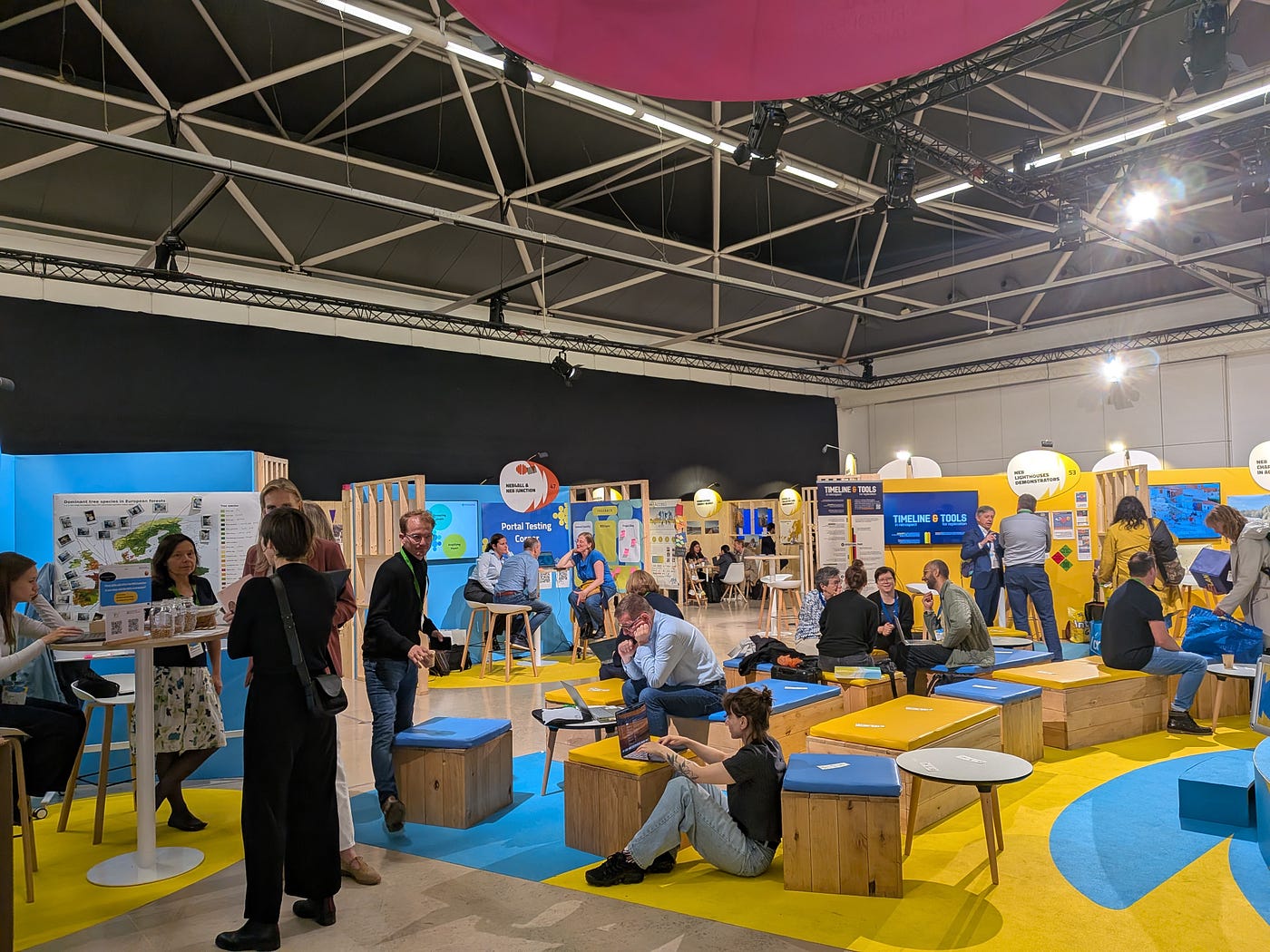
Fab City Zagreb STEAM presentation. Image: Fab City Zagreb
This leads to the next stage: establishing a permanent space, a center where the local ecosystem can work year-round, host visitors, and connect with other networks. Again, the local phenomenon plays a central role in shaping the space’s identity. The first example of such a transformation is the Center for Creativity and Science Promotion in Grobnik, located in a former school building next to a medieval castle. Opened this year after a short preparation period, it became possible because local actors were deeply committed and aligned.
When building a distributed network of such spaces, recognizability and specificity are essential. Each location must offer something distinctive, something that makes it worth visiting not only for local residents but also for national and international audiences.
The final step emphasizes continuous work with local actors, national networking, and even more importantly, openness to international collaboration. Building bridges beyond borders is fundamental to sustaining growth.
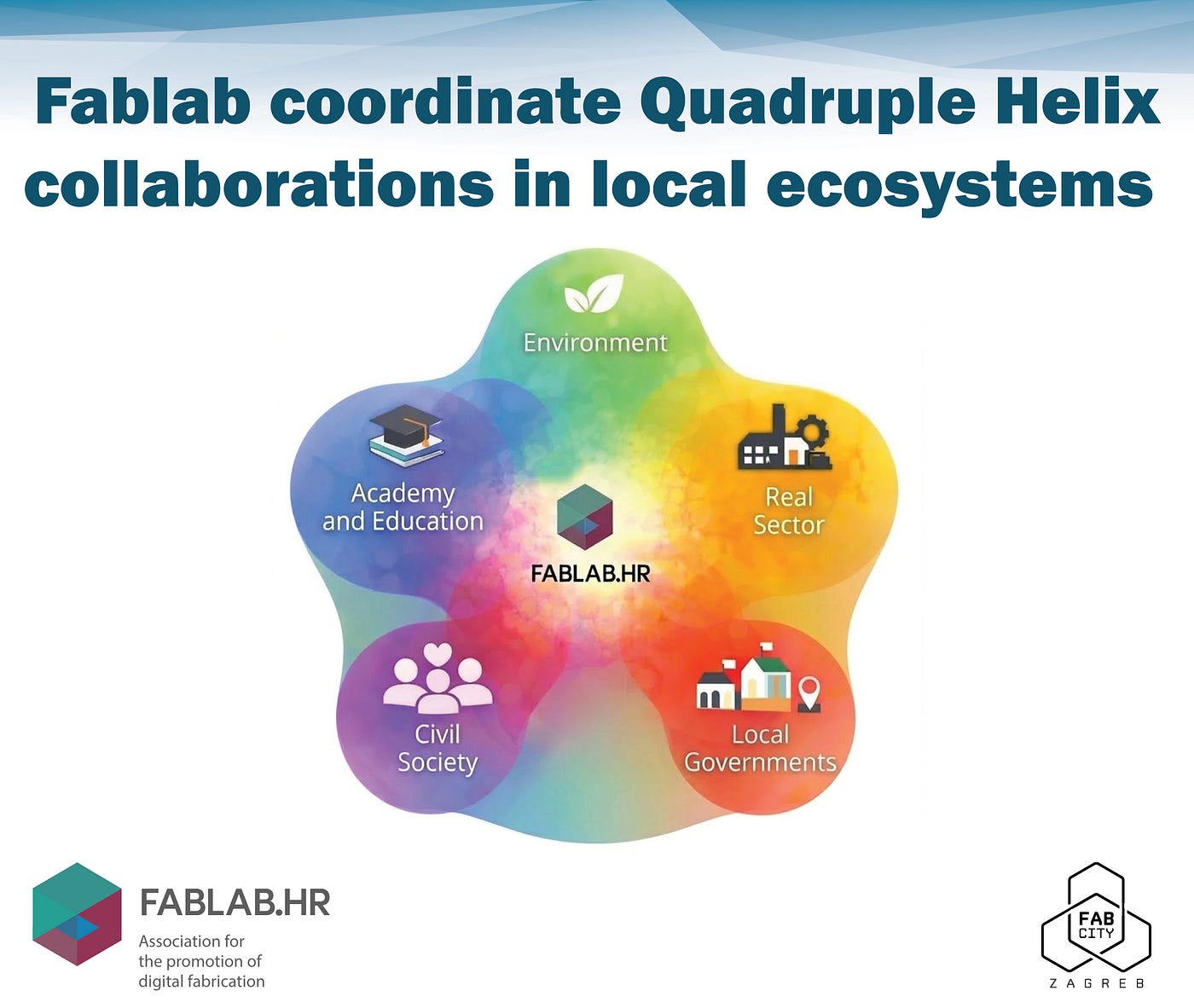
Fab City Zagreb STEAM presentation. Image: Fab City Zagreb
STEAM, Fab Labs and the Fab City methodology integrated into the Croatian context
In the past five years, Croatia with support from the National Foundation for Civil Society Development and European Social Funds has funded several STEAM-related projects aimed at strengthening organizational capacity and promoting STEAM education. Fablab contributes to this landscape through the structured methodology described above. Elements of the Fab City Full Stack methodoly openness, inclusivity, affordability, and sustainability are embedded in ecosystem-building efforts.
The Fab City framework offers an integrated narrative where these activities can be positioned coherently and communicated effectively to diverse actors within each ecosystem. It provides a shared language that connects local action with global ambition.
One example of what emerged from this process was transforming abandoned buildings such as the former Sljeme meat factory complex. The headquarters building of the former Sljeme meat factory in Sesvete has been the focus of transformation proposals for nearly a decade. The Faculty of Architecture, together with the local NGO Green and Blue Sesvete and Fablab, has advocated for converting the space into an innovation hub.
The site was included in two EU-funded projects, and in 2025, a new participatory cultural initiative called “Sljeme za sve” (“Sljeme for All”) proposed reimagining the building as a community center. Unlike earlier proposals, which focused on specific actors and innovation-driven activities, this broader approach is less specialized and ultimately more inclusive, opening the door to wider participation.
On the island of Prvić, a similar process is unfolding. Fablab has proposed the Adriatic GreenLab in an abandoned children’s center building, led by the local NGO “Otok.” To extend the tourist season and diversify activities on the island, the NGO organizes the art-and-science event “Creative Days of Faust Vrančić,” building a network of local and external actors who gather annually. Recently, smaller-scale activities have been organized to raise awareness about the building’s potential.
In both cases, Fablab acts as initiator and motivator, sharing experience, providing logistical support, and connecting local actors with broader networks, while ensuring that long-term momentum remains rooted in the local community
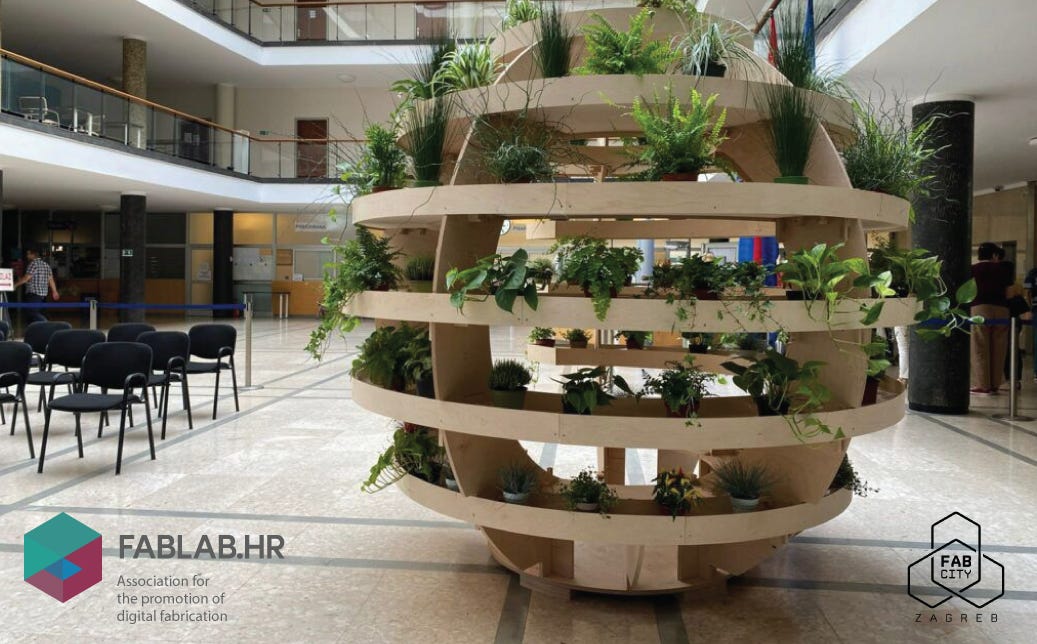
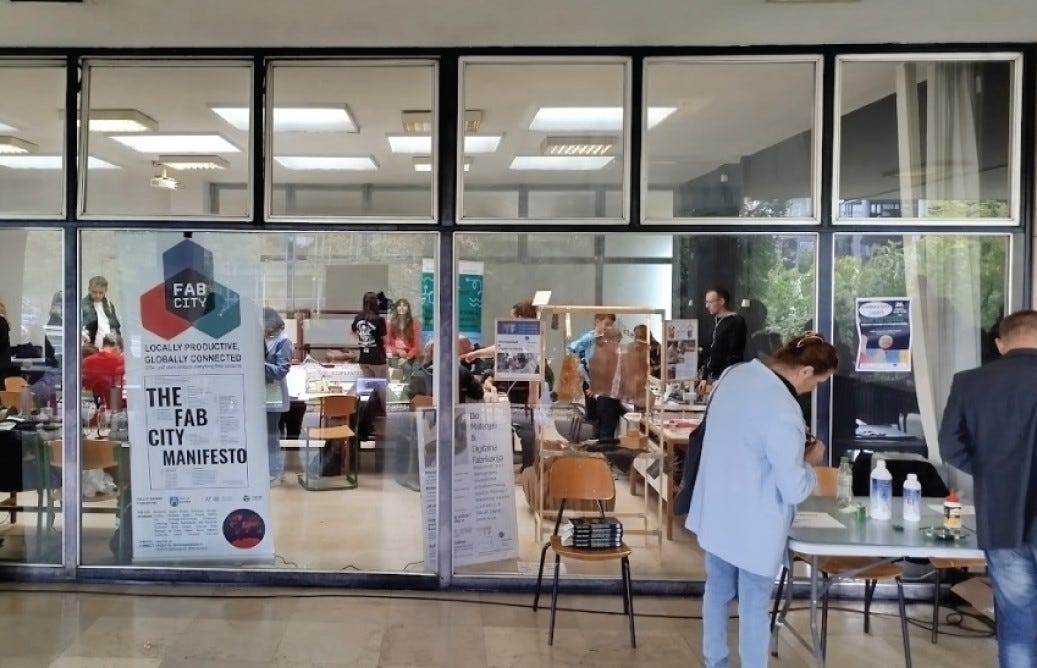
Fab City project. Image: Fab City Zagreb
Measuring impacts in Zagreb, Grobnik, and Prvić
Impact has unfolded in two phases. For years, substantial groundwork and community engagement took place without tangible spatial transformation. This changed in 2025 with the conversion of a former school building in Grobnik, previously closed due to a lack of pupils, into a Center of Creativity. The space is expected to strengthen local development and attract visitors from across Croatia and beyond.
On Prvić island, the Adriatic GreenLab initiative also made visible progress. In Sesvete, activities at the former Sljeme factory site are becoming more frequent, increasing public attention and placing constructive pressure on city authorities to address the building’s future. Beyond physical spaces, impacts include strengthened community networks, increased awareness of local potential, new competencies among local actors, and gradual shifts in perception regarding what abandoned spaces can become.
Activities have reached remote and rural territories throughout Croatia and extended internationally, a reach made possible primarily through European project funding. Since one organization cannot cover the entire country alone, close collaboration with local actors remains essential.
Looking ahead, one possible direction is to focus more strongly on flagship initiatives and global frameworks such as Fab City Zagreb Experience Lab, Adriatic GreenLab, Mediterranean Makers Initiative, and Designing the Future Academy, while continuing to secure project funding and support local partners in consortium-building.
At the same time, there is a strategic tension to navigate. Moving too far toward consultancy and funding management could distance Fablab from hands-on making and user engagement. The challenge will be finding a balanced model that sustains growth while preserving direct connection with communities.
In this evolving landscape, Fab City Zagreb demonstrates that building local STEAM ecosystems is not a single project but a long-term civic process, one that connects spaces, people, education, and innovation into a distributed, resilient network for territorial transformation.
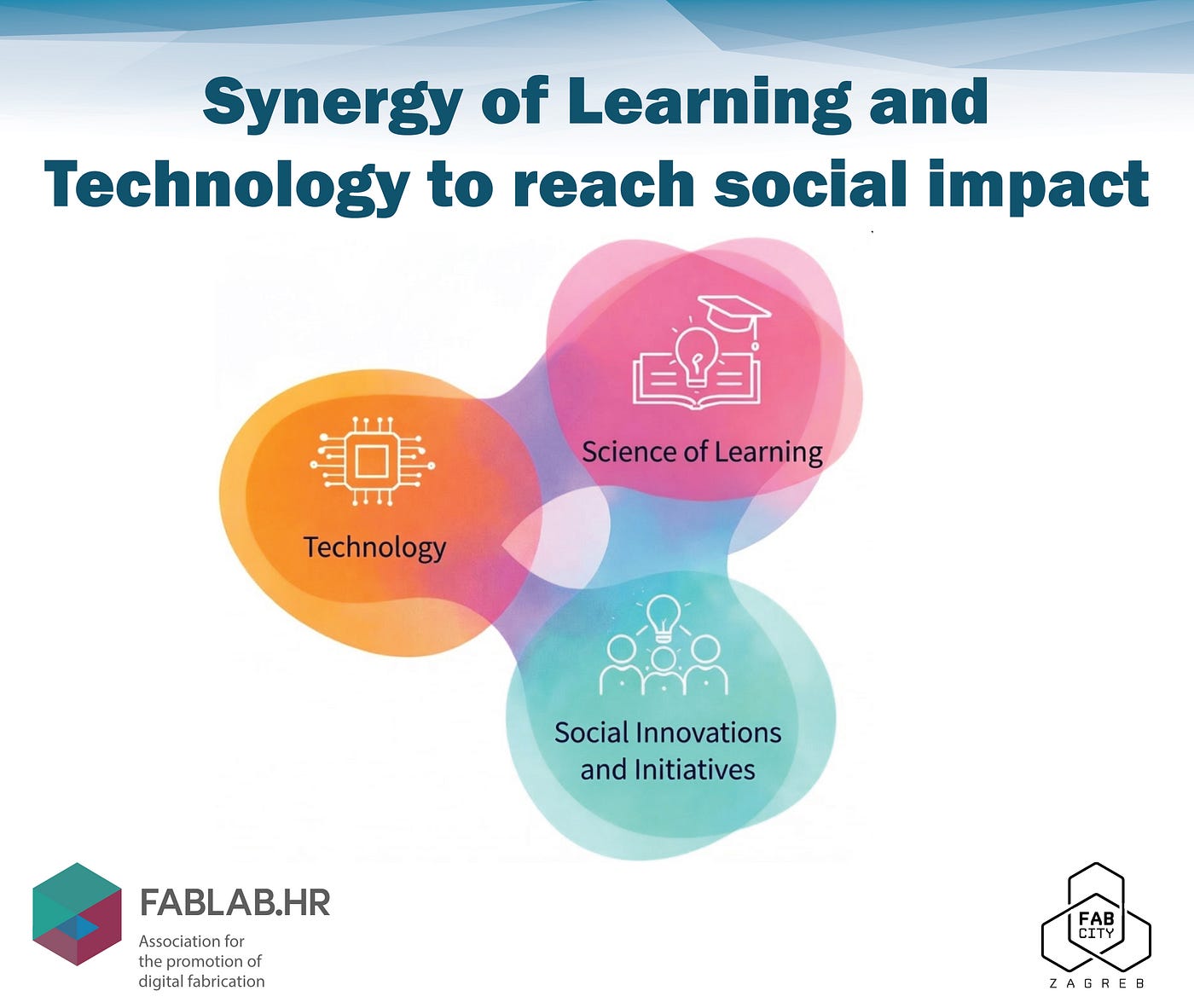
Fab City Zagreb STEAM presentation. Image: Fab City Zagreb
메타데이터
- post_id
- fbbd7ef74dc5
- slug
- fab-city-zagreb-building-local-steam-ecosystems-as-drivers-for-development-fbbd7ef74dc5
- url
- https://blog.fab.city/fab-city-zagreb-building-local-steam-ecosystems-as-drivers-for-development-fbbd7ef74dc5
- canonical_url
- https://blog.fab.city/fab-city-zagreb-building-local-steam-ecosystems-as-drivers-for-development-fbbd7ef74dc5
- author_url
- https://medium.com/@fabcityfoundation
- status
- ok
- fetched_at
- 2026-06-12 07:40:50