ESG Reporting vs Sustainability Reporting: What’s the Real Difference?
Confused about ESG reporting vs sustainability reporting? Learn the real difference, who needs each, common mistakes, and how IRQS helps…
ESG Reporting vs Sustainability Reporting: What’s the Real Difference?
Confused about ESG reporting vs sustainability reporting? Learn the real difference, who needs each, common mistakes, and how IRQS helps you report with confidence.
Two reports. Two names. Endless confusion. Here is the quick version for the busy reader.
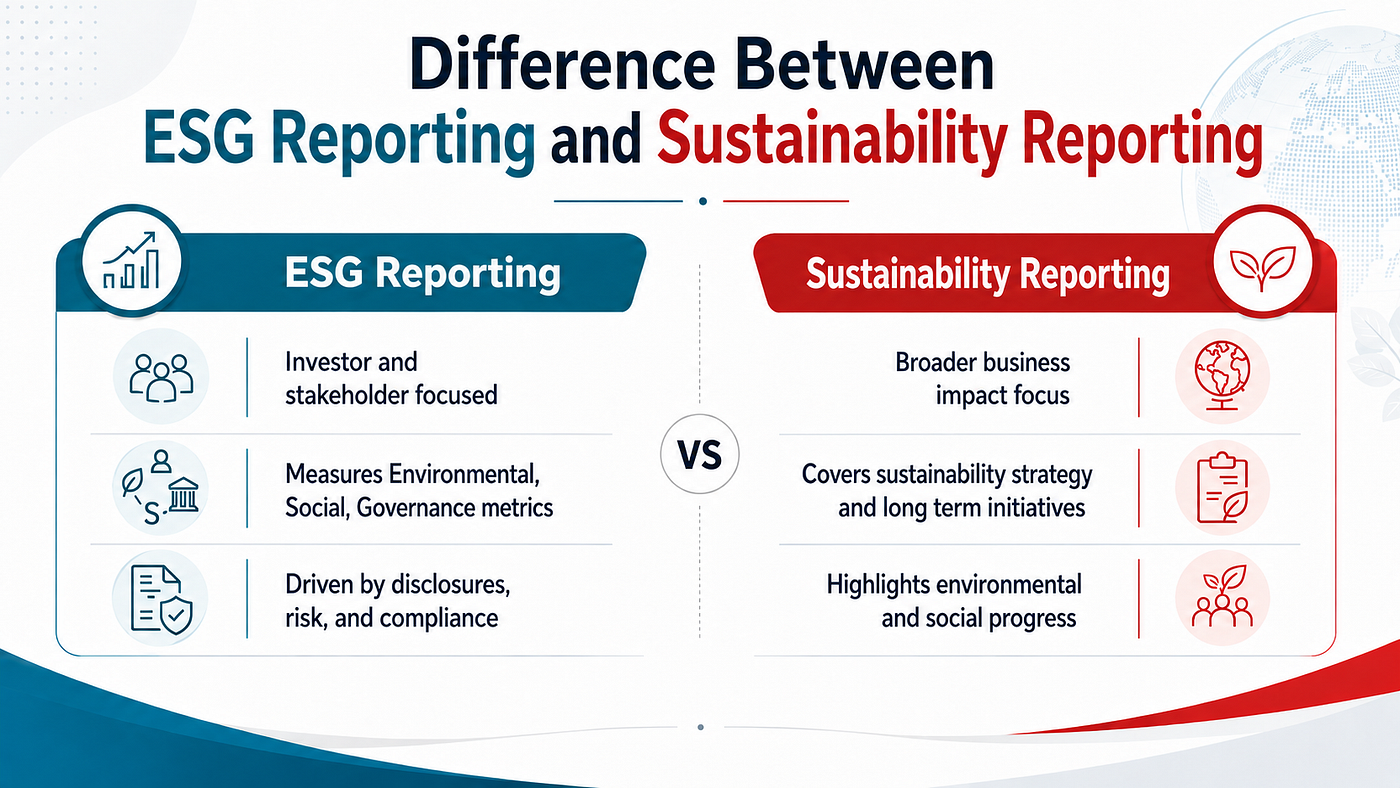
Sustainability reporting is the broad story of how your company manages its long term impact on the environment, society, and the economy. ESG reporting is the focused, data driven version that measures environmental, social, and governance performance using set frameworks, mostly for investors and regulators. Think of sustainability reporting as the wide angle view and ESG reporting as the close up with numbers.
Most businesses end up needing both. The trick is knowing which one answers which question, and who is actually reading it. This guide breaks that down in plain language, then shows how IRQS helps companies move from good intentions to credible, assured reporting.
Why Everyone Mixes These Two Up
Picture a meeting where someone says “we need a sustainability report,” another person nods and says “yes, our ESG numbers,” and a third quietly wonders if those are the same thing. Nobody asks. The confusion just rolls on.
This mix up happens for a good reason. The two overlap a lot. Both deal with non financial performance. Both talk about the environment and social impact. Both aim to build trust and show long term value. So the words get swapped around as if they mean the same thing.
They do not. And mixing them up has real costs. You can end up writing a feel good narrative when an investor wanted hard data. Or you build a compliance heavy report when your customers just wanted to know you care. The right report for the wrong audience is still the wrong report.
What Sustainability Reporting Actually Is
Sustainability reporting is the bigger picture. It covers how your business balances environmental, social, and economic systems for the long haul. The core idea is simple: meet today’s needs without robbing future generations of theirs.
These reports tend to lean qualitative. They tell the story of your commitments, your values, and the direction you are heading. Numbers show up, but the tone is often narrative and mission driven.
Common themes inside a sustainability report include:
- Investing in renewable energy
- Water and resource conservation
- Sustainable sourcing and ethical production
- Circular economy initiatives
- Long term community and environmental commitments
So what: A sustainability report shows the world your vision and your direction, mostly in your own words.
What ESG Reporting Actually Is
ESG stands for Environmental, Social, and Governance. ESG reporting takes that broad sustainability intent and turns it into measurable, comparable data. This is the report investors, banks, and regulators reach for when they want proof, not promises.
ESG reporting breaks down into three buckets:
- Environmental: carbon footprint, energy use, climate risk
- Social: labor practices, diversity and inclusion, human rights, supply chain
- Governance: board structure, business ethics, transparency
What sets ESG apart is the structure. These reports follow recognized frameworks so one company can be compared fairly against another. The usual names include:
- GRI (Global Reporting Initiative)
- SASB (Sustainability Accounting Standards Board)
- ISSB (International Sustainability Standards Board)
- TCFD (Task Force on Climate related Financial Disclosures)
The stakes here are high and rising. ESG focused institutional investment was reported soaring 84 percent to 33.9 trillion US dollars in 2026, making up 21.5 percent of assets under management, according to PwC. That is a lot of capital flowing toward companies that can prove their performance.
So what: An ESG report is your evidence file, built to a standard, aimed at people who make financial decisions.
The Core Differences at a Glance
Sometimes a side by side view clears the fog faster than paragraphs. Here is how the two compare.
Feature
Sustainability Report
ESG Report
Focus
Broad environmental and social impact stories
Financially material risks and investor grade disclosures
Audience
Public, customers, employees, NGOs
Investors, regulators, analysts
Tone
Narrative, mission driven
Data driven, compliance focused
Standards
Often GRI, UN SDGs, Integrated Reporting
SASB, TCFD, ISSB, GRI, CDP
Purpose
Showcase initiatives and values
Inform capital markets and manage risk
The pattern is clear. ESG reporting is more structured, comparable, and compliance ready. Sustainability reporting is broader and more storytelling based. One proves. The other explains.
Who Actually Cares About Which Report
This is where the difference stops being academic and starts affecting your budget. Different readers want different things.
Investors and regulators want ESG
They need data they can trust and compare. ESG reporting helps them assess risk, screen for long term financial health, and meet their own compliance duties. A warm narrative will not satisfy a credit analyst or a fund manager.
Customers, employees, and communities lean toward sustainability
They want to know the company cares and is heading somewhere good. A sustainability report tells that story in a way people connect with. It builds brand trust and culture.
Boards and leadership often need both
Leadership has to satisfy investors and the public at once. That usually means a sustainability narrative backed by solid ESG data, so the story and the numbers say the same thing.
So what: Decide who you are writing for before you write a single line. The audience picks the report.
When a Company Needs One, the Other, or Both
Timing and obligation matter as much as audience. Here is a practical way to think about it.
- You are early in your journey. A sustainability report is a fine starting point. It sets out values and direction while you build the systems to measure performance.
- You are seeking investment or capital. ESG reporting becomes essential. Investors expect structured, comparable data before they commit.
- You fall under regulation. Frameworks like the Business Responsibility and Sustainability Reporting (BRSR) requirement in India make specific disclosures mandatory, not optional. Here ESG style data is the baseline.
- You want credibility on both fronts. Mature companies run both, with a clear sustainability narrative resting on an audited ESG foundation.
The general path looks like this: companies often start with sustainability intent and CSR, then mature into structured ESG reporting as expectations and regulations grow.
Common Mistakes Businesses Make
Plenty of well meaning companies trip on the same hurdles. Spotting them early saves time, money, and reputation.
- Using the wrong report for the audience. Sending investors a glossy values story instead of measurable data is a frequent miss.
- Telling stories with no proof. Claims without numbers read as marketing. ESG data turns “we care” into “here is the evidence.”
- Ignoring frameworks. Skipping recognized standards like GRI or SASB makes your report hard to trust and impossible to compare.
- Treating reporting as a one time task. Reporting is a cycle, not a brochure. Data needs to be tracked, updated, and stood behind.
- Skipping assurance. Unverified numbers carry far less weight with investors and regulators than independently assured ones.
That last point deserves attention. Self reported data invites doubt. Assured data invites confidence. The gap between the two often decides whether a stakeholder believes you.
How to Choose the Right Reporting Path
You do not need to guess your way through this. A few clear questions point you in the right direction.
- Who is the primary reader? Public and customers lean sustainability. Investors and regulators lean ESG.
- What is driving the report? Values and brand suggest sustainability. Risk, capital, and compliance suggest ESG.
- Are you regulated? If BRSR or similar rules apply, structured ESG data is non negotiable.
- Do your story and your numbers match? If you claim diversity matters, your data should show it. Alignment builds trust.
- Can your data survive scrutiny? If you are not sure, that is a sign you need independent assurance.
Answer these honestly and the path usually picks itself. The goal is not more reporting. It is the right reporting, backed by data you can defend.
Where IRQS Fits In
Knowing the difference is step one. Building reports that hold up under investor and regulator scrutiny is the harder part, and that is exactly where IRQS helps.
IRQS works with companies to move from broad sustainability intent to credible, verified reporting. The support spans three connected areas: sustainability assurance, certification, and training. That combination matters, because a strong report needs accurate data, recognized standards, and people who know how to manage both.
Here is what makes IRQS a dependable partner:
- 30 plus years of sustainability expertise, so the guidance is grounded in real experience
- Accredited, trusted assurance and certification, which adds weight to your disclosures
- Practical, business focused solutions rather than theory that never reaches the boardroom
- Globally recognized credentials and reporting, helping your reports stand up across markets
- More than 5000 certified clients, a track record that speaks for itself
IRQS supports businesses across ESG, sustainability, BRSR reporting, carbon footprint, and assurance aligned needs. Whether you are aligning with global frameworks or preparing for India’s BRSR requirements, the role of IRQS is to give your reporting the structure and credibility stakeholders expect. In short, IRQS helps you turn good intentions into proven, assured impact.
Final Thoughts: Report With Confidence, Not Confusion
The difference between ESG reporting and sustainability reporting comes down to scope and purpose. Sustainability reporting tells the broad story of your long term impact. ESG reporting proves your performance with measurable, comparable data. Most growing companies need both, working together so the narrative and the numbers agree.
Getting this right is no longer a nice extra. Investors expect evidence, regulators expect disclosure, and customers expect honesty. The companies that report clearly and back their claims with assured data earn trust that competitors cannot fake.
If you want confidence, compliance, and credibility in your reporting, IRQS is built to help you get there. With three decades of expertise, accredited assurance, recognized credentials, and thousands of certified clients, IRQS can guide your business from sustainability intent to reporting you can stand behind. Start that conversation before your next disclosure deadline, not after.
메타데이터
- post_id
- fbc0060ee69c
- slug
- esg-reporting-vs-sustainability-reporting-whats-the-real-difference-fbc0060ee69c
- url
- https://medium.com/@samuelthomasthinks/esg-reporting-vs-sustainability-reporting-whats-the-real-difference-fbc0060ee69c
- canonical_url
- https://medium.com/@samuelthomasthinks/esg-reporting-vs-sustainability-reporting-whats-the-real-difference-fbc0060ee69c
- author_url
- https://medium.com/@samuelthomasthinks
- status
- ok
- fetched_at
- 2026-07-23 12:50:11