HALĀL IN THE ḤARAM: Why Vigilance Still Matters in the Holy Lands
Being in the blessed lands of Makkah or Madīnah does not by itself guarantee that every sandwich, slider or shawarma we eat is halāl in the…
HALĀL IN THE ḤARAMAYN: Why Vigilance Still Matters in the Holy Lands
Being in the blessed lands of Makkah or Madīnah does not by itself guarantee that every sandwich, slider or shawarma we eat is halāl in the way we believe it should be. Saudi Arabia runs a vast, modern food system: regulated, industrial, and profit-driven. In a world where everything sacred is being repackaged for sale, even the assurance of halāl demands vigilance, not blind trust.
The Assumption Versus the System
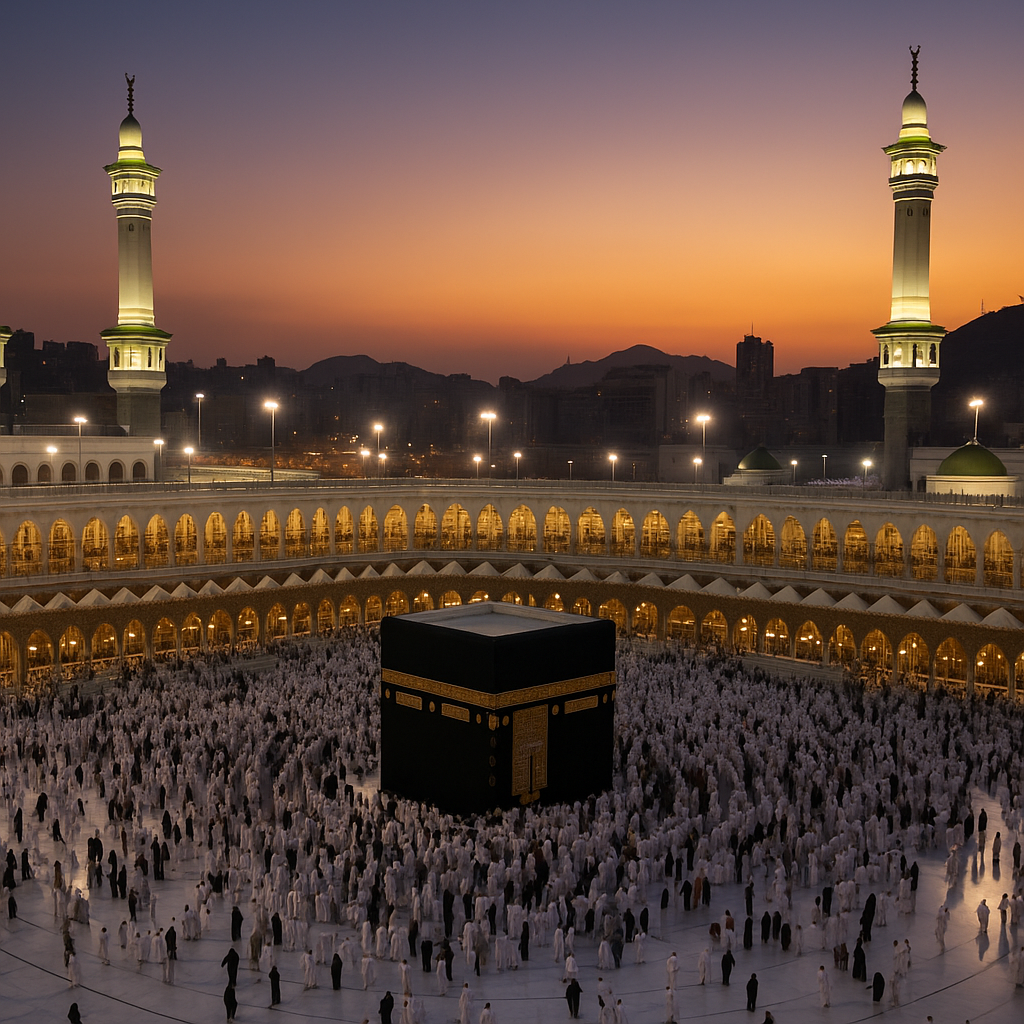
We arrived in the Two Blessed Cities with hearts at peace, anticipating what lay ahead — a journey of healing and transformation. The streets echo the wonderful adhān we so often watch on YouTube; the pilgrims circle the majestic Kaʿbah; and every person, like us, is here in this sanctity with a single objective — self-reformation. Yet the halāl system that feeds millions of pilgrims each year is not governed by sanctity — it is governed by regulation, much of which falls short under scrutiny.
During my current journey (Oct 2025), I’ve been reading on the halāl situation in Saudi, and then speaking to others involved in it, and then engaging in more reading, and what I found has left me feeling a little uncomfortable, let’s say.
The Saudi Food & Drug Authority (SFDA) and its Halāl Centre certify and monitor the process by which imported meat and poultry enter the Kingdom. Each shipment must be accompanied by an approved certificate from a recognised foreign body.¹ That is a commendable step for traceability, but not a guarantee of perfection, particularly when standards differ from country to country, and from one halāl board to another.
Halāl certification, in Saudi or abroad, even for us in the UK, is a process, not just a promise. It can meet regulatory thresholds and still fall short of the ethical and religious depth many believers seek: hand-slaughter, the tasmiyah, the mercy of the act itself.
Imported Meat and Poultry: What’s Really Coming In?
Saudi Arabia relies heavily on imports of poultry, beef and processed meat. The leading supplier is Brazil and other South American countries, which has become the world’s largest exporter of so-called “halāl” meat.² ³ Yet senior Muftis and Islamic researchers have long raised concerns about weak supervision and commercialised certification systems in those very markets.⁴ Like in the European halāl market, South America is becoming a massive player in the Arab world, only to the detriment of this Ummah.
When global supply chains dominate, the room for moral shortcuts grows. Every food outlet is now obliged to present its meat sources, however, some will hide this information from customers, no doubt because the reality would turn sincere pilgrims away. Chains whose workers I spoke to and whose paperwork I perused over, such as Pizza Hut, Kudu and KFC, appear to source much of their meat and poultry from South America and Europe, through these import-based systems. That is not a claim of impermissibility, but a reminder that even in the most sacred of lands, due diligence is not optional.
Hand-Slaughter vs Machine-Slaughter: The Practical Reality
The traditional understanding of halāl according to the vast majority of the Ummah is personal: a Muslim’s hand, a du’a taking Allah’s name, and a clean, merciful cut of at least 3 of the 4 arteries and vessels. Machine slaughter, accompanied by the du’a repeated on a machine, or with Allah’s name written on the blade, does not fulfil the conditions of halāl slaughter.
But the Gulf Standard GSO 993 allows mechanised slaughtering systems for poultry, provided conditions are met — correct vessels cut, the bird alive, and tasmiyah recited.⁵ Industrial plants processing tens of thousands of birds per hour cannot function otherwise. Review papers on halal compliance stress that while stunning may be “reversible,” errors in mechanised systems remain possible.⁶
For many Muslims, that grey zone created by stunning and mechanised slaughter is enough reason for caution.
The Myth of Infallible Intentions
We must be honest: assuming that Saudi authorities or corporations always prioritise the spiritual welfare of the Ummah over economic ambition is naïve. The state has pursued an open vision of modernisation: promoting mass tourism, entertainment festivals and commercial spectacles once unthinkable in the sacred Arab lands.
These developments are presented as progress, yet for many Muslims they mark a quiet de-sanctification of what should remain holy ground. When the sacred is blended with spectacle, when the Kaʿbah’s skyline is framed by luxury towers and promised cinemas, we are reminded that profit does not always bow to piety.
I don’t expect boycotts, or any form of hostility or rebellion — I simply wish to call for realism. As believers, we judge systems by their adherence to divine principles, not by geography or prestige. The Qur’an cautions us: “And do not let the hatred (or the love) of a people prevent you from justice.” (5:8)
If theft, deceit and negligence can occur in the Ḥaram itself, and those responsible for it can be accused of the worst crimes, then how much more must we ensure our halāl is truly halāl? Reverence for the land must never blind us to the fallibility of its institutions.
Why Halāl Vigilance Matters
Our Dīn anchors purity of consumption to purity of heart:
“O mankind, eat of what is lawful (halāl) and good (ṭayyib) on the earth, and do not follow the footsteps of Shayṭān.” (Qur’an 2:168)
“O Messengers, eat from the good things and do righteous deeds.”
- *(Qur’an 23:51)
“Eat of what Allah has provided for you, lawful and good, and be mindful of Allah in whom you believe.”
- *(Qur’an 5:88)
The Prophet ﷺ said: “Allah is Pure and accepts only that which is pure.” (Ṣaḥīḥ Muslim 1015)
And: “Leave what makes you doubt for what does not make you doubt.” (Tirmidhī 2518)
Eating halāl is not just a ritual — it is a moral discipline. When the great companion Sa’d ibn Abi Waqqas radhi-Allahu anhu asked for a ‘life hack’ to have his du’as answered, he was told, “purify your food, your calls will be answered”. In an age of mass production and marketing, the believer’s duty is not to assume, but to ask.
Imagine visiting the Haramayn and saving up your du’as, only to be rejected because of our lack of self-discipline when it comes to what we put in our stomachs. As a wise man once told me, ‘if you cannot control your stomach, how do you intend to control your nafs?’
Practical Guidance for those visiting the Haramayn
- Ask: “Is this meat locally-slaughtered (watani/ baladi) or imported (mustawrad/ min al-khārij) ?” If imported, confirm that its certifier is recognised by the SFDA.⁷
- Ask: “Is it hand-slaughtered or machine-slaughtered? Is any stunning used?” The answer matters.
- Check hotel and buffet sources. If unclear, prefer vegetarian or seafood dishes.
- Be courteous but firm. When consumers ask, suppliers respond.
- Remember: holiness of place does not erase human error. Your caution is an act of īmān, not distrust.
What Now?
Assuming halāl by location is a comfort, but not a guarantee. Saudi Arabia is blessed to host the world’s holiest lands, but the modern state and the corporations within are driven by the same economic and political forces that govern everywhere else. We can honour the Ḥaram while recognising that for most big businesses, it is a case of profit over people, and more concerningly, profit over piety. If it really is a worst case scenario — you will survive as a vegetarian for a couple of weeks!
Knowing the lack of due diligence, poor processes, and blatant corruption in the global halāl food trade, we cannot sit back and allow our children to put fire in their bellies. If we learn to ask gently, to choose consciously, and to eat with awareness, then the sanctity of Makkah and Madīnah will live within us, and maybe, just maybe, our du’as will be answered and our hearts will be reformed.
Footnotes
- Saudi Food & Drug Authority (SFDA), Halal | The official website of the Saudi Food & Drug Authority, 2025.
- Bridging Markets: The Flourishing Brazil–GCC Halal Partnership, Salaam Gateway.
- Where Halal Food Comes From: Brazil — World’s Top Meat Exporter, Newsweek.
- Brazil is the World’s Largest Exporter of Halal Meat — Here’s Why That’s a Problem, Green Islam.
- GSO 993 — Animal Slaughtering Requirements According to Islamic Rules, Gulf Standardization Organization.
- Halal Compliance and Requirements — The Big Issue?, Campden BRI.
- Recognised Foreign Halal Certification Bodies, Saudi Halal Center (SFDA).
메타데이터
- post_id
- fbc5ac4e7240
- slug
- halāl-in-the-ḥaram-why-vigilance-still-matters-in-the-holy-lands-fbc5ac4e7240
- url
- https://medium.com/@AbuSulaym/hal%C4%81l-in-the-%E1%B8%A5aram-why-vigilance-still-matters-in-the-holy-lands-fbc5ac4e7240
- canonical_url
- https://medium.com/@AbuSulaym/hal%C4%81l-in-the-%E1%B8%A5aram-why-vigilance-still-matters-in-the-holy-lands-fbc5ac4e7240
- author_url
- https://medium.com/@AbuSulaym
- status
- ok
- fetched_at
- 2026-06-24 04:09:36


