Strong anchors + weak weaving: a two-boundary SYK / GJW-inspired protocol for traversable wormholes…
I explored a simple conceptual split:
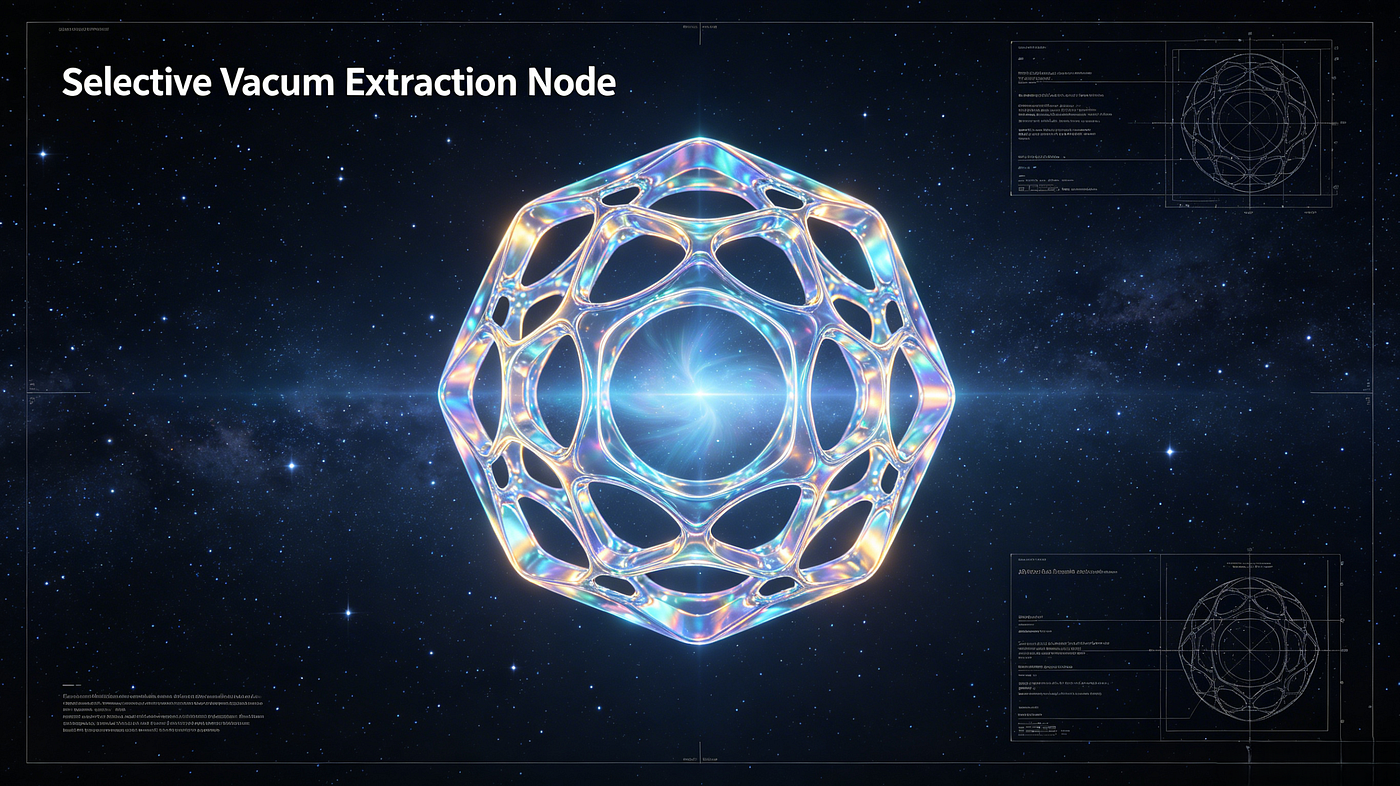
Strong anchors + weak weaving: a two-boundary SYK / GJW-inspired protocol for traversable wormholes (toy model)

I explored a simple conceptual split:
- Strong entanglement → “anchors” that primarily fix the geometry of the two ends
- Weak entanglement → “weaving” that controls the connectivity of the throat
I mapped this onto a two-boundary SYK model with a Gao–Jafferis–Wall (GJW)-type coupling and checked it with exact diagonalization (N=4 Majorana per side). The results are consistent with the expected behavior of a weakly coupled traversable wormhole in the AdS₂/JT limit. This is strictly a toy model.
Motivation
ER=EPR (Maldacena & Susskind, 2013) tells us that entanglement is dual to a non-traversable Einstein–Rosen bridge. Traversability requires an effective negative-energy injection. Gao, Jafferis & Wall (2017) showed that a carefully chosen double-trace deformation between the two boundaries can produce such a negative-energy shockwave in the bulk.
I asked whether one can separate the roles of entanglement more cleanly:
- Strong, local entanglement mainly sets the geometry of the two “mouths” (anchors).
- Weaker, cross-boundary entanglement mainly controls the connectivity and traversability of the throat (weaving).
Model
Two-boundary SYK Hamiltonian (Kitaev 2015; Sachdev & Ye 1993):

(which corresponds to a double-trace deformation in the boundary CFT, following the GJW protocol). μ is the weak-weaving strength.
- μ=0 : two independent thermal systems connected by a non-traversable ER bridge.
- Small μ>0 : negative-energy shockwave opens a temporary throat → signal can cross.
- Large μ : the two systems thermalize into a single state; the geometric notion of a wormhole disappears.
Numerical check (exact diagonalization)
I constructed the eight Majorana operators via Pauli strings on a 16-dimensional Hilbert space and computed the infinite-temperature cross-boundary correlator

Quantum-simulation sketch (NISQ)
- Prepare an approximate thermofield-double state (strong anchors).
- Encode a qubit state on the left boundary.
- Evolve under a Trotterized version of Hweak Hweak (cross-boundary XX/YY-type gates).
- Decode on the right boundary and measure fidelity.
A useful experimental fingerprint: the sign of μ . Positive μ \mu μ should enhance the signal (negative-energy shockwave); negative μ \mu μ should suppress it further. Ordinary gate noise is usually sign-insensitive.
Important limitations
- This is a 0+1D toy model in the AdS₂/JT limit.
- Macroscopic traversable wormholes still require macroscopic amounts of negative energy; GJW only provides an effective negative-energy shockwave in the bulk dual.
- Our universe is de Sitter, not anti-de Sitter. Extending the construction to dS is non-trivial.
- Exact diagonalization is limited to very small N.
- Decoherence and gate errors will swamp the signal unless careful error mitigation and the sign-sensitivity test are used.
- Nothing here claims that we can build a macroscopic wormhole in the laboratory.
Open questions
- Can one make the weak-weaving term more realistic (e.g., only a few cross terms)?
- How does the critical μc \mu_c μc scale with N?
- Is there a clean tensor-network / MERA picture of the strong-anchor + weak-weaving split?
- What is the best way to diagnose “geometric” versus “purely quantum-information” effects on a real quantum processor?
I’m posting this mainly to get criticism. Constructive comments, references I missed, or suggestions for cleaner numerics/circuits are very welcome.
(If anyone wants the small-N ED script or a more detailed circuit sketch, just ask.)
메타데이터
- post_id
- fbcd191e3d88
- slug
- strong-anchors-weak-weaving-a-two-boundary-syk-gjw-inspired-protocol-for-traversable-wormholes-fbcd191e3d88
- url
- https://medium.com/@Dimension-Zero/strong-anchors-weak-weaving-a-two-boundary-syk-gjw-inspired-protocol-for-traversable-wormholes-fbcd191e3d88
- canonical_url
- https://medium.com/@Dimension-Zero/strong-anchors-weak-weaving-a-two-boundary-syk-gjw-inspired-protocol-for-traversable-wormholes-fbcd191e3d88
- author_url
- https://medium.com/@Dimension-Zero
- status
- ok
- fetched_at
- 2026-09-13 00:27:29