The phygital paradox
Or maximalism for the physical and minimalism for the digital.
The phygital paradox
Or maximalism for the physical and minimalism for the digital.
For years, the digital and physical worlds coexisted, with social media, virtual reality, and other digital platforms becoming increasingly prevalent. However, a significant shift has occurred in how consumers interact with their surroundings. Previously, the phygital world, a blend of physical and digital experiences, served as an extension of one another, with digital platforms often acting as an escape from the physical world due to their convenience and accessibility.
But now, the digital and physical worlds are serving distinct purposes. With growing concerns over transparency, information overload, and digital fatigue, a substantial portion of the population has begun to view digital platforms not as an “escape”, but as a tool to enhance and facilitate their lives. Nothing more than that, just a means to an end. This shift marks a new era in human interaction, where digital and physical experiences are no longer interchangeable but rather complementary, with clear objectives and boundaries.

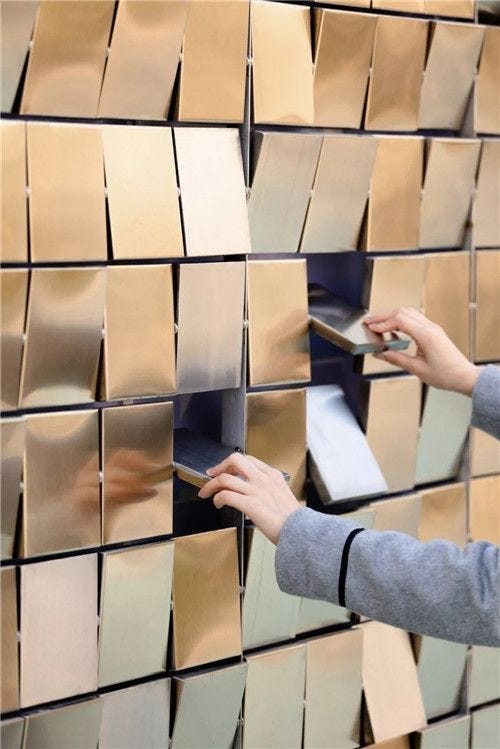
Kinetic panels on a store to promote physical interaction.
The “desire” for earthly experiences
Because of this, the traditional minimalism that once dominated product design and architecture is giving way to a new preference for rich, tactile experiences. Most consumers prefer a down-to-earth physical experience. Whether it’s a maximalist approach or subtle accents, the goal is to evoke emotions and create a sense of depth. Even if a product has a “clean cut” appearance, it can use a rich textured material.
But not only interiors, the need to touch, to feel and express can be seen in what consumers buy. We have digital applications for music, writing and drawing, but the tactile tools connect us to the world, improving our creativity. We want a physical world where we can escape and be ourselves, for most, the digital alter ego now feels somewhat “empty”, with a lack of meaningful connection.
This desire for tactile experience extends far beyond interior design. The resurgence of tangible products, with a certain level of craftsmanship and attention to detail, such as pens or journaling equipment. Take vinyl records, despite having access to convenient digital alternatives, people are seeking out tools that allow them to express themselves and tap into their creativity. Thus, the vinyl plates are not just tools, but they are designed to show a type of personality, using material associated with craftsmanship (wood, textured glass, alloy components, etc).

Journaling as a hobby has been popular for a while. It is a “me” time of self-expression where we can enjoy the simple experience of writing. Photo Alina Vilchenko
What about digital?
The less is more dogma for physical jumped to the digital world. People want technology to be a tool. They search for a digital detox, using technology for just the bare minimum. The trend of the “dumb” phones is a clear example of it. Consumers want a phone that does the classical functions, with just some apps for mobility and communication (WhatsApp, Uber, maps, Spotify, etc). Some technological startup brands are even tapping into the idea of bringing a physical keyboard to phones (hello Blackberry!). Reddit and some other forums are full of threads advising on how to “dumbify” your smartphone. Why? Because of the lack of alternatives to everyday phones.

Minimal Phone with keyboard and just some apps with a simple interface. Source Minimal Company
It is worth noting that there is a trend that is coming strong. “EDC (Every Day Carry)”, where people share what they use every day for slow living. The vast majority of EDC setups that people share are associated with a digital detox.

Some people have two phones. One smart for work and “dumb” one for personal use. Others even prefer to go back to the mp3 era. Source Reddit.
How can brands seize the opportunity presented by this trend?
To truly stand out and leave a lasting impression, move beyond the ordinary promotional items like water bottles, tote bags, and cheap pens. Instead, craft a unique brand experience that touches your audience on a deeper multisensorial level. Associate your brand with a sensory experience that sparks emotions and creates memories. What about a signature tea blend that reflects your values, or custom ink cartridges in your brand’s colours that ignite creativity? Envision a distinctive scent that becomes your brand’s signature, evoking recognition wherever it’s encountered as candles or bespoke parfum samples. Activate the senses of smell, taste, or touch to create an immersive and unforgettable brand encounter. In doing so, you’ll not only differentiate your brand but also forge a powerful emotional connection.

Crazy idea. Hire a barman, create a signature cocktail recipe that embodies your brand. Give the kit to create it at home. Connect with a sensorial experience, not another “water bottle”. Source Pexels
What about consumer goods and electronics?
In the case of furniture, retail and home decoration, it is easy. Go full wild, or just a bit. What I mean is that you can go full maximalism and excess “with a taste”. Or use a neutral palette, but make sure to enrich everything with a tactile texture or colour accents. For example, if you want a neutral colour for a cotton chair, make sure the fabric has some remarkable texture and/or combine it with some flashy colours to make it livelier.
In the case of consumer electronics or goods. If you want to craft a seamless phygital experience, make sure that your physical product offers visual and tactile richness and, this is important, the digital application that is associated with it, just has as less extra functions as possible. You should give priority to “all information in one visual sweep”. Less is more, does not apply only to the web/app aesthetics, but also to the functionality. If my headphones app just has an equaliser, an on/off button and a how-to manage phone connection. That is enough for most consumers, believe me. UX/UI should not be overbearing with tons of extra functions that will be used a few times, if at all.

Most headphone functions can be controlled with the smart touch on the headphones themselves. No need to use an app. Photo de Karol D
And this is why CMF design can help .
I know this may be a bit too much information, but I believe this trend has come to stay for several years. Thus, the importance of CMF design because is a discipline that studies how to convey precisely these “physical emotions”. Do not worry. I will, in future articles, delve further into how a CMF strategy could bring this experience to life.
Feel free to drop me some lines if you would like.
메타데이터
- post_id
- fbcd3907f1ad
- slug
- the-phygital-paradox-fbcd3907f1ad
- url
- https://medium.com/@ncortizas_designer/the-phygital-paradox-fbcd3907f1ad
- canonical_url
- https://medium.com/@ncortizas_designer/the-phygital-paradox-fbcd3907f1ad
- author_url
- https://medium.com/@ncortizas_designer
- status
- ok
- fetched_at
- 2026-07-16 06:57:17