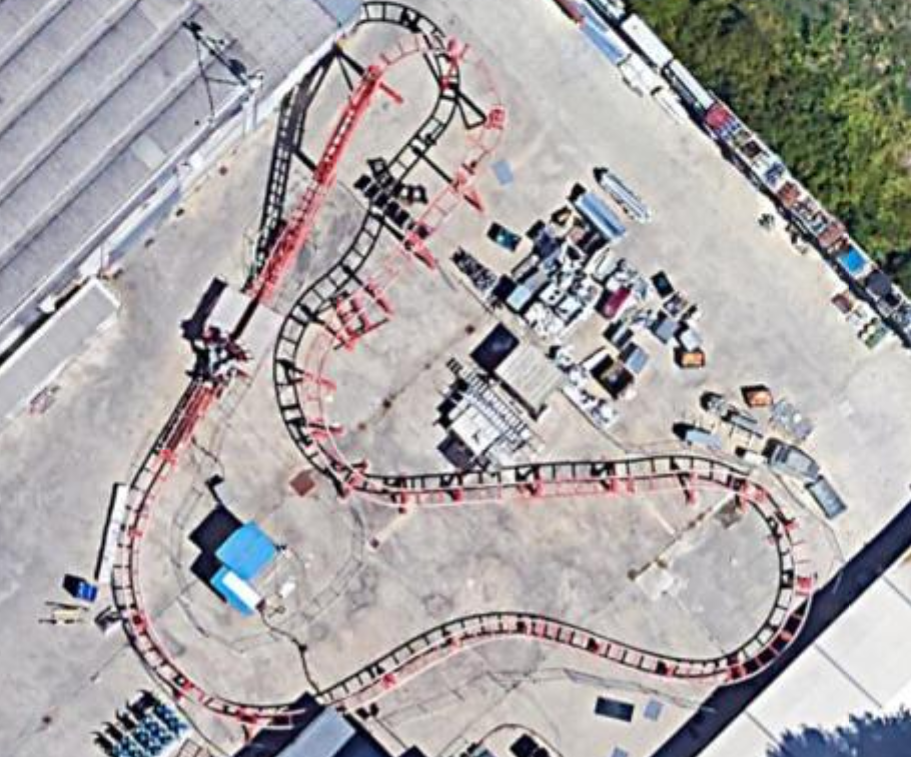
The Attraction Portfolio
15 experiences, one argument
The Attraction Portfolio
15 experiences, one argument

The previous chapter presented the park’s seven zones: what story each one tells, what the visitor feels walking through them, and why they are designed the way they are. It was a chapter about narrative and philosophy.
This one is a chapter about engineering.
Attractions are not selected from a catalogue — you do not browse a manufacturer’s PDF and pick what looks appealing. They are selected by narrative function and by CPH (capacity per hour). An attraction that does not fit the story of its zone is noise. An attraction that fits but cannot absorb demand creates a queue that ruins the experience of the entire zone.
This chapter presents the 15 experiences of Phase 1, the logic behind each one, and the analysis of whether the whole can absorb the visitors the model projects.
Part I: The selection principles
CPH as a design criterion, not an engineering one
CPH (visitors per hour that an attraction can process) is not just a technical figure. It is a design decision with consequences for the experience.
An attraction with a CPH of 300 in a high-footfall zone creates two-hour queues that degrade the perception of the entire park — not just that attraction. An attraction with a CPH of 1,500 in a low-footfall zone is wasted capacity.
The correct design distributes high-CPH attractions along the route — never concentrated at the same point — and places low-CPH attractions in zones where visitors will arrive in dispersed flow, not in an opening rush.
Audience balance
A regional theme park has three distinct audiences who must find content on every visit:
- Adults without children: seeking narrative and emotional intensity, physically more demanding attractions, unique experiences
- Families with older children (6–12): seeking variety, combining moderate adrenaline with shared moments
- Families with young children (0–6) and grandparents: needing height-restriction-free attractions, sensory experiences, slower pace
A park that does not cover all three profiles loses complete family visits: if grandparents have nothing to do while parents are on the roller coaster, the family does not come back.
The anchor
Every park has one attraction that defines the identity of the whole. It is the one that appears in the brochures, the one visitors describe to their friends, the one that justifies the trip. In this project that attraction is clear: the dark ride in the industrial zone, themed around Asturian mining, with a robotic arm as its movement system.
Nothing comparable exists in Spain with this narrative. That does not guarantee success — but it does guarantee singularity, which is the first requirement for generating the desire to visit.
Part II: The attractions
Tier A — The anchors (3 attractions)
The three highest-capacity, highest-investment attractions. Distributed along the route to prevent concentration and to give visitors a reason to keep moving through every third of the park.
El Pozu (industrial zone) Dark ride with an industrial robotic arm. First-person immersion in a mining shift: the descent, the work, the danger, the rescue, the community that fights. Queue themed as a mine gallery — changing rooms, tools, simulated cage descent. CPH: 1,200. Estimated investment: €22–28M.

The most singular attraction in the park and its emotional anchor. Robotic arm technology allows completely free movement in a contained space — each cycle can be different, which generates repeatability. Repeat visitors look for variations they missed on their first visit.
Sobre Asturies (forest zone) 300-seat flying theater. Simulated flight over Asturias — the coast, the Picos de Europa, the valleys, the estuaries. This is not a tourist flyover: it has a story, a narrative arc, a reason. The visitor “leaves” the park toward the surrounding region and returns with a different perspective. CPH: 1,350. Estimated investment: €18–25M.

The highest capacity in the park, placed in the first third of the route to absorb the opening rush before it distributes. Suitable for all audiences with no height restriction — it is the attraction for grandparents, young children and adults with vertigo.
El Vendaval (prehistoric zone) Launched coaster themed around the Nuberu, the Asturian god of storms and wind. The launch mechanism is the concept: before the train departs, visitors spend 30–45 seconds in a pressure chamber with real wind generated by industrial fans. The air grows in intensity. The temperature shifts — from warm and oppressive to sudden cold, like an Atlantic front arriving. The launch comes once you have already felt the storm from the inside.

To our knowledge, this is the first roller coaster in the world with a launch pressure chamber. The concept has its own narrative logic: the Nuberu travels on air currents, and so does the train. The ride continues with onboard audio that distinguishes wind types by section — mountain wind, Atlantic gale, full storm, calm after the storm — synchronised with air temperature and the lighting of each section. CPH: 1,100. Estimated investment: €15–22M.
Tier B — Main attractions (5 attractions)
O Sella (prehistoric zone) River adventure ride in an elongated boat — not a circular raft, but a linear craft that follows the river. Direct reference to the International Descenso del Sella: river bank recreated with Asturian fauna and vegetation, festival atmosphere, getting wet as part of the contract. CPH: 900. Estimated investment: €8–12M.

The most effective attraction on warm days. Water visible from a distance acts as a natural signpost — visitors locate it without a map and adjust their route based on the heat of the day. The ride has two seasonal versions without structural changes: the summer version recreates the atmosphere of the Descenso with spectators and celebration; the autumn version travels the river in its natural state, fallen leaves and silence.
La Güestia (forest zone — integrated into the natural environment) Slow dark ride, continuous vehicle, tone somewhere between melancholic and unsettling. La Güestia is the procession of restless souls from Asturian folklore. The attraction has a three-act structure: the visitor begins as an observer, continues as a follower, and in the final scene discovers they have been part of the procession for some time. High visual and sound density, no jump scares — the model is Efteling, not Halloween horror. CPH: 700. Estimated investment: €10–16M.
The lowest CPH in Tier B, but the attraction justifies the narrative investment of the entire zone. It is the most “European” attraction in the park by concept, and the one that most clearly signals the project’s ambition: not an adrenaline park, but an experience park. During the Noche de les Ánimes — the Asturian equivalent of Halloween — this attraction is the centrepiece of all the park’s special programming.
El Castru (prehistoric zone) Family coaster of medium-low intensity, suitable from approximately 1.10m. Themed around Asturian hillforts — the ride “assaults” the pre-Roman settlement. Bridge attraction between the junior and adult audience. CPH: 950. Estimated investment: €5–8M.
La Ferrería (industrial zone) Spinning dark ride (freely rotating vehicles) through a traditional Asturian forge. The vehicle’s rotation is narratively justified by the gears and machinery. The family attraction in the industrial zone — necessary to balance the emotional intensity of the main dark ride. CPH: 800. Estimated investment: €6–10M.
Cine Asturies (contemporary zone) 200-seat 4D cinema with an independent exterior entrance. The programme rotates — it is not a fixed attraction, it is a content platform that can be updated without structural investment. School groups, events, screenings outside park hours. CPH: 800. Estimated investment: €5–8M.
Tier C — Complementary attractions (5 attractions)
El Carru (arrival plaza) Large double-deck carousel, 56 places, decoration inspired by Asturian folk tradition. Located in the entrance plaza — the first thing a child sees on arrival. CPH: 750. Investment: €1.5–3M.
The carousel is the iconic attraction of any park with identity. Its position at the entrance is not accidental: it acts as the first visual desire point and as an emotional anchor for families with young children.
La Ruta del Tratante (contemporary zone) Bumper cars on a narrative route through an Asturian village recreated at reduced scale. The tratante was the travelling merchant who went from village to village. Collision is not the objective — discovering the village is. CPH: 130. Mandatory Virtual Queue required. Investment: €3–5M.
The low CPH is the price of a format that prioritises experience over throughput. Managed with Virtual Queue to prevent a physical queue from forming.
Xanines (forest zone) Junior attraction themed around xaninas — the small xanas of Asturian folklore. For the youngest visitors in the nature and mythology zone. CPH: 400. Investment: €1–2M.
Txarru (prehistoric zone) Junior coaster or slow vehicles themed with Asturian forest animals — bears, deer, wolves. Many children’s first roller coaster. CPH: 380. Investment: €1–2M.
El Esbardu (industrial zone) Drop tower themed as the mine cage — the platform that carried miners to the bottom. The drop is the descent. The ascent is the return to the surface. Narratively coherent with the zone. CPH: 500. Investment: €3–5M. Status: pending confirmation as Phase 1 or Phase 2.
Shows (2)
La Danza del Fueu (medieval zone) Main park show. 450 seats, covered venue, 5 daily sessions. Live bagpipes, dance, narration of Asturian history. The pipers are professionals from local bands on rotation. 2,250 visitors/day. Investment: €8–14M.
Los Seres del Monte (forest zone — semi-open space integrated into the natural environment) Intimate show, 280 seats, 6 daily sessions. The universe of Asturian mythological beings — the Xana, the Cuélebre, the Trasgu, the Nuberu. Format close to street theatre with effects integrated into the natural environment. 1,680 visitors/day. Investment: €3–6M.
Flat rides — Tier D (capacity complementaries)
Four attractions that close the CPH gap and cover zones with limited mechanical content. They do not replace the narrative attractions — they complement them.
Attraction Zone Type CPH Investment La Atalaya Medieval 35m swing tower 650 €2.5–4M El Visu Forest Balloon / observation tower 300 €1–2.5M El Carrilet Perimeter Tourist train 700 €1.5–3M El Péndulo del Nuberu Prehistoric Pendulum (conditional) 450 €2–3.5M
La Atalaya resolves the lack of mechanical content in the medieval zone without requiring a full anchor investment. El Visu is the attraction with no age or height restriction — suitable for grandparents and families with babies, a segment the rest of the portfolio cannot serve. El Carrilet is not a thrill attraction: it is an experience infrastructure that increases dwell time for families with young children.
Part III: Capacity analysis
Aggregate CPH vs. target
The project’s peak demand is 15,000 visitors on the worst day of the year. To handle them without unsustainable queues, the park’s total CPH must exceed 11,620 PPH (based on 15,000 visitors × effective usage rate).
Tier A (3 anchors):                  3,650 PPH
Tier B (5 attractions):              4,000 PPH
Tier C (5 complementary):            2,810 PPH
Shows (daily capacity):              3,930 vis/day
Tier D excl. El Péndulo (3 flats):   1,650 PPH
─────────────────────────────────────────────
Total CPH (excl. El Péndulo):       12,110 PPH
Target:                             11,620 PPH
Surplus:                              +490 PPH  (~4%)
The portfolio exceeds the throughput target with a 4% margin. Sufficient to absorb operational contingencies: an attraction in maintenance, a longer-than-expected queue on a hot day, a show cancelled for rain.
The margin is not generous — this is not an oversized park. It is precisely what the demand model requires.
Distribution by zone
Validation is not just the aggregate total — it is the distribution. If all the CPH is concentrated in two zones, the park creates bottlenecks even if the total number is correct.
Arrival plaza:       750 PPH   (El Carru)
Forest:            1,950 PPH   (Flying Theater + La Güestia + Xanines + El Visu)
Prehistoric:       3,330 PPH   (El Vendaval + O Sella + El Castru + Txarru)
Medieval:          2,900 vis/day show + 650 PPH La Atalaya
Industrial:        2,500 PPH   (El Pozu + La Ferrería + El Esbardu)
Contemporary:        930 PPH   (Cine Asturies + La Ruta del Tratante)
Perimeter:           700 PPH   (El Carrilet)
The forest and contemporary zones are the lightest in mechanical CPH. This is coherent with their function: the forest is an immersion and walking zone, not an attractions zone; the contemporary zone is a closing zone, not a demand concentration point. The prehistoric and industrial zones absorb the bulk of high-intensity flow.
Part IV: Attraction CAPEX
Tier A (3 attractions):         €55–75M
Tier B (5 attractions):         €34–54M
Tier C (5 attractions):         €10–17M
Shows (2):                      €11–20M
Tier D excl. El Péndulo (3):     €5–10M  (estimate)
──────────────────────────────────────────
Total Phase 1 attractions:     €115–176M
Financial model allocation:    €100–160M
The complete portfolio with flat rides pushes slightly above the high end of the financial model in its upper range. The deviation is approximately 10% — absorbable within the 12% contingency already included in total CAPEX, or partially deferrable by pushing El Esbardu or El Péndulo del Nuberu to Phase 2.
The decisions still open
The portfolio is structured, but four decisions affect the final design and are not yet closed:
El Esbardu: Phase 1 or Phase 2? The drop tower adds useful CPH in the industrial zone and is narratively coherent, but is not essential to meet the throughput target. If adjusted CAPEX requires it, it is the first candidate to defer.
El Péndulo del Nuberu: conditional from the outset. It only enters Phase 1 if visitor profile analysis confirms adrenaline demand not covered by El Vendaval and El Esbardu. For now, out.
The names: several current names are provisional. El Vendaval, La Ruta del Tratante, Xanines and Txarru need a criteria review before they are definitive. Names in Asturian have strength, but only when they are the best option for each case — not as a systematic rule.
The mythology zone: in the original scheme it existed as its own zone. In the updated design, mythology is distributed along the forest and the river. La Güestia, Los Seres del Monte and Xanines relocate to the forest zone. This decision has implications for visitor flow — three attractions that were previously grouped are now distributed, which reduces demand concentration at that point but also reduces the thematic coherence of the forest zone.
What these numbers say
Two clear conclusions from the portfolio analysis.
The project has a singular emotional anchor. The industrial zone dark ride has no equivalent in Spain. That does not guarantee success, but it guarantees the reason for an initial visit — the necessary condition for the financial model’s demand curve to materialise.
The audience balance is correct but tight at the junior end. Txarru and Xanines cover the under-1.10m segment, but both are in the same section of the route (prehistoric zone and forest). A family with a young child and a teenager has to split up in the industrial zone and part of the medieval zone. That is a tension that operations design must manage — clear signage, waiting areas with services, and La Atalaya as a low-threshold attraction in the zone where that separation is most likely to occur.
The next chapter shifts register again. We have talked about engineering, economics and attraction design. Now it is time for the water: the indoor water park, why it is part of the project from Phase 1, and how you design an indoor water park that works 365 days a year in northern Spain.
This series examines the feasibility of a theme park in Asturias from scratch, using the same tools that would apply to a real project. The models are estimates; the conclusions are for the reader to draw.
Published in **Ride Intelligence** — theme park analysis: engineering, capacity, economics.
Published chapters:
- Chapter 1 — Could Asturias Have the Best Theme Park in Spain?
- Chapter 2 — Where to Build It
- Chapter 3 — What Kind of Park Should This Be
- Chapter 4 — The Worst Day of the Year
- Chapter 5 — The Stress Test
- Chapter 6 — The Global Stress Test
- Chapter 7 — The Price of the Dream · ES
- Chapter 8 — The Year Two Trap · ES
- Chapter 9 — What’s Inside · ES
- Chapter 10 — The Attraction Portfolio (this article) ·
메타데이터
- post_id
- fbd64c4cc5d4
- slug
- the-attraction-portfolio-fbd64c4cc5d4
- url
- https://medium.com/ride-intelligence/the-attraction-portfolio-fbd64c4cc5d4
- canonical_url
- https://medium.com/ride-intelligence/the-attraction-portfolio-fbd64c4cc5d4
- author_url
- https://medium.com/@lluisabg
- status
- ok
- fetched_at
- 2026-06-14 11:28:49