Banks Are About to Get Away With Stealing Again
The CFPB shutdown means consumer protection laws stay on the books but stop being enforced
Banks Are About to Get Away With Stealing Again
The CFPB shutdown means consumer protection laws stay on the books but stop being enforced
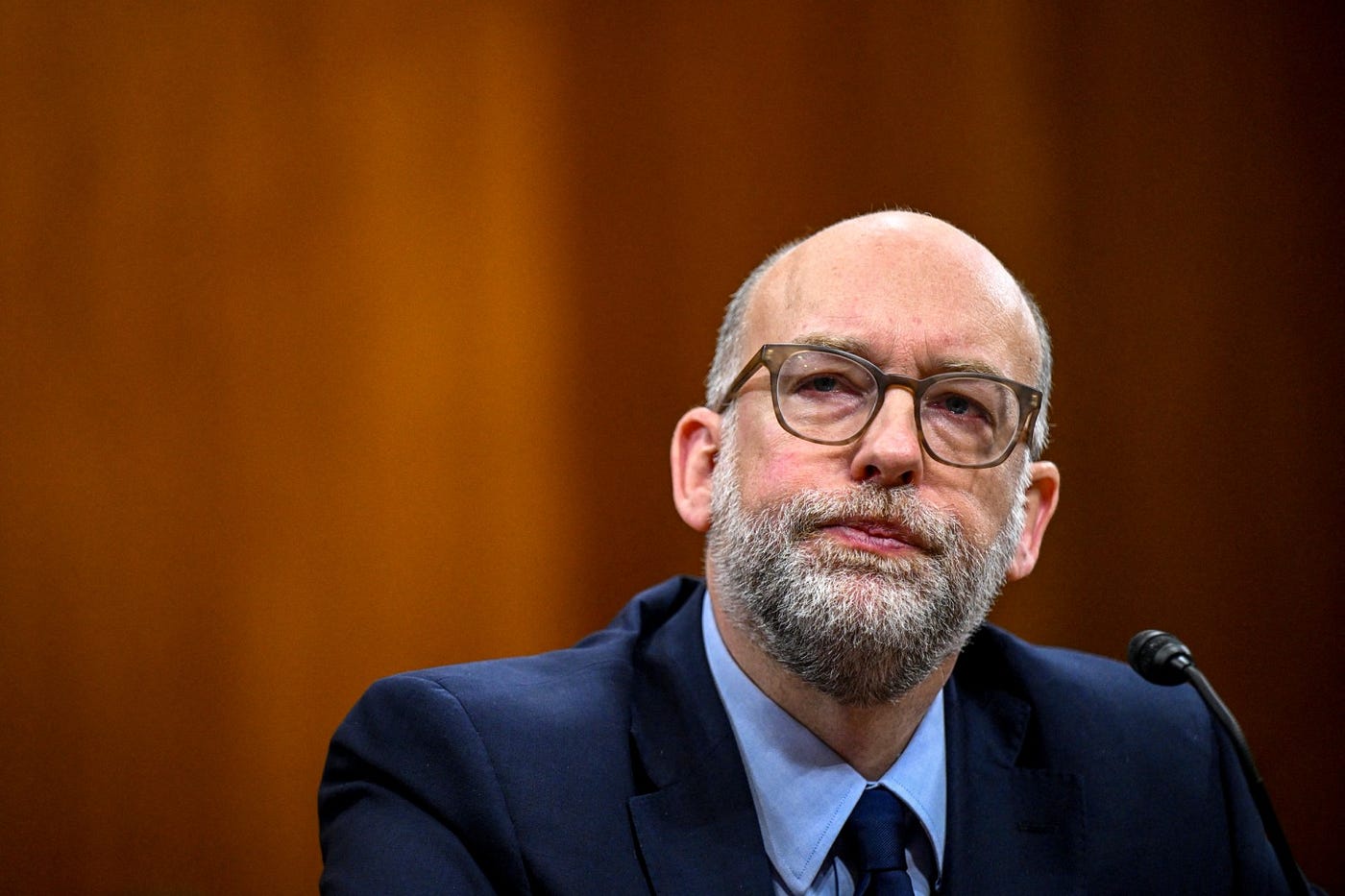
Photo credit: AP Photo / Jacquelyn Martin
Sarah Martinez disputed a $4,200 fraudulent charge on her Chase credit card in November. The Consumer Financial Protection Bureau forced Chase to investigate within 30 days and provisionally credit her account. She had her money back in three weeks.
In February, when the same thing happens to her neighbor, there’s no one to call.
Twenty-two state attorneys general filed an emergency lawsuit five days ago because the Trump administration refuses to fund the Consumer Financial Protection Bureau. Without court intervention, the agency that returned $21 billion to 205 million Americans runs out of money in 35 days. Major banks will stop being forced to follow consumer protection laws that remain in the books.
Russell Vought claims the CFPB has no legal funding, even though Congress deliberately insulated its budget from political sabotage. He exploits the Federal Reserve’s accounting losses to redefine “earnings” as profit instead of revenue, a semantic stunt that magically reduces the bureau’s funding to zero.
The Supreme Court upheld this funding structure in 2024 on the assumption it would be honored. Vought does not challenge the law. He smothers it with wordplay, using accounting tricks to shut down the one federal agency that forces banks to pay for abuse. This is not governance. It is intentional destruction disguised as interpretation.
Wells Fargo abused 16 million accounts through illegal fees, wrongful repossessions, and foreclosure errors, earning a $3.7 billion CFPB penalty. In a separate scandal, its employees opened 3.5 million fake accounts without consent. Navy Federal Credit Union charged illegal overdraft fees to active-duty sailors and paid $80 million. The three credit bureaus left fraudulent accounts on 22.8 million credit reports until the CFPB forced their removal and wiped medical debt from credit files.
In February, there’s no one to force anything.
The CFPB enforces 18 consumer protection laws that banks were never willing to follow voluntarily. When enforcement disappears, banks revert immediately because abuse is profitable and stops only when penalties outweigh revenue.
Banks are required to investigate fraud quickly and issue provisional credits, but only enforcement makes them comply. Without it, disputes drag on, refunds vanish, and consumers are left owing fraudulent charges with no federal backstop.
Federal law limits how often debt collectors can call, what they can say, and whether they can pursue debts you do not owe. Enforcement is the only thing that makes those limits real. When enforcement vanishes, collectors escalate pressure on invalid debts and funnel complaints into state offices they know cannot stop them.
Overdraft charges and surprise fees fell only because CFPB penalties made abuse costly. The CFPB’s overdraft rule saved consumers $5 billion a year by replacing $35 fees with a $5 cap at large banks, ending transaction reordering designed to drain accounts. Without enforcement, caps collapse, $35 fees return, and banks resume extracting money by design.
Servicers are required to credit mortgage payments accurately and pause foreclosure during modification disputes, but only federal enforcement forces compliance. Without that backstop, misapplied payments and wrongful foreclosure notices stand, and homeowners must prove errors using records controlled by the servicer.
Navient miscounted Public Service Loan Forgiveness payments, wrecked credit reports, and added years of repayment through administrative failures. The CFPB banned Navient from federal servicing and ordered $120 million in restitution. After January, replacement servicers repeat the same abuses with no federal consequence.
Credit bureaus remove fraudulent accounts only when Fair Credit Reporting Act enforcement forces them to comply. The CFPB compelled bureaus to wipe medical debt from 22.8 million credit reports. When that force disappears, fraud returns. Disputes are rejected without investigation, corrected errors reappear, and bureaus choose stonewalling because fighting consumers costs less than fixing broken systems.
Contracts stripping your right to sue spread when oversight collapses. Banks expand mandatory arbitration into checking accounts and products that once allowed court access. Even with documented harm, recovery vanishes because disputes are forced into private forums designed to protect banks, not consumers.
Do Before January 31st:
File every pending dispute immediately at consumerfinance.gov/complaint because companies respond to 97% of complaints when federal law requires response and failure to respond to triggers enforcement action. State systems have no such enforcement mechanism. Cases filed before the portal closes have federal backing while cases filed after have none.
Pull all three credit reports at annualcreditreport.com and dispute every error today because credit bureaus must investigate disputes under the Fair Credit Reporting Act, though CFPB enforcement drives compliance when bureaus ignore or mishandle disputes. Bureaus will reject disputes without investigation after enforcement ends, so document every error now while federal enforcement can still compel correction.
Screenshot every bank statement, credit card statement, loan statement, and transaction history you have while exporting PDF copies if your institution allows. When disputes arise after January 31st and you need to prove what your account showed on a specific date, banks control the records while you need your own copies.
Review every financial account agreement you have for arbitration clauses that force you into private arbitration instead of court when disputes arise. CFPB oversight limited how broadly these clauses could be applied and what rights they could eliminate, but without oversight, expect arbitration requirements to expand into checking accounts and products where they don’t currently exist. Know what you already agreed to so you can identify when terms change.
Check your credit card agreements for fee schedules, interest rate terms, and universal default clauses because the CFPB attempted to cap credit card late fees at $8, which would have saved consumers $10 billion annually, but the rule was blocked by courts and then vacated by Vought in April 2025 after he took control of the agency. Without CFPB enforcement of existing fee caps, expect fees to climb even higher. Document what your current agreement says about fees so you can identify when terms change.
Set up transaction alerts on every financial account by enabling notifications for every purchase, withdrawal, fee, and balance change because what used to trigger federal enforcement action when you reported problems will require you to catch errors yourself in real time after January. Banks are not required to notify you before charging most fees.
If you have an active mortgage modification, document every payment, every communication with your servicer, and the full modification timeline. Servicers routinely misapply payments, fail to credit modifications, and proceed with foreclosure despite agreements. CFPB enforcement forces corrections. Without it, those errors become your burden to unwind in state court.
If you are in an income driven repayment plan or pursuing Public Service Loan Forgiveness, request and save a complete payment history. Servicers routinely miscount qualifying payments, costing borrowers years of progress through administrative errors. CFPB enforcement compels corrections. After January, those errors persist unless you can prove them with documentation servicers may not provide.
What Happens After January 31st:
Without enforcement, banks stretch fraud investigations from weeks to months, demand more proof, and reverse provisional credits, leaving consumers responsible for disputed charges. After January 31, disputes slow, standards rise, and the financial burden remains with the account holder.
Credit report errors increase and take longer to correct because bureaus investigate only when enforcement makes noncompliance costly. When that pressure ends, bureaus can reject disputes without review, refuse corrections, and allow previously resolved errors to return, with no federal regulator available for escalation.
Overdraft fees, late fees, balance transfer fees, foreign transaction fees, and newly invented charges will rise as the cost of abuse disappears. Banks once moved cautiously to avoid penalties. Without enforcement, restraint ends and maximum fees return.
Debt collectors will contact consumers more often and with greater aggression. Federal limits technically remain, but enforcement evaporates. Collectors understand that silence now replaces consequence.
Mortgage servicing errors become nearly impossible to correct because servicers control the records and have no incentive to admit wrongdoing. Misapplied payments, fabricated late fees, and wrongful foreclosure notices leave homeowners trapped, paying lawyers to disprove errors the servicer created.
By 2027, the practices that detonated the 2008 financial collapse return without the regulator Congress built to stop them. Servicers manufacture foreclosure paperwork, credit card companies revive universal default clauses, and payday lenders expand predatory products. These abuses never stopped voluntarily. They stopped only when enforcement made cheating too expensive.
Americans filed 1.8 million complaints in 2023. Ninety seven percent forced a response. More than half led to real fixes like corrected credit reports, while most of the rest produced formal explanations. Since 2010, that system processed over 10 million complaints and compelled companies to act instead of ignore consumers.
Congress created the CFPB after mortgage fraud at Wells Fargo, Countrywide, and Washington Mutual detonated an economic collapse that wiped out 8.7 million jobs. Lawmakers insulated the agency from annual appropriations to stop banks from lobbying its budget into oblivion. That safeguard is now being twisted into a kill switch.
Trump installed Vought only after blocking prior acting directors through litigation. Once in control, Vought halted major bank examinations, froze new investigations, suspended rulemaking on junk fees and data broker sales, and dumped remaining enforcement cases onto the Justice Department. He then issued reduction in force notices to more than 1,600 employees, wiping out over 90 percent of the staff. The agency still exists on paper. Its regulatory function does not.
Three lawsuits now challenge the shutdown. Twenty two state attorneys general argue Vought’s funding interpretation violates administrative law and the separation of powers. The CFPB employee union argues the agency cannot refuse legally available funding. Consumer advocates argue the move flatly contradicts congressional intent in Dodd Frank. Federal courts will spend months parsing the phrase combined earnings. Major banks will spend zero days deciding whether to refund your fraudulent charge.
The $18 trillion consumer debt machine does not pause when its regulator is gutted. Banks keep charging fees, debt collectors keep calling, and mortgage servicers keep making errors. The only thing that disappears is the enforcement that once forced them to stop.
The CFPB returned $21 billion to consumers by punishing fraud, illegal fees, and systemic abuse. In February, that enforcement ends. Fake accounts return. Illegal fees return. Fraud stays on your credit report. These practices persist because they generate profit and stop only when someone makes them stop.
The bands never stop playing. They’re just allowed to cheat now.
SHARE THIS ARTICLE
Share this with anyone who has a bank account, credit card, mortgage, or student loan, because the 35 day countdown is real and the window to protect yourself is closing. Acting before January 31 makes abuse harder, delay less profitable, and silence far riskier for banks.
Send it to family group chats, neighborhood groups, coworkers, and friends buried in debt, especially anyone who has fought an overdraft fee, disputed fraud, or watched the system stop responding.
The CFPB complaint portal at consumerfinance.gov/complaint shuts down in 35 days, and once it does, no federal agency will be able to force banks to respond. Every dispute filed and record saved now increases the number of people protected before enforcement collapses.
This is happening now, not someday. The lawsuit was filed days ago, funding runs out in 35 days, and the difference between protection and unchecked abuse is whether people understand the deadline in time.
Act before January 31, because the last collapse began when banks kept stolen money, foreclosed anyway, destroyed credit, and faced no consequences.
Sources
New York Attorney General. Attorney General James sues Trump administration to defend consumer protection. Dec 22, 2025. https://ag.ny.gov/press-release/2025/attorney-general-james-sues-trump-administration-defend-critical-consumer
California Attorney General. Attorney General Bonta sues Trump administration over CFPB funding. Dec 22, 2025. https://oag.ca.gov/news/press-releases/attorney-general-bonta-sues-trump-administration-demands-continued-lawful-funding-of-the-cfpb
NPR. Nearly two dozen states sue Trump administration over CFPB funding. Dec 22, 2025. https://www.npr.org/2025/12/22/nearly-two-dozen-states-sue-trump-administration-over-cfpb-funding
Associated Press. Democratic-led states sue White House over CFPB funding. Dec 22, 2025. https://apnews.com/article/c4174a3b364e6eb4a5935a14ea5e101c
Reuters. States sue to block defunding of U.S. consumer watchdog. Dec 22, 2025. https://www.reuters.com/world/democratic-led-states-sue-block-us-consumer-watchdogs-defunding-under-trump-2025-12-22/
American Banker. CFPB at risk in 2026. Dec 26, 2025. https://www.americanbanker.com/news/its-all-on-the-line-for-the-cfpb-in-2026
American Banker. CFPB complaints surge amid defunding efforts. Jul 23, 2025. https://www.americanbanker.com/news/cfpb-complaints-skyrocket-amid-efforts-to-defund-cut-staff
CFPB. Consumer Response Annual Report 2023. Mar 2024. https://www.consumerfinance.gov/data-research/research-reports/consumer-response-annual-report-2023/
CFPB. Credit card late fee rule. Mar 5, 2024. https://www.consumerfinance.gov/about-us/newsroom/cfpb-bans-excessive-credit-card-late-fees/
Goodwin Law. CFPB agrees to eliminate $8 late fee cap. Apr 15, 2025. https://www.goodwinlaw.com/en/insights/publications/2025/04/cfpb-agrees-to-eliminate-8-cap-on-credit-card-late-fees
Urban Institute. Consumer complaints without CFPB. May 22, 2025. https://www.urban.org/urban-wire/millions-consumer-complaints-could-go-unanswered-without-consumer-financial-protection-bureau
U.S. Supreme Court. CFPB v. CFSA, 601 U.S. ___ (2024). https://www.supremecourt.gov/opinions/23pdf/22-448_o7jp.pdf
메타데이터
- post_id
- fbdc27b2bcd3
- slug
- banks-are-about-to-get-away-with-stealing-again-fbdc27b2bcd3
- url
- https://medium.com/@GlassEmpires/banks-are-about-to-get-away-with-stealing-again-fbdc27b2bcd3
- canonical_url
- https://medium.com/@GlassEmpires/banks-are-about-to-get-away-with-stealing-again-fbdc27b2bcd3
- author_url
- https://medium.com/@GlassEmpires
- status
- ok
- fetched_at
- 2026-06-15 20:49:13