Chapter 2 — Brand as a System of Meaning
If the retail environment acts as a mediator between brand and consumer, it is first necessary to understand what is meant by the concept…

Chapter 2 — Brand as a System of Meaning
If the retail environment acts as a mediator between brand and consumer, it is first necessary to understand what is meant by the concept of a brand. Reducing a brand to a logo, a name, or a set of graphic elements overlooks its complexity. A brand is, above all, a system of meanings organized around values, narratives, and strategic positioning.
Throughout the twentieth century, the brand evolved from a simple mark of origin into a strategic instrument of differentiation. Scholars such as Jean-Noël Kapferer and David Aaker have emphasized that a brand constitutes a symbolic asset capable of generating recognition, trust, and loyalty. More than identifying a product, a brand creates a frame of reference through which interpretation and choice are guided.
Wally Olins further argued that brands are not merely communication devices but comprehensive systems of expression that manifest themselves through products, services, behaviours, and environments. From this perspective, a brand is experienced through every interaction people have with it. The physical environment therefore becomes more than a functional setting; it becomes a visible and tangible expression of the brand itself.
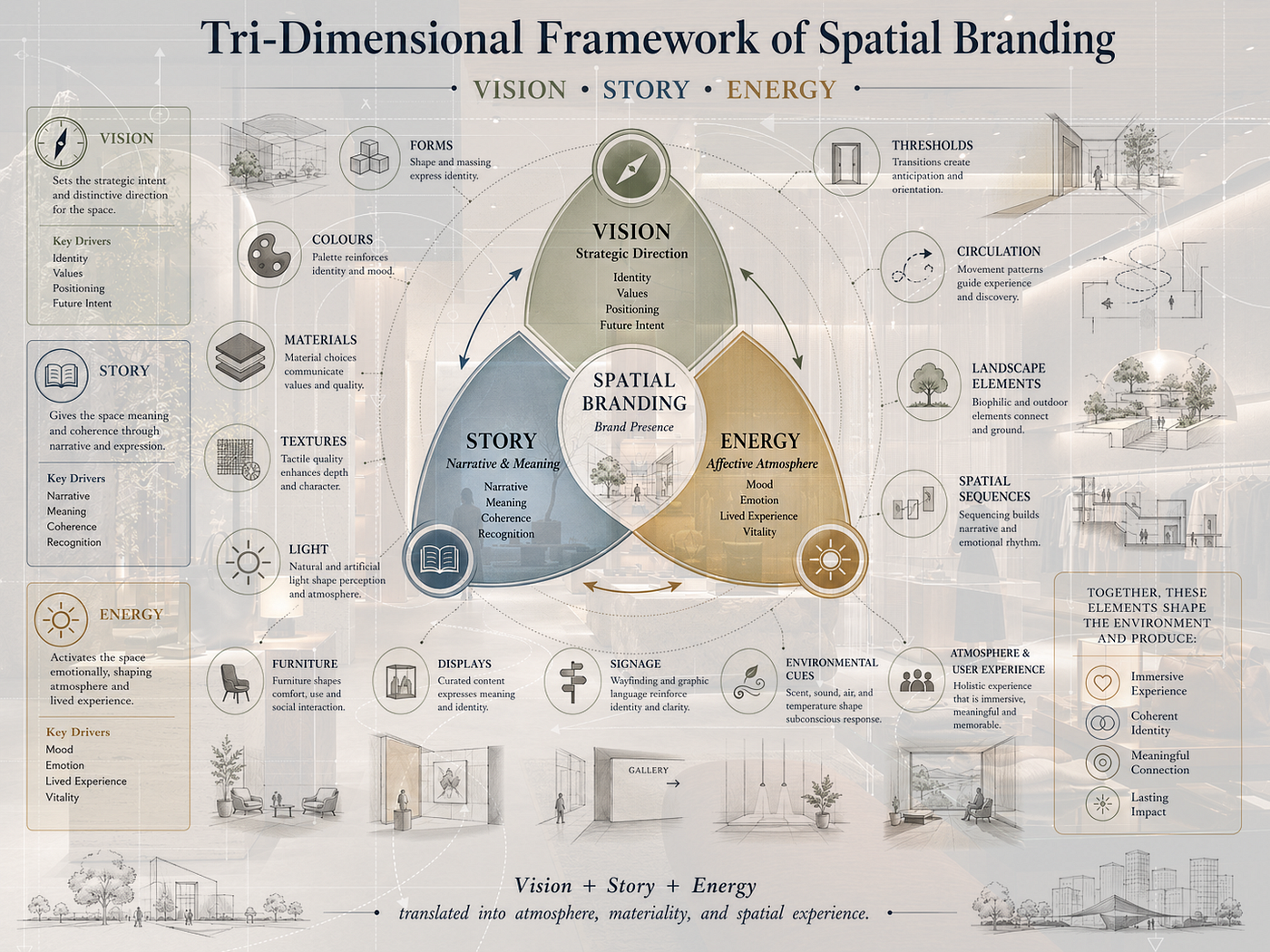
In this sense, a brand can be understood as a system structured across different levels:
- Core Identity — values, purpose, and vision.
- Personality — symbolic traits that enable identification.
- Positioning — the place the brand occupies in the market and in the consumer’s mind.
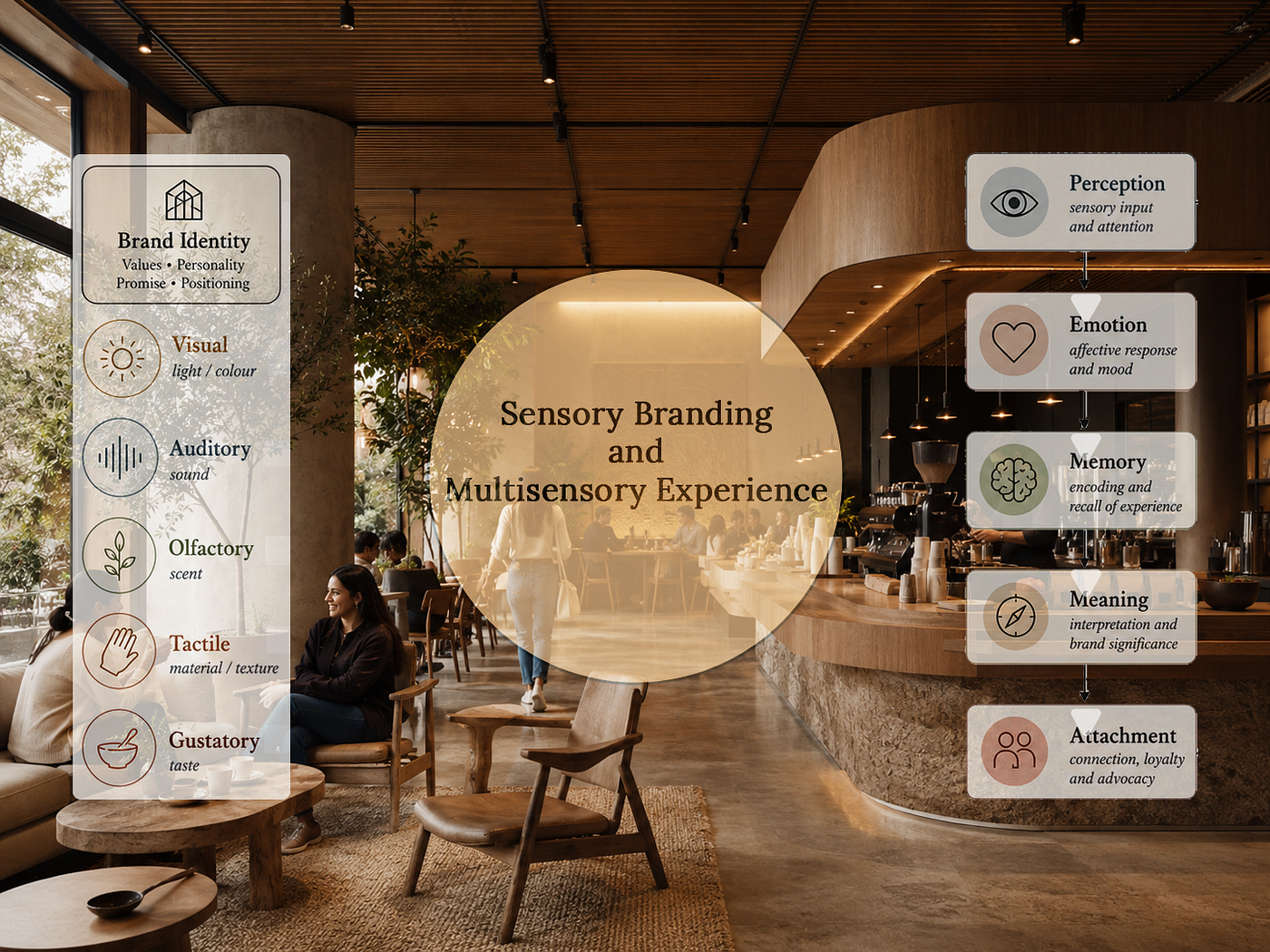
- Expression — the visual, verbal, and sensory language through which the brand manifests itself.
These levels do not exist in isolation. They form a coherent whole that should guide every manifestation of the brand, including the physical environment.
Brand as Narrative
One of the most productive ways of understanding a brand is to view it as a narrative. A brand organizes dispersed elements — products, images, messages, and experiences — into a coherent story. This story may be explicit or implicit, but it functions as a structure of meaning.
The notion of narrative becomes particularly relevant when considering retail environments. If a brand tells a story, the store represents one of its most tangible chapters. Movement through the space can be interpreted as a narrative sequence: entry, discovery, engagement, and culmination. Spatial organization can either reinforce or undermine this structure.
Narrative coherence therefore becomes a fundamental design criterion. The objective is not to literally illustrate the brand’s story, but rather to translate its principles into consistent spatial experiences.
Brand as a World
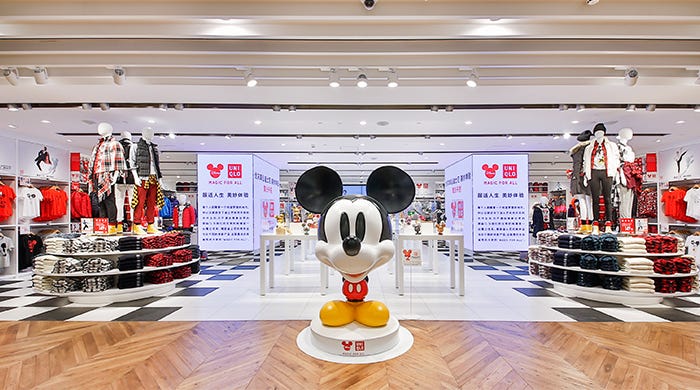
Some authors describe a brand as a “world” or “universe.” This metaphor is especially useful in the context of retail design. A world possesses its own rules, atmosphere, and internal codes. By entering a store, visitors enter that universe.
The notion of a brand world implies three dimensions:
- Internal Coherence — all elements should relate to one another consistently.
- Recognizability — the environment should be identifiable as belonging to the brand.
- Immersion — users should feel that they have entered a distinct environment.
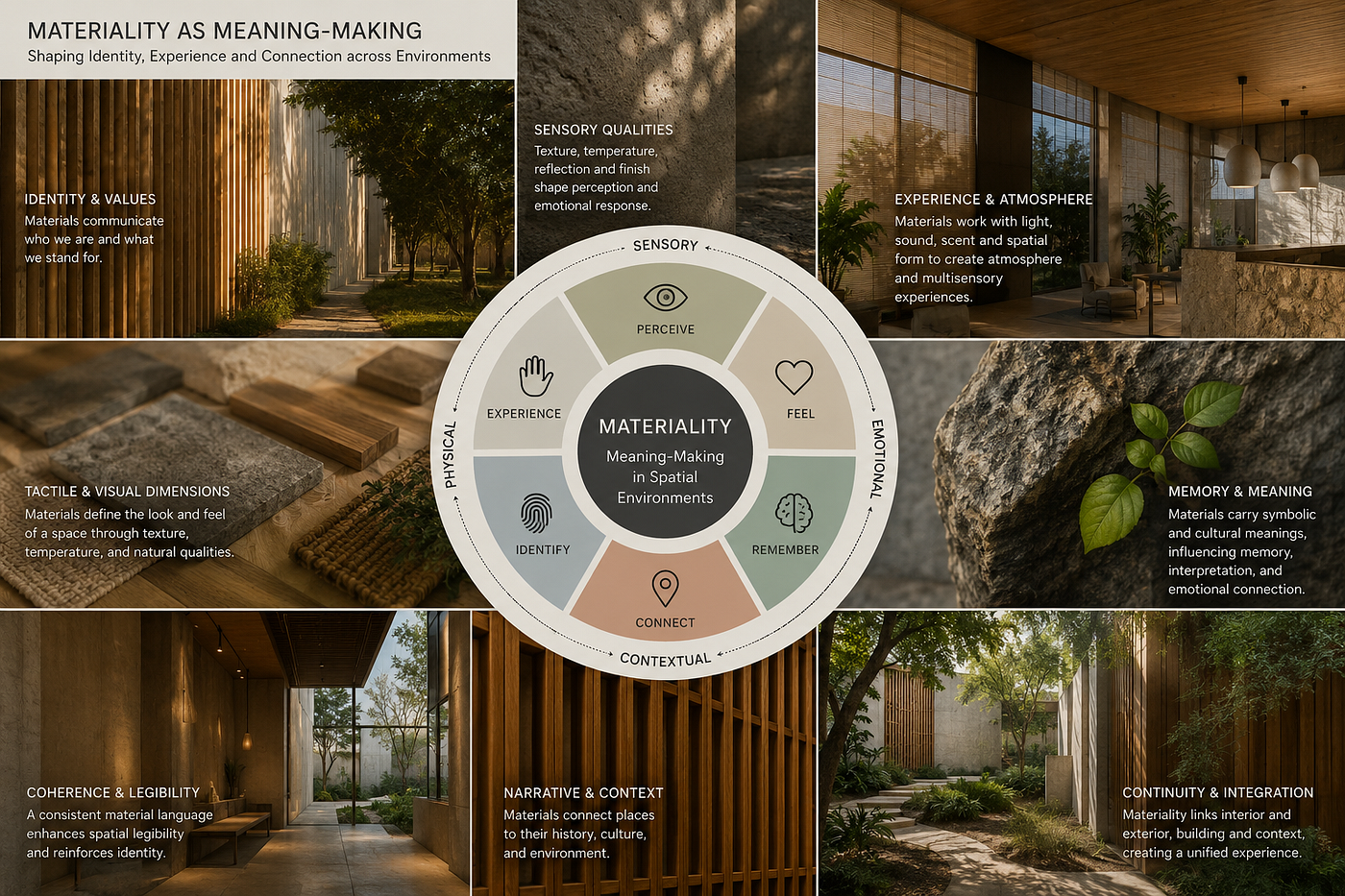
Designing a retail space therefore involves materializing that world in a tangible form. Scale, materials, lighting, circulation, and visual communication become instruments through which this universe is constructed.
Tension and Differentiation
Brand identity is not merely a collection of positive values; it also involves tensions and choices. A brand may position itself as minimalist or exuberant, exclusive or accessible, experimental or traditional. Such decisions directly influence spatial design choices.
Ignoring these tensions often leads to generic environments that could belong to virtually any brand. One of the most common mistakes in retail design is the dilution of identity in favour of a “safe” aesthetic or prevailing trend. The result is a loss of differentiation.
The design process should instead embrace and make visible the brand’s defining choices. Spatial translation is not a decorative operation; it is a strategic one.
From Abstraction to Translation
If a brand is a system of meanings, how can this abstract system be transformed into concrete spatial decisions?
The transition requires a process of translation. This translation is not literal but interpretative. Values such as innovation, proximity, or exclusivity do not possess direct spatial forms; they must be converted into operational design principles.
For example:
- Innovation may be expressed through material experimentation, spatial flexibility, or technological integration.
- Proximity may be reflected in human-scaled environments, intimate circulation paths, or interaction-focused design elements.
- Exclusivity may manifest itself through controlled access, reduced product density, or the use of distinctive materials.
This stage of translation is critical and constitutes the starting point for the methodology that will be developed in the second part of this research.
Before proceeding, however, it is necessary to understand the other side of the relationship: the user and the experience constructed within the environment.
If the brand provides the system of meanings, it is the consumer who interprets and experiences those meanings. In the next chapter, we will examine experience from the perspectives of perception, emotion, and behaviour, exploring how the physical environment influences the relationship between people and brands.
-//-
- Aaker, D. A. (1996). Building strong brands. Free Press.
- Kapferer, J.-N. (2012). The new strategic brand management: Advanced insights and strategic thinking (5th ed.). Kogan Page.
- Olins, W. (2008). The brand handbook. Thames & Hudson.
- Neumeier, M. (2006). The brand gap (Rev. ed.). New Riders.
메타데이터
- post_id
- fbecf9f0ecd0
- slug
- chapter-2-brand-as-a-system-of-meaning-fbecf9f0ecd0
- url
- https://medium.com/@francdccnha/chapter-2-brand-as-a-system-of-meaning-fbecf9f0ecd0
- canonical_url
- https://medium.com/@francdccnha/chapter-2-brand-as-a-system-of-meaning-fbecf9f0ecd0
- author_url
- https://medium.com/@francdccnha
- status
- ok
- fetched_at
- 2026-07-18 21:36:33