Months in the classical Meitei calendar
Journey into the ancient Meitei rhythm of time — told by moons, not machines.
Months in the classical Meitei calendar
Journey into the ancient Meitei rhythm of time — told by moons, not machines.
The months of the lunar year have traditional names in the Meitei language — also known as Manipuri, Meiteilon, or Meeteilon, depending on the source. These names have been passed down through centuries, echoing the Meitei people's way of observing nature, time, and tradition.
Now, let’s discover what these months are called.
What is the traditional Meitei word for “month”?
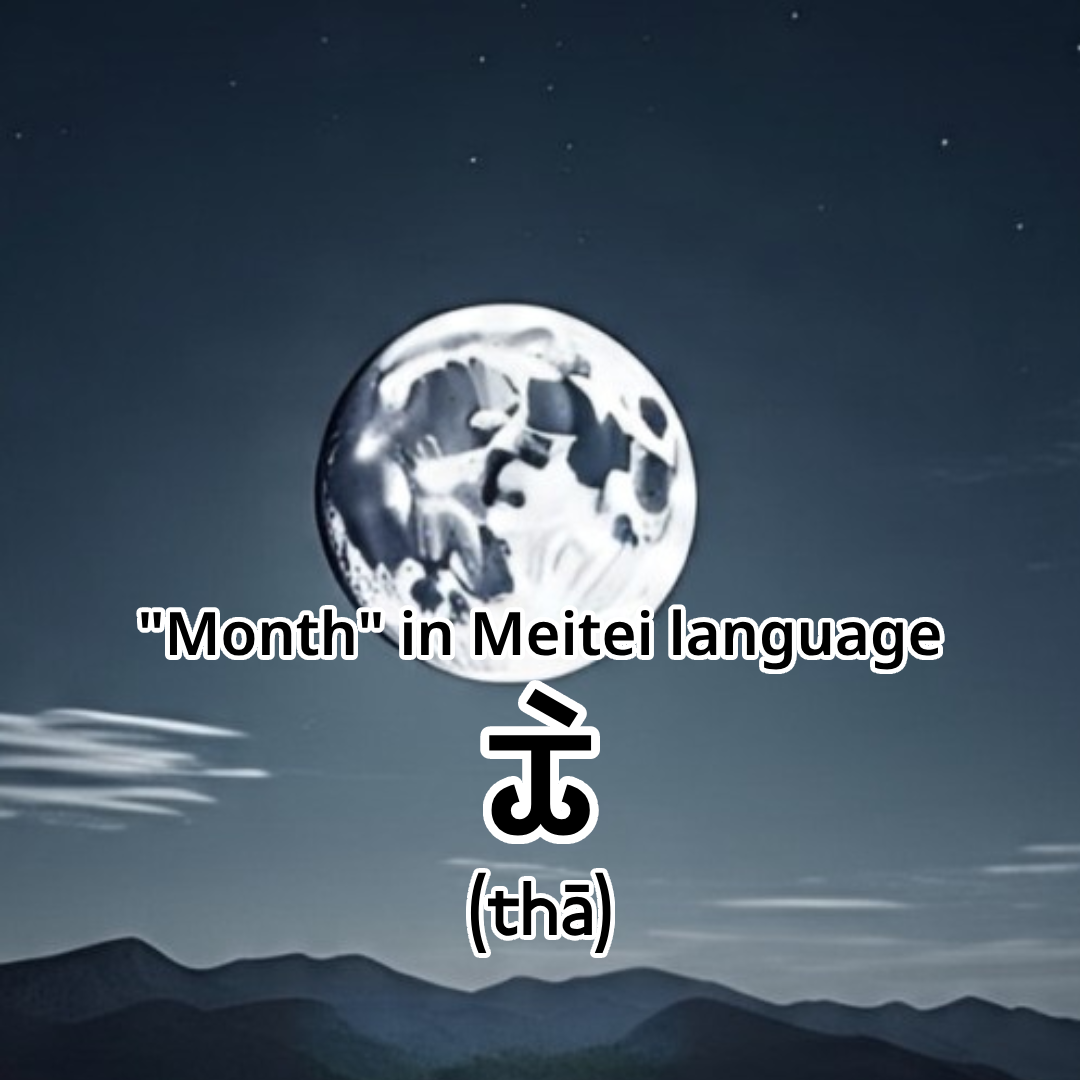
In Meitei language, the word for “month” is “Thaa” or “Tha” (ꯊꯥ), which also means “Moon.” This is because the traditional Meitei calendar is lunar — each month begins with the appearance of a new moon and ends when the next new moon rises. In this way, time in Meitei tradition flows with the Moon’s journey, as the calendar is structured around its natural cycle.
Sajibu month:
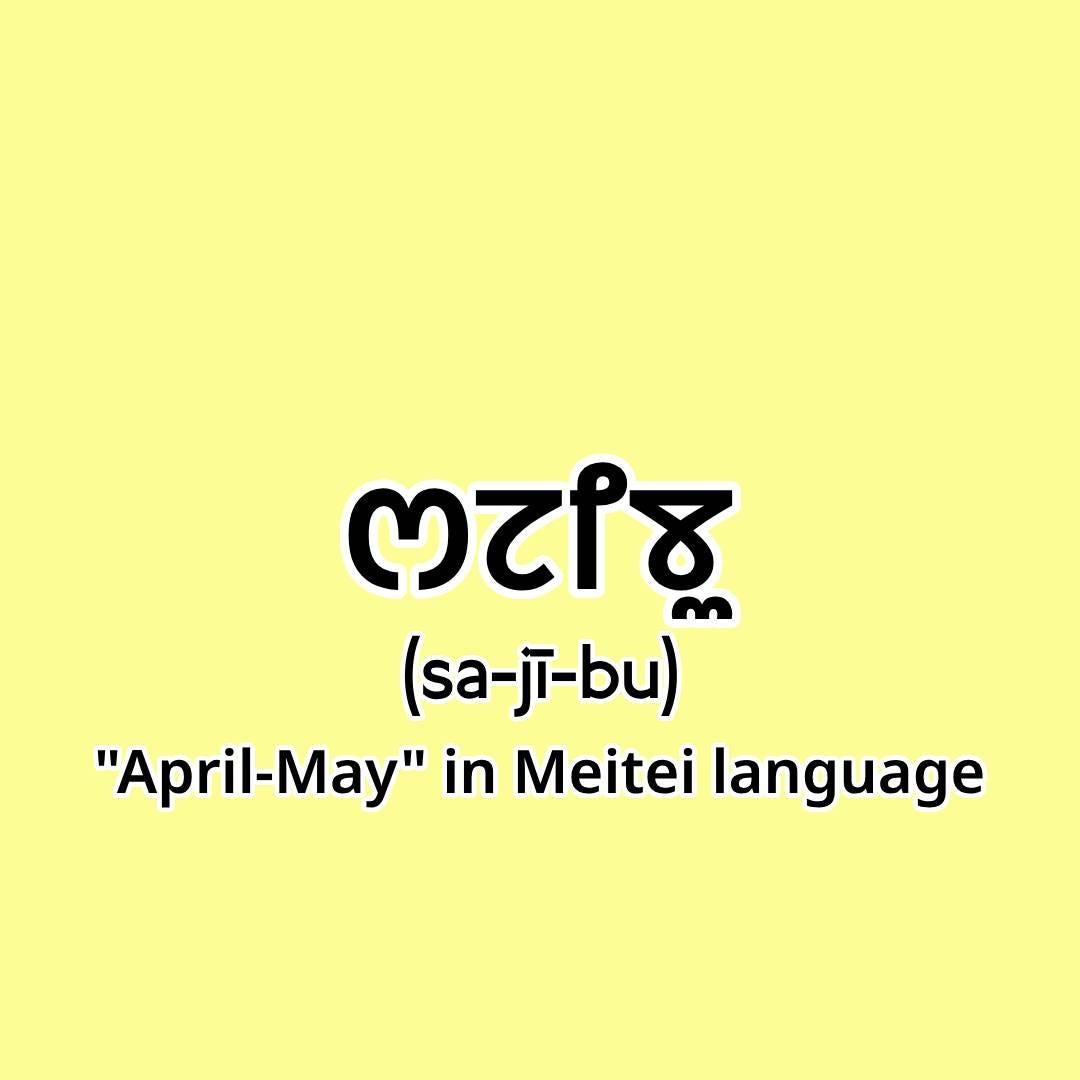
The month of April–May is called “Sajibu” (ꯁꯖꯤꯕꯨ) or “Sachipu” (ꯁꯆꯤꯄꯨ) in the Meitei language. While Sajibu technically spans both April and May, most of its days usually fall within April — which is why it’s commonly associated with that month.
In the Meitei lunar calendar, Sajibu is the first month of the year, and its name literally means “the first month of the year” in English. The term has several alternative spellings, such as “Sajeebu,” “Saajeebu,” or “Saajibu.” The word “Sajibu” is derived from the older Meitei term “Sachipoy” (ꯁꯆꯤꯄꯣꯢ) or “Sachipu” (ꯁꯆꯤꯄꯨ), which also appears in various spellings like “Sacheepoy,” “Saacheepoy,” “Saachipoy,” “Sacheepu,” “Saacheepu,” and “Saachipu.”
Kalen month
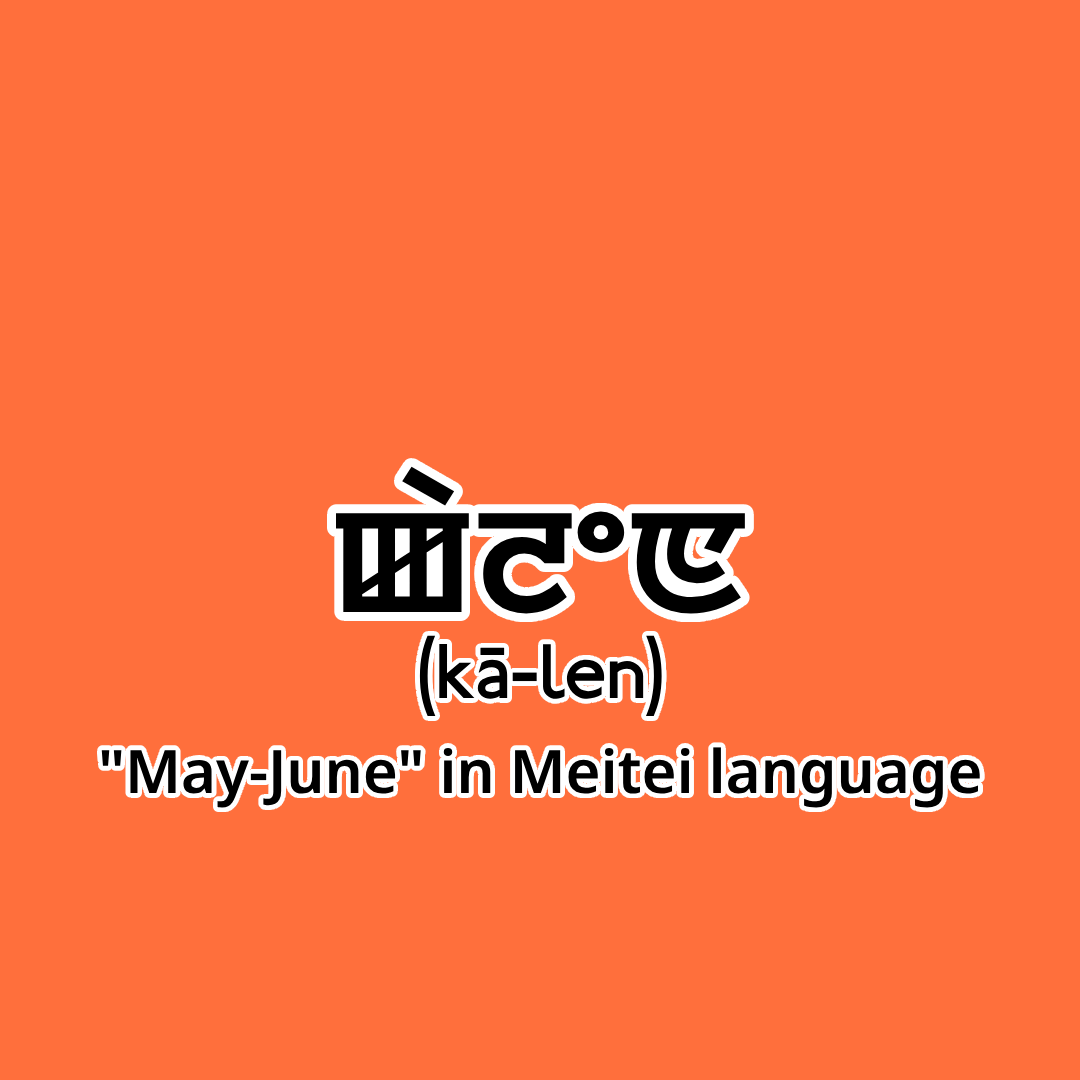
The month of May–June is called “Kaalen” or “Kalen” (ꯀꯥꯂꯦꯟ) in the Meitei language. While Kaalen technically spans both May and June, most of its days usually fall within May — which is why it’s commonly associated with that month.
In the Meitei lunar calendar, Kaalen is the second month of the year and its name literally means “the second month of the year” in English. It is derived from its older Meitei name, “Kanpi” (ꯀꯥꯟꯄꯤ), which appears in various spellings like “Kaanpee”, “Kanpee”, “Kaanpi”, etc.
Interestingly, the word “Kaalen” also means “summer” in Meitei, linking the month to the seasonal heat and energy that defines this time of year in Manipur.
Inga month
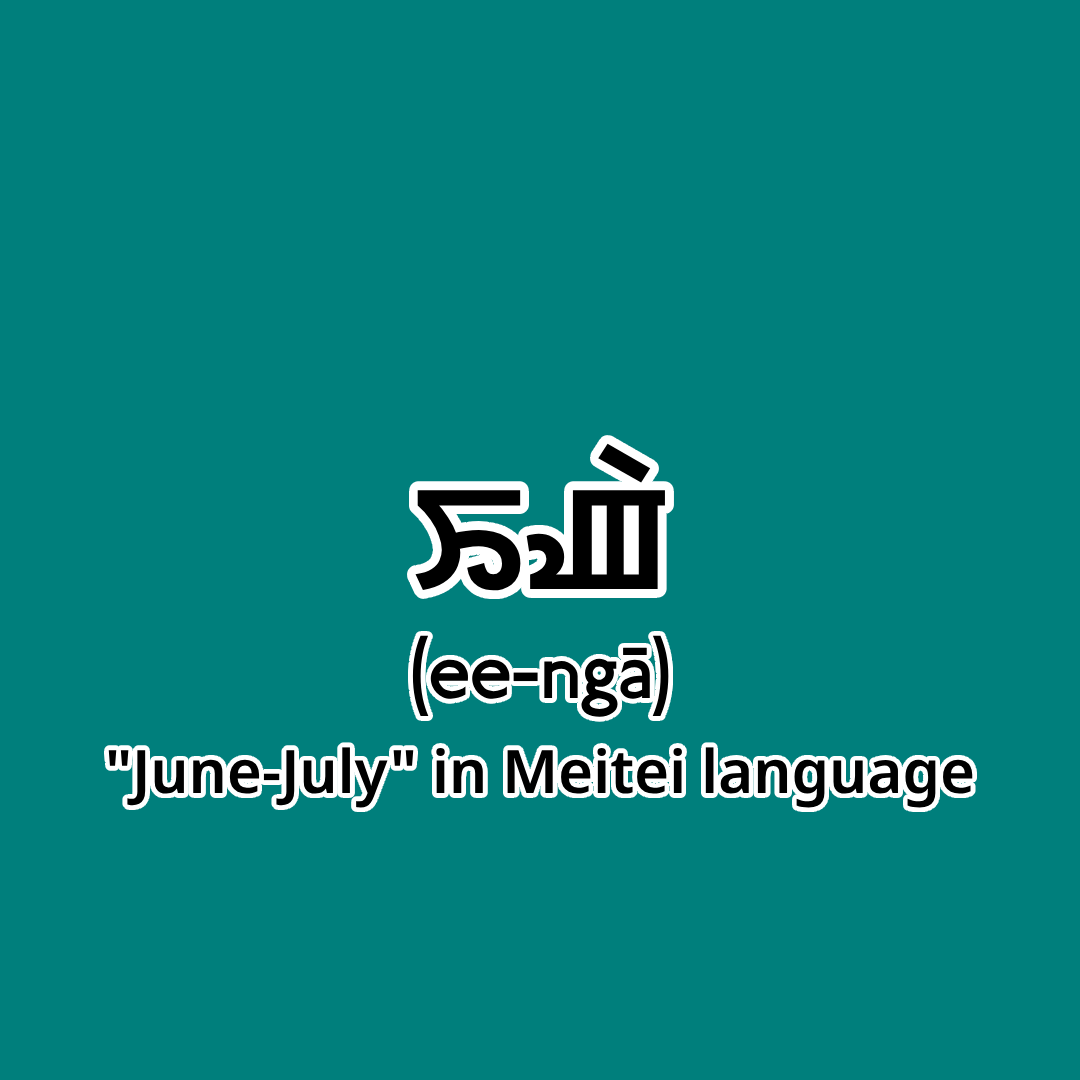
The month of June–July is called “Inga” or “Eenga” (ꯏꯉꯥ) in the Meitei language. While Ingaa technically spans both June and July, most of its days usually fall within June — which is why it’s commonly associated with that month.
In the Meitei lunar calendar, Inga is the third month of the year, and its name literally means “the third month of the year” in English. The term has alternative spellings, such as “Ingaa”, “Eenga”, “E-nga”, etc. It is derived from its older Meitei name, “Asaau” (ꯑꯁꯥꯎ), which appears in various spellings like “Aasao”, “Asou”, “Aasau”, “Aasou”, etc.
Ingen month
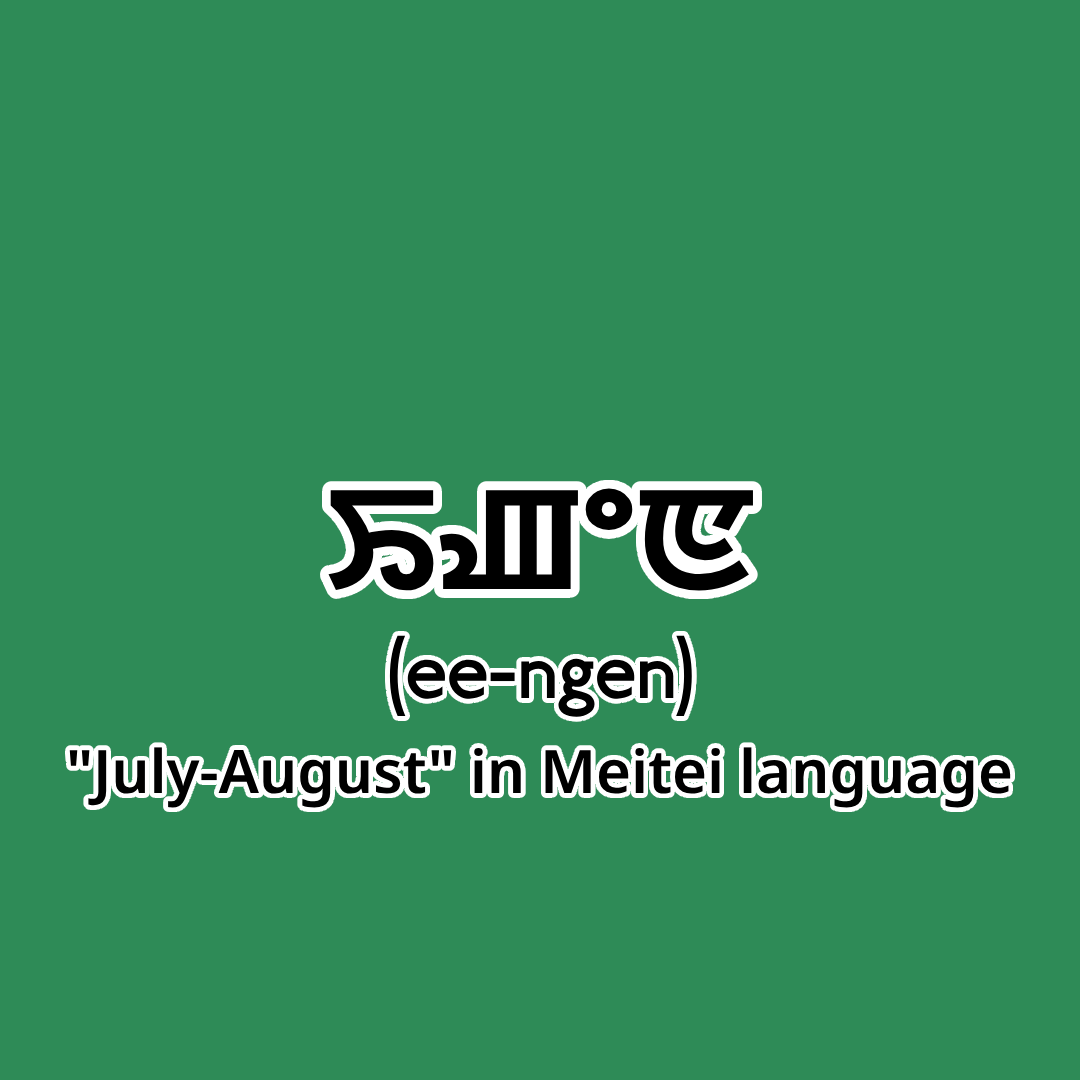
The month of July–August is called “Ingen” or “Eengen” (ꯏꯦꯉꯟ) in the Meitei language. While Ingen technically spans both July and August, most of its days usually fall within July — which is why it’s commonly associated with that month.
In the Meitei lunar calendar, Ingen is the fourth month of the year, and its name literally means “the fourth month of the year” in English. The term has alternative spellings, such as “Ing-ngen”, “Eengen”, “Engen”, and “Eng-ngen”, “Ingel”, “Ing-ngel”, “Eengel”, “Engel”, “Eng-ngel”, etc. It is derived from its older Meitei name, “Haaleng” (ꯍꯥꯂꯦꯡ).
Thouwan month
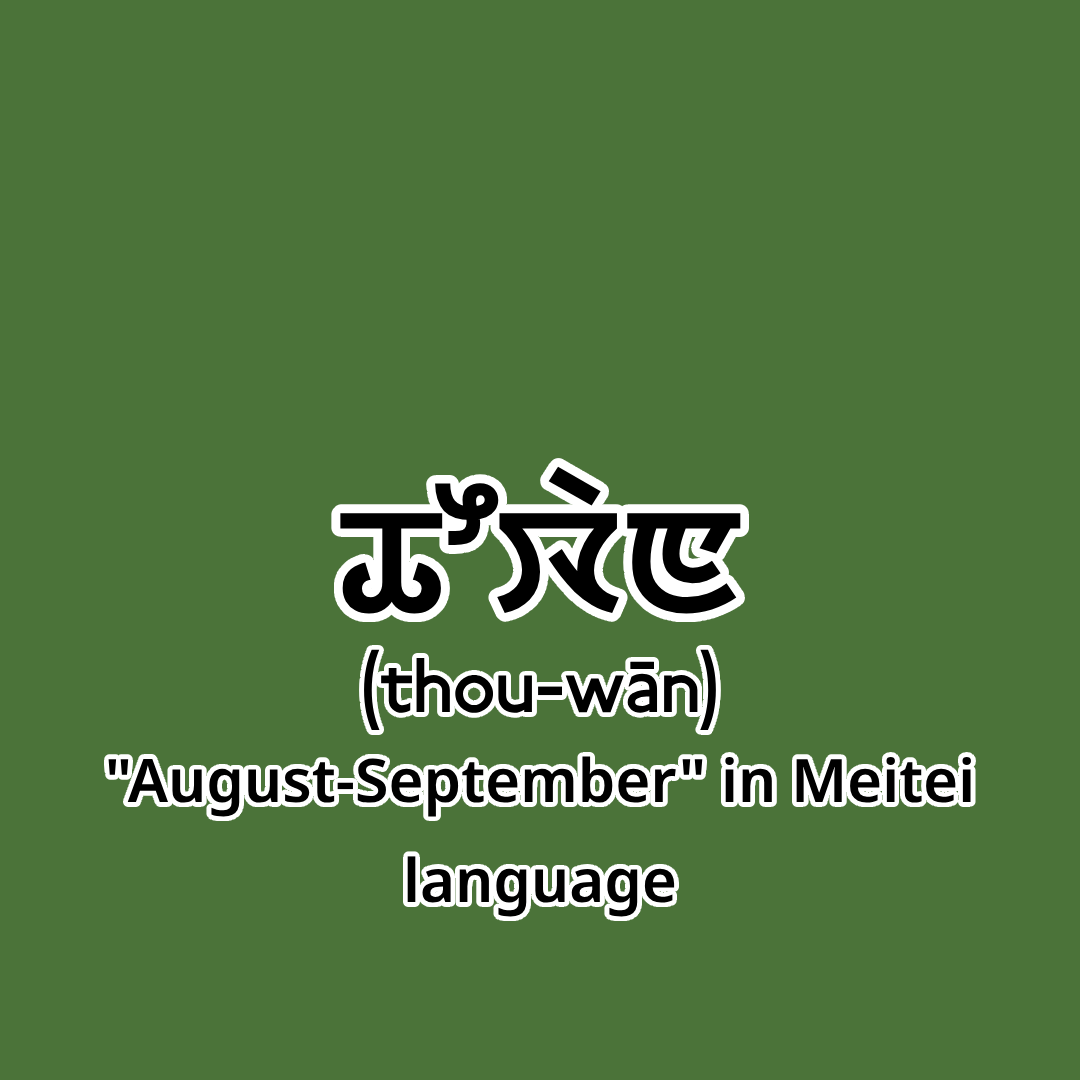
The month of August–September is called “Thawan” (ꯊꯋꯥꯟ) or “Thouwan” (ꯊꯧꯋꯥꯟ) in the Meitei language. While Thawan technically spans both August and September, most of its days usually fall within August — which is why it’s commonly associated with that month.
In the Meitei lunar calendar, Thawan is the fifth month of the year, and its name literally means “the fifth month of the year” in English. The term has alternative spellings, such as “Thawaan”, “Thaawaan”, etc. It is derived from its older Meitei name, “Waantat” (ꯋꯥꯅꯥꯠ).
Thawan is also included in the Meitei word “Thawanmichak” which means “star” in English.
Langban month
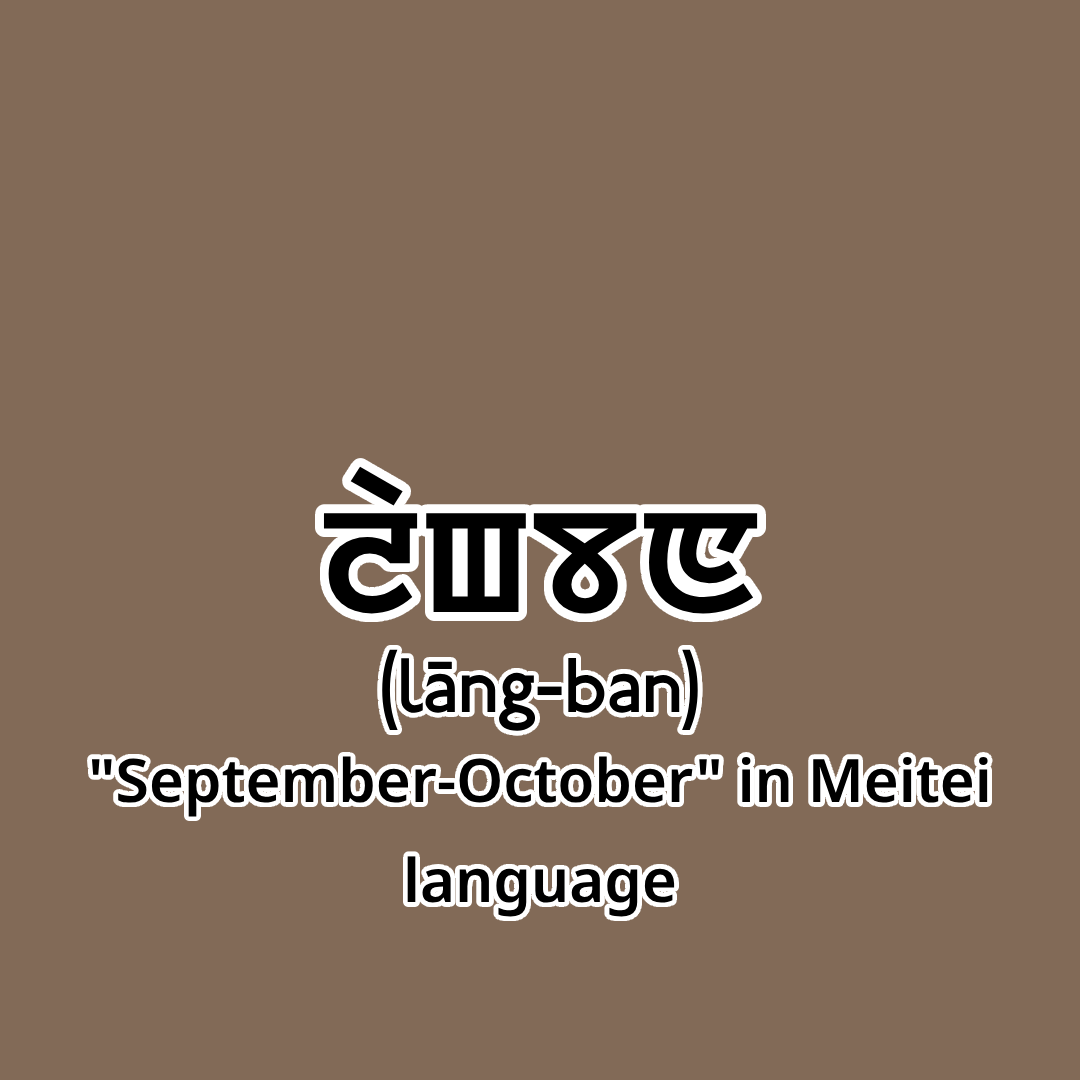
The month of September–October is called “Langban” (ꯂꯥꯡꯕꯟ) in the Meitei language. While Langban technically spans both September and October, most of its days usually fall within September — which is why it’s commonly associated with that month.
In the Meitei lunar calendar, Langban is the sixth month of the year, and its name literally means “the sixth month of the year” in English. The term has its alternative spellings, such as “Laangban”, “Langbal”, “Laangbal”, etc. It is derived from its older Meitei name, “Langpan” (ꯂꯥꯡꯄꯟ) or “Achit” (ꯑꯆꯤꯠ), which appears in various spellings like “Laangpan”, “Langpal”, “Laangpal”, “Aachit”, etc.
Langban is a spiritually significant time, as it includes important cultural observances and ancestor-honouring rituals that prepare for the more festive seasons ahead.
Mera month
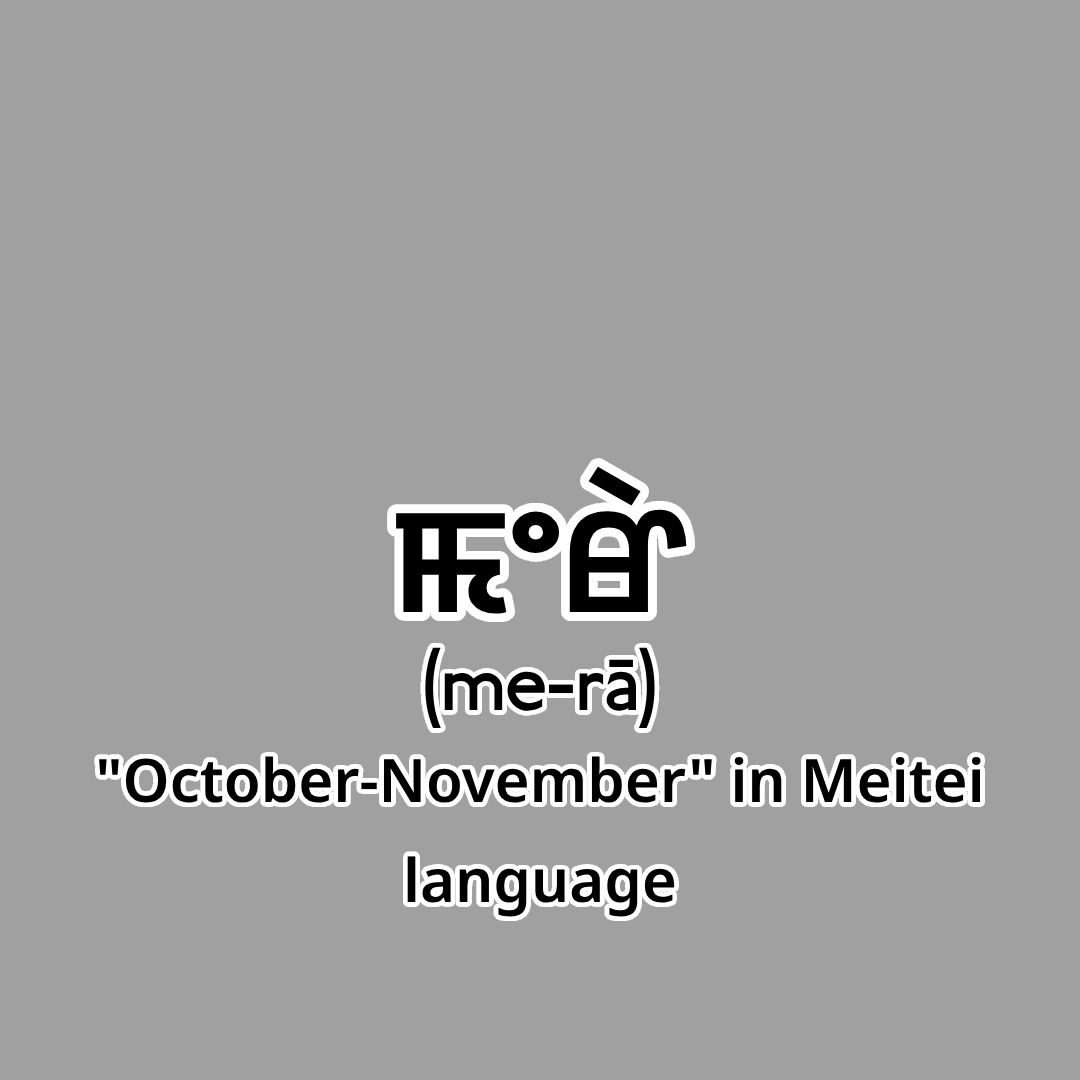
The month of October–November is called “Mera” (ꯃꯦꯔꯥ) in the Meitei language. While Mera technically spans both October and November, most of its days usually fall within October — which is why it’s commonly associated with that month.
In the Meitei lunar calendar, Mera is the sixth month of the year, and its name literally means “the seventh month of the year” in English. The term has its alternative spellings, such as “Meraa”, “Merra”, “Merraa”, etc. It is derived from its older Meitei name, “Mela” (ꯃꯦꯂꯥ) or “Aale” (ꯑꯥꯂꯦ), which appears in various spellings like “Melaa”, “Mella”, “Mellaa”, “A-le”, “Aalle”, “Aalay”, “Alay”, “Alle”, etc.
Hiyanggei month
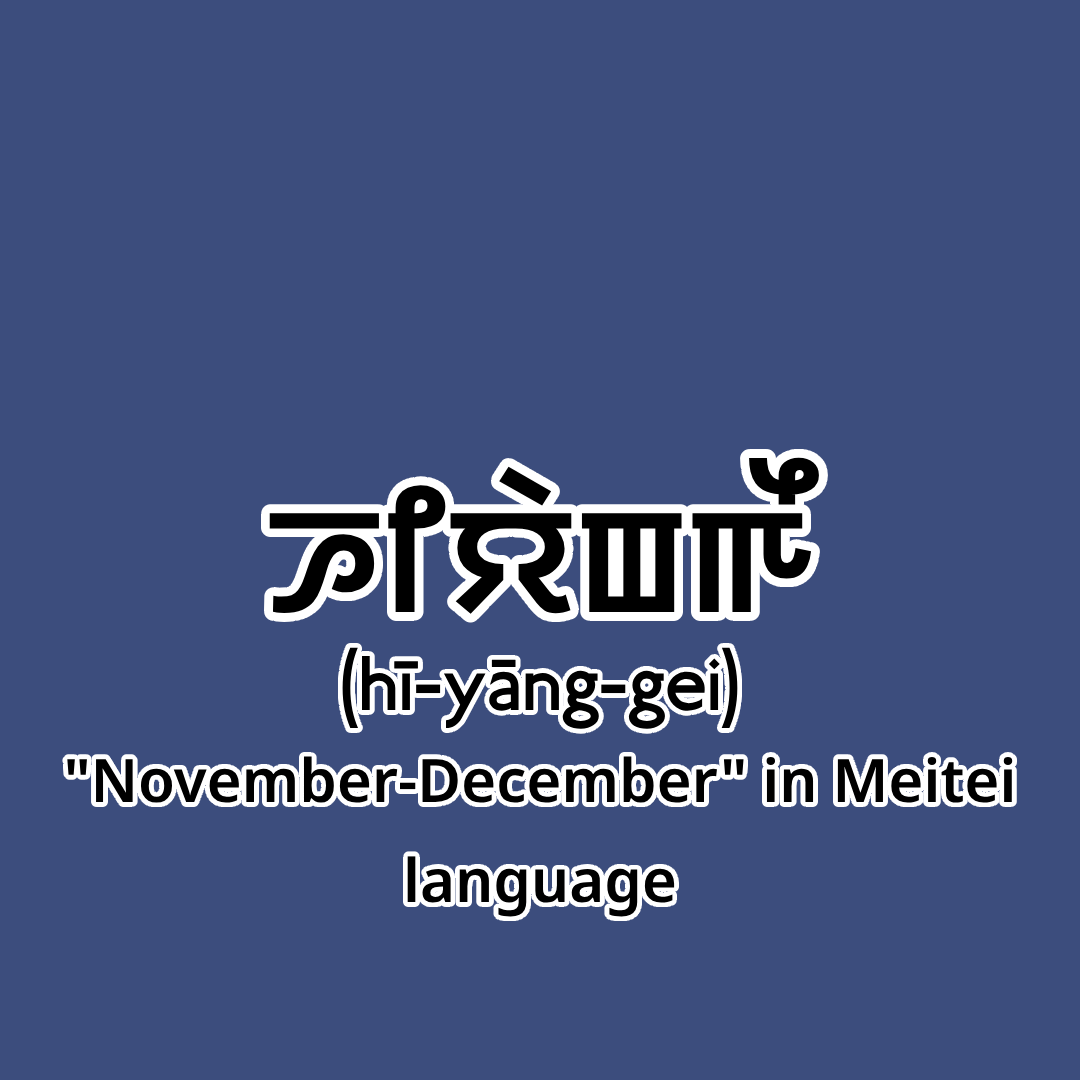
The month of November–December is called “Hiyanggei” (ꯍꯤꯌꯥꯡꯒꯩ) in the Meitei language. While Hiyanggei technically spans both November and December, most of its days usually fall within November — which is why it’s commonly associated with that month.
In the Meitei lunar calendar, Hiyanggei is the sixth month of the year, and its name literally means “the eight month of the year” in English. The term has its alternative spellings, such as “Heeyangei”, “Hiyangei”, “Heeyaangei”, “Hiyaangei”, “Heeyanggei”, “Heeyanggei”, “Heeyaanggei”, “Heeyaanggei”, etc. It is derived from its older Meitei name, “Hiyangkei” (ꯍꯤꯌꯥꯡꯀꯩ) or “Chiktham” (ꯆꯤꯛꯊꯝ), which appears in various spellings like “Heeyankei”, “Hiyankei”, “Heeyaankei”, “Hiyaankei”, “Heeyankkei”, “Heeyankkei”, “Heeyaankkei”, “Heeyaankkei”, “Chiktham”, “Cheektham”, “Chikthaam”, “Cheekthaam”, etc.
Poinu month
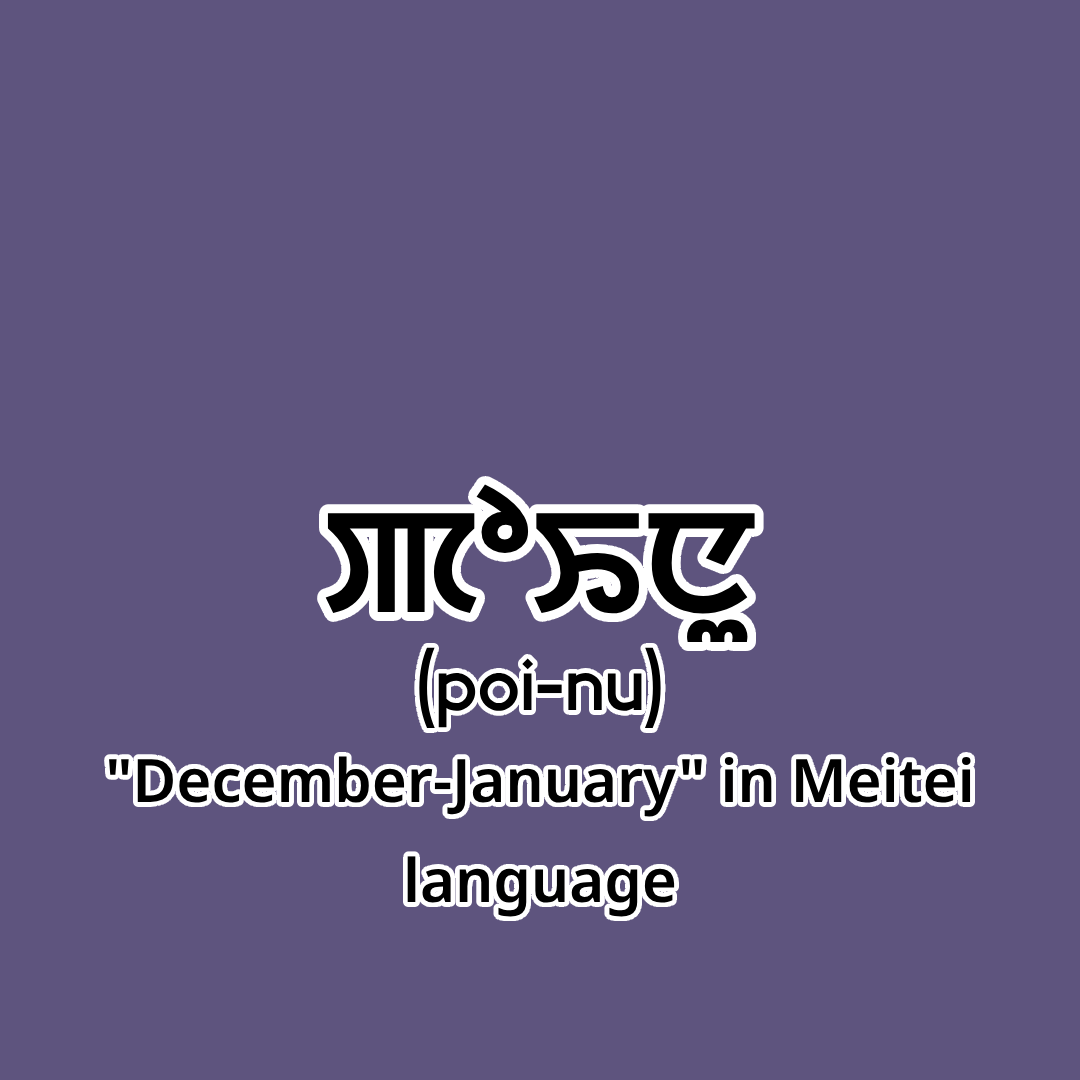
The month of December–January is called “Poinu” (ꯄꯣꯢꯅꯨ) in the Meitei language. While Poinu technically spans both December and January, most of its days usually fall within December — which is why it’s commonly associated with that month.
In the Meitei lunar calendar, Poinu is the ninth month of the year, and its name literally means “the ninth month of the year” in English. The term has alternative spellings such as “Poynu”, “Poinoo”, and “Poynoo”, etc. It is derived from its older Meitei name, “Untham” (ꯎꯟꯊꯝ), which also appears in variant forms like “Unthaam”.
Wakching month

The month of January–February is called “Wakching” (ꯋꯥꯛꯆꯤꯡ) in the Meitei language. While Wakching technically spans both January and February, most of its days usually fall within January — which is why it’s commonly associated with that month.
In the Meitei lunar calendar, Wakching is the tenth month of the year, and its name literally means “the tenth month of the year” in English. The term has alternative spellings such as “Waakching”, “Waakching”, and “Wakcheeng”, “Waakcheeng”, etc. It is derived from its older Meitei name, “Eentham” (ꯏꯟꯊꯝ), which also appears in variant forms like “Entham”, “Eenthaam”, “Enthaam”, “Inthaam”, and “Intham”.
Fairel month
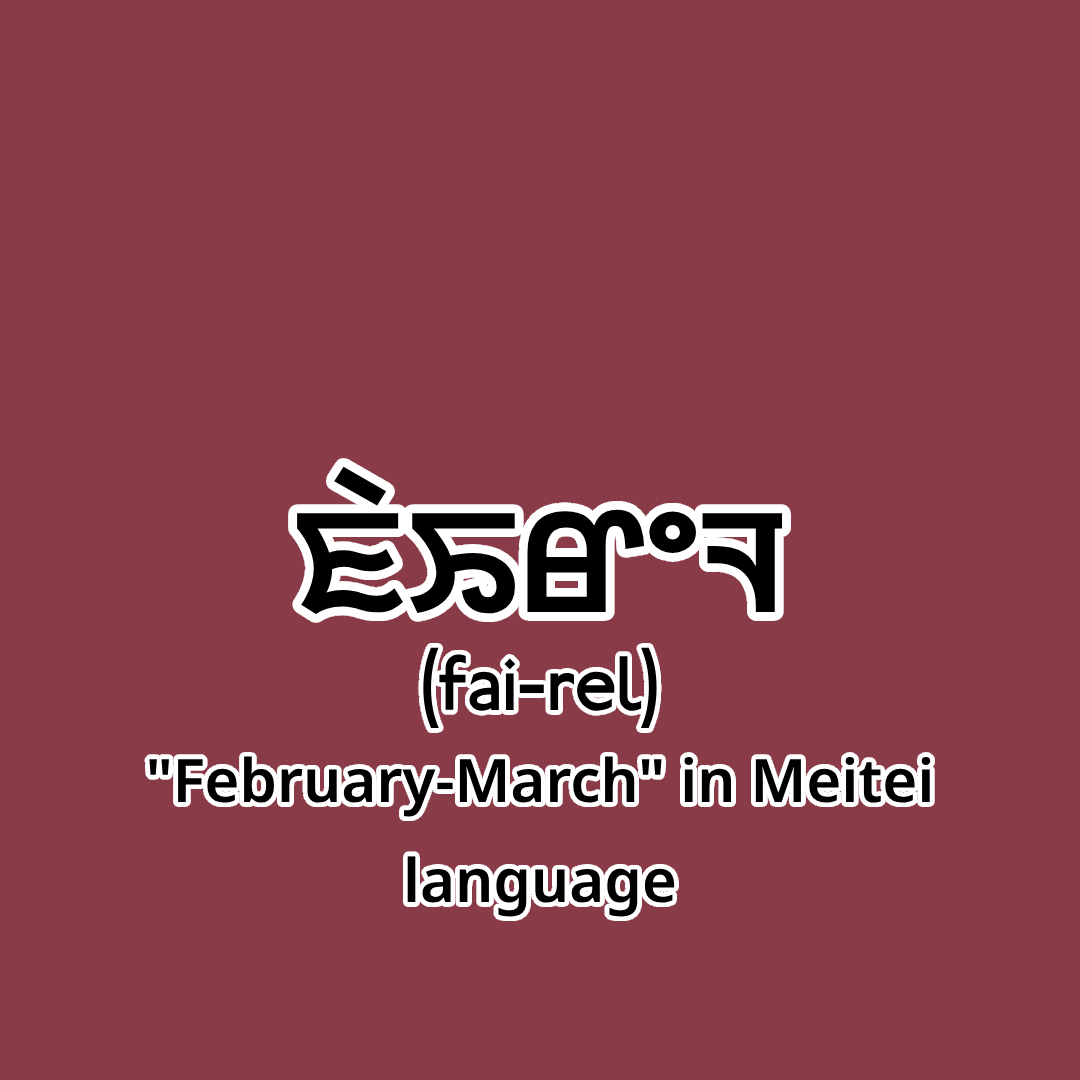
The month of February–March is called “Fairen” (ꯐꯥꯢꯔꯦꯟ) in the Meitei language. While Fairen technically spans both February and March, most of its days usually fall within February — which is why it’s commonly associated with that month.
In the Meitei lunar calendar, Fairen is the twelfth month of the year, and its name literally means “the twelfth month of the year” in English. The term has alternative spellings such as “Fairel”, “Phairel”, “Phairen”, and so on. It is derived from its older Meitei name, “Ashit” (ꯑꯁꯤꯠ) or “Failen” (ꯐꯥꯢꯂꯦꯟ), which also appears in variant forms like “Failel”, “Failen”, “Phailel”, “Phailen”, “Aashit”, “Aasit”, and “Asit”.
Lamta month
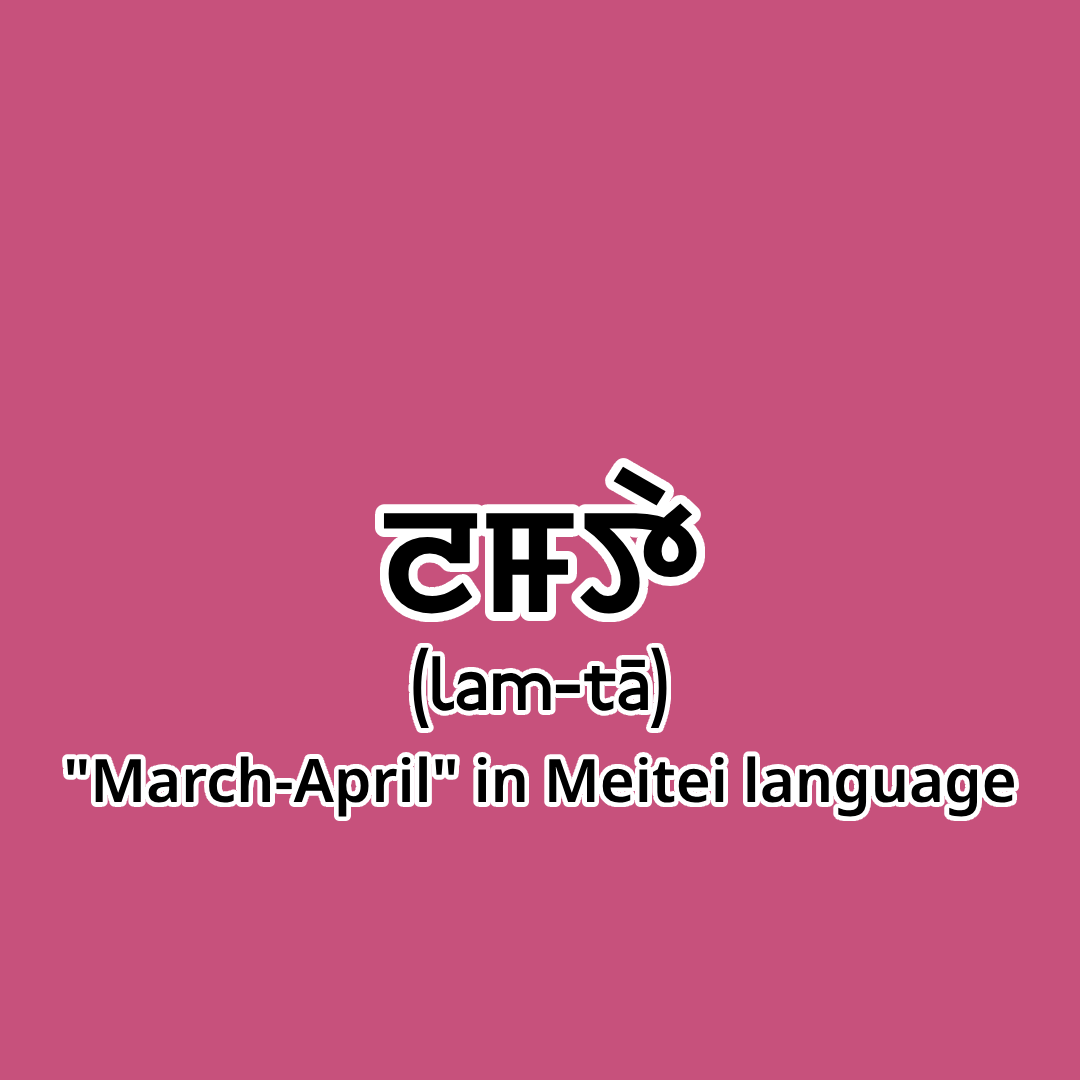
The month of March–April is called “Lamta” (ꯂꯝꯇꯥ) in the Meitei language. While Lamta technically spans both March and April, most of its days usually fall within March — which is why it’s commonly associated with that month.
In the Meitei lunar calendar, Lamta is the eleventh month of the year, and its name literally means “the eleventh month of the year” in English. The term has alternative spellings such as “Lamtaa”, “Laamtaa”, etc. It is derived from its older Meitei name, “Thapi” (ꯊꯥꯄꯤ), which also appears in variant forms like “Thaapee”, “Thapee”, “Thaapi”, “Thappee”, “Thaappee”, “Thaappi”, and “Thappi”.
New Year in Meitei
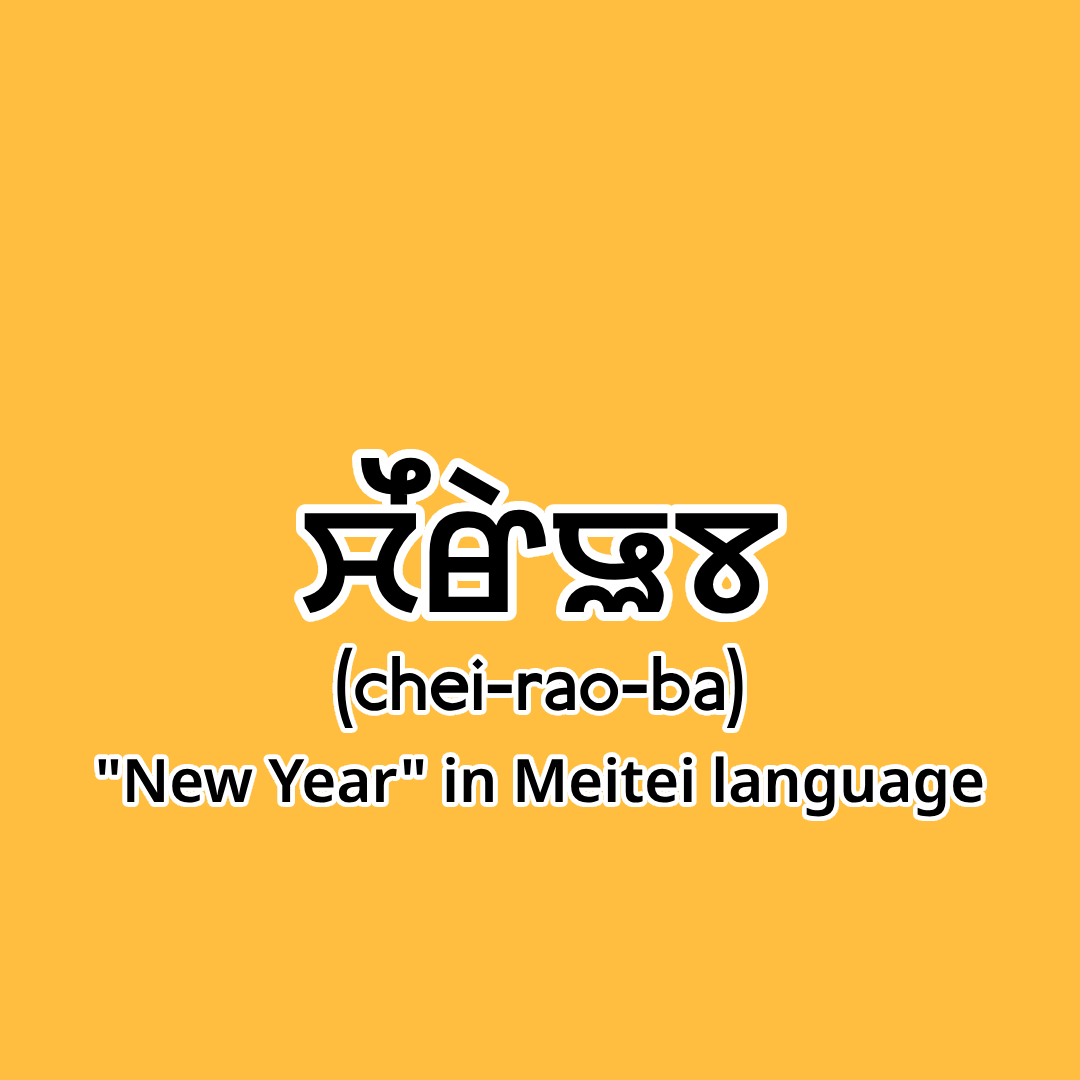
After the end of Lamta month, the new year begins. In Meitei calendar and culture, the new year usually starts in March, and occasionally in April.
The festival of Cheiraoba is also called Sajibu Cheiraoba (ꯁꯖꯤꯕꯨ ꯆꯩꯔꯥꯎꯕ), which means “New Year of Sajibu month” in English; Sajibu Nongma Panba (ꯁꯖꯤꯕꯨ ꯅꯣꯡꯃ ꯄꯥꯟꯕ), meaning “First day of Sajibu month”; and Cheiraoba Nongma Panba (ꯆꯩꯔꯥꯎꯕ ꯅꯣꯡꯃ ꯄꯥꯟꯕ), meaning “First day of the New Year” in English.
In older Meitei terms, the New Year is also called Sachipu Cheilaopa (ꯁꯆꯤꯄꯨ ꯆꯩꯂꯥꯎꯄ), Sachipu Nongma Panpa (ꯁꯆꯤꯄꯨ ꯅꯣꯡꯃ ꯄꯥꯟꯄ), and Cheilaopa Nongma Panpa (ꯆꯩꯂꯥꯎꯄ ꯅꯣꯡꯃ ꯄꯥꯟꯄ).
Special Note:
The writing style here is inspired by Goutamkumar Oinam, a fellow contributor to Medium about Manipur, Meitei culture, Meitei religion, etc.
Tag (s):
Sajibu Cheiraoba ; Meitei calendar ; Meitei culture ; Meitei lunar months ; Cheiraoba ; Sajibu ; Sanamahism ; Manipuri new year ; Lamta ; Fairen ; Wakching ; Hiyanggei ; Thawan ; Ingen ; Inga ; Kalen ; Sajibu Nongma Panba ; Cheiraoba Nongma Panba ; Ancient Meitei language ; Old Meitei terms ; Meitei month names ; Meitei Mayek ; Meitei phonetics ; Yek Salai ; Kangleipak ; Traditional Meitei timekeeping ; Meetei traditions ; Lunar calendar ; Manipuri heritage ; Cultural festivals of Manipur ; Indigenous calendar systems ; Seasonal colours ; Meitei astronomy ; Manipuri script ; Traditional calendar months ; Sanamahi calendar ; Thapunglon ; Kanglei sacred knowledge
메타데이터
- post_id
- fbeef3e4e029
- slug
- months-in-the-classical-meitei-calendar-fbeef3e4e029
- url
- https://medium.com/@victormangang/months-in-the-classical-meitei-calendar-fbeef3e4e029
- canonical_url
- https://medium.com/@victormangang/months-in-the-classical-meitei-calendar-fbeef3e4e029
- author_url
- https://medium.com/@victormangang
- status
- ok
- fetched_at
- 2026-07-19 09:26:45