Why I Struggled to Give Voices Like Tommy Robinson a Chance
A personal reflection on bias, experience, and the difficulty of questioning our own assumptions
Why I Struggled to Give Voices Like Tommy Robinson a Chance
A personal reflection on bias, experience, and the difficulty of questioning our own assumptions
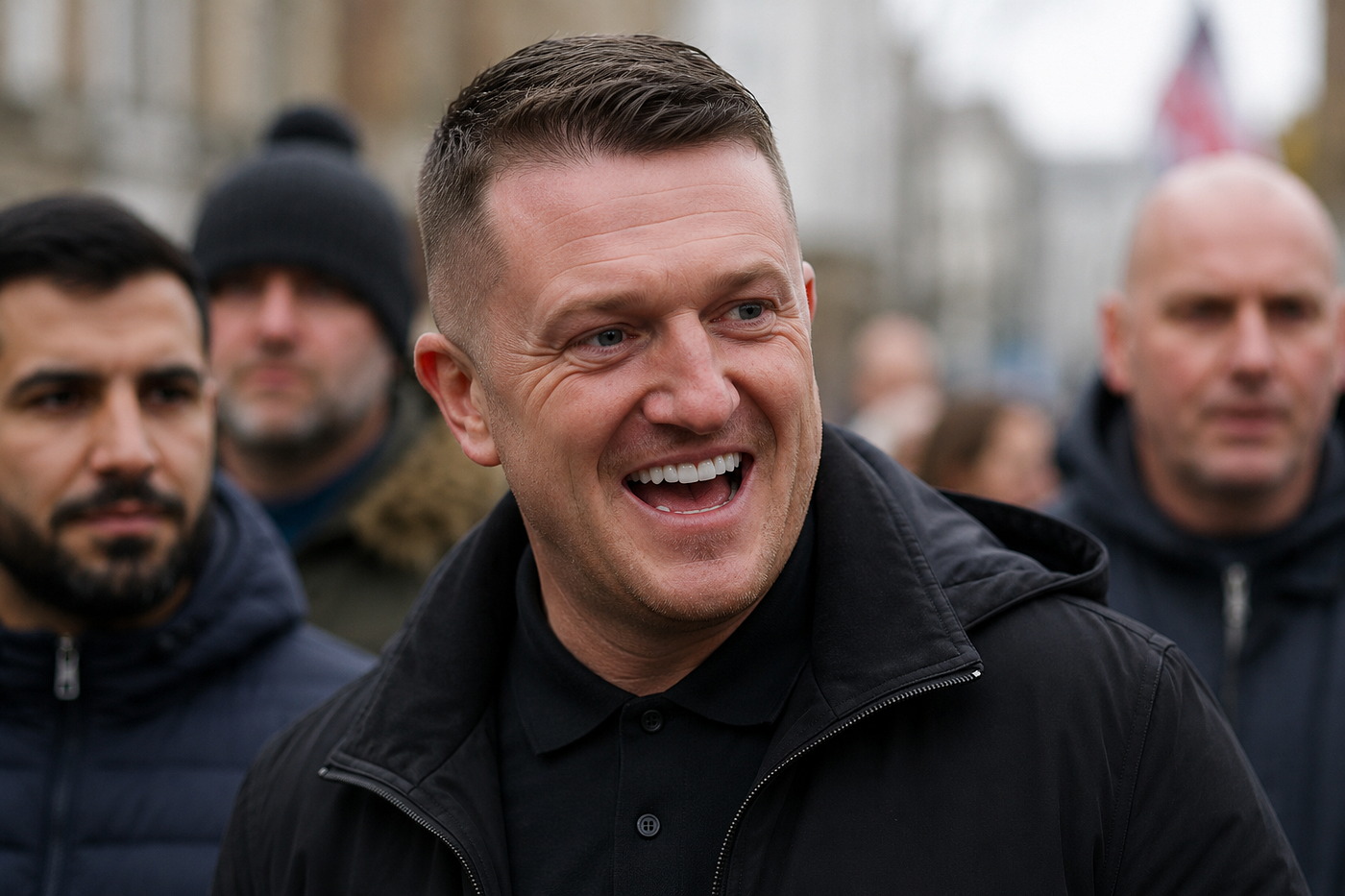
Photo credit: AI-generated (ChatGPT) illustration inspired by public appearances of Tommy Robinson. Used for illustrative purposes only.
Before I begin, let me make one thing clear. I am not speaking for everyone. I am speaking for myself. But I simultaneously suspect there are some people who may see parts of themselves in what I am about to describe.
Over the last few days, as I have been reading more about the UK grooming gang scandals and some of the institutional failures surrounding them, I found myself asking an uncomfortable question:
Why was it so difficult for me to even entertain the possibility that voices like Tommy Robinson might possibly have a valid perspective about certain aspects of this issue?
The more I reflected on it, the more I realized that my resistance did not come from a single source. It came from a collection of experiences, values, assumptions and observations that slowly formed a lens through which I viewed the world. I share this to explore the bias. To understand it. And may be to demonstrate how difficult it is for us humans to get over/dismantle some of these biases which are so layered and complex.
Here are some of the reasons that contributed to my blind spot:
- I have always been uncomfortable with hatred. Every time I gave even a brief chance to some of the voices speaking about some of the issues pertaining to Muslims in UK, I would quickly encounter language filled with contempt, hostility, generalizations and resentment. It felt like those voices had vocabulary come straight out of the hatred dictionary. That alone was enough to make me shut down and stop listening because the tone felt racist and filled with contempt. And because I saw so many arguments rooted in collective blame, it became even harder for me to separate legitimate concerns from prejudice.
- People often justified present-day hostility using past grievances. I would regularly see people bring up historical invasions, events from centuries ago, or the actions of other Muslims elsewhere in the world as reasons to distrust Muslims today. That never sat well with me. I have never believed people should inherit guilt for crimes they did not commit. Should we make accommodations for people who continue to be disadvantaged by the consequences of historical injustices? Absolutely. But should people living today be held personally responsible for what their forefathers did? My conscience has almost always answered that question with a firm no.
- My lived experience didn’t match the narrative. Every Muslim I have personally known beyond an acquaintance has treated me with kindness and respect. So when voices like Tommy Robinson and the likes painted Muslims as a threat, it conflicted with what I had actually experienced in my own life. I still hold this view — nothing has changed on this.
- Many of the people expressing hostility towards Muslims also held other views and prejudices that I strongly disagreed with. As a result, I found it difficult to trust their judgment on this issue as well. I felt they likely were blaming Muslims unnecessarily when data wasn’t actually supporting it.
- Many of the voices raising these concerns were supported by people whose politics and worldviews I already had concerns about. People like Tommy Robinson were often championed by political movements and personalities (Trump, Vance, etc.) that I did not trust. For one, some of these people were likely getting away from heinous crimes themselves (Epstein files for instance). Fair or unfair, I found myself dismissing the message along with the messenger just because it was cheered upon by these personalities.
- My own experiences of seeing religious minorities mistreated made me instinctively protective of groups I felt were being unfairly targeted.
- I generally support ideas like diversity, inclusion and efforts to correct historical disadvantages where they exist. Not because I think it makes me a better person (as most rightists typically think this is the only reason why people embrace this idea), but because I would rather live in a world where differences are accommodated than one where only certain groups are naturally positioned to succeed.
- I often felt that many people from the Tommy camp approached Muslims with suspicion rather than inclusion. That naturally influenced how I responded whenever criticism of Muslims or the pointing of them as most likely perpetrators of these crimes arose. My mind was drawing the parallel to how black people are typically targeted as the likely crime suspect in certain locations.
- Whenever I tried to verify some of the claims made by voices like Tommy Robinson for myself, the information I found from sources that were generally regarded as credible and trustworthy often pointed in a different direction. In some cases, sources said did not seem to support the conclusions that were being made by voices like Tommy Robinson. So I concluded that people like Tommy Robinson were filling in the gaps with assumptions and biases. Looking back now, I can understand why I arrived at that conclusion, even if I am beginning to question whether it was the correct one considering I am now realizing how the whole system and state machinery was likely skewing the data available to general public.
- I struggled to believe that institutions across an entire country could repeatedly, coherently fail to confront something so serious if it were happening at the scale some people claimed. I couldn’t understand the motive behind why the whole state machinery would support henious crimes like this and do everything to hide it. I couldn’t understand how so many people could look the other way and how so many people’s humanity and conscience could have been suppressed by a political agenda. That explanation felt less believable to me than the possibility that the claims themselves were exaggerated to likely fill a racist agenda.
Taken together, these things created a mental block.. In other words a bias which prevented me from giving some of what voices like Tommy have been saying all along a fair chance. Notice none of these are individually responsible for this bias in me. Not one thing. Not one fact. Not one ideology.
A whole chain of experiences, values, assumptions and observations I have picked up along my path of life.
I share this not to justify my bias, but to facilitate an understanding of it. And perhaps to show how our opinions are rarely formed by a single fact. They are shaped by our experiences, values, fears, loyalties, environments and the people we choose to trust.
Perhaps your bias was completely different from mine. Perhaps some of these reasons resonate with you. Perhaps you have your own experiences that led you to distrust or not even give a chance to voices like Tommy Robinson.
Or perhaps you were simply on Tommy camp for many other reasons, one of which can include because you carried the hatred without even needing to know the truth — a bias in itself (because none of us still know the truth with certainty until investigations take place).
Whatever the case, I think it is worth examining. Because our biases are rarely born from a single bad intention. Sometimes they are born from compassion. Sometimes from personal experience extending empathy. Sometimes from trust or lack thereof. Sometimes from fear of becoming the very thing we oppose.
And perhaps that is what I am sitting with right now.
I can see exactly why I believed what I believed. And yet, I can also see where it may have led me astray.
Urgh… being human is so freaking hard!!! Whoever says it is easy to be human is a big fat liar or is probably not being honest with themselves!
A few disclaimers before my words can be misconstrued:
- I am not suddenly agreeing with everything Tommy Robinson or his supporters say. Nor am I claiming that every concern they have raised is automatically valid.
- All I am saying is that I have become aware of a bias that made me less willing to consider some of those claims than I perhaps should have been. I am now trying to examine that blind spot with a little more honesty.
- Likewise, I am not suddenly viewing Muslims differently because I am willing to consider the possibility that a disproportionate number of perpetrators in the UK grooming gang scandals may have come from a particular background. I still believe good human beings exist in every community, and I refuse to let the actions of some become a judgment of all.
- Most importantly, I do not view the Lowe Report as the ultimate truth — at least not yet. Reports are not the same thing as reality. They are attempts to understand reality, and like all human efforts, they can be incomplete, flawed, influenced by assumptions, or even shaped by political motivations. So while this report has challenged some of my existing beliefs and prompted me to re-examine my own biases, I am not rushing to replace one certainty with another. I am simply making room for a possibility that I may have dismissed too quickly before. It is entirely possible that future investigations will strengthen some of the report’s conclusions. It is also possible that they will challenge parts of it. For now, I am trying to hold both curiosity and skepticism at the same time.
- I also have no intention of embracing the hatred, hostility or collective blame that can sometimes accompany these conversations. If anything, one of the reasons I developed this blind spot in the first place was because I found those things so deeply uncomfortable.
- Nor does being biased about this one issue suddenly make me a full fledged right-winger. If there is anything this reflection has taught me, it is that all of us carry biases. This just happens to be one that I became aware of in myself.
- I am not sharing this because I think people on the opposite side of me are free of bias, or because I believe only people with left-leaning views on this issue are flawed and need to re-examine their bias. Far from it. If there is one thing this experience has reinforced for me, it is that bias is a deeply human thing. It exists across ideologies, political camps, religious affiliations and worldviews. I am sharing this because I can only take responsibility for my own biases. And this one, at least, is mine.
In short, I have moved from, “They’re probably just being Islamophobic, or racist” to, “I don’t know. I’ll continue to try to understand more.”
And right now, “I don’t know” feels like the more honest position.
메타데이터
- post_id
- fbfba2ed8956
- slug
- why-i-struggled-to-give-voices-like-tommy-robinson-a-chance-fbfba2ed8956
- url
- https://medium.com/the-political-prism/why-i-struggled-to-give-voices-like-tommy-robinson-a-chance-fbfba2ed8956
- canonical_url
- https://medium.com/the-political-prism/why-i-struggled-to-give-voices-like-tommy-robinson-a-chance-fbfba2ed8956
- author_url
- https://medium.com/@krutikarta
- status
- ok
- fetched_at
- 2026-07-08 18:29:56