Best of KubeCon Europe 2026
The waves of technology are crashing over me at KubeCon Europe, and I can’t hold the excitement in, so I’m going to share the best parts of…
Best of KubeCon Europe 2026
The waves of technology are crashing over me at KubeCon Europe, and I can’t hold the excitement in, so I’m going to share the best parts of KubeCon.
Platform Coffee
If you get up super early in Amsterdam during KubeCon and head to Brasserie Nenette, you’ll find several tables filled with deep conversation. From 7am to 8:30am, Platform Coffee fills the room with Lean Coffee discussions.
David Stenglein is the architect of Platform Coffee, and when it’s not running in person at KubeCon, you can find it online through the CNCF Platform Engineering Slack channel (you may need to join the Slack community first).
Co-located events
On day zero of KubeCon, the co-located events take place. This is a vibrant and focused set of events for Argo CD, Platform Engineering, and other CNCF sub-groups.
This year, I gave a flash keynote at ArgoCon based on data from the State of GitOps report. This was an exclusive “cut” of the data where we pulled out Argo CD to compare it to everything else.
You should also check out the welcome and intro from Dan Garfield and GitOps and Secrets: State of the Union from Kostis Kapelonis.
KubeCon
Today, I got excited about creating a toolchain that includes solid favourites and some shiny new things that I’ve been learning about from their creators. As CI is a solved problem, let’s pick things up from there.
Cloudsmith
Cloudsmith sits at the end of your build process and handles artifact management, supply chain security, package scanning, and policies. The idea is that instead of generating SBOMs that go unused, you ensure every package meets policy before you distribute it.
With the Digital Operational Resilience Act and the recent Cyber Resilience Act, this is a hot topic in Europe. Cloudsmith acts as your artifact authority, guarding the door and checking whether your packages meet the dress code (and you set the policy with Rego).
If you haven’t seen Rego before, here’s a quick door policy to deny trainers and athletic shoes. If you’re dealing with security and compliance, you’re going to meet Rego at some point, as this is the de facto language for defining policies.
No trainers! Rego definition:
Cloudsmith sits right in the middle of CI/CD, helping you keep CI and CD decoupled (because CI is not CD). If you have teams using different CI tools, you can funnel everything into Cloudsmith to create a single artifact authority for all your packages.
Argo CD and Octopus
Argo CD landed in Octopus in October 2025, adding to the Kubernetes API and Kubernetes Agent options. Previously, I’ve preferred the Kubernetes Agent as it’s the easiest way to crack on with container deployments.
When I looked more closely at GitOps in the State of GitOps report, the data painted a very clear picture that the Open GitOps principles have a deeply positive impact on many of the things I care about: Software delivery performance, security, compliance, auditability, reduced access, and drift prevention.
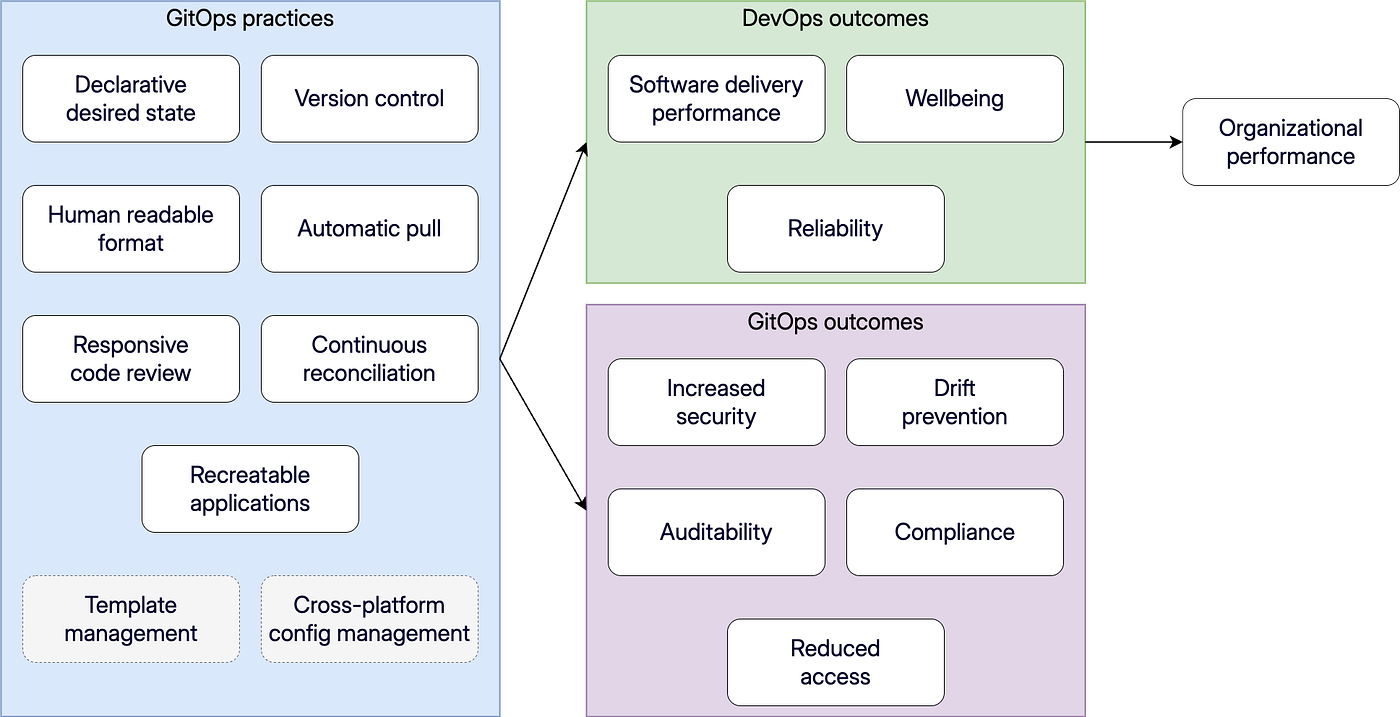
Combining Argo CD, designed for GitOps, with Octopus’s powerful modeling gives you a scalable way to manage deployments. In Platform Hub, Octopus uses Rego to set policies and powerful template management, making it easy for teams to meet policy requirements.
Octopus is the number one maintainer of Argo CD and (through Codefresh) was the first commercial maintainer when Intuit opened a call for maintainers, after they acquired Argo creators, Applatix.
Argo CD timeline
- 2016: Codefresh public launch. The first Kubernetes-native CI/CD tool.
- 2017: The initial Argo CD commit by Applatix
- 2018: Intuit acquires Applatix
- 2018: Codefresh joins the Argo CD project as the first commercial contributor.
- 2024: Octopus acquires Codefresh and their superstar Argo CD maestros.
- 2025: Argo CD in Octopus (yay).
The Cloudsmith and Octopus toolchain
This is where Cloudsmith pops back up: make sure you check back with Cloudsmith to get the green light on policies and perform artifact attestation before you let the package progress through your deployment pipeline to production.
Argo CD the right way
A related highlight was getting a copy of Argo CD the right way by Kostis Kapelonis. This book lets you know about 30 wrong turns people often make with Argo CD. For each one, it explains the pain you’re going to get if you apply the anti-pattern, and it lets you know how to do it the right way instead.
The whole stack of books got snapped up, but I wrestled some folks to the ground to make sure I got hold of a signed copy all of my own. Thank you, Kostis, for the wonderful personalised message!
Datadog
So now your app is deployed safely and reliably to production, and it’s working perfectly, or is it? That’s where Datadog joins the toolchain. It has been part of my go-to toolbox for a long time, and it’s where I refined my thoughts on things like the three Fs of event log monitoring.
From a practical perspective, Datadog makes you the first to know when there’s a problem. That means you get to resolve an issue before it becomes service-impacting in many cases. Over time, you move from CPU-watching to more sophisticated metrics that reflect your software’s purpose and that are reliable early indicators of problems, including when you deploy a working software version that actually harms your business metrics.
When I was running software teams, Octopus and Datadog were often the two tools that solved the most problems as they fill crucial gaps. If you have these gaps, the business usually thinks the development teams are idiots.
Akamas
This was a tip-off from a friend. Akamas ingests data from your monitoring tools (like Datadog) and helps you right-size your clusters and containers. I’ve used cloud cost management tools that flag when you’re using a virtual machine of the wrong size, but this goes way deeper in two ways.
It looks deeper into your setup (JVM/Node/Kubernetes/Node pools) and can suggest changes via pull requests so that you can stick to your GitOps process.
This will help you reduce costs, and it will also improve stability, as it will tell you if you’ve underspecified something.
Kratix
This was another tip-off, but from an Argo CD user who had a conversation with me about their setup. When they asked how other tools fit with Kratix, I realised I didn’t have enough deep knowledge of Kratix to help them… other than “it’s a cool Platform Engineering tool made by really nice people”.
After basking in my own sense of failure for a minute, I went to the Kratix booth to learn more about what it does. The essential explanation that clicked with me (and all credit to the Kratix team for the metaphor) was that Kratix is a vending machine. Platform teams can stock the vending machine with capabilities, and application teams can self-service these capabilities when they need them.
The platform team can provide snacks, like “A Jenkins”, or a ready meal like “a deployment pipeline with CI tool, CD tool, and observability”, or maybe even “GitHub, Cloudsmith, Octopus, and Datadog,” which sounds good to me.
This is where platform teams should start, rather than Backstage (if you add Backstage later, you can plug Kratix in and populate Backstage with something useful!)
Toolchains rock
Whenever I’ve pulled tools into a toolchain in a development team, it has always been to turn a weakness into an opportunity to shine.
When the CTO gets an angry call from a customer CEO… we need Datadog to snitch on problems before they escalate that far.
When the development team looks sloppy because they trash production during deployments… we need Octopus to make deployments stress-free.
A really great toolchain has tools that complement and amplify each other. This is why toolchains often beat all-in-ones. Your all-in-one might tick off a feature box (artifact management), but it won’t be implemented at the depth of Cloudsmith. It might let you script up deployments, but it’s really tricking you into writing your own CD tool using bash scripts.
As you build out a great toolchain, you’ll progress from the high-impact areas (the ones solved by the tools I just mentioned) to smaller improvements that continue to elevate your software delivery and operations stories.
We know it’s not all about tools; organizational culture plays a massive role in the success of software products. What I’ve found repeatedly is that a great toolchain can trigger cultural transformation by changing how people view software teams.
Originally published at https://stevefenton.co.uk on March 24, 2026.
메타데이터
- post_id
- fc0e90f8a7e3
- slug
- best-of-kubecon-europe-2026-fc0e90f8a7e3
- url
- https://medium.com/@steve.fenton/best-of-kubecon-europe-2026-fc0e90f8a7e3
- canonical_url
- https://medium.com/@steve.fenton/best-of-kubecon-europe-2026-fc0e90f8a7e3
- author_url
- https://medium.com/@steve.fenton
- status
- ok
- fetched_at
- 2026-07-14 03:37:49