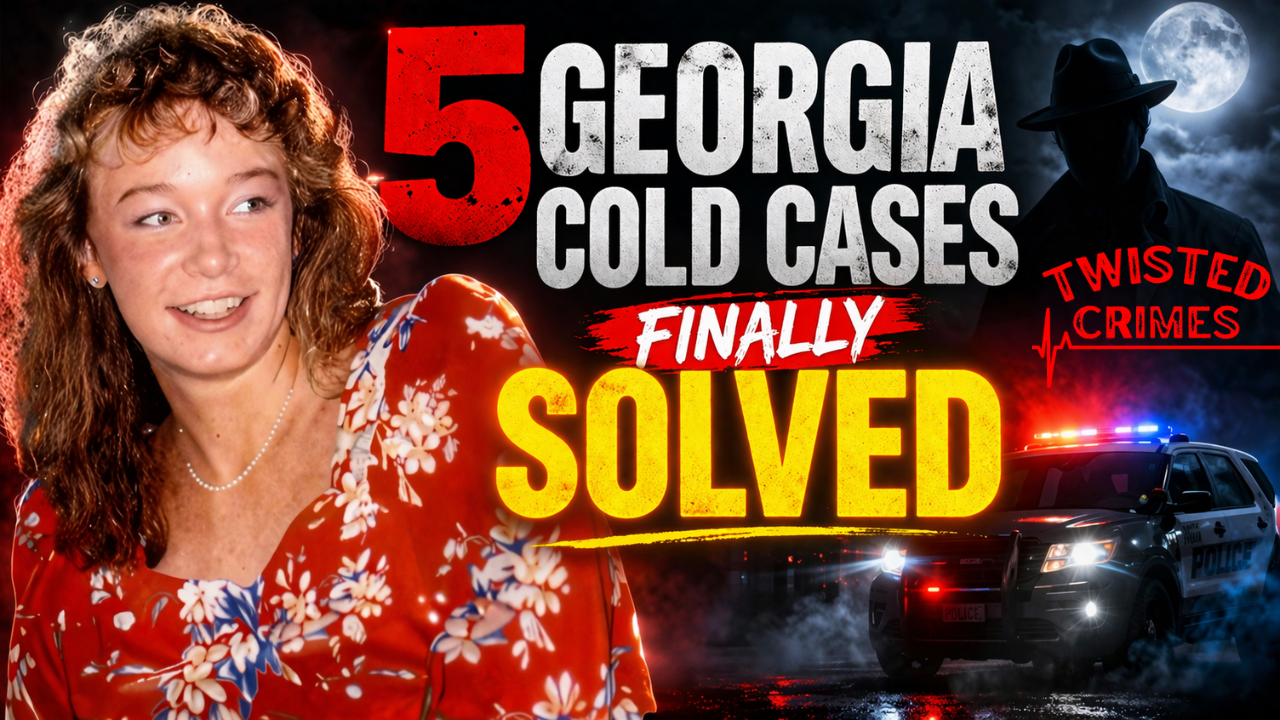
2 Utah Cold Cases FINALLY Solved
For decades, these killers believed Utah had buried their secrets.
2 Utah Cold Cases FINALLY Solved

For decades, these killers believed Utah had buried their secrets.
One case began under the glowing lights of Salt Lake City, where an eighteen-year-old girl vanished on her way to work.
The other unfolded in the remote desert darkness of rural Utah after a young Army veteran went on a date and never came home.
Years passed. Witnesses disappeared. Evidence sat untouched in storage boxes, and families slowly began losing hope that anyone would ever be held accountable.
But what these killers didn’t know was that decades later, DNA technology would begin speaking for the dead.
Investigators would uncover horrifying new details that completely changed both cases, including one suspect police now believe may have been stalking women along one of Salt Lake City’s most dangerous roads.
We’re diving into two Utah cold cases that finally came back to life, and the chilling mistakes that ultimately exposed the people responsible.
Case One: Christine Gallegos
In the mid-1980s, Salt Lake City looked very different than it does today.
The glowing neon along State Street cut through the darkness at night.
Cars rolled past old motels, bars, and convenience stores, and just beyond the city lights, the Wasatch Mountains stood silent over everything below.
But beneath that growing city atmosphere, women were disappearing.
According to investigators, one predator may have been moving through Salt Lake City almost unnoticed.
Eighteen-year-old Christine Gallegos was young, outgoing, and deeply in love with her fiancé, Troy.

Her mother later described her as sweet, energetic, and full of life.
Christine had plans. A future. A family she hoped to build someday, but on the night of May 15, 1985, all of that was stolen from her.
Christine was trying to get to work.
Like many young people at the time, she hitchhiked.
That same night, a man was driving alone in the darkness.
He was not on his way to work. He was instead looking for young women out alone.
Easy targets for him.
Investigators believe he stopped and offered Christine a ride, but she never made it to her job.
Sometime that night, police believe that man drove her to a remote area near what was then known as Dirk’s Field in Salt Lake City.
What happened next was horrifying.
Investigators say Christine was brutally beaten, sexually assaulted, stabbed, and shot twice in the head.
The violence of the attack immediately stood out to detectives.
It was obvious she had fought desperately for her life. There were signs of a struggle everywhere. Whoever attacked Christine had encountered resistance, and investigators believed that may have escalated the violence even further.
The next day, May 16, 1985, Christine’s body was discovered near 1384 South Jefferson Street, and just like that, another brutal murder was added to Salt Lake City’s growing list of unsolved crimes.
What makes this case especially terrifying is how random it appears.
Investigators eventually said they found no evidence that Christine even knew her killer. That means this may have been a complete stranger attack.
A young woman simply trying to get to work, getting into the wrong car.
In 1985, detectives worked the case aggressively. They interviewed witnesses, processed evidence, sent forensic material to labs over and over again, but every lead collapsed.
Years passed.
Then decades.
Christine’s murder slowly became one more cold case sitting inside storage boxes and police databases, but investigators never completely gave up.
The case stayed active inside the FBI’s ViCAP system and later the Utah Cold Case Database.
That decision would eventually matter, because nearly forty years later, technology finally caught up with the killer.
In 2023, Salt Lake City detectives reopened Christine’s case with help from Utah’s Cold Case Review Board and the Utah State Crime Lab.
They focused on one critical piece of evidence: an unidentified male DNA profile.
For years, that DNA had gone nowhere, but now investigators had something they didn’t have in 1985.
Investigative genetic genealogy.
The same type of forensic science that has solved dozens of cold cases across the country.
Using funding from the Sexual Assault Kit Initiative, detectives sent evidence to Othram Labs in Texas, a company known for specializing in advanced genealogy testing, and slowly, a name finally emerged.
Ricky Lee Stallworth.
Twenty-seven years old in 1985. A U.S. Air Force airman stationed at Hill Air Force Base. Living in Layton, Utah.
According to police, he was a man whose name had never once surfaced during the original investigation.
Which is one of the craziest parts of this story. This wasn’t a suspect detectives had overlooked. This wasn’t an ex-boyfriend or somebody in Christine’s social circle. He was completely unknown to investigators for almost four decades.
To confirm the identification, detectives contacted Stallworth’s surviving relatives.
A voluntary DNA sample from one of his family members matched the crime scene evidence.
After forty years, police finally knew who killed Christine Gallegos, but there was a devastating twist, Ricky Lee Stallworth had died in July of 2023 from natural causes, just months before detectives identified him.
Retired Detective Cordon Parks later admitted publicly, “I wish we could have got to him before he died.”
Because investigators never had the chance to interrogate him, never had the chance to ask why, never had the chance to learn whether Christine was his only victim.
That possibility became even more disturbing as detectives dug deeper into Stallworth’s past.
According to investigators, Stallworth was known to disappear overnight and return the next morning without explanation.
Police reports from the final years of his life also showed he had been associated with prostitutes.
One of his ex-wives reportedly told detectives she was not surprised police were collecting his DNA in connection to a murder investigation.
That statement says a lot.
Because usually when police contact family members decades later, there’s shock, disbelief, but according to detectives, at least one ex-wife immediately thought it was believable.
Investigators also began exploring the possibility that Stallworth may have stalked women along State Street in Salt Lake City during the 1980s.
And if you know anything about State Street during that era, that detail becomes chilling.
Back then, parts of the corridor were lined with motels, clubs, truck stops, and areas known for prostitution and transient activity.
Easy places for predators to blend in.
Easy places for vulnerable people to disappear.
Investigators now believe Stallworth may have been moving through those areas unnoticed for years, but because he died before being identified, many questions may never be answered.
Did he specifically target Christine? Did he pick her up randomly while she was hitchhiking? Was she his only victim? Or were there others who were never connected to him?
Those answers may have died with him.
Still, for Christine’s family, the announcement brought something they had waited almost forty years to hear.
A name.
At a press conference announcing the case had finally been solved, Christine’s mother stood beside investigators and spoke emotionally about the daughter she lost in 1985.
“She was in love with her fiancé, Troy,” her mother said. “They had a family planned.”
Then she added something heartbreaking, “I wonder about the kids that she would have. I watch other people with their daughters, their grandkids. They took so much away when they took her away.”
That’s the part people sometimes forget with cold cases.
Families don’t just lose someone once. They lose every future moment too.
Birthdays.
Grandchildren.
Holidays.
Entire lifetimes disappear.
Salt Lake City Police officially closed Christine Gallegos’ case in 2025, forty years after her murder.
While there were no handcuffs, no trial, and no courtroom confession, investigators say they now know exactly who took Christine’s life.
It’s another reminder that cold cases are changing across America.
Killers who once escaped justice through time, luck, or limited technology are now being identified decades later through DNA they never knew they left behind.
Sometimes the dead speak louder after forty years than killers ever expected.
But while Christine Gallegos’ killer hid in the shadows of Salt Lake City, another Utah cold case was unfolding hundreds of miles away in a place that looked completely different.
No neon lights, no busy city streets, just open desert, isolated highways, and the kind of small town where violent crime almost never happened.
When this murder struck in 1972, it terrified an entire community.
Case Two: Gregory Nickell
In late November, the landscape around Vernal, Utah, becomes cold, quiet, and almost eerie.
The mountains turn dark early.
Wind moves through the empty desert roads.
At night, the isolated overlooks outside town feel completely cut off from the rest of the world.
In 1972, Vernal was the kind of place where people left doors unlocked.
Everybody knew everybody.
According to longtime residents, murder simply wasn’t something people worried about.
Then came the weekend after Thanksgiving, and suddenly, everything changed.
Twenty-one-year-old Gregory Dahl Nickell had recently returned home after serving in Vietnam.
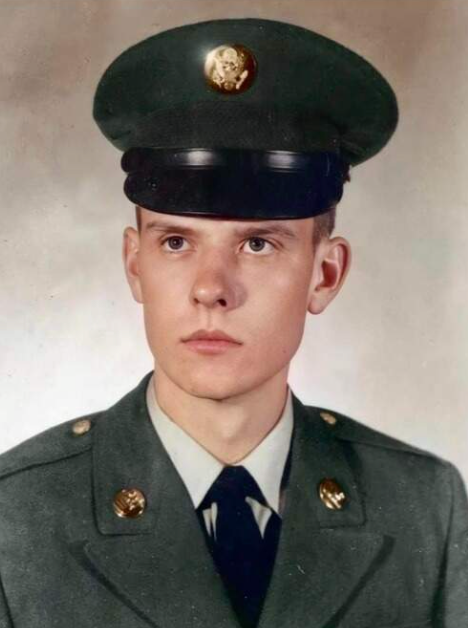
Friends and family described him as well-liked, respectful, and the kind of young man nobody could say a bad word about.
His sister later said, “Greg was loved by everyone.”
On the night of November 25, 1972, Gregory went out on a date with an eighteen-year-old woman.
At some point after 1 a.m., the couple parked at a scenic overlook west of Vernal near Highway 40.
It should have been an ordinary night.
Instead, it became one of the most horrifying crimes in Utah history.
According to investigators, a stranger approached the car and claimed there had been an accident nearby.
He told Gregory he needed help contacting the sheriff.
Gregory agreed, but as he turned, the man pulled out a .22-caliber pistol and opened fire.
Investigators say Gregory was shot multiple times.
His date later told police Gregory tried shielding her from the bullets.
Even while dying, he was trying to protect her. That detail makes this case incredibly emotional. In her final moments with him, he wasn’t thinking about himself. He was trying to save her.
After shooting Gregory, investigators say the attacker shoved his body onto the young woman inside the car and drove away.
Then something even more terrifying happened.
Another vehicle appeared behind them, flashing its headlights.
The woman realized there wasn’t just one attacker.
There were two.
The suspects drove deep into a remote area miles away from the overlook. There, they set Gregory Nickell’s car on fire with his body still inside. Over the next several hours, investigators say the two men repeatedly terrorized and did horrible things to the eighteen-year-old woman.
For much of the ordeal, her attackers kept a blanket or bag over her head. She could barely see where they were taking her. She could barely identify the men.
Eventually, after hours of terror, they dumped her near Duchesne and disappeared into the darkness.
Back in Vernal, panic spread quickly. Longtime residents later described the murder as something completely foreign to the town.
One resident remembered being afraid to go outside after dark because nobody knew who had committed the crime.
Investigators faced enormous problems from the beginning.
The surviving victim could provide only limited descriptions.
There was no surveillance footage.
No cell phones.
No DNA testing.
Despite sending dozens of pieces of evidence to the FBI Crime Lab in 1972, the investigation stalled.
Years passed.
Then decades.
Gregory Nickell’s murder slowly became one more cold case sitting inside evidence storage, but Gregory’s sister, Lynnette Ray, refused to let people forget. For more than fifty years, she stayed in contact with investigators. She pushed for answers and promised her brother she would never stop trying to solve the case.
She later said, “I promised Greg I would keep with this until the day I die.”
The fact is, families like that are one reason so many cold cases are finally being solved. Some people simply refuse to let the victim disappear.
Then came the breakthrough.
In 2015, investigators decided to reevaluate forensic evidence collected from the surviving victim back in 1972.
This is where modern DNA technology completely changed the case.
Back in the early seventies, investigators preserved evidence carefully, even though the science to fully test it didn’t exist yet. At the time, they had no way of knowing DNA testing would someday become powerful enough to identify killers decades later.
Thankfully, they saved it anyway.
In 2020, investigators resubmitted the evidence for advanced testing.
This time, they discovered two separate male DNA profiles.
One profile eventually identified a man named Daniel Arthur Bell.
Bell had been living in the Uintah Basin at the time of the murder and worked on a ranch.
Investigators later learned he had a disturbing criminal history.
In 1988, Bell was convicted of rape in Oregon, but there was another devastating twist, Bell had died in Washington state in 2019, before investigators identified him.
Still, detectives continued working to identify the second man.
Eventually, DNA led them to Darrell Eugene Choate.
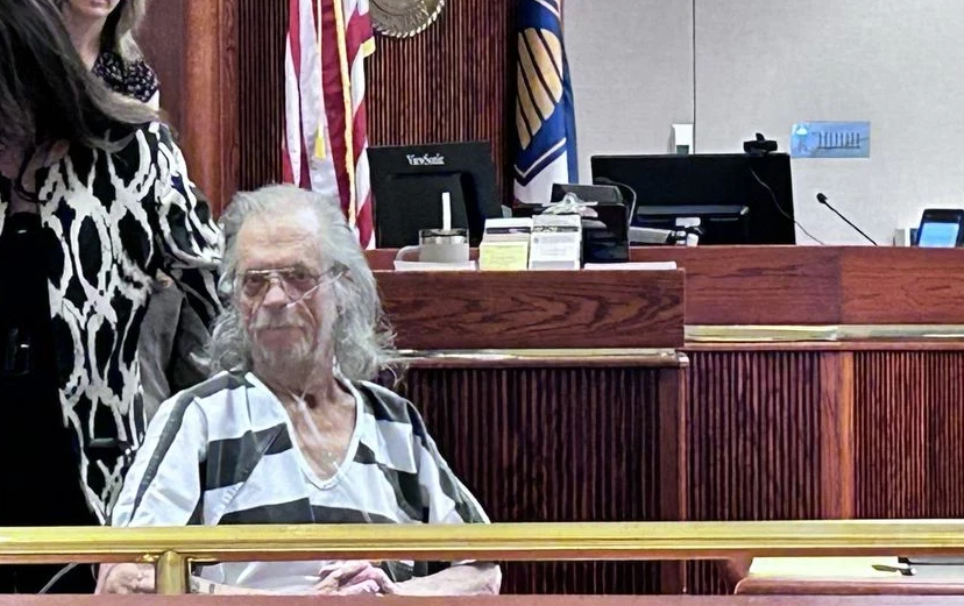
According to investigators, Choate had a long history across Utah and several western states, working jobs as a ranch hand, truck driver, oil field worker, and miner.
More than fifty years after Gregory Nickell was murdered, authorities finally obtained an arrest warrant.
Then came one of the most unbelievable moments in the entire case.
On November 26, 2024, exactly fifty-two years to the day Gregory was murdered, Darrell Eugene Choate was arrested.
That timing almost feels unreal.
Fifty-two years later, to the exact day.
Meanwhile, Gregory’s family had spent half a century waiting for someone to finally say, “We know who did this.”
Investigators said this may now be the oldest cold case murder prosecution currently moving through the Utah court system.
For Gregory’s sister, Lynnette, one question still remains.
Why?
Why murder a young Army veteran out on a date? Why destroy two families? Why terrorize an entire town?
According to her, she still wants to look the surviving suspect in the eye and ask him directly.
Beyond the brutality of the crime, this case also tells another story, a story about how dramatically cold case investigations have changed.
Because in 1972, investigators had almost nothing. No databases. No genealogy testing. No modern DNA analysis.
Today, a microscopic amount of preserved evidence can identify killers half a century later.
That’s exactly what happened here.
Steve O’Camb from Utah’s State Bureau of Investigation put it perfectly when he called this, “The golden age of cold cases.”
Killers who once believed time erased their crimes are now being hunted by science itself.
For the quiet town of Vernal, Utah, justice may have arrived fifty years late, but it finally arrived.
The New Era of Cold Cases
These two Utah investigations are separated by more than a decade, happened in completely different parts of the state, and involved very different victims.
Yet they share something remarkable.
Both killers believed they had gotten away with murder.
One vanished into everyday life after killing a young woman on her way to work.
The other disappeared into the rural West after helping carry out one of Utah’s most horrific crimes.
For decades, both cases sat inside evidence rooms.
Boxes gathered dust.
Families waited.
Investigators retired.
And many people assumed the truth would never be known.
But the evidence never stopped waiting.
As DNA science evolved, those forgotten pieces of evidence became powerful once again.
The same biological material that investigators collected decades earlier — long before anyone imagined forensic genealogy — became the key to finally identifying the people responsible.
These cases also highlight something investigators across the country are seeing more often.
Cold cases are no longer limited by the technology available when the crime occurred.
They are limited only by whether evidence was preserved.
A single hair.
A tiny amount of biological material.
A decades-old sexual assault kit.
Items that once seemed insignificant are now solving murders that once appeared impossible to crack.
For the families, that doesn’t erase decades of pain.
It doesn’t replace birthdays that were missed.
It doesn’t bring back holidays, weddings, grandchildren, or the futures that were stolen.
But it does provide something many families feared they would never receive.
Answers.
And in many cases, a name.
Conclusion
Two Utah cold cases.
Two killers who thought they had escaped forever.
One hid behind the chaos of a growing city.
The other disappeared into the deserts and backroads of rural Utah.
For decades, both crimes sat buried in old evidence boxes while families waited for answers that felt like they might never come.
But these cases prove something we’re seeing more and more across the country.
Time is no longer protecting killers the way it once did.
DNA.
Genetic genealogy.
And investigators willing to reopen forgotten files are changing everything.
For Christine Gallegos, justice came forty years later.
For Gregory Nickell and the young woman who survived that nightmare in Vernal, it took more than half a century.
Eventually, science caught up with the people responsible.
And somewhere out there tonight, there are other cold case killers who still believe they got away with it.
The scary part for them?
Their DNA may already be sitting in an evidence box, waiting for technology to catch up.
If history has taught us anything, it’s this:
Cold cases don’t always stay cold.
Sometimes justice simply waits for science to catch up.
And when it does, the truth has a way of finding those who thought they had escaped it forever.
Sources:
Salt Lake City Police Department — SLCPD Solves 1985 Cold Case Murder of Christine Gallegos https://police.slc.gov/2025/05/15/slcpd-solves-1985-cold-case-murder-of-christine-gallegos/
ABC News — Cold case murder solved 40 years after Utah teenager killed after hitchhiking to work: Police https://abcnews.com/US/salt-lake-city-utah-cold-case-murder-solved-christine-gallegos/story?id=121855149
CBS News — 40 years after Utah teen’s murder, police identify her killer as a U.S. airman https://www.cbsnews.com/news/cold-case-murder-christine-gallegos-salt-lake-city-suspect-identified/
KUTV — Suspect identified in Uintah County cold case nearly 50 years later https://kutv.com/news/local/uintah-county-utah-cold-case-murder-rape-gregory-dahl-nickell-daniel-arthur-bell-washington-1972-vernal-sheriffs-office
ABC3340 — DNA advancements lead to cold case breakthrough in Utah abduction, murder mystery https://abc3340.com/news/nation-world/dna-advancements-lead-to-cold-case-breakthrough-in-vernal-utah-abduction-murder-mystery
KUTV — Warrant for arrest filed for murder in Vernal 1972 cold case https://kutv.com/news/local/warrant-for-arrest-filed-for-murder-in-vernal-1972-cold-case
KUTV — Man arrested in Vernal murder case 52 years to the day the crime happened https://kutv.com/news/local/man-arrested-in-vernal-murder-case-52-years-to-the-day-the-crime-happened-darrell-eugene-choate-gregory-nickell-daniel-bell
메타데이터
- post_id
- fc1b5eb96344
- slug
- 2-utah-cold-cases-finally-solved-fc1b5eb96344
- url
- https://medium.com/@christophermcandrew/2-utah-cold-cases-finally-solved-fc1b5eb96344
- canonical_url
- https://medium.com/@christophermcandrew/2-utah-cold-cases-finally-solved-fc1b5eb96344
- author_url
- https://medium.com/@christophermcandrew
- status
- ok
- fetched_at
- 2026-07-14 07:27:29