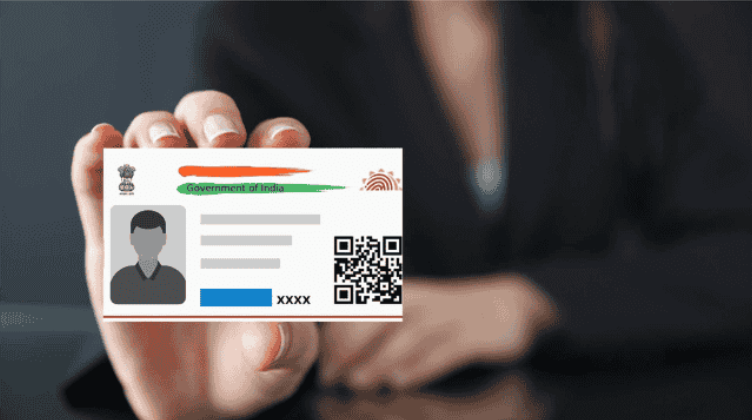
CKYC vs eKYC: The Complete Guide for Financial Institutions
If you work in banking, fintech, or compliance, you’ve probably heard the terms Central KYC (CKYC) and electronic KYC (eKYC) thrown around…
CKYC vs eKYC: The Complete Guide for Financial Institutions
If you work in banking, fintech, or compliance, you’ve probably heard the terms **Central KYC (CKYC) and[ electronic KYC (eKYC)** ](https://pixdynamics.com/ekyc-solution)thrown around a lot.
At first glance, they might sound similar — they both verify customer identities, after all. But in reality, they differ in purpose, execution, and even the way they impact your onboarding workflow.
Let’s break it down.
What is CKYC?
Central KYC (CKYC) is a government-led initiative in India managed by the Central Registry of Securitisation Asset Reconstruction and Security Interest of India (CERSAI).
The idea is simple yet powerful: bring all customer KYC records into one central repository so that data is uniform, duplication is avoided, and financial systems become more transparent.
Once a customer’s CKYC is completed, they’re assigned a unique 14-digit KYC Identifier (KIN). Any financial institution can use this KIN to access their verified details — no need to start the KYC process from scratch each time.
CKYC vs eKYC: The Key Differences
While both CKYC and eKYC aim to authenticate customers, the way they operate is quite different:
1. Authority & Management
- CKYC → Managed centrally by CERSAI under a government mandate.
- eKYC → Handled by individual banks, NBFCs, or service providers using Aadhaar-based systems.
2. Data Centralization
- CKYC → Stores customer data in one central registry accessible across financial institutions.
- eKYC → Data stays with the organization that conducted the verification.
3. Onboarding Method
- CKYC → Assisted onboarding with document submissions, sometimes in-branch.
- eKYC → Fully digital, self-service onboarding via apps or websites.
4. Verification Process
- CKYC → Document uploads, OCR/manual checks, possible physical verification.
- eKYC → Aadhaar OTP, biometrics, and instant document checks.
5. Reusability
- CKYC → One KIN can be reused across institutions.
- eKYC → Usually not reusable beyond the initiating organization.
6. Ideal Use Case
- CKYC → Regulatory compliance, long-term account management.
- eKYC → Fast, remote, digital-first onboarding.
How CKYC Works — Step by Step
- Customer Onboarding → Data collected in-branch or online.
- Document Collection → ID/address proofs submitted.
- Data Extraction & Verification → Details validated via OCR or manual checks.
- Image Compression → As per CERSAI’s format (Pixl’s automation handles this).
- Upload to CERSAI → Secure transfer via API/SFTP.
- KIN Issued → Unique identifier provided post-verification.
How eKYC Works — Step by Step
- User Initiation → Process starts on a website or mobile app.
- Document Submission → Aadhaar, PAN, or similar uploaded.
- Biometric Verification → Face, fingerprint, or voice matched with government records.
- Completion → If successful, onboarding is done instantly.
Types of CKYC Accounts
- Normal Account → For customers with full documentation.
- Simplified Measures Account → Limited documentation allowed.
- Small Account → Minimal documentation, low transaction limits.
- OTP-Based eKYC Account → Aadhaar OTP verification, usage limits apply.
How Pixl.ai Makes CKYC Easier
At **Pixl.ai, we’ve built a plug-and-play CKYC API** that works across mobile, desktop, and web platforms.
Here’s what sets it apart:
- Easy Integration → Works with on-premise or cloud setups.
- Real-Time Verification → Validate customer data instantly before upload.
- AI-Powered Automation → OCR + AI to extract, verify, and prepare documents.
- Pre-Upload Validation → Avoid rejections by fixing issues beforehand.
- Duplicate Detection → Alerts for potential repeat customer records.
Final Thoughts
The difference between CKYC and eKYC isn’t just technical — it’s strategic.
- CKYC is your long-term, regulation-focused record keeper.
- eKYC is your quick, digital-first identity check.
With **Pixl.ai’s CKYC and eKYC solutions**, you don’t have to choose one over the other — you get speed, compliance, and automation all in one place.
메타데이터
- post_id
- fc35dc918fcb
- slug
- ckyc-vs-ekyc-the-complete-guide-for-financial-institutions-fc35dc918fcb
- url
- https://medium.com/@pixldm1/ckyc-vs-ekyc-the-complete-guide-for-financial-institutions-fc35dc918fcb
- canonical_url
- https://medium.com/@pixldm1/ckyc-vs-ekyc-the-complete-guide-for-financial-institutions-fc35dc918fcb
- author_url
- https://medium.com/@pixldm1
- status
- ok
- fetched_at
- 2026-07-18 06:54:35