Anti-Intellectualism in the Age of Intelligence
The rise of far-right leaders and media outlets has fed into the distrust of deep state, fake news, and meddling with elections…
Anti-Intellectualism in the Age of Intelligence

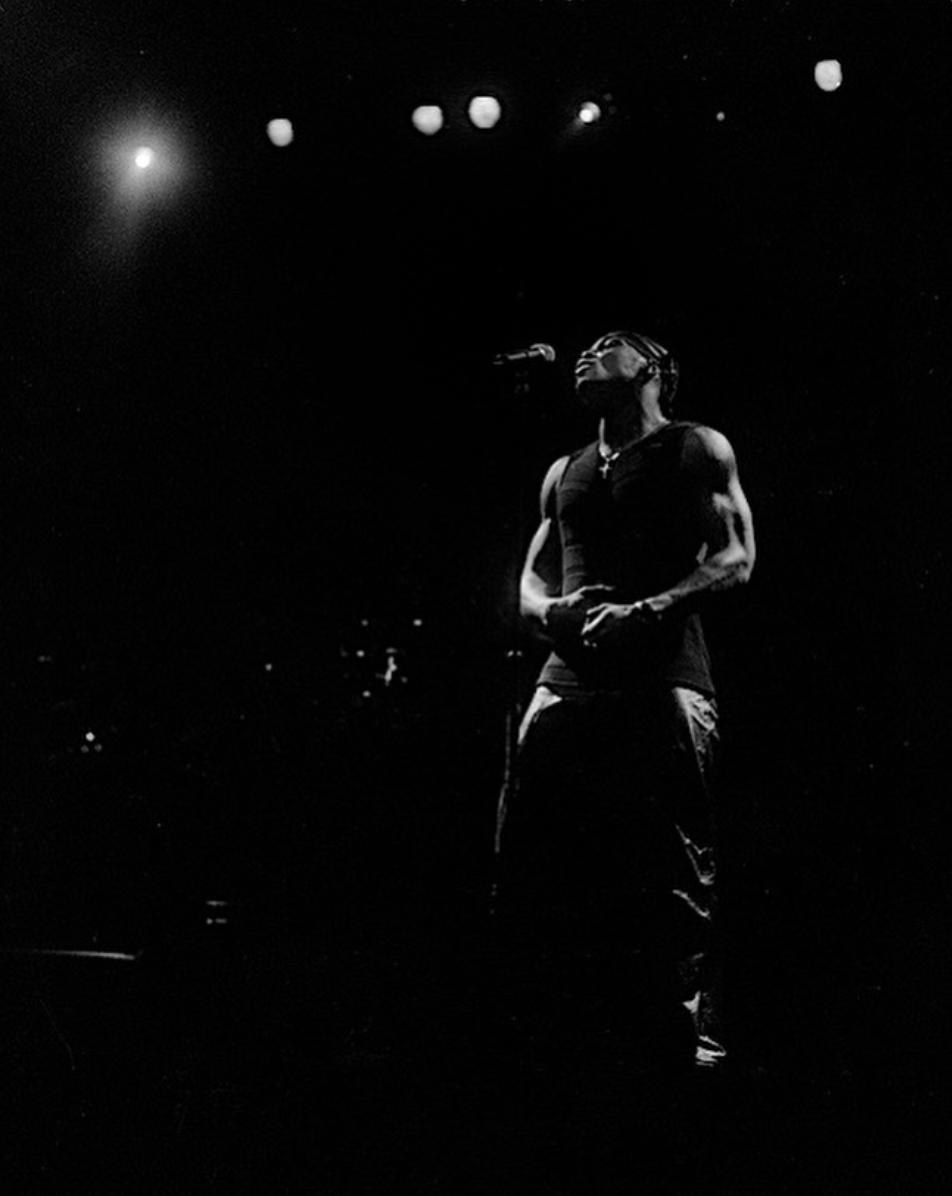
From top left to right: Kendrick Lamar, Jay-Z, Michael Eric Dyson, Drake, Adin Ross, DJ Akademics, Nicki Minaj
The rise of far-right leaders and media outlets has fed into the distrust of deep state, fake news, and meddling with elections, cultivating an “us-versus-them” mentality, with the “us” being common citizens and “them” being the elites. — Nadia Garrida via Fordham Political Review
I was a smart, empathetic and observant kid. My grades were As and Bs, I had perfect attendance every year and often volunteered in my schools and in the community. I lost track of time while reading books in the main public library, especially on rainy Saturdays. However, for some people, these things were seen as uncool [enter ‘nerd’, ‘geek’, ‘bookworm’] and, until the 5th grade, I was often bullied. Being a Black girl didn’t help (I was often discouraged by others). Later, I discovered I was street-smart, which meant I knew how to deal with the potential difficulties or dangers of life in different environments. I loved hip-hop and my favorite rap group was Public Enemy. Most of my peers were into pop and R&B music and none of them had any interest in computers or technology (years before AI).

My 1993 SAIC grad school interview with rapper Chuck D of Public Enemy
The elite of Black America goes to the colleges. But, if the elite goes to the colleges and then into the white working world, 3 out of 10 get a job and 7 come back to be managers at Wendy’s. All those years are wasted. — Chuck D via Nettrice Gaskins (me)
The tension of being “book smart” vs. being ‘street smart’ followed me through college and into adulthood. The former ‘smart’ involves academic, theoretical knowledge and logical reasoning, while the other ‘smart’ indicates practical, experiential, social or emotional intelligence for navigating real-world situations. Dr. Michael Eric Dyson is a person who claims to understand this tension. By the time Dyson had published Holler if You Hear Me: Searching for Tupac Shakur I was still nearly a decade away from starting my own Ph.D. journey. Dyson was on my radar back then because he hosted a radio show, was a frequent commentator on NPR, MSNBC and CNN, and a regular guest on Real Time with Bill Maher.
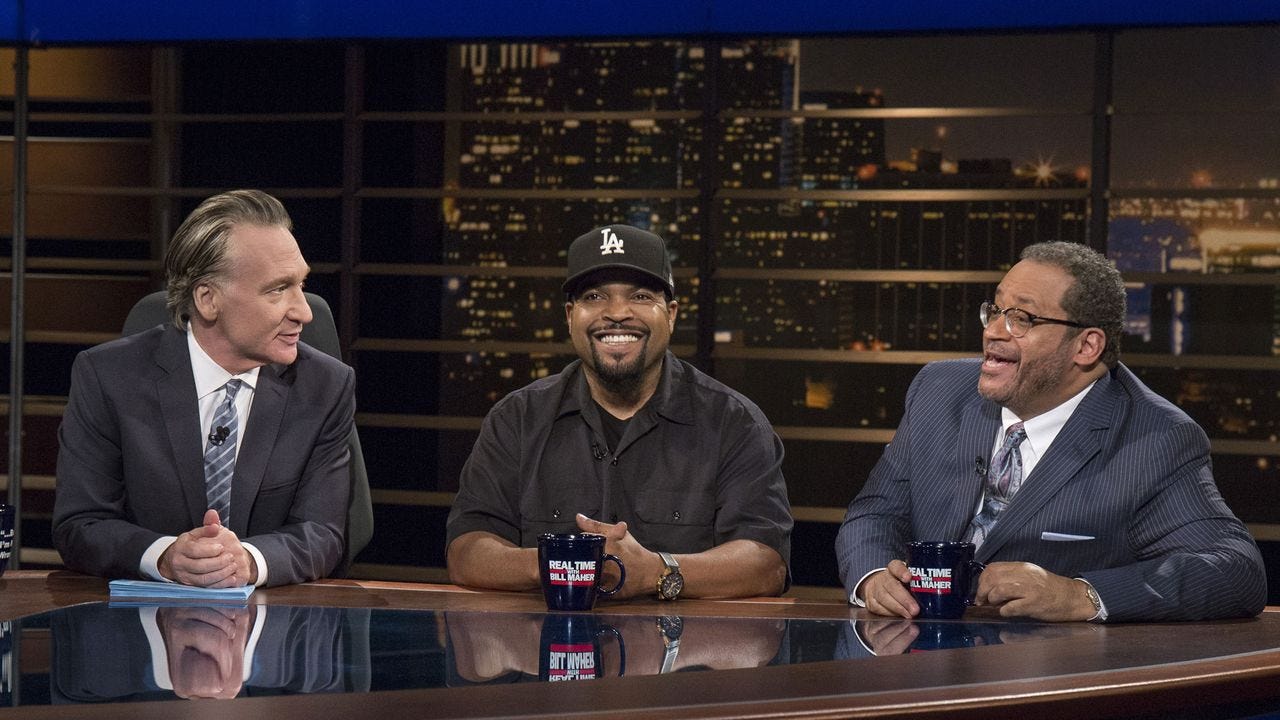
Bill Maher, Ice Cube, and Michael Eric Dyson on HBO’s “Real Time with Bill Maher,” after Maher drew criticism for saying the N-word. PHOTOGRAPH BY JANET VAN HAM / HBO
In an 2000 article, author Michael A. Fletcher described Dyson as “a Princeton Ph.D. and a child of the streets who takes pains never to separate the two.” For me this distinction came into question when I noticed that Dyson’s audiences were often people who were outside of street urban culture (hip hop) and Black culture. Dyson defended host Bill Maher who sparked outrage when he jokingly referring to himself as a “house n*****” on his HBO talk show Real Time With Bill Maher. The “Hip Hop Preacher” (Dyson) named-dropped Maher again more recently.
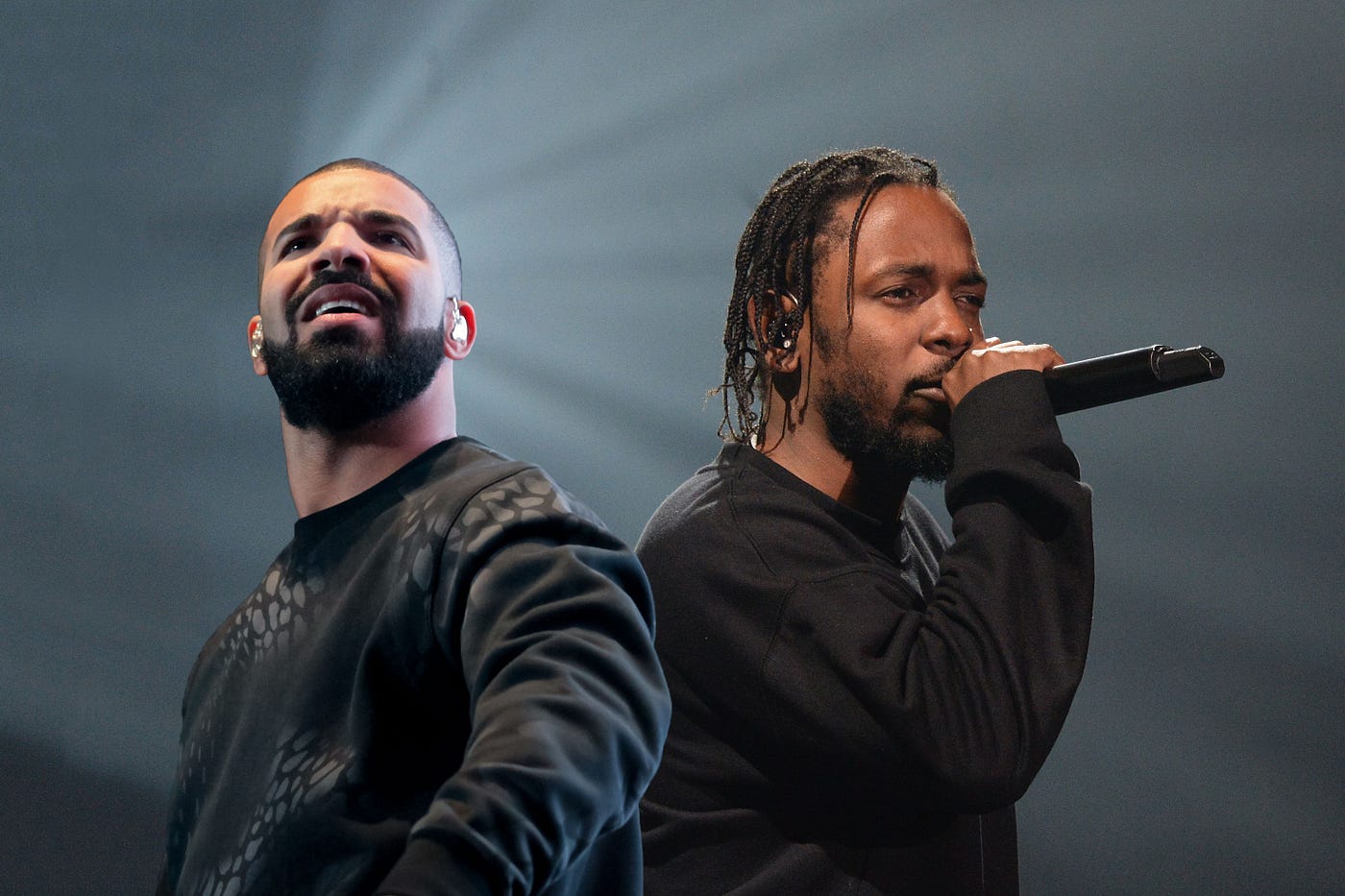
Left: Drake; Right: Kendrick Lamar. Courtesy of GQ Magazine and Getty Images
Two years ago Dyson went on Maher’s show to explain the ongoing Kendrick-Drake rap feud to a mostly white U.S. audience. Dyson proceeded to say that he was “team Drake” and was appalled at Drake’s blackness being called into question and went as far as to suggest the subtext of this beef was related to Israel and Palestine. This problematic take reared its ugly head and was called into question last week during an interview on Jay Mohr’s Mohr Stories podcast, and in an op-ed for *The Philadelphia Citizen*.
The respected academic backs up his position by citing Drake’s personal and family connections to Black icons such as Sly and the Family Stone and Aretha Franklin. Dyson is not backing down, but he does confess to getting some courteous pushback from Jay-Z. — Stephen Andrew Galiher via VICE
The reason Dyson’s ‘de-blackness’ comment is a problem is for one reason: Kendrick never claimed Drake wasn’t black. In “Euphoria” Kendrick highlights Drake’s apparent struggle with his blackness. As a Black Canadian raised in a white Jewish community in Toronto, Drake has navigated an intersection of identities and has been known to downplay his blackness in white circles. For example, there is a video making the rounds of Drake disparaging “Toronto slang” and using the n-word with a hard ‘er’.
How many more Black features ’til you finally feel that you’re Black enough? — Kendrick Lamar in “Euphoria”
Drake in ‘blackface’ makeup and other racist imagery on his clothing
Drake claims that he and another Canadian friend were working on a project on Black American representation in the media, and bringing awareness to the unfair practice. To date, Canada has not passed federal, nation-wide segregation laws like the U.S. “Jim Crow” system. Some critics argue that Drake has benefitted greatly from being light-skinned, whereas, darker rappers like Kendrick Lamar have had to struggle harder to achieve mainstream acceptance in the U.S. Classism is also persistent in this story (ex. poor vs. less poor, have vs. have not). While hip hop is not solely responsible for perpetuating these stereotypes, it currently has one of the most significant roles in doing so.
You always rappin’ like you tryna get the slaves freed. — Drake on “Family Matters”
Whipped and chained you like American slaves. — Drake on “Slime You Out”
Left: Jay-Z; Right: Kendrick Lamar
Dyson revealed that hip-hop mogul Jay-Z privately disagreed with his comparison between Kendrick’s “Not Like Us” and the xenophobic political identity of Donald Trump. Dyson also claimed that Kendrick represents Tupac before he was killed and Drake/J Cole represent who Tupac would have become. Somehow Dyson missed that Drake/J Cole are not publicly aligned with the late rapper’s core values that center on empowerment, radical authenticity, and social justice. Then, Dyson released a second video in response to the backlash to clarify his statements and apologize to Jay-Z for “miscategorizing” Kendrick (Note: Dyson has yet to apologize to the rapper). Jay-Z has long supported Kendrick by providing mentorship and, more recently, defending his lyrical approach in his feud with Drake.
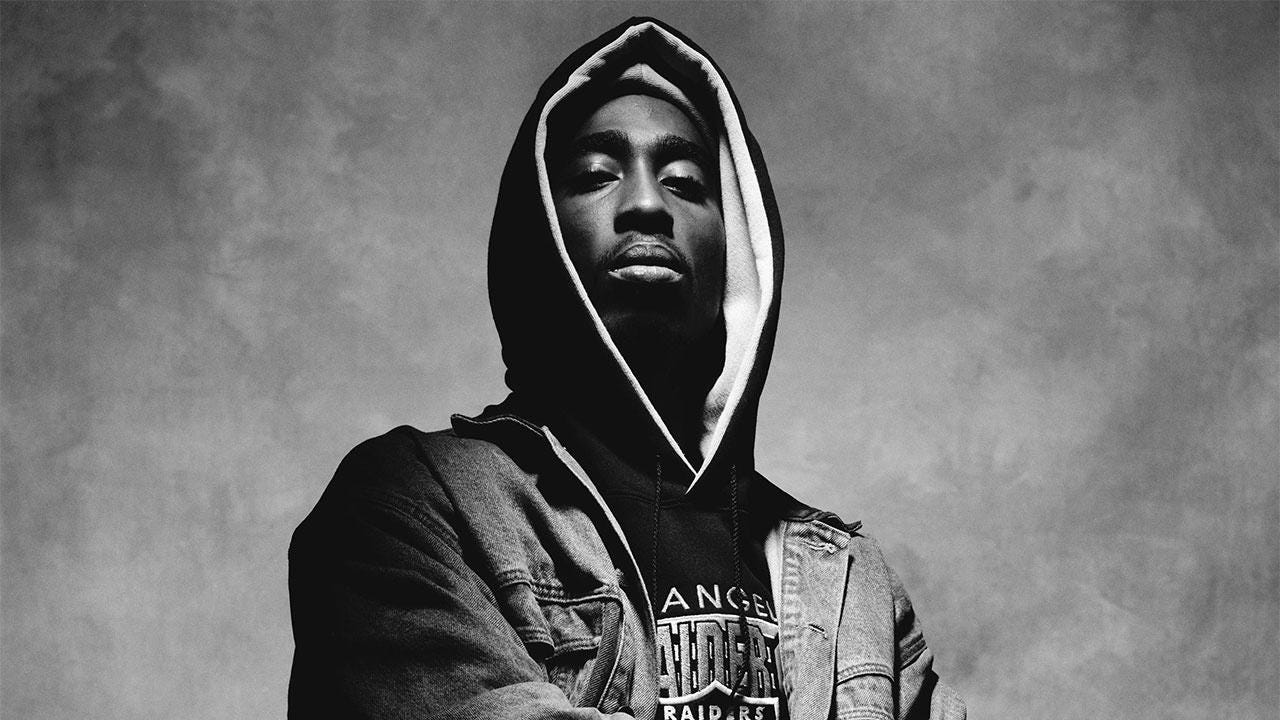
Tupac Shakur. Courtesy of PBS
Tupac: The ground is gonna open up and swallow the evil Kendrick: Right Tupac: That’s how I see it, my word is bond I see and the ground is the symbol for the poor people Kendrick: Right Tupac: The poor people is gonna open up this whole world And swallow up the rich people…— Tupac & Kendrick in “Mortal Man”
Many of the claims that Dyson has made about Kendrick is addressed in the song “Mortal Man” from the album To Pimp a Butterfly. It is composed of a song section, a poem section, and ends with a faux-interview between Kendrick and Tupac Shakur. Kendrick said he was inspired to make the song after seeing Tupac’s shadow talk to him while asleep, in addition to realizing that they were both born in June. Kendrick was also inspired by a 2014 trip to Robben Island, South Africa where Nelson Mandela had before been imprisoned. Additionally, the rapper has said it is about how people seem to point out others’ flaws without seeing “the big picture.”
[embed]
Dyson’s comments are fanning the flames of the ongoing culture war. Hyper-conservatism, extremism and ‘parasocial’ bullying have infiltrated hip hop and Black culture(s). These interactions are often one-sided, psychological, and emotional, especially when someone feels a sense of connection with a celebrity who does not know they exist. In a previous post, I explored how these behaviors negatively impact hip hop and mainstream (pop) culture. Scholars/influencers who are “team Drake” also support conservative political groups. Also, corporate, major labels face immense political pressure to conform, while simultaneously commodifying hip hop and Black culture for profit, leading to accusations of exploiting and altering its cultural authenticity.
You’re not a colleague. You’re an f-ing colonizer. — Kendrick Lamar on “Not Like Us”
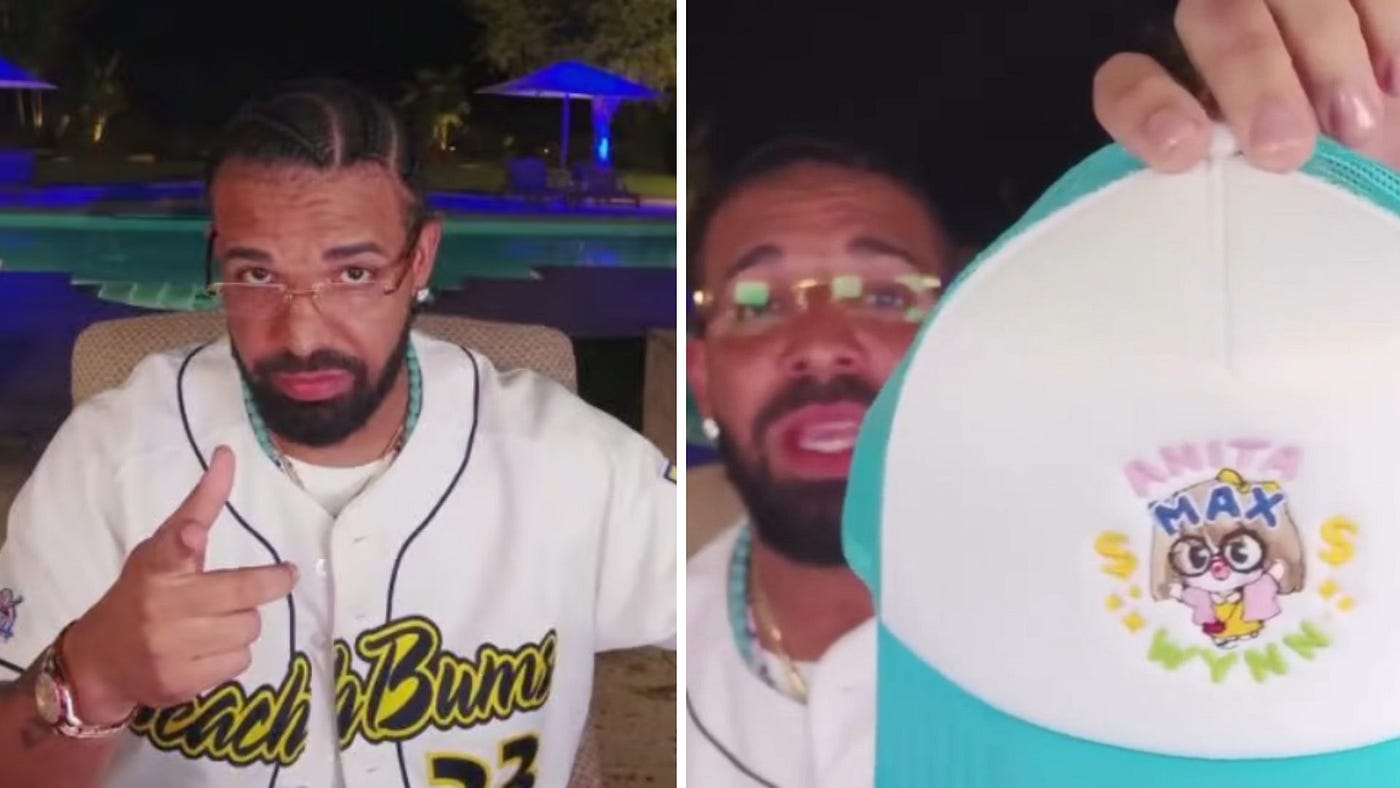
Drake and his “Anita Max Wynn” merch via Instagram
One ever feels his twoness, — an American, a Negro; two souls, two thoughts, two unreconciled strivings; two warring ideals in one dark body, who dogged strength alone keeps it from being torn asunder. — W.E.B. Du Bois in The Souls of Black Folk
Dr. Michael Eric Dyson’s recent comments trouble the notion of a harmonious cohabitation between book smarts and street smarts that, unfortunately, rides a new wave of anti-intellectualism in popular culture. Anti-intellectualism is characterized by the distrust, suspicion, or hostility toward intellectuals, academics, and specialized expertise. It fosters political apathy, validates “alternative facts,” and causes significant societal dangers, including compromised public health, climate change denial, and the decline of educational rigor. It also correlates with lower literacy levels, with reports indicating millions of adults in the U.S. possess, at best, basic or below-basic reading skills. These foundational skills are necessary to gain media, digital and AI literacies.
In the “age of intelligence” we can ill afford to have people like Dr. Michael Eric Dyson (and others) feeding and stirring up a pot that is missing so many important ingredients.
메타데이터
- post_id
- fc3dad05b0fd
- slug
- anti-intellectualism-in-the-age-of-intelligence-fc3dad05b0fd
- url
- https://medium.com/@nettricegaskins/anti-intellectualism-in-the-age-of-intelligence-fc3dad05b0fd
- canonical_url
- https://medium.com/@nettricegaskins/anti-intellectualism-in-the-age-of-intelligence-fc3dad05b0fd
- author_url
- https://medium.com/@nettricegaskins
- status
- ok
- fetched_at
- 2026-08-04 03:44:19