Software-Defined Vehicles and the Future of Mobility: Lessons Learned From Building at Global Scale
The mobility industry is experiencing the most profound reinvention since the dawn of the automobile. Henry Ford once said, “If I had asked…
Software-Defined Vehicles and the Future of Mobility: Lessons Learned From Building at Global Scale
The mobility industry is experiencing the most profound reinvention since the dawn of the automobile. Henry Ford once said, “If I had asked people what they wanted, they would have said faster horses.” His message was clear: transformational leaps don’t come from refining the past; they come from reimagining the future.
Today, we are standing at that same historical inflection point.
Electrification began the disruption. Software is accelerating it. AI will evolve it to a new level, as well as future levels, yet to be imagined!
The shift to software-defined vehicles (SDV) is not simply about upgrading technology, but about building intelligent, continuously evolving vehicles that learn, adapt, update, and personalize throughout their lifecycle. Vehicles are becoming dynamic digital platforms, not static hardware. They grow smarter every month. They improve long after they leave the assembly line and are integrated into people’s lives.
And because of that, automotive brands are transforming from product manufacturers into ecosystems that shift experiences in a connected vehicle to a connected life.
- dynamic, always-on customer relationships
- personalized digital services
- immersive cockpit experiences
- real-time intelligence
- continuous feature evolution
- lifetime value creation
The winning brands of the next decade will be those that stop thinking like automakers and start thinking like experience companies powered by software, data, and AI. It’s not just about making driving safer; it’s about making life easier and making driving more fun. It’s not just about selling a product; it’s about selling services and solutions that deliver extraordinary experiences. And this can only be done on schedule with a technology architecture.
1. Architecture is destiny.
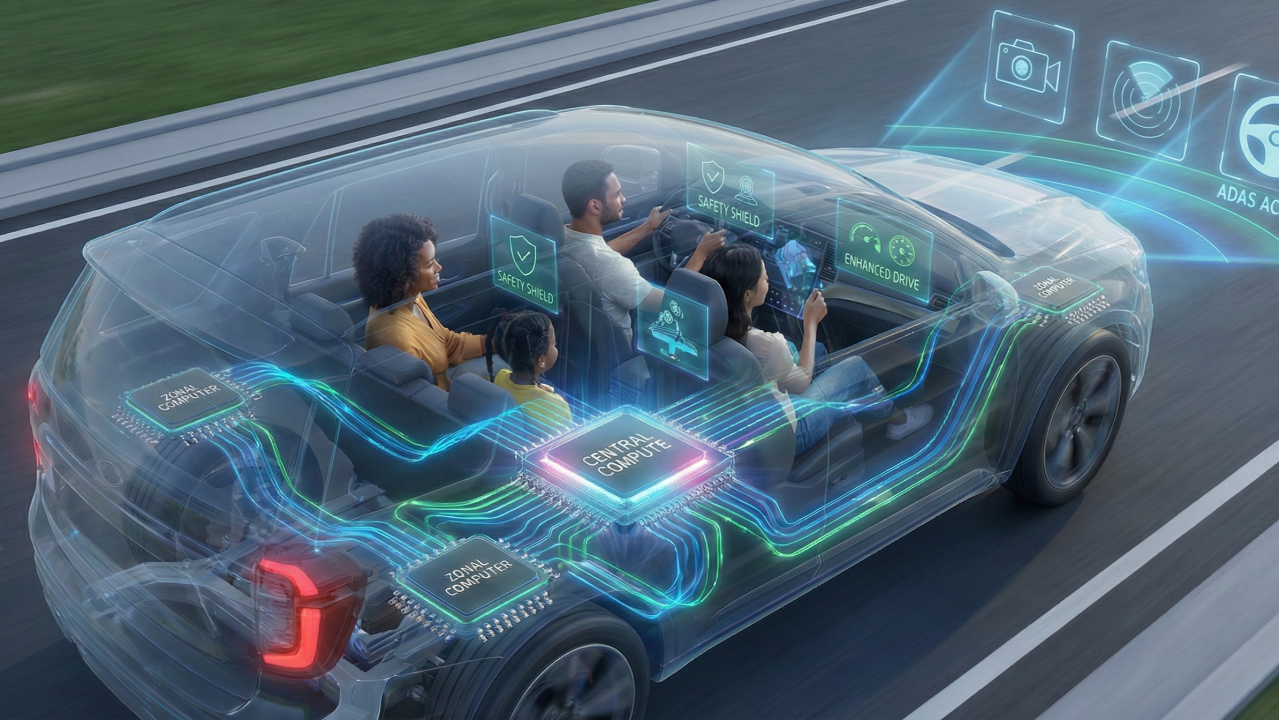
Legacy distributed ECUs cannot deliver the speed or customer experience required for modern vehicles. Centralized compute, zonal controllers, and unified middleware are foundational to:
- faster software deployment
- seamless OTA updates
- better cybersecurity posture
- scalable ADAS and autonomous capabilities
- feature evolution post-sale
Companies that attempt SDV transformation without addressing foundational architecture will experience slow progress and limited monetization.
2. The product is no longer hardware. It’s the experience enabled not just with a connected vehicle but with a connected life.
Today’s customers expect:
- continuous upgrades
- personalized UX
- smarter energy management
- predictive services
- seamless connectivity
This shifts the monetization model from one-time “launch features” to lifetime value, transforming the relationship between OEM and customer. The winners will be those who transition from selling vehicles to delivering monetizable, evolving experiences.
3. Talent must move from function-aligned to product-aligned.
The traditional “IT vs. engineering” divide is incompatible with SDV.
The highest-performing organizations are built around long-lived product teams that own:
- customer experience
- roadmaps
- software development
- quality metrics
- financial outcomes
This model accelerates innovation, reduces functional friction, and aligns the entire value chain around the customer.
4. Execution requires deep cross-functional alignment.
SDV transformation succeeds only when hardware, software, cloud, cybersecurity, UX, manufacturing, and commercial organizations operate in a synchronized model.
Key enablers of this alignment include:
- transparent product road mapping
- shared architecture decisions
- end-to-end integration testing
- consistent KPIs across functions
- leadership unity around the SDV strategy
When companies treat SDV as a software initiative instead of a company-wide initiative, they stall.
5. Monetization is real and expanding.
Across mobility and industrial sectors, software-driven revenue is emerging in areas like:
- connected services, including entertainment
- predictive maintenance
- energy optimization
- safety and driver-assist enhancements
- fleet intelligence
- UX-driven personalization
Software is becoming a meaningful contributor to margin, loyalty, and customer lifetime value. The full potential appears only when architecture, organizational structure, and commercial strategy are aligned.
Where Mobility Goes Next
The future of mobility will be shaped by the convergence of:
🚗 SDV platforms ⚙️ AI-driven engineering and energy systems 📡 Hyper-scale OTA capability 🤝 Cross-industry ecosystems 💸 Digital services and recurring revenue models
To lead in this era, organizations must embrace a new mindset: software is not a feature; it is the business model.
We are only at the beginning of what is possible, and the leaders who invest in strong architecture, agile product organizations, and AI-powered capabilities will define the next decade of mobility.
메타데이터
- post_id
- fc545b0dfbda
- slug
- software-defined-vehicles-and-the-future-of-mobility-lessons-learned-from-building-at-global-scale-fc545b0dfbda
- url
- https://medium.com/@chamarthimamatha/software-defined-vehicles-and-the-future-of-mobility-lessons-learned-from-building-at-global-scale-fc545b0dfbda
- canonical_url
- https://medium.com/@chamarthimamatha/software-defined-vehicles-and-the-future-of-mobility-lessons-learned-from-building-at-global-scale-fc545b0dfbda
- author_url
- https://medium.com/@chamarthimamatha
- status
- ok
- fetched_at
- 2026-06-21 12:17:11




