A Terrible Ideological Acronym for a Perfectly Intelligent Phrase
An essay on the spectacular self-sabotage of using the acronym ANTIFA.
Acronym Backfire
A Terrible Ideological Acronym for a Perfectly Intelligent Phrase
An essay on the spectacular self-sabotage of using the acronym ANTIFA.
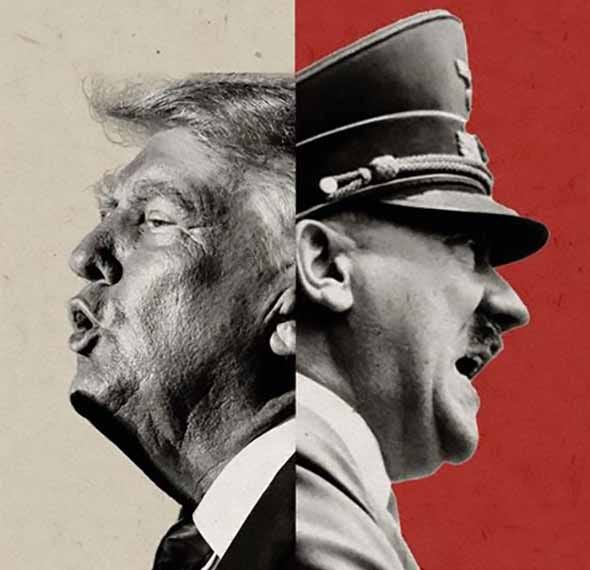
The Reason I’m Against Far-Right Fascism: Washington Post
Here’s a radical suggestion, offered at no cost: USE ACTUAL SENTENCES.
“I am against fascism.”
“I oppose racism.”
“I think far-right extremism is dangerous.”
Whoever took the perfectly serviceable phrase “anti-fascist” and condensed it into a six-letter acronym that sounds like a mid-tier Sicilian crime syndicate should be awarded a lifetime achievement prize in political self-sabotage.
These are not controversial positions. These are conversational layups. Most Americans, if asked directly, would struggle to oppose them without sounding like they’d taken a wrong turn somewhere between 1933 and basic decency.
None of these sentences needs an acronym. None of them need a logo, and certainly not the specific ANTIFA logo, which features a black anarchist flag and a red communist flag side by side, a design choice so politically self-aware it makes one wonder if it was commissioned by the opposition.
None of them needs a uniform, a color scheme, or a tactical approach that, as multiple scholars have pointed out, tends to hand the right exactly the violent imagery it needs to energize its base.
The Brennan Center, not exactly a hotbed of right-wing thinking, put it plainly: Trump’s executive order targeting Antifa aims to “criminalize opposition.”
The entire strategy of the designation, as the Global Extremism Monitor noted, “reframes dissent as terrorism,” part of what analysts describe as a coordinated far-right effort to “criminalize opposition while minimizing the real threat of far-right violence.”
Research from 2020 found that one person who self-identified as an antifascist had been linked to one homicide, while far-right extremists have been responsible for dozens.
This is the scoreboard. These are the facts. And yet somehow the movement that is, statistically, fighting the more lethal adversary managed to name itself in a way that made it sound like the threat.
The word, in the end, did the work that the movement never could have done itself.
The Lesson, If Anyone Is Still Listening
There is an old rule in politics and rhetoric: never let your enemies name you. The corollary, less often stated, is, for God’s sake, don’t name yourself in a way that helps them.
The people who oppose fascism, racism, and far-right violence have, on the merits, an unanswerable case. History is on their side. Comparative body counts are on their side.
The dictionary definition of fascism, with its dictatorial leader, centralized autocracy, militarism, forcible suppression of opposition, and belief in a natural social hierarchy, describes something that a majority of human beings, when they encounter it in the real world, prefer not to live under.
This is not a fringe position. This is not a radical position.
It became a radical position, legally, politically, and rhetorically, the moment it acquired a six-letter name that sounds like a cult, a brand of Italian cold cuts, or a covert government program, depending on how tired you are.
Say you are against fascism. Say you are against racism. Say you are against organizations that march with torches and drive cars into crowds. Say these things in plain English, in complete sentences, without a logo, without a tactical manual, without anything that can be capitalized, designated, or executive-ordered out of existence.
The idea, stated plainly, is bulletproof. It is only the branding that proved fatal..
Let me be clear about what I am not saying. I am not saying that opposing fascism is a bad idea. Opposing fascism is, in fact, one of the least controversial positions a thinking person can hold.
Fascism, by its textbook definition, involves authoritarian rule centered around a personality cult, the suppression of dissent, militarism, the scapegoating of minorities, and the annihilation of political opposition.
Opposing that seems, shall we say, obvious. It is the kind of position that should require no branding, no logo, no secret handshake, and yet, here we are.
The Genius of Giving Your Enemies a Target
Appreciate, with the bitter admiration one reserves for elegant mistakes, what the word “ANTIFA” accomplished for the American right wing. It handed them a noun.
Before ANTIFA, opponents of fascism were simply, opponents of fascism. How do you demonize that? How do you pass an executive order against “people who don’t like Hitler”? You cannot.
The sentence barely parses. But once you have a proper noun, a six-letter acronym, something that sounds vaguely like a secret society that meets in black turtlenecks? Now you have a thing.
A thing can be targeted, designated, investigated, and, in September 2025, designated a domestic terrorist organization by presidential executive order.
That executive order, let us note for the record, designated an entity that the FBI’s own former director Christopher Wray described to Congress as “more accurately characterized as an ideology than a structured group”. The Congressional Research Service agreed.
The Brennan Center for Justice, which has spent a decade studying domestic terrorism law, noted flatly that “Antifa is not a group or an organization but a decentralized movement” and that the designation “makes no sense.”
Academics at the University of Maryland’s START program spent considerable effort analyzing whether antifa even qualifies as a “group” in any meaningful sense and concluded the question was genuinely complicated.
In other words, the United States government designated it a noun. A decentralized, leaderless, membership-free, dues-free, directory-free collection of loosely affiliated individuals who share the opinion that fascism is bad.
The designation is less a legal instrument than a thought experiment: what if you could make being against something illegal by giving that something a name that sounds organized?
The answer, it turns out, is that you absolutely can — if the something in question was foolish enough to name itself.
The Capitalization Problem, or: How a Typo Became a Conspiracy
There is a detail in all this that I find particularly exquisite. According to AllSides, which tracks how words travel differently across the political spectrum, those who believe antifa is a loosely coordinated movement write it in lowercase: antifa. Those who believe it is an organized, centrally commanded, well-funded terrorist network write it in uppercase: ANTIFA.
This means the entire argument about what antifa is has been encoded into a single shift key. The ideological battle over the nature of left-wing dissent in America is being waged, in part, through typography.
That is either the most sophisticated semiotic joke in the history of American politics, or evidence that we have all, collectively, lost the plot.
The irony is almost too perfect. A movement that named itself after its opposition to a vague, shape-shifting term, fascism, created a vague, shape-shifting term of its own that its opponents then used to describe everything.

Copyright © 2026 MOXY. All rights reserved.


New Literary Society
메타데이터
- post_id
- fc57635ff3c5
- slug
- a-terrible-ideological-acronym-for-a-perfectly-intelligent-phrase-fc57635ff3c5
- url
- https://medium.com/new-literary-society/a-terrible-ideological-acronym-for-a-perfectly-intelligent-phrase-fc57635ff3c5
- canonical_url
- https://medium.com/new-literary-society/a-terrible-ideological-acronym-for-a-perfectly-intelligent-phrase-fc57635ff3c5
- author_url
- https://medium.com/@moxymcmxlvii
- status
- ok
- fetched_at
- 2026-07-11 03:42:06