Swift Meets UMA: How Swift 6.1 Makes Device-Independent Services Practical
With first-class WASM support, Swift becomes a frictionless building block for universal microservice runtimes
Swift Meets UMA: How Swift 6.1 Makes Device-Independent Services Practical
With first-class WASM support, Swift becomes a frictionless building block for universal microservice runtimes
*The Rise of Device-Independent Architecture | Bonus*

✍️ From Platform-Locked to Runtime-Free
A few years ago, I built a simple app in Swift that did one thing well: locally processed and visualized data for skiers. The frontend was native. The logic was embedded. And none of it could run anywhere else.
Today, with Swift 6.1 and WebAssembly, I’m using that same language to build services that run across browser, edge, and cloud, all from a single binary. Not because I rewrote anything, but because Swift finally plays well with portable runtimes.
This changes the game for UMA, the Universal Microservices Architecture we’ve been developing. Swift no longer needs wrappers or custom pipelines. It compiles cleanly to WASM, communicates with UMA through standard contracts, and integrates seamlessly into a device-independent system out of the box.
UMA in Practice
UMA isn’t a framework or a library. It’s a runtime architecture pattern built around one idea:
Microservices should be portable, composable, and deployable across browser, edge, and server environments using the same binary.
That means:
- Each service is compiled to WASM
- All communication happens via contracts
- Services are discovered, versioned, and orchestrated through a registry
- UMA adapters abstract away the environment (WASI, JS, native host)
This makes the system modular, flexible, and future-proof. But only if services can be built easily.
That’s where Swift 6.1 comes in.
Why Swift 6.1 Changes the UMA Equation
Before Swift 6.1, using Swift with UMA required navigating unofficial forks, patching LLVM, or manually working with JavaScriptKit. It was experimental at best.
Now, Swift has:
- ✅ Tier-1 support for
wasm32-unknown-wasi - ✅ A maturing ecosystem around SwiftWasm
- ✅ Clean JavaScript interoperability via JavaScriptKit
- ✅ Native support for
Package.swiftand SwiftPM workflows - ✅ Direct access to
@_cdeclfor contract binding
In other words, Swift now works similarly to Rust and Go. Cleanly. Reproducibly. Portably.
That lowers the friction for adopting UMA in any team already invested in Swift.
Example: Swift UMA Service in Practice
Imagine a validation service that checks email formats and country codes.
In Swift:
@_cdecl("validate")
public func validate(_ ptr: UnsafePointer<UInt8>, _ len: Int) -> Bool {
    let input = String(bytesNoCopy: UnsafeMutableRawPointer(mutating: ptr),
                       length: len,
                       encoding: .utf8,
                       freeWhenDone: false) ?? ""
    return input.contains("@") && input.contains(".")
}
As a UMA Service
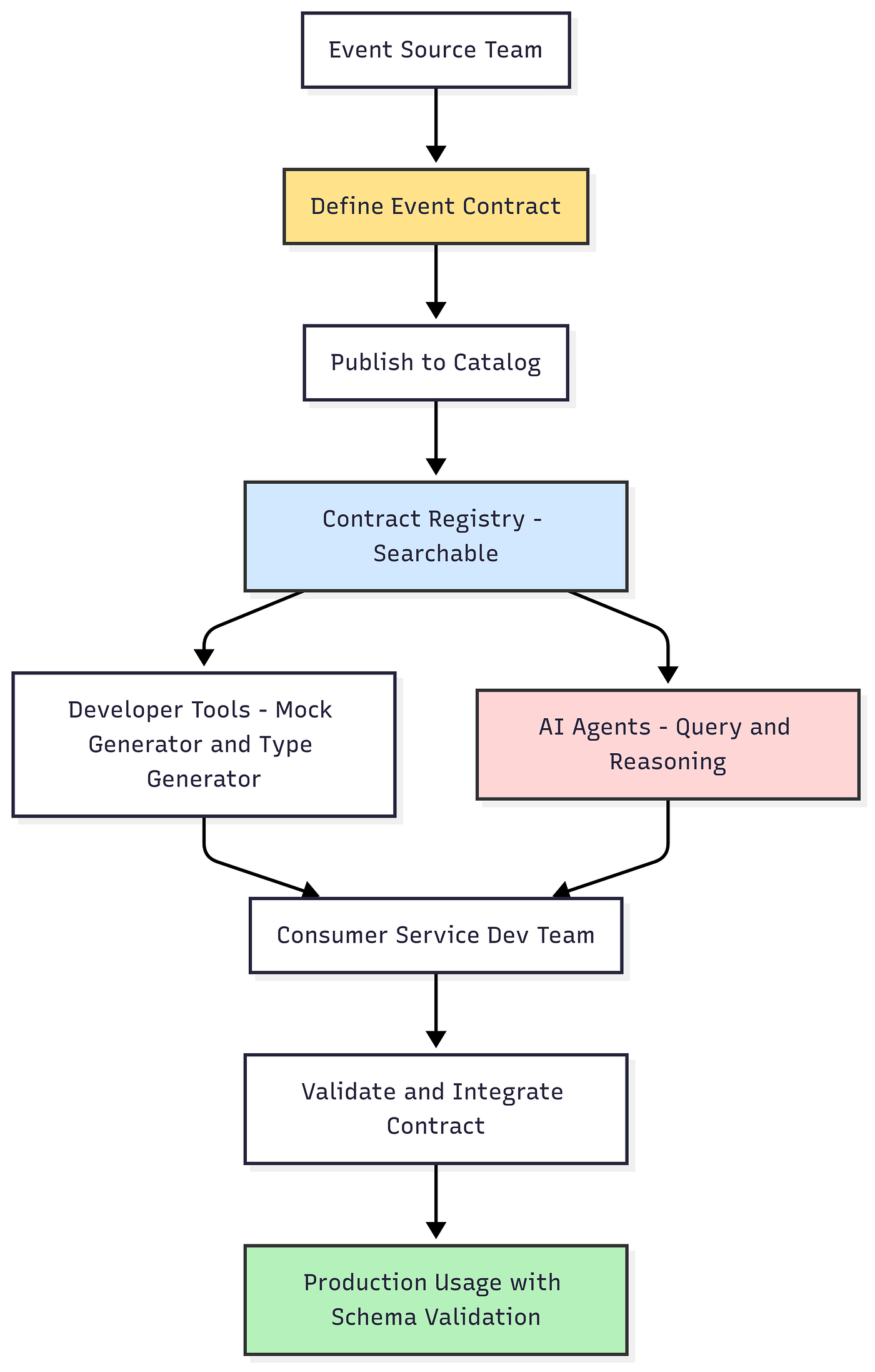
- 🧱 Compiled to WASM using Swift 6.1
- 📦 Packaged into a module and published to the UMA Registry
- 🔁 Bound to a WIT or OpenAPI contract
- 🚀 Executed in-browser using JavaScriptKit
- 🌍 Also deployed to an edge node with WASI runtime
No wrappers, no forks, no language switching. One Swift file. Three runtime targets.
UMA Contracts Fit Naturally in Swift
UMA services are defined by contracts that specify inputs, outputs, and lifecycles. These can be mapped directly in Swift:
[embed]
This makes Swift a fully compliant UMA service language, requiring no special treatment.
Unlocking UMA Adoption for Swift-Heavy Teams
Many teams already have strong Swift experience from building Apple-native apps, data pipelines, or command-line tools.
Swift 6.1 unlocks UMA for these teams by:
- 🔁 Reusing existing language skills and tooling
- 🧪 Allowing rapid prototyping of WASM services in Swift
- 🌐 Running those services across browsers, Edge, and the server
- 🧩 Integrating them into larger UMA-based workflows
This lowers the barrier to entry for UMA. You can start small — with one service, one contract — and scale into a full runtime without hiring a new team or switching stacks.
Bootstrapping UMA with Swift
Want to test UMA? Swift is now one of the easiest ways to do it.
Bootstrap Path:
- Write a stateless Swift function
- Export it as a WASM symbol using
@_cdecl - Define a simple WIT or IDL contract
- Compile with
swiftc -target wasm32-unknown-wasi - Run it in-browser using JSKit or in UMA runtime with a WASI adapter
You now have a fully portable UMA service with near-zero friction.
UMA Becomes Easier to Implement
The real takeaway?
Swift 6.1 doesn’t just give you WebAssembly. It gives UMA a low-friction, high-leverage path for rapid adoption.
It removes historical friction:
- No more glue code
- No more experimental toolchains
- No more language switching
And it unlocks real value:
- Shared logic between iOS and browser
- Faster POCs and onboarding
- Broader ecosystem participation
UMA is about building portable, discoverable, and composable systems. Swift 6.1 makes that vision practical, especially for teams already fluent in Apple’s ecosystem.
Want to Go Deeper?
This post is part of the Rise of Device-Independent Architecture series. We’re building an ecosystem around truly portable systems that scale across devices, runtimes, and teams.
📝 White Paper: Universal Microservices Architecture: Runtime for a Device-Independent Future
📦 Tools to Try:
ℹ️ What Does wasm32-unknown-wasi Mean?
The wasm32-unknown-wasi target triple might look odd at first, especially the "unknown" part, but it follows a standard naming pattern from LLVM:
<architecture>-<vendor>-<system>wasm3232-bit WebAssembly architectureunknownNo specific vendor (generic, portable target)wasiWebAssembly System Interface (for interacting with files, clocks, etc.)
The "unknown" Simply means there is no vendor lock-in. This is the intended naming and is widely used in toolchains like Rust and Clang. It does not reflect immaturity or instability—it reflects portability.
Found this valuable?
If this post changed how you think about runtime observability or distributed systems debugging, hit the clap button. It takes one second, and it helps other engineers find the series. 👏
📚 The Book
Everything in this post goes deeper into **Universal Microservices Architecture**: the runtime model, the full LifecycleRecord implementation in Rust and TypeScript, all six companion labs, and the complete five-part architecture from contract design to production deployment.

Universal Microservices Architecture | Get the book
Following along?
This post is part of The Rise of Device-Independent Architecture: a weekly series on building systems that run anywhere, scale deliberately, and don’t break when the environment changes.
메타데이터
- post_id
- fc5829a76e50
- slug
- swift-meets-uma-how-swift-6-1-makes-device-independent-services-practical-fc5829a76e50
- url
- https://medium.com/the-rise-of-device-independent-architecture/swift-meets-uma-how-swift-6-1-makes-device-independent-services-practical-fc5829a76e50
- canonical_url
- https://medium.com/the-rise-of-device-independent-architecture/swift-meets-uma-how-swift-6-1-makes-device-independent-services-practical-fc5829a76e50
- author_url
- https://medium.com/@enricopiovesan
- status
- ok
- fetched_at
- 2026-08-09 17:39:08