The Youth Unemployment Crisis in India: Lack of Jobs or Structural Mismatch?
As per Economics The definition of unemployment is a situation where an individual without work, available for work actively seeking…
The Youth Unemployment Crisis in India: Lack of Jobs or Structural Mismatch?
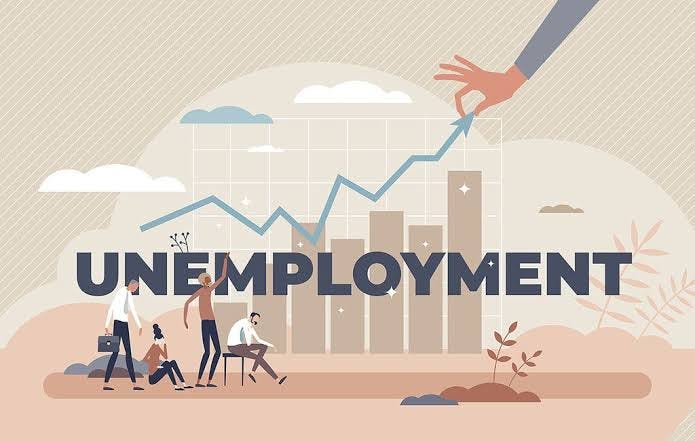
As per Economics The definition of unemployment is a situation where an individual without work, available for work actively seeking employment, and cannot secure a job.
Right now, in 2026, our current population is 1.423 billion. Out of this, 27.2% of people are between the age of 15–29, which is around 387 million. Out of this, the unemployment rate in rural areas is 8.30%, and in urban areas 13.60%. Overall, the average unemployment in youth is 9.90%.
But the question arises: is current Indian youth really employable? Cause employment is not just about degree you also need technical and soft skills which are required by the market. Unemployment means that you are eligible for the job, but still can’t find work.
Not finding a job as per your wish or as per your expectation is not considered unemployment. Famous economist John Maynard Keynes, in his famous book *The General Theory of Employment, Interest, and Money*, introduced the concept of involuntary unemployment. Keynes argued that unemployment occurs when workers are willing to accept the prevailing market wage (or even a lower one) but still cannot find a job because there is a lack of aggregate demand in the economy.
So now the question is: is unemployment because of the lack of demand or other reasons? Let’s discuss it.
Let us now examine the key factors for unemployment:
1. Relation of Technology and Unemployment
We all know that technology replaces humans to do a certain kind of work, and that’s why fewer people are needed by employers. But is technology going to replace humans by 100%? The answer is No. Technology can never be a substitute for humans; it can replace repetitive work, but work that needs decision-making and judgement is always done by humans.
Every new technology in the world creates a threat of unemployment. When the calculator was invented, everyone got panicked and started thinking that it would replace mathematicians… but even now we need mathematicians. The same thing happened when the computer was invented; everyone was thinking that it would replace clerks and accountant but they are still exist, ATM machines will replace bank workers but they still exist ,bank still employee millions of people just nature of banking is changed. The same thing happened when the internet was invented and when the airplane was invented, but the world is still going on and on.
Right now, the threat is that AI will replace humans, but all technologies, including AI, are making our work much faster and easier than before. They are transforming humans into a kind of superhuman so that people can save time on other work and focus on their core strengths.
Let’s understand this with a real-life example. For example, you are a lawyer, and you have read and analysed so many case studies in your career, but it’s very difficult to remember all of them. So, whenever you require a reference to an old judgment, you have to go through lots of pages to find the reference to that old judgment. With the help of AI, you can just give the description of the case, and AI will shortlist some of the judgments relevant to current case. You can then easily select one of them.
So, here in this case, AI is just helping the lawyer find out the judgments that AI thinks are relevant. Whether to take that judgment as a reference or not is the final call of the lawyer himself, and that requires his human intelligence to determine whether it is a relevant reference for the current case or not.
All of these inventions make our work easier than before, but the truth is technology can destroy some jobs, creates new jobs, change some skill requirements but cannot be substitute for human intelligence.
2. Shift in Demand

In 1950–51, more than 50% of our population was dependent on agriculture for their survival. As time passed, people gradually shifted to manufacturing and the service sector, and right now only 16.5% of the population is dependent on agriculture. So as time passes, the form of employment changes.
So actually, the industry is changing and that’s why temporary unemployment arises. As time passes, people gradually adapt to new skills and find new sources of employment.
So, when tractors came into the picture in 1974, agriculture workers lost their jobs, but over time they started working in factories. Every new invention creates a temporary threat to employment, but also creates new opportunities in other sectors… the same thing with computers, cars, smartphones, and now AI. All of these inventions temporarily create unemployment, but after time, people evolve and start working in other industries.
Over a period of 70 years, we shifted from agriculture to the service sector. So, we can say that unemployment is not because of a lack of demand or due to overpopulation, because demand is may be still the same, but in different sectors and different industries and for that you need different skill set which brings us to our next problem.
3. Skillset
If we see the literacy rate in India, it is 77% in rural and 90% in urban areas. Now the question arises: if people are educated, why are they still not getting jobs? Let’s understand this.
The majority of undergraduate courses don’t provide the skillset ,practical exposure need in the market, and provide limited technical skills. Even if the government changes the courses every year, the world is changing so fast that you are not going to match the level required to get a job at a multinational company.
Now lets understand this by one example,
The person named Rajesh is looking for a job, and he gave an interview at company A. He got rejected because he didn’t know Excel, Word, or PowerPoint. So he learned those things and went for another interview after 6 months at another company called B. Now he again got rejected because he doesn’t know Power BI, KNIME, Python, or the use of AI. I think I made my point with this example.
So, it’s on you to update yourself on a daily basis; otherwise, you end up being jobless because just a graduation degree is not enough to get a job or may be you are eligible candidate but looking for the job in wrong place…yes wrong place, have you ever thought about it? let’s see.
4. Looking for a Job in the Wrong Place
Service sector has a major part in our GDP right now, and it has the maximum capacity to provide you with a job — and they are providing jobs. But some part of the youth only wants a government job.
Right now, a major part of the service sector in India contains:
- Software Engineers/IT Professionals
- Financial & Investment Analysts
- Data Scientists/AI Engineers
- Logistics & Supply Chain Managers
- Digital Marketers & Content Strategists
- Chartered Accountants/Corporate Auditors
- Commercial/Public Sector Bankers
And government intervention in these sectors is less than 1%; all of these sectors are run by private organizations.
Some young people believe that unless the government creates jobs, employment opportunities are limited. However, the majority of new employment opportunities are generated by the private sector.
The majority of sectors run by the government have the type of job that lasts for 30 years up to the age of retirement, then another person is replaced on his behalf after retirement. But this is also a half-truth, because technology is also going to play role here too, so the percentage of hiring in next batch is always going to be lesser than the previous batch. let’s understand the competition from below table.

So, chances are very rare to get a government job, and that we can see from the data.
With all of this, we also have to see what the government’s plans about create new jobs. What are their policies?
5. Government Policies
In one podcast, Chief Economic Advisor Sanjeev Sanyal clearly stated that current government believe in Chanakya’s Artha shastra for the economic policies, and according to it, “The government has no business to be in business.” That same statement is given by Prime Minister Shri Narendra Modi.
So, the government has no plan to create new businesses, and they are selling or restructuring the loss-making units that they already have (e.g., Air India, Consolidation of 27 Public Sector Banks down to 12 large public banks).
So, if you are still looking for a government job, then you are “finding a needle in a haystack.”
6. Social Barrier
Now if we combine all the reasons: there is too much population, because of that there is too much competition, a lack of skills in youth, and a lack of jobs in the government sector. Still some people are not doing a job because that job does not match their status… even if they don’t have the kind of skillset required for their dream job, they are still refusing other jobs based on status or salary.
And they are easily doing this because of their comfort zone. Comfort zone… how? Let’s understand.
In India, youth have so much privilege, especially those born in middle-class and upper-middle-class families, that till the age of 24 or 25, all of their expenses are borne by the family. Because of that, they never come out of their comfort zone to start something on their own or do any job for survival.
India’s employment challenge is not solely a shortage of jobs; it is also a problem of skill mismatch, structural economic change, evolving industry demand, and unrealistic job preferences.
I am not saying that everything is perfect outside and it’s your fault that you are not finding the job, I agree that not getting the type of job you want or and not getting enough salary is also a big problem not every person can leave their family and shift to other city for the job,yes there are not enough jobs out there in the market but the truth is you have to start from somewhere…time has changed, industries have changed, job types have changed, now is your time to change your mindset. It’s better to have something than nothing and blaming the government for your problems is not going to change anything.
If you never start you never know the market and you never reach at the place where you always wanted to reach.
“The illiterate of the 21st century will not be those who cannot read and write, but those who cannot learn, unlearn, and relearn.”
Before we wrap up…
If you found this perspective valuable, share it with your friends, especially students and job seekers who are trying to understand the changing job market share it on WhatsApp or LinkedIn.
Sources:
-
United Nations Population Division (UN DESA) — World Population Prospects-https://population.un.org/wpp/graphs?loc=356&type=Probabilistic%20Projections&category=Population
-
Ministry of Health & Family Welfare (MoHFW) — Technical Group on Population Projections-https://healthnutritionindia.in/dashboard/6/3/56
-
Ministry of Statistics and Programme Implementation (MoSPI) — PLFS Reports-https://www.pib.gov.in/PressReleasePage.aspx?PRID=2246009&lang=1®=3
-
Economic survey of India-https://www.indiabudget.gov.in/economicsurvey/
-
Ministry of Statistics and Programme Implementation (MoSPI) — National Accounts Statistics (NAS ):-
1950–51 & Historical Base Series (1999–2000 & 2004–05 Base): mospi.gov.in/publications-reports
2025–26 Advance Estimates & GDP Press Releases: mospi.gov.in GDP Releases
-
Reserve Bank of India (RBI) — Database on Indian Economy (DBIE):- Handbook of Statistics on the Indian Economy Table on Real GVA / GDP composition): dbie.rbi.org.in
-
Ministry of Finance — Annual Economic Survey of India- Statistical Appendix (Sectoral Share of GVA at basic prices): indiabudget.gov.in/economicsurvey
메타데이터
- post_id
- fc69ad8cc39d
- slug
- the-youth-unemployment-crisis-in-india-lack-of-jobs-or-structural-mismatch-fc69ad8cc39d
- url
- https://medium.com/@shyamchaudhari2424/the-youth-unemployment-crisis-in-india-lack-of-jobs-or-structural-mismatch-fc69ad8cc39d
- canonical_url
- https://medium.com/@shyamchaudhari2424/the-youth-unemployment-crisis-in-india-lack-of-jobs-or-structural-mismatch-fc69ad8cc39d
- author_url
- https://medium.com/@shyamchaudhari2424
- status
- ok
- fetched_at
- 2026-07-26 02:20:04



