The Living Turf of Daikin Park
If you’ve sat behind home plate in downtown Houston lately, you’ve noticed the new signs, but the soul of the stadium remains the same. As…
The Living Turf of Daikin Park
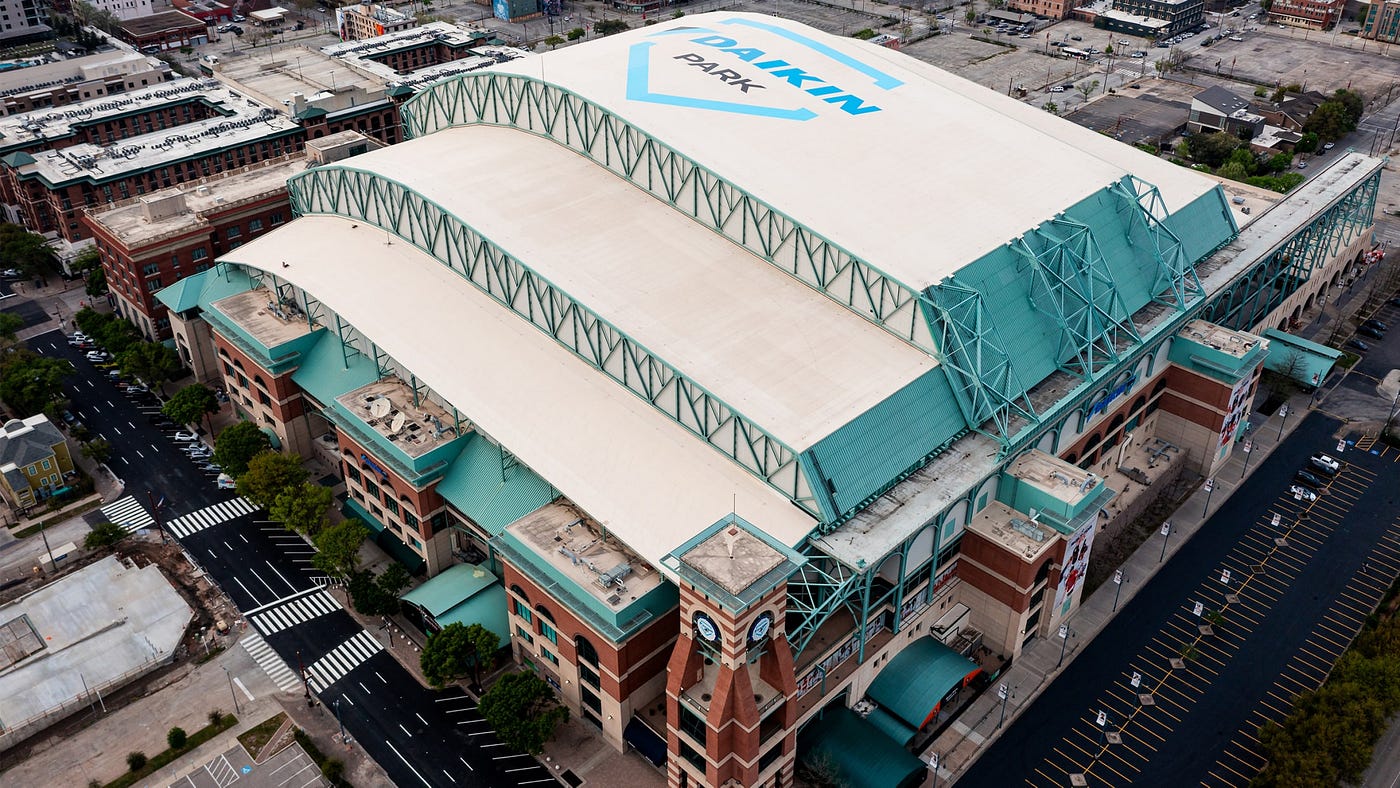
If you’ve sat behind home plate in downtown Houston lately, you’ve noticed the new signs, but the soul of the stadium remains the same. As of January 2025, the iconic venue formerly known as Minute Maid Park officially transitioned into Daikin Park.
While the “Juice Box” moniker is fading into Houston history, the field itself remains a high-stakes engineering marvel. For the Houston Astros, the ground they play on is a sophisticated living organism that has evolved from a quirky experiment into a championship-caliber stage.
The Turf Evolution: From “AstroTurf” to Organic Green
It’s impossible to talk about the Astros’ field without acknowledging the history: AstroTurf.
The team’s former home, the Astrodome, gave birth to the brand name because natural grass couldn’t survive. It was essentially green carpet over concrete. When the team moved downtown in 2000, they made a hard pivot back to nature.
- The Current Surface: The field at Daikin Park uses Platinum TE Paspalum. This salt-tolerant, warm-season grass is the “special ops” of turf; it maintains a deep, vibrant emerald color even under the stress of a retractable roof that limits natural sunlight.
- The Shadow Problem: Because the roof is often closed during the brutal Houston summers, the grounds crew uses massive UV lighting rigs that crawl across the grass at night to mimic the sun’s rays.
The Ghost of Tal’s Hill
The field’s layout has seen major surgery over the years. From 2000 to 2016, center field featured Tal’s Hill, a 30-degree incline with a flagpole standing live in play. In 2017, the hill was leveled to make way for the center-field fan zones, shortening the distance from a massive 436 feet to a more standard 409 feet. While the hill is gone, the Crawford Boxes in left field remain a pitcher’s nightmare at just 315 feet, keeping the field’s reputation as one of the most unique in the league.
The Dirt and the Climate
The dirt at Daikin Park is a precision-engineered mixture of expanded shale and vitrified clay. The clay base provides stability and a true bounce for high-velocity infield hits, and the sliding pit is kept at a specific moisture level to allow players to slide without grabbing, reducing the risk of leg injuries.
The Daikin Connection
The renaming to Daikin Park after the world’s largest air conditioning manufacturer is ironically perfect. The stadium’s most vital feature is its 9-million-pound retractable roof. The grounds crew monitors the dew point inside the stadium as closely as a lab experiment. When the roof is closed, the air becomes heavy, which can suppress home runs that might have cleared the fences on an open-air night.
The Verdict
The field at Daikin Park is a reflection of Houston itself. It’s innovative, resilient, and built to withstand the Texas heat. The Minute Maid oranges may be gone, but the Paspalum stays green regardless of the humidity outside. Next time you see a home run disappear into the boxes, take a second to look down at the grass. There’s a world of science keeping that field Major League in the heart of the city.
메타데이터
- post_id
- fc716bfc2727
- slug
- the-living-turf-of-daikin-park-fc716bfc2727
- url
- https://medium.com/@t6m07246qkxa/the-living-turf-of-daikin-park-fc716bfc2727
- canonical_url
- https://medium.com/@t6m07246qkxa/the-living-turf-of-daikin-park-fc716bfc2727
- author_url
- https://medium.com/@t6m07246qkxa
- status
- ok
- fetched_at
- 2026-06-21 19:25:17