America’s Most Secret UFO Incident. The Woodriver Junction Encounters.
Wood River Junction is located in rural South County, Rhode Island, six miles inland from Block Island Sound. For most of the twentieth…
America’s Most Secret UFO Incident. The Woodriver Junction Encounters.

UNC’s Wood River Enriched Uranium Scrap Recovery Plant. The UFO Incident Epicenter.
Wood River Junction is located in rural South County, Rhode Island, six miles inland from Block Island Sound. For most of the twentieth century, the Junction had a population of less than 1,000 and was best known for its potato and turf farms.
In 1962, the United Nuclear Corporation (UNC) selected Wood River Junction as the site where it would build the nation’s first enriched-uranium cold-scrap recovery plant. The facility was 40 miles from Metals & Controls, the US government’s largest enriched uranium fabrication contractor. Metals & Controls co-founder, Vannevar Bush, had headed the US World War II atomic bomb program.
The UNC — Wood River Junction plant was specifically designed to recover highly enriched uranium-235 from scrap metal. During the fabrication of highly enriched uranium for US military contracts, 10–20% of the starting material was commonly left as machine turnings, furnace slag, alloys, and non-specification parts.
In the UNC — Wood River Junction case, the scrap it processed came from Metals & Controls and the US-owned Y-12 nuclear weapons components plant in Oak Ridge, Tennessee. The amount of material that UNC processed can be estimated from Nuclear Regulatory Commission inspection reports. In the first six months of 1978, 38 of the 45 trucks that left the UNC plant with enriched uranium were not surveyed for radioactive contamination. If 45 shipments left UNC’s plant in 180 days, then a reasonable estimate is that approximately 45 also arrived.
Because uranium-235 in the early 1960s was valued at $10,000 per kilogram, the US Atomic Energy Commission needed a scrap-recycling service. More than 30,000 US nuclear weapons had been built by 1962, and the accumulating scrap was a storage and inventory accountability problem. In addition, the Commission was the sole supplier of uranium-235 to contractor companies like Metals & Controls, and they, too, had no way to recover the material written off as scrap. The Wood River plant was the first to solve the enriched uranium recycling problem.
UNC’s Wood River Junction facility was very similar to a uranium metal refinery. After the uranium metal scrap was dissolved in nitric acid and liquefied, it was pumped into a series of stainless-steel tanks and mixing vessels, where all metals except uranium were removed by chemical precipitation.
The pregnant uranyl nitrate solutions remaining after chemical purification were pumped into additional vats, and the uranium was precipitated as an oxide powder. The uranium oxide was carefully weighed and stored in 1-liter polyethylene bottles, each containing 100 grams of enriched uranium-235.
The 100-gram lots of uranium-235 that UNC produced and packaged were less than the 500 grams of enriched uranium needed to form a critical mass. By limiting the mass in each storage bottle to 100 grams, criticality could be avoided. Criticality is the nuclear chain reaction that powers nuclear reactors and atomic bombs.
The United Nuclear Woodriver plant processed its first enriched uranium scrap in March 1964. Four months later, on July 24, 1964, it had a fatal nuclear criticality accident. The accident was caused by UNC employee Robert Peabody pouring 3,000 grams of highly enriched uranium into a 24-inch-diameter vat containing 10 gallons of solvent. The safe batch limit for the process being performed was less than 500 grams.
The criticality incursion that Peabody accidentally caused flashed like lightning, delivering more than 20,000 rads of whole-body radiation. Peabody received fifty times more radiation than is fatal, and he died a horrific death two days later. The incident remains historically and symbolically significant. Robert Peabody was the first and only private industry nuclear employee in America to die of acute radiation overexposure.
In 1973, the Wood River Junction UFOs Arrived
The United Nuclear plant occupied 1,200 acres surrounded by a barbed wire-topped fence in the middle of nowhere. The plant was a high-security installation processing nuclear weapons-grade uranium, and it was kept out of sight for numerous reasons. The 28-man private security force that protected UNC’s plant was employed by Wackenhut. That’s the same company that provided security at the Y-12 plant, the Nevada Nuclear Test Site, Area 51, and most of America’s other nuclear weapons-related facilities.
The UNC Wood River Junction Plant’s connection to Wackenhut is notable. It had a long history of recruiting from the military and intelligence communities. Many former CIA, FBI, and other government officials served in top-level management. Former FBI Director Clarence Kelley and and Deputy CIA Director and Secretary of Defense Frank Carluci served on Wackenhut’s board of directors. CIA Director William Casey was Wackenhut’s attorney before joining President Ronald Reagan’s administration in 1980.
A less-than-obvious reason for the UNC plant was built in a small, secluded town on an even more secluded tract of land goes beyond national security. In the early 1960s, there were no approved burial areas where UNC or any other Atomic Energy Commission contractor could dispose of their radioactive waste. On-site radioactive waste burials were the norm up until the early 1970s.
Much of the highly enriched uranium that UNC processed came from the US government’s Y-12 weapons components plant at Oak Ridge National Lab. Despite claiming to be at the cutting edge of nuclear technology, the photos below show Oak Ridge’s primitive radioactive waste disposal methods. How Y-12 disposed of its uranium-contaminated waste is the example it expected contractors like UNC to follow. Y-12’s managers had no illusion that UNC would dispose of its radioactive waste in a manner that was any different from Y-12.

Y-12 Plant Low Level Waste Disposal Trench

Y-12 Plant Low Level Waste Disposal Trench

Y-12 Plant Low Level Waste Disposal Trench
By locating the UNC plant on a two-square-mile parcel of self-contained land, the company could operate in secret. Only the company employees and Atomic Energy Commission inspectors knew that thousands of gallons of uranium-refining waste were pumped into unlined pits behind the plant every day.
The contaminated liquid waste sent to UNC’s seepage pits drained directly into the gravel aquifer just below the pits' base. UNC’s waste disposal methods exactly mirrored those practiced at its largest customer, the Y-12 plant.
By the early 1970s, UNC’s unsafe waste disposal practices had come under intense local scrutiny. Heavy rains caused the radioactive waste disposal pits to overflow every spring, and when the public found out, they were enraged.
UNC’s liquid waste lagoons were 1,000 feet east of the Pawcatuck River, and the river was twenty-five feet lower in elevation. Water flows downhill, meaning the lagoons were hydrologically connected to the Pawcatuck River. Best known as the best trout fishing spot in Rhode Island, the Pawcatuck served as a public water supply downstream from the UNC plant.
The environmental problems at UNC, as at the Y-12 plant, were multifaceted. In 1973, it was found that UNC had 14 stacks, none of which had scrubbers. Two exhaust stacks and UNC’s radioactive waste incinerator continuously discharged air-borne radioactivity at levels up to thirty-five times the maximum allowed limit. Potentially even worse is that the byproduct of its nitric acid use was ammonium nitrate with low-level uranium contamination. UNC gave the contaminated ammonium nitrate to South County potato farmers, who sprayed it on their fields as fertilizer.

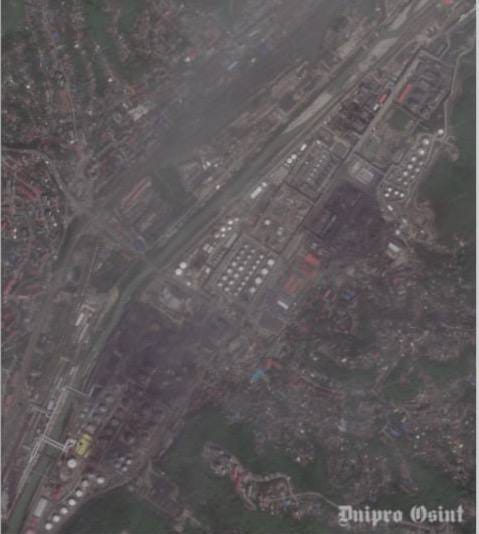
Liquid Radioactive Waste Pits At UNC Wood River Junction Circled in Red — 1970s
Robert Peabody’s radiation overexposure death and the UNC’s nightmare radioactive waste disposal practices stand out because the UFOs started arriving in February 1973. Over the following months, hundreds of people saw them in the Wood River Junction area, flying slowly and silently by at treetop level.
Internet reports on the Woodriver Junction sightings mention only February 1973, which is inaccurate. Between February and April of 1973, there were 33 UFO sightings within several miles of Wood River Junction. More amazing is that the sightings lasted for years, extending into 1979, just before the plant closed. The sightings almost always involved a single craft flying low and slow.

Many reports indicate that the Wood River Junction UFOs departed by flying out over the sea
In the 1970s, almost everyone who lived on Kings Factory Road just south of the UNC facility. The sightings, often involving the craft drifting over people's homes at a snail’s pace, led to everyone calling it the Wood River Junction UFO. Because Kings Factory Road is on a hill, its residents had a good view of Hope Valley and could see the UNC plant, which was 100 feet lower in elevation.
People on Kings Factory Road were not the only witnesses. Others encountered the craft (UFOs) while driving on South County’s back roads. An odd physical manifestation is that people reported their cars would stall when the craft passed overhead. After the craft drifted by, the cars were able to start again.


More than 200 US cases of stalled automobiles are associated with UFO sightings between 1944 and 1980. On Kings Factory Road, residents reported squiggly lines on their TV screens when the UFO was nearby. One witness said the TV interference pattern was similar to that caused by the high-voltage discharge from a faulty automobile spark plug. The TV interference disappeared when the craft left the area.
Witnesses who saw the Wood River Junction craft said it was two to three times the diameter of an automobile, and some reports state that it had flashing lights. A common theme is that the UFO was seen just above the treetops, moving slowly, and not performing high-speed maneuvers. Many sightings of the UFO hovering over ponds and fields were made.
The spookiest part of the Wood River Junction UFO story is that the craft would hover over UNC’s Wood River Junction plant. The craft was even photographed by local residents who trudged through the woods to UNC’s fence line. One of the photographers lived on Kings Factory Road and was a long-time reporter for the Providence Journal. The newspaper refused to run the Wood River Junction UFO story or publish the photos.
What happened in Wood River Junction is factual and has a significant bearing on the broader ongoing debate about UFOs. What’s especially meaningful is that the UFO visits to UNC’s uranium recovery plant were not high-speed, high altitude reconnaissance missions; they were overnight camping trips at a high-security, licensed nuclear facility. Because the UNC plant was 100 feet lower in elevation than the Kings Factory Road hill, people could look out their window and see the craft hovering over the nuclear facility for hours.
I’m not sure anyone has enough data to offer a good opinion about the origin and nature of the Wood River Junction craft. A speculative case can be made that the UFOs were advanced, nuclear-powered aircraft engaged in refueling, but that theory lacks evidence. It can also be argued that the craft were part of a classified military program that uses advanced craft to protect nuclear weapons and the material they are built with. Both theories have more holes than Swiss Cheese.
What I can say with 100% certainty is that the Wood River Junction enriched-uranium recovery plant was the magnet that attracted the UFOs. There was a cause-and-effect relationship. If, by some remote chance, the craft were extraterrestrial, then their nightly vigils above the UNC plant would speak volumes about why they were visiting.
The UNC plant at Wood River Junction not only recycled weapons-grade enriched uranium scrap, but it was also the site of Robert Peabody’s criticality death. Beyond that unprecedented nuclear safety lapse, the plant’s environmental horror show raises a whole series of ethical issues about knowingly causing environmentally induced mutations and cancer deaths. An interesting side note is that all of the eggs sold by a Wood River Junction chicken farm in the late 1970s had two yolks.
UNC’s radioactive waste disposal practices were not unique; they were a microcosm of every facility linked to US nuclear weapons production. Could the Wood River UFOs have been sending an extraterrestrial message to humanity about its social immaturity and use of technology it can’t safely control? I wanted to ask former UNC employee Robert Peabody that question, but he died in a 1964 criticality accident.
A final note about the UFO incidents at UNC’s plant is that Kings Factory Road is in Chalestown, where the seaside village of Quonochontaug is located. Quonochontaug played a key role in the popular 1990s and early 2000s TV hit show “The X-Files.” At its peak in the late 1990s, The X-Files had 20 million viewers per episode.
In The X-Files, the parents of the show’s main character, FBI agent Fox Mulder, had a summer home in Quonochontaug (Charlestown) while he was growing up. Mulder’s father and other Quonochontaug residents worked for the government and were part of a secret alien contact program. The program was international in extent and involved the United Nations.
After becoming an adult, Fox Mulder joined the FBI, and with one other agent, was assigned to investigate UFOs and anomalous, unexplained events. Mulder’s political protector, “the smoking man,” was an omnipotent government employee with invisible connections more powerful than the President’s. The smoking man worked for the same secret alien contact program as Agent Mulder’s late father, and was a frequent visitor to the Mulders’ Quonochontaug home.
Unlike the Wood River UFO incidents, The X-Files was entirely science fiction. Nonetheless, the Wood River Junction UFO connection to Charlestown is an intriguing coincidence. Purportedly, Quonochontaug was included in The X-Files plot because it provided a secluded, socially closed backdrop for those connected to the secret alien relations conspiracy.
The question I have to ask is: “Was Quonochontaug included in the X-Files as a subconscious message about the Wood River Junction UFO incidents?” In the 1970s, when the United Nuclear incidents happened, the fictional X-Files character Fox Mulder would have been a youth spending his summers in Quonochontaug, swimming at Charlestown’s town beach.
The Quonochontaug, X-Files, and the Wood River Junction UFO sightings are interesting. This story would not be fully transparent if I did not mention it.
메타데이터
- post_id
- fc75752c3fea
- slug
- americas-most-secret-ufo-nuclear-incident-the-woodriver-junction-encounters-fc75752c3fea
- url
- https://medium.com/@nhojsull/americas-most-secret-ufo-nuclear-incident-the-woodriver-junction-encounters-fc75752c3fea
- canonical_url
- https://medium.com/@nhojsull/americas-most-secret-ufo-nuclear-incident-the-woodriver-junction-encounters-fc75752c3fea
- author_url
- https://medium.com/@nhojsull
- status
- ok
- fetched_at
- 2026-06-24 04:09:36