7. The Genocide Machine
Can Big Finish’s first Dalek story live up to its iconic villains?
Can Big Finish’s First Dalek Story Live Up to Its Iconic Villains?
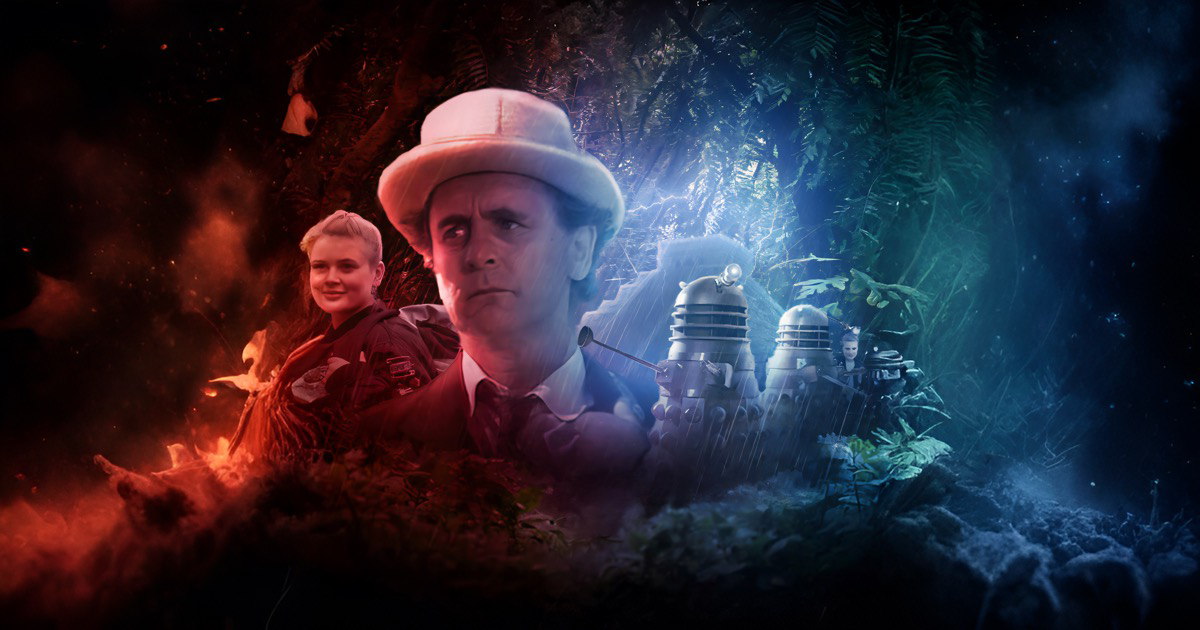
Alternate artwork by https://www.deviantart.com/pandplayerhd/art/Doctor-Who-MR-7-The-Genocide-Machine-TEXTLESS-1001235417
The Genocide Machine marks a milestone in Big Finish history as their first audio drama featuring Doctor Who’s most notorious villains. But does this Seventh Doctor adventure deliver on the promise of its legendary antagonists, or does it exterminate our expectations?
When Icons Return
There’s something undeniably thrilling about the moment you first hear that distinctive Dalek control room heartbeat pulsing in the background. It’s a sound that signals danger, nostalgia, and excitement all at once. Back in 2000, when Big Finish was still establishing its Doctor Who credentials, nothing could legitimise their project quite like the arrival of the show’s most iconic villains.
The Daleks aren’t just monsters; they’re part of Doctor Who’s DNA. Their appearance in The Genocide Machine represented a significant milestone — a sign that Big Finish was truly carrying the torch for Doctor Who during a time when the show’s return to television seemed like wishful thinking. Even though their involvement was heavily advertised (and plastered across the cover art), hearing those mechanical voices again after years of absence felt momentous.
A Tale of Two Halves
Mike Tucker seemed the perfect choice to pen this landmark story. His connection to Doctor Who spans decades as both a visual effects artist (most recently, winning a BAFTA for his model work on the 50th-anniversary special) and accomplished writer of Doctor Who novels. Pairing him with the Seventh Doctor and Ace — characters he’d written for previously — appeared to be a recipe for success.
The setup is classically Who: the Doctor and Ace arrive at a hidden library on the jungle planet of Kar-Charrat, a vast repository of knowledge that rivals even the Gallifreyan Matrix. Naturally, this makes it an irresistible prize for the Daleks, who plan to absorb all this knowledge and become unstoppable.
The first two episodes are genuinely excellent. Tucker’s script smartly holds back the Daleks until the end of part one, building tension before delivering that spine-tingling reveal. There’s something deliciously retro about this approach that evokes classic serials like Planet of the Daleks — the jungle setting, the hidden alien race, the mysterious technology all creating a sense of pulpy adventure that feels right at home in the Doctor Who universe.
By the midpoint cliffhanger, the story reaches a thrilling crescendo: the Doctor is seemingly dead, Ace is captured, and the Daleks are on the verge of accessing all the knowledge in the universe. It’s a perfect setup for what should be an epic conclusion.
And then…something goes awry.
When Good Setups Go Bad
The second half of The Genocide Machine feels like it’s running on emergency power. Where the opening episodes demonstrate the Daleks’ cunning and patience, the conclusion relies on a series of convenient solutions that undermine their threat.
Without spoiling the specifics, the story introduces new elements in its latter half that weren’t properly established earlier. What begins as a tightly plotted Dalek invasion shifts into something less focused, with last-minute revelations and plot devices that feel designed primarily to extract our heroes from an otherwise impossible situation.
The Doctor, who had been brilliantly proactive initially, becomes more of an observer as events unfold around him. The Daleks, meanwhile, shift from unstoppable force to beatable foes through means that feel more convenient than earned.
Identity Crisis
One of the story’s stronger concepts involves duplicates — something the Daleks have historically been fond of employing. Here, it’s Ace who finds herself duplicated, a particularly interesting twist given how her character is defined by individuality and rebellion. Sophie Aldred’s performance as Dalek-Ace is distinctive, if occasionally veering into melodrama, but it creates an effectively unsettling version of the character.
Unfortunately, much like the story itself, this concept never reaches its full potential. After a promising introduction, Dalek-Ace is quickly sidelined rather than becoming the genuine threat she could have been. It’s another example of The Genocide Machine setting up compelling ideas but failing to follow through on them.
The Sound of Evil
Where the story consistently excels is in its production values. The sound design creates a vivid atmosphere, from the dense jungle environment to the sterile library interiors. The Dalek voices, handled by Nicholas Briggs (who would, of course, go on to voice them in the revived television series), are pitch-perfect, capturing their menacing arrogance. Sylvester McCoy and Sophie Aldred slip effortlessly back into their roles, their chemistry as strong as ever.
This technical excellence makes the narrative shortcomings all the more frustrating. You can hear the potential for greatness throughout — it’s just never quite realised.
Legacy in the Making
Despite its flaws, The Genocide Machine remains significant in the Big Finish canon. It launched what would become one of their most successful ranges, the Dalek Empire series, and demonstrated their commitment to bringing back iconic elements of Doctor Who with appropriate gravitas. It also established a template for future Seventh Doctor stories that would explore his more manipulative side, even if this particular tale doesn’t fully capitalise on that aspect.
In the broader context of Doctor Who history, the story arrived at an interesting juncture. The wilderness years were in full swing, with the TV Movie having failed to launch a series and the new show still five years away. Big Finish was, at this point, the standard-bearer for the franchise, and bringing back the Daleks represented a significant step in keeping the Doctor Who flame alive.
So Near, Yet So Far
The Genocide Machine ultimately feels like a solid foundation rather than a towering achievement. The first half demonstrates everything that makes Doctor Who work — tension, mystery, clever protagonists, and intimidating antagonists. The second half reveals the challenges of crafting a satisfying resolution when the villains are as formidable as the Daleks.
Is it worth a listen? Absolutely. The production quality alone makes it worthwhile, and those opening episodes deliver some genuinely thrilling moments. But as the first Big Finish Dalek story, it represents a missed opportunity to truly showcase these iconic villains at their calculated, ruthless best. Instead of exterminating our expectations, it merely stuns them.
But perhaps that heartbeat in the dark — that moment when we knew the Daleks were truly back in Doctor Who — was achievement enough for a first outing. Sometimes, the return of an icon doesn’t need to be perfect to be significant.

메타데이터
- post_id
- fc894308b197
- slug
- 7-the-genocide-machine-fc894308b197
- url
- https://medium.com/doctor-who-the-big-finish-reviews/7-the-genocide-machine-fc894308b197
- canonical_url
- https://medium.com/doctor-who-the-big-finish-reviews/7-the-genocide-machine-fc894308b197
- author_url
- https://medium.com/@tim_53834
- status
- ok
- fetched_at
- 2026-07-17 23:00:59