Best Purple Team Course: Where Offense Meets Measurable Defense
Security teams often worked separately. Red teams would test, blue teams would monitor, and everyone assumed things were under control. But…
Best Purple Team Course: Where Offense Meets Measurable Defense
Security teams often worked separately. Red teams would test, blue teams would monitor, and everyone assumed things were under control. But a pentest does not automatically fix your defenses, and alerts do not guarantee attackers get caught.
Purple teaming changes that by bringing both sides together, finding what your defenses can actually catch and fixing what they miss. Programs like the **best purple team course and blue team lab** are built around this idea, using real attack scenarios to answer one simple question: would we have caught that?
In this article, we will cover what purple teaming is, why it matters, and how the right training can help you build defenses that actually work.
Why Purple Teaming Matters Now
Attackers are no longer dependent on custom malware. They leverage identity systems, trusted binaries, and native administrative tools. Most enterprise compromises today rely on:
- Credential abuse instead of exploitation
- Lateral movement using legitimate protocols
- Privilege escalation through misconfiguration
- Living-off-the-land execution techniques
Traditional red team exercises often identify weaknesses but fail to validate whether detection teams can identify them. Conversely, blue teams frequently build rules without understanding how real attackers chain techniques together.
The best purple team course addresses this disconnect by placing both mindsets into the same operational framework.

What This Program Focuses On
A mature purple team program is not about tool usage. It is about controlled adversary simulation followed by structured defensive validation.
The curriculum emphasizes:
- Executing realistic attack chains
- Measuring detection effectiveness
- Improving telemetry coverage
- Refining correlation logic
- Re-testing after defensive adjustments
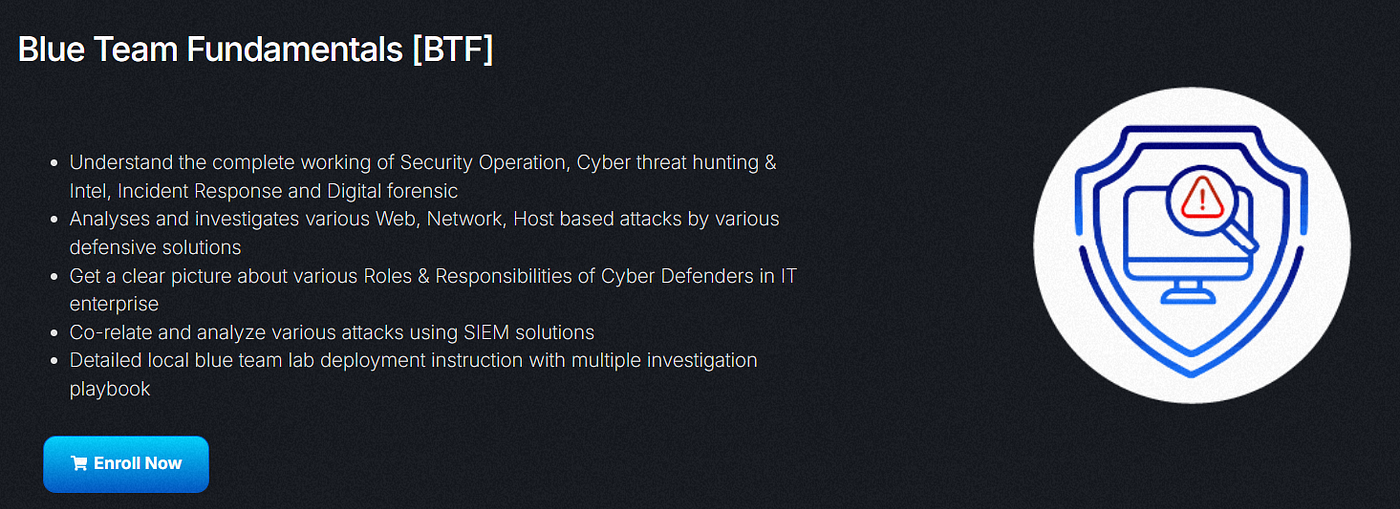
A structured blue team lab ensures that every offensive technique is examined from a defender’s perspective. Students do not simply compromise systems. They analyze logs, alerts, and event traces generated by their own activity.
Core Technical Areas
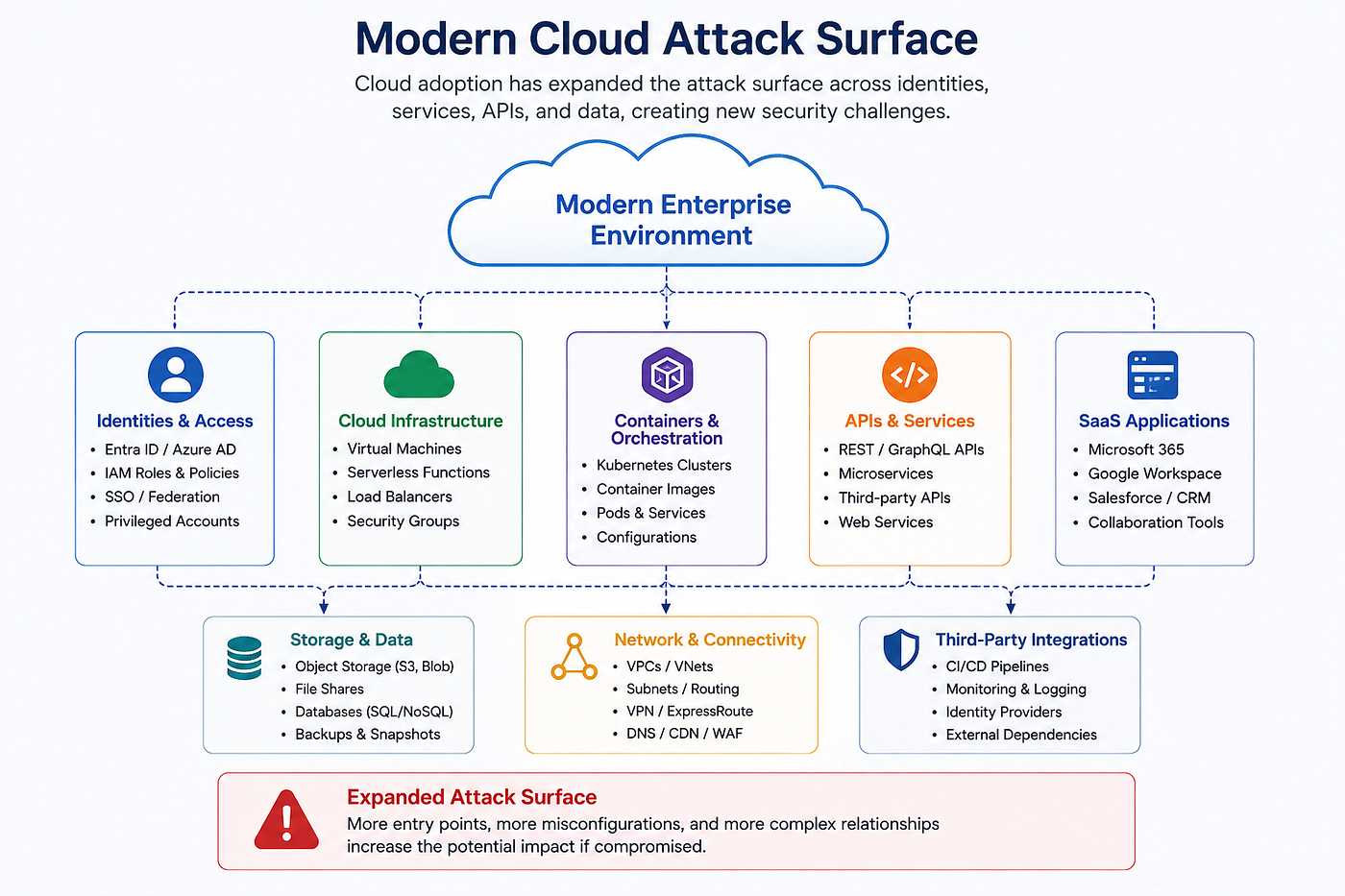
Architecture for blue team
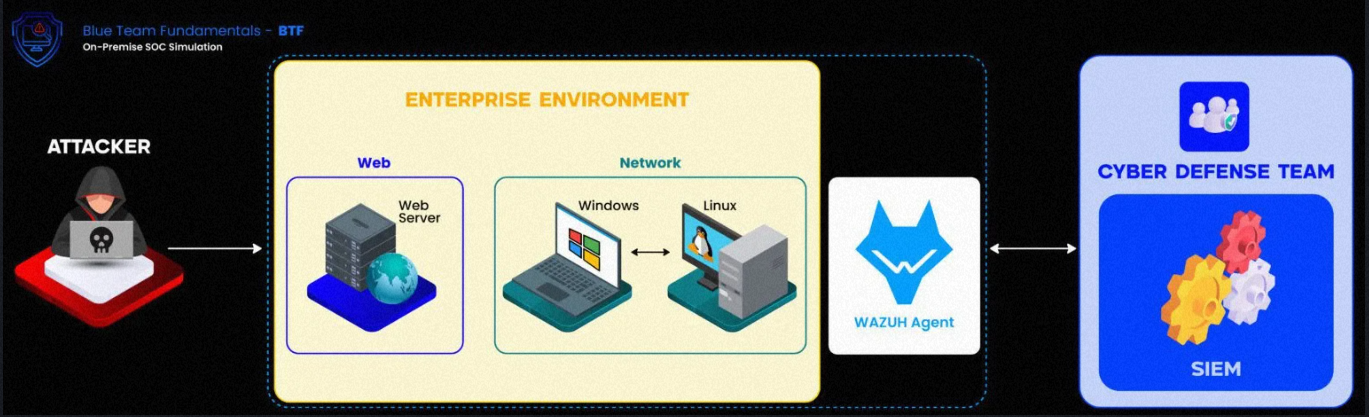
Realistic Adversary Simulation
Instead of isolated commands, participants simulate full attack paths that resemble real intrusions. This includes:
- Initial access scenarios
- Credential harvesting techniques
- Privilege escalation chains
- Lateral movement across domain infrastructure
- Persistence and evasion strategies
Each action is reviewed inside the blue team lab to understand detection visibility and telemetry gaps.
Detection Engineering and Telemetry Validation
Detection engineering is a practical discipline. It requires understanding how attacker behavior appears across logs and endpoint data sources.
The best purple team course trains participants to:
- Analyze Windows event logs and Sysmon data
- Evaluate endpoint detection alerts
- Design SIEM correlation rules
- Conduct structured threat hunting
- Reduce false positives without weakening coverage
This approach builds defensive capability grounded in attacker behavior, not theoretical scenarios.
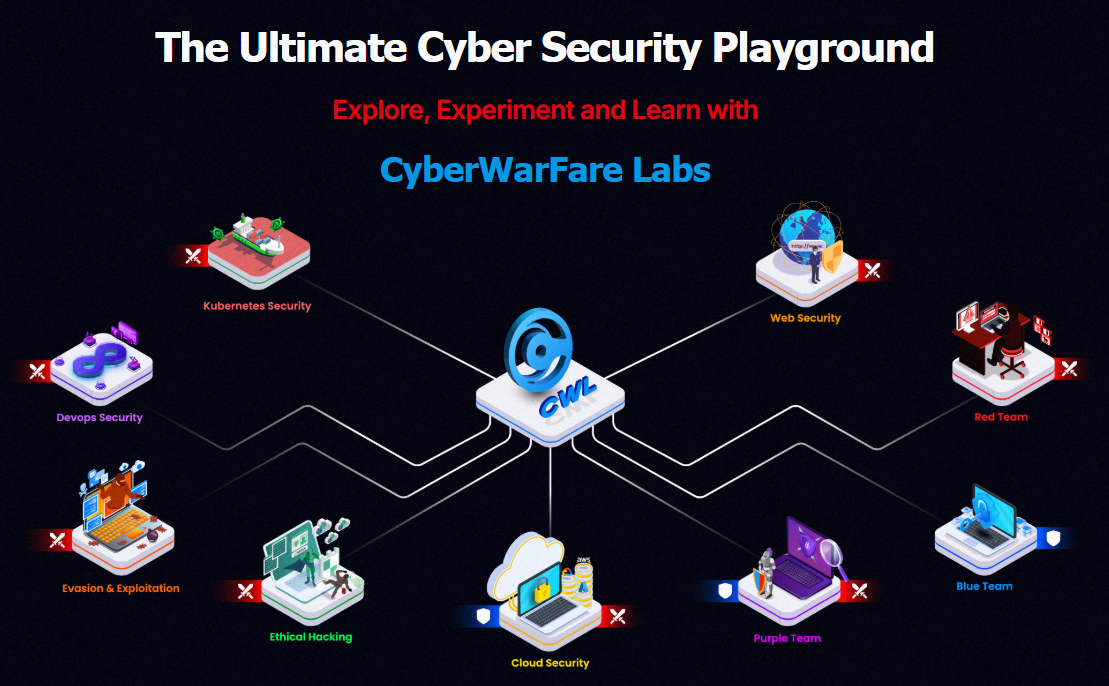
Architecture for purple team
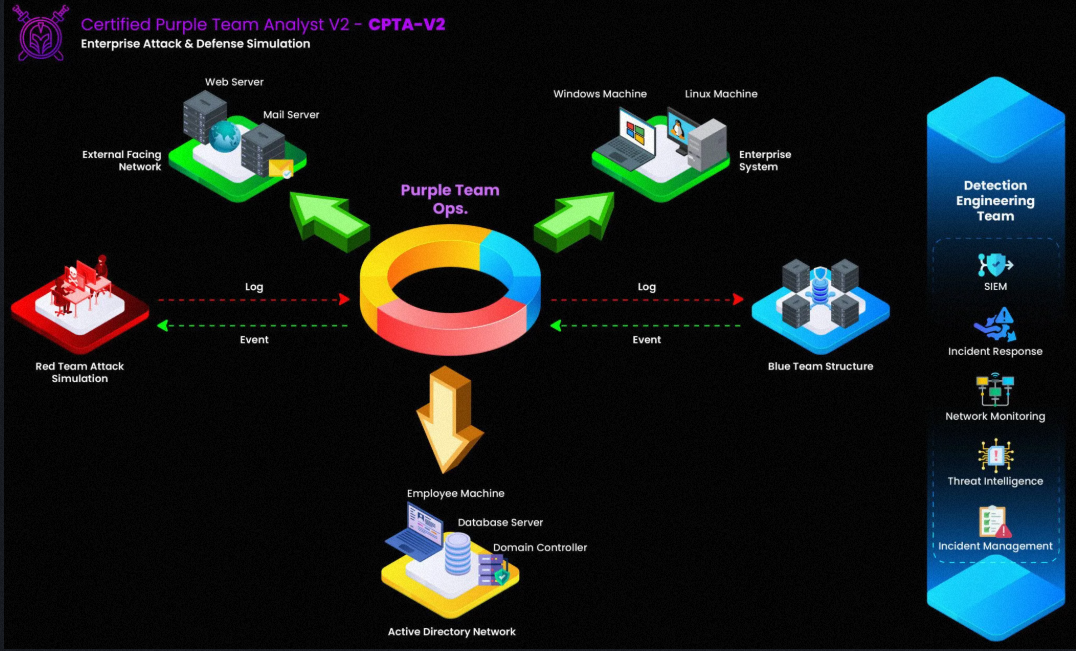
Active Directory and Identity Security
Identity remains the backbone of enterprise compromise. Purple team training focuses heavily on:
- Kerberos-based attacks
- NTLM relay exploitation
- DCSync and replication abuse
- Delegation misconfigurations
- Service account privilege misuse
These techniques are executed in a controlled blue team lab environment, replicating domain-based enterprise networks.
Endpoint and Behavioral Detection
Modern EDR platforms rely on behavior, not signatures. Understanding how these systems detect suspicious activity is critical.
Participants examine:
- Parent-child process relationships
- Command-line logging visibility
- Process injection indicators
- In-memory execution artifacts
- Behavioral anomaly patterns
This dual exposure strengthens offensive discipline and defensive engineering precision.
Practical Learning in a Controlled Lab Environment
Practical exposure defines the effectiveness of a purple team program. A structured blue team lab provides domain-joined systems, centralized log aggregation, and endpoint monitoring configured to simulate real enterprise infrastructure.
Students execute controlled attack sequences and immediately analyze:
- Which logs captured the activity
- Which alerts triggered correctly
- Where telemetry gaps exist
- How detection logic can be improved
After adjustments are made, attacks are re-executed to validate improvements. This iterative cycle mirrors how mature security teams refine detection capabilities in production networks.
The best purple team course builds analytical thinking. Participants learn to approach every action with two questions in mind:
- How would an attacker execute this effectively?
- How should a defender detect this reliably?
Repeated execution within the blue team lab strengthens this dual perspective.
Who Should Take This Program
- Security analysts transitioning from blue to purple roles
- Red team professionals seeking detection engineering knowledge
- SOC engineers responsible for SIEM rule creation
- Threat hunters validating adversary techniques
- Consultants conducting adversary simulation assessments
- Identity and Active Directory security specialists
Industry Relevance
Enterprises increasingly demand measurable security maturity rather than theoretical assessments. Leadership expects proof that detection systems can identify real adversary behavior.
The best purple team course aligns with this demand by preparing professionals capable of simulating attacks and validating defensive response in a single workflow. Experience gained inside a structured blue team lab reflects the operational realities of modern SOC and adversary emulation teams.
As organizations adopt continuous validation models, professionals who understand both offense and defense are positioned to lead detection improvement initiatives and adversary simulation programs.
Final Thoughts
Purple teaming represents a shift from reactive security to measurable resilience. It integrates offensive precision with defensive validation, creating a feedback loop that strengthens enterprise defenses over time.
A structured best purple team course, supported by a realistic **blue team lab**, equips professionals with the technical depth and operational clarity required to operate confidently across both domains of modern cybersecurity.
메타데이터
- post_id
- fc89cfbcfce5
- slug
- best-purple-team-course-where-offense-meets-measurable-defense-fc89cfbcfce5
- url
- https://medium.com/@jamesadler8/best-purple-team-course-where-offense-meets-measurable-defense-fc89cfbcfce5
- canonical_url
- https://medium.com/@jamesadler8/best-purple-team-course-where-offense-meets-measurable-defense-fc89cfbcfce5
- author_url
- https://medium.com/@jamesadler8
- status
- ok
- fetched_at
- 2026-06-09 15:37:30