Why A/B Testing Matters More Than Ever For WordPress Sites In 2025
How vital it is for WP website owners and shopify stores to A/B test their pages and how new tool Sigmize made it very simple to A/B test.
Why A/B Testing Matters More Than Ever For WordPress Sites In 2025
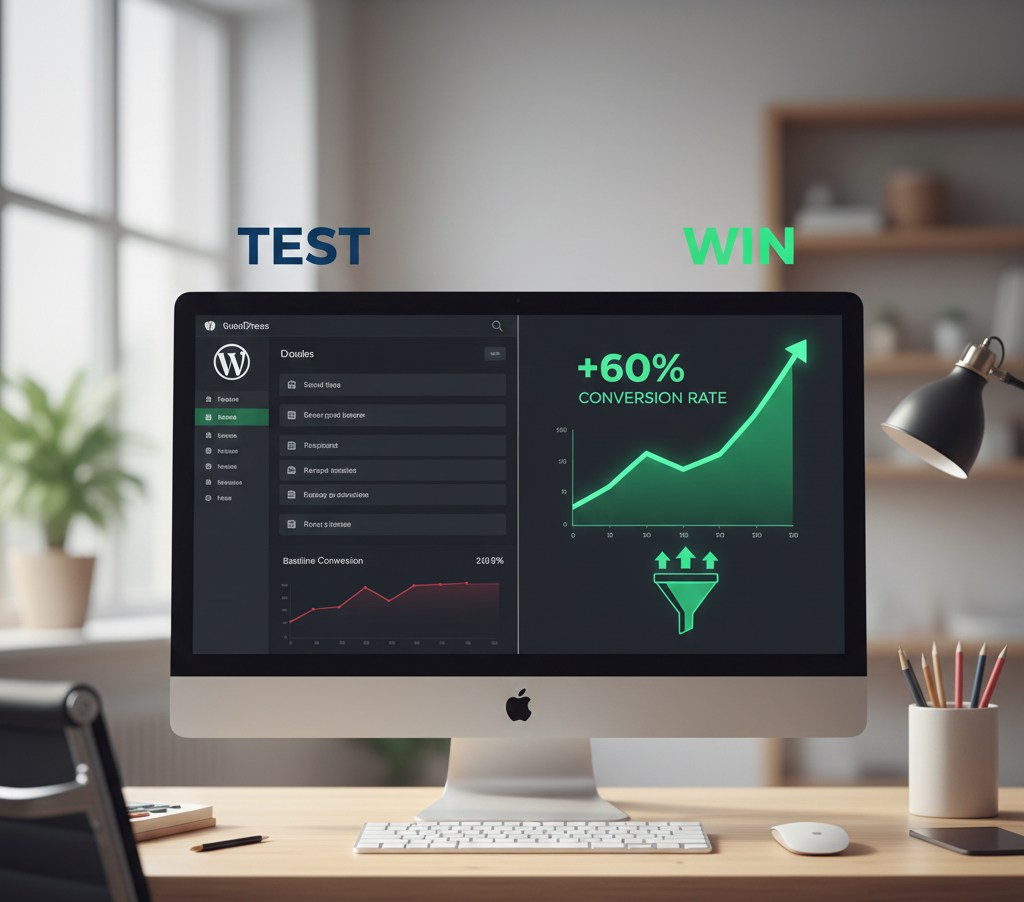
Successful wordpress website owners are consistently testing when compared to the rest.
Something quietly shifted in 2025.
It was not a big algorithm update or some dramatic change in the WordPress ecosystem. It felt more like a slow turning of the dial.
First a whisper. Then a pattern. Then you realize this is the new normal.
WordPress site owners who used to stop at “fast, secure, and live” started asking a different question:
Now what actually converts?
That question has completely changed how I look at my own sites.
This is the story of how that happened, why A/B testing suddenly clicked for me as a WordPress user, and how a new tool called **Sigmize **slipped into my stack and made testing feel as natural as checking page speed.
This is not a product pitch. It is the journey of a regular WordPress owner who finally connected the dots between speed, traffic and conversions.
The Old Game: Speed, SEO, Launch, Hope
If you have been in the WordPress world for a while, you probably recognize this pattern.
You pick a theme You tweak it for days You obsess over Core Web Vitals You compress images You remove that one plugin you are emotionally attached to but know is slowing the site You hit publish and breathe
The site is beautiful. It is fast. Lighthouse gives you a green score. Google Search Console slowly starts showing impressions. Organic clicks appear. Maybe you run some paid traffic.
The unspoken assumption is simple.
If the site is fast If the SEO is decent If the offer is good
People will convert.
For years that was my mental model too. I would call a site “done” once speed and SEO looked good. After that, any conversion win felt like a bonus, not a deliberate outcome.
In 2025 that mindset started to feel out of date.
What Changed In 2025
The short answer is: the market got crowded.
Every niche that used to have a handful of decent WordPress sites now has dozens. Sometimes hundreds.
Freelancers launched more client sites. Agencies rolled out entire fleets of funnels. Creators spun up microsites for every idea.
Traffic became harder to earn and more expensive to buy. But something even more important happened quietly in the background.
Conversion rates started slipping.
The same opt in that used to pull 3 percent would suddenly hover around 2 That “no brainer” pricing page that happily closed at 5 percent would sit closer to 3
Nothing broke. You did not become worse at marketing overnight. The simple reality is that visitors have more choices.
More choices mean people compare more. They think more. They hesitate more. They bounce a little faster and come back a little less.
If you still optimize like it is 2023, you end up stuck in a loop.
Get more traffic Hope it converts Repeat
The WordPress sites that are quietly pulling ahead in 2025 are doing something different.
They are not guessing. They are not assuming. They are testing.
Why WordPress Owners Feel This First
If you are a WordPress person, chances are you already have an optimization mindset.
You care about details You look at load times You tune hosting, caching, and CDNs You argue with yourself about whether one more plugin is worth the extra HTTP request
That focus on performance gave you a big edge for a long time.
A lot of your competitors were still running bloated pages on cheap hosting. Just being fast was enough to feel special.
That edge is gone.
Good hosting is easier to get. Performance‑focused themes are everywhere. Page builders and block plugins are much lighter than they used to be.
Speed stopped being a differentiator and turned into table stakes.
At some point you look at your numbers and realise something important.
Everyone is fast now.
So where do the gains come from next?
The answer that kept showing up for me was simple.
They come from what you do with the visitors after they arrive.
That is where A/B testing lives.
My First Realization About A/B Testing
I had heard about A/B testing for years.
I followed the classic case studies. I read about button color tests. I admired those huge uplift stories where a simple headline change doubled signups
But deep down I had quietly filed A/B testing under a category that sounded like this in my head:
Great in theory Complicated in practice Probably for bigger teams
That changed when I saw my own analytics.
Traffic looked fine. Click through rates looked fine. But conversion rates on a couple of important pages had clearly softened.
Not broken Not terrible Just clearly lower than they used to be
The old reaction would have been to chase more traffic. The new instinct was to ask a simple question:
What if the page itself can be better?
And that is the moment when A/B testing stopped feeling like a fancy concept and started feeling like the logical next step.
The Tooling Problem I Kept Hitting
Once I decided to actually test, I did what most of us do.
I opened a dozen tabs and went hunting for tools.
Classic enterprise testing suites. Analytics platforms with experiment add ons. SaaS tools that promised all forms of optimization in one dashboard.
They were powerful. No question.
But the more I dug into them, the more one frustration kept showing up.
They wanted to sit on top of my site instead of sitting inside my WordPress workflow.
They added scripts They added dashboards They added complexity
And most importantly for a performance‑focused brain, they added bloat.
I would spend months trimming my stack to keep TTFB low and Largest Contentful Paint happy. Dropping a heavy testing script on top of that felt like undoing half the work.
So I did what many WordPress owners quietly do.
I told myself I would circle back to A/B testing later. After the redesign. After the next launch. After things “settle down”.
Spoiler: there is never a perfect later.

Sigmize.com (source)
Sigmize Made A/B Testing Feel Natural For WordPress Owners
Around this time I came across **Sigmize**.
What caught my attention first was something small yet very specific.
Sigmize talked about being built for people who already care about speed.
Not just “we are fast too” But “we live in your WordPress world and respect the work you have already done to stay lean”
That line alone got it a trial on one of my sites.
I installed it expecting the usual complexity curve. Instead, the experience felt surprisingly natural.
Native WordPress interface Clear experiment setup No sense of a giant external system bolted on
For the first time, A/B testing did not feel like a separate project. It felt like another step in the normal optimization flow, right after checking page speed and before shipping new traffic campaigns.
What Happened When I Actually Started Testing
The temptation was to plan a massive test.
Rewrite the whole page Change the flow Rethink the layout
Instead I did something much smaller.
I picked one key page and made a simple variation of the hero section.
Same offer Same core message Different headline and supporting copy
**Sigmize** let me set it up quickly so I just pressed go and moved on.
A few days later I opened the dashboard and felt that slightly addictive sensation that only real data can give you.
There it was.
Version A and Version B Side by side Visitors, clicks and conversions clearly separated
One of them was quietly winning.
Not by a huge margin. Not a dramatic 300 percent lift. Just a clear, repeatable difference that I could actually feel in my numbers.
So I shipped the winner as the new control and set up another test.
Different button copy this time. Then a slightly reworked pricing layout. Then an experiment on how testimonials were presented.
None of these changes alone felt magical. But the combined result after a few weeks did.
With the exact same traffic volume, that page simply converted more people.
More signups More trials More customers
No extra ad spend No extra content No heavy redesign
Just a quiet series of evidence based tweaks.
That is when I realized what had really changed for me.
I was no longer hoping people would convert. I was learning how to help them do it.
Why This Matters Specifically For WordPress In 2025
WordPress is still the backbone of so many serious websites.
Agencies run client properties on it. Product companies build marketing sites on it. Creators and educators launch programs on it.
Because we live in that ecosystem, we are used to working on performance and SEO.
In 2025 the competitive edge is no longer found in shaving another 100 ms off your load time. It is found in understanding what makes people actually act once the site has loaded.
And that is exactly what A/B testing with a tool like **Sigmize **does.
It lets you keep everything you love about WordPress
The control The flexibility The performance work you have already done
And it gives you a way to turn that solid foundation into more conversions without throwing another complex platform into the mix.
Why I Think Now Is The Perfect Time To Start
There is something special about starting to test at this moment instead of a year from now.
Right now most WordPress owners are still where I was.
They have heard of A/B testing They like the idea They have not built it into their normal workflow yet
That means a quiet opportunity exists.
If you begin testing now If you make it part of your weekly or monthly routine If you treat conversion rate like you already treat page speed
You create a compounding advantage that is very hard for others to copy later.
Every winning variation becomes a permanent asset. Every insight about visitor behavior makes future decisions faster and safer. Every small improvement stacks on top of the last one.
Give that six months and your site is not just faster than your competitors. It is smarter.
A Simple Starting Plan You Can Copy
If you are a WordPress site owner who resonates with this, here is exactly how I would start.
- Pick one important page Either home, pricing, lead magnet or a key product page.
- Install Sigmize on that site Keep your stack light. Skip the complexity. Just get a simple testing layer in place.
- Create one clear variation Change the main headline or the primary call to action. Do not overthink the rest.
- Run the test and let it collect data Resist the urge to peek every hour. Give it time to stabilize.
- Ship the winner and queue up the next idea Perhaps a different hero layout. A new testimonial order. A shorter form.
- Repeat this rhythm for three months One meaningful test at a time, week after week.
If your experience mirrors mine, you will look up a few months from now and realize a simple truth.
You are no longer guessing what works. You just know what works backed with data.
The Quiet Power Of A/B Testing For WordPress Owners
At its core A/B testing is not about fancy statistics or complex dashboards.
It is about respecting your visitors enough to learn from their behavior instead of projecting your assumptions onto them.
It is about pairing your existing strengths as a WordPress owner
Your eye for detail Your performance focus Your love of clean builds
With a discipline that turns that craft into more results.
That is why Sigmize has earned a permanent place in my toolkit.
It made A/B testing feel like a natural extension of what I was already doing rather than a separate, heavy project.
And more importantly, it reminded me that in 2025 the real win is not just building beautiful fast sites.
The real win is building sites that help more of the right people say yes.
If you own a WordPress site right now, this is a wonderful time to start that journey.
Pick a page Run a test Watch what your visitors teach you
And if you want a tool that speaks the same language as your WordPress brain, you already know the name to search for:
Sigmize.
Just realized, i didnt talk about the session recordings and heatmaps that helped me understand what actions my visitors were taking.
Maybe an another blog that talks about the session recordings, heatmaps and their pricing which is just an icing on the cake! Do check them out if you are serious about improving conversions on your website with your current traffic.
메타데이터
- post_id
- fc9304e76ef8
- slug
- why-a-b-testing-matters-more-than-ever-for-wordpress-sites-in-2025-fc9304e76ef8
- url
- https://medium.com/@foundertalks/why-a-b-testing-matters-more-than-ever-for-wordpress-sites-in-2025-fc9304e76ef8
- canonical_url
- https://medium.com/@foundertalks/why-a-b-testing-matters-more-than-ever-for-wordpress-sites-in-2025-fc9304e76ef8
- author_url
- https://medium.com/@foundertalks
- status
- ok
- fetched_at
- 2026-06-09 15:37:30