The End of an Era: Honoring CPB’s Legacy as Public Media Charts Its Own Course
As 2026 begins, those of us devoted to public media face a watershed moment. The Corporation for Public Broadcasting, our North Star for…
The End of an Era: Honoring CPB’s Legacy as Public Media Charts Its Own Course
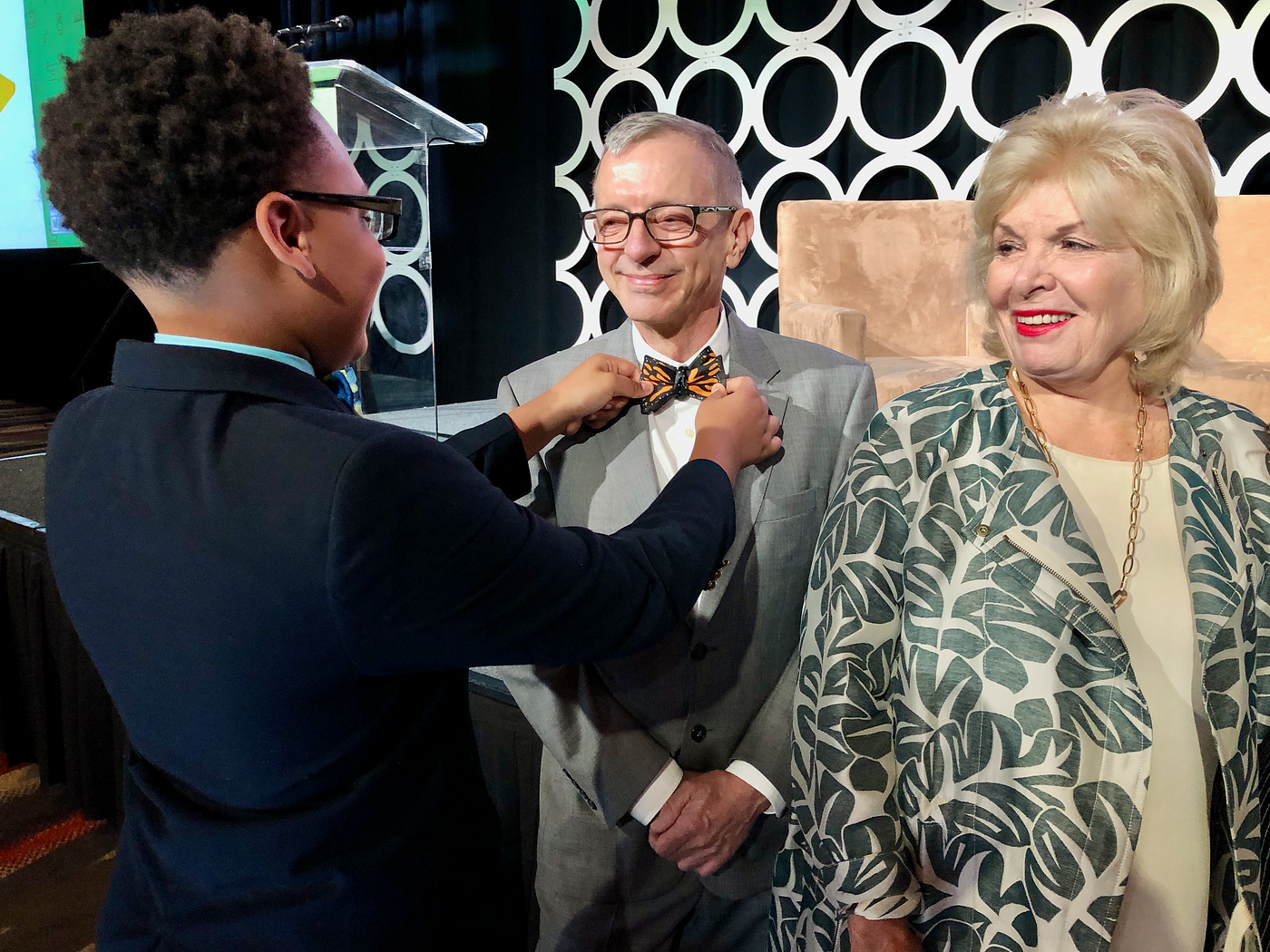
Alex Hart-Upendo adjusts bow tie on Bohdan Zachary with Pat Harrison
As 2026 begins, those of us devoted to public media face a watershed moment. The Corporation for Public Broadcasting, our North Star for decades, is gone forever. We have entered uncharted territory: one without the institutional framework and leadership that unified, funded, and elevated our collective mission.
The loss is profound and multifaceted. Gone are the catalytic national initiatives that brought stations together around shared purpose. Gone are the Community Service Grants that formed the financial bedrock for so many local operations. Gone are the meticulous (and oftentimes maddening) reporting requirements that, however arduous, connected us to a larger accountability structure. And perhaps most poignantly, we will no longer hear from Patricia Harrison, whose two-decade tenure as CPB President defined a golden era of advocacy and vision.
Rather than speculate on the political forces that brought us to this juncture, I choose to focus on what endures: our fundamental mission to serve local communities with distinction. This has always been public media’s differentiating strength, the covenant that separates us from commercial entries drive by profit margins and political fealty.
I speak from experience on both sides of that divide. The first half of my career unfolded in the golden age of commercial network news, working at CBS, ABC, and NBC when these institutions represented the pinnacle of American journalism. Today, those once-mighty brands operate as diminished weakened versions of themselves, casualties of consolidation, cost-cutting, and the erosion of the public trust mandate that once guided them.
Pat Harrison’s galvanizing clarion speeches at annual PBS and NETA conferences didn’t just inspire; they fortified our belief that public media could genuinely transform lives. I witnessed this conviction in action during my tenure leading Milwaukee PBS. When we partnered with the Milwaukee Journal Sentinel/USA Today to produce “Kids in Crisis: You’re Not Alone,” a half-hour documentary about Wisconsin’s alarming surge in teen suicide, I emailed Harrison the link of the film on impulse. The extent of our dealings had included pleasantries and selfies at conferences over the years. Yet within forty-five minutes after I emailed her, Pat’s response arrived. She didn’t just praise the work, she immediately shared it with her entire executive staff and directed them to watch it. Harrison recognized what we had created: vital journalism on a criminally under-reported national crisis that only public media had the mandate and patience to tell properly.
The documentary’s impact validated everything CPB stood for. In our film four young people courageously shared their experiences with suicidal ideation. Our subjects then traveled throughout Wisconsin for town hall screenings and discussions. Bipartisan legislators in Madison watched, were moved, and introduced two bills to support teens in crisis. Governor Tony Evers signed both into law. Within days of Harrison’s email, CPB invited our producers and the young participants to present at a conference of 800 public media executives, amplifying our methodology for addressing this difficult subject.

This was Pat Harrison’s genius: spotting consequential work, elevating it instantly, and leveraging CPB’s convening power to spread best practices across the entire public media ecosystem.
Pat Harrison understood what was at stake. She was more than an administrator; she was a fearless champion who wielded influence on Capitol Hill and in communities nationwide to defend the proposition that Americans deserved media that served them rather than advertisers. To those of us in the trenches of public broadcasting, she was both guardian and gladiator — a figure who seemed, against all odds, indomitable.
The CPB Board voted to dissolve the organization following deliberate actions by the current administration and Congress’ rescission of previously appropriated funds, a move that eliminated CPB’s federal funding. For nearly six decades, strengthened democratic discourse and cultural enrichment across this nation. That it ended not with a gradual sunset but with swift, irreversible action speaks to the fragility of public goods in our current political climate.
Yet in this moment of loss, gratitude is essential. Pat Harrison and the dedicated executives at CPB waged an unrelenting campaign on behalf of hundreds of public radio and television stations and, by extension, millions of Americans who relied on the programming, journalism, and community connection these stations provided. Their work elevated educational content, amplified underrepresented voices, and maintained a bulwark against the homogenization of American media.
As we move into a new era without CPB’s structure, guidance, or funding, we do so not with loss alone but with purpose renewed. What CPB built was never meant to end — it was meant to endure through the people and institutions it strengthened. Now it falls to us to imagine boldly, to forge new alliances, and to keep faith with the audiences who trust us to inform, inspire, and connect.
CPB may be gone, but the mission it championed — and the standard of integrity and vision Patricia de Stacy Harrison embodied — remains our moral compass. We owe her, and the institution she led, profound gratitude for shaping the ideals we now carry forward.
The work of public media continues — in every public radio and public television station that believes in a more informed and empathetic nation. Our mission is not diminished; it is evolving. In its final act, CPB affirmed what has always been true: that public media is not a structure of funding or policy, but a spirit of service. And that spirit endures in us.
메타데이터
- post_id
- fc9568fcf573
- slug
- the-end-of-an-era-honoring-cpbs-legacy-as-public-media-charts-its-own-course-fc9568fcf573
- url
- https://medium.com/@beezee_21889/the-end-of-an-era-honoring-cpbs-legacy-as-public-media-charts-its-own-course-fc9568fcf573
- canonical_url
- https://medium.com/@beezee_21889/the-end-of-an-era-honoring-cpbs-legacy-as-public-media-charts-its-own-course-fc9568fcf573
- author_url
- https://medium.com/@beezee_21889
- status
- ok
- fetched_at
- 2026-06-17 10:21:25