One Country, Two Invoices
Pakistan and the Mediation
One Country, Two Invoices
Pakistan and the Mediation
Every time Pakistan performs an act of consequential diplomacy, two separate transactions occur simultaneously. The world receives something of genuine and lasting value. Pakistan’s people receive something entirely different. The currency is the same. The exchange rate depends entirely on which Pakistani you are.
This column is about both invoices.
What Just Happened
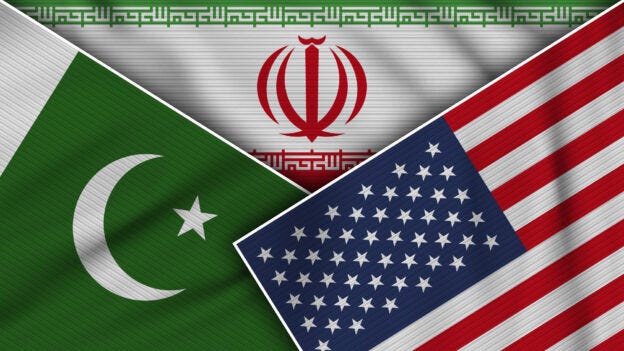
Pakistan has once again positioned itself as the indispensable back channel in a crisis that could have consumed the region. The Iran US confrontation following Operation Epic Fury in February 2026 placed the global energy supply, the Middle Eastern order, and potentially the broader Muslim world on the edge of a precipice that no other country had the relationships, the geography, or the institutional credibility to pull back from.
Pakistan pulled it back. Interior Minister Mohsin Naqvi made multiple trips to Tehran. Army Chief Field Marshal Asim Munir communicated directly with the Iranian supreme leadership and with President Trump. Prime Minister Shehbaz Sharif worked the Gulf capitals. Pakistan facilitated the ceasefire framework, the communications architecture, and the diplomatic structure that is currently the only arrangement preventing full regional collapse.
This is not small work. This is the kind of diplomacy that reshapes the regional order and saves lives in numbers that will never be fully counted.
Two invoices were generated by this work. They went to very different addresses.
Invoice One: The Ruling Class
The military establishment will receive institutional strengthening of a kind that no domestic political process could deliver. The credibility of having managed a crisis of this magnitude, with direct access to both Washington and Tehran at the highest levels, translates into untouchable institutional authority at home. No civilian government, no judicial process, no popular movement challenges an institution that just prevented a regional war. The establishment knows this. It is partly why the establishment pursued this role with the energy it did.
The specific individuals who managed this mediation will receive what Pakistani power brokers have always received at moments of international validation. Assurances of continued relevance. Protection of institutional positions. The quiet understanding from Washington, Riyadh, and other Gulf capitals that Pakistan’s establishment is a partner whose domestic arrangements will not be scrutinised too closely in the near term. Foreign governments that need Pakistan’s channels do not simultaneously pressure Pakistan on democracy, political prisoners, or press freedom. The correlation is not accidental.
The financial dimension will follow its established channels. Gulf states grateful for regional stability will provide deposits, investments, and arrangements that flow through the institutions and individuals who delivered the outcome. These will not appear in any official account. They will appear in the DHA expansion projects, the Bahria Town developments, and the quietly expanding portfolio of military affiliated commercial interests that Ayesha Siddiqa documented in Military Inc. and that has only grown since that book was published in 2007.
The political class providing civilian cover will receive tenure assurances. The current government understands that its continuity is partially secured by its usefulness in this moment. That understanding shapes every domestic policy decision including decisions about political opponents, press regulation, and judicial independence. Usefulness to the establishment is the most reliable form of political insurance available in Pakistan. The current government has just demonstrated maximum usefulness.
Foreign residencies and nationalities already held by the families of the ruling class will be further secured through the goodwill generated by this mediation. The British government, the UAE government, and others who host Pakistani elite assets are not indifferent to Pakistan’s diplomatic contributions. The informal understanding that Pakistani elite wealth stored in their jurisdictions will not face serious scrutiny is renewed every time Pakistan delivers a service of this magnitude. The exit door stays open. The accounts stay protected.
This is Invoice One. It will be settled in full.
Invoice Two: The Pakistani People
The Pakistani citizen who funded this mediation through his taxes, his remittances, his inflated electricity bills, and the opportunity cost of governance attention directed outward rather than inward will receive the following.
A moment of national pride. Genuine, earned, and real. Pakistan’s role will be covered in international media. Pakistanis abroad will share the articles. There will be a brief period in which being Pakistani in a foreign country feels like something other than a source of embarrassment at immigration queues. This is not nothing. But it is not enough.
The electricity bill will not change. The IMF programme currently imposing its conditionalities on Pakistan’s economy will not be restructured as a consequence of this mediation. No debt will be written off. No sanctions relevant to Pakistan’s economic development will be lifted. No technology transfer will occur. No trade agreement will be signed that meaningfully improves the employment prospects of the graduate in Karachi who cannot find work matching his qualifications. The fiscal space available for education, health, and infrastructure will not expand because Pakistan facilitated a ceasefire between two powers who have already moved on to calculating their next set of interests.
Pakistan receives approximately thirty billion dollars in annual remittances with fifty four percent from Gulf states. The workers sending that money home from construction sites in Dubai and Riyadh will continue sending it into an economy where their sacrifice subsidises a system designed to benefit people they will never meet. The Gulf states whose regional stability Pakistan just helped protect will not offer those workers better wages, better legal protections, or better residency rights as a consequence of what Pakistan delivered.
The political prisoner whose case has generated international attention will not be released as a consequence of this moment of diplomatic achievement. The establishment’s domestic authority, freshly reinforced by international validation, makes internal political concession less likely rather than more. Strength does not produce generosity in systems designed around power preservation. It produces further consolidation.
The young Pakistani deciding whether to emigrate will make the same calculation he was making before Operation Epic Fury, before the ceasefire, before Pakistan’s role was confirmed by international media. He will look at the electricity tariff, the unemployment rate, the rupee’s purchasing power, the quality of public hospitals, the independence of courts, and the realistic prospect of his talent being rewarded in the country of his birth. He will make a rational decision. Pakistan is losing this calculation at record rates. Diplomatic achievement at the international level does not change the domestic variables that drive it.
This is Invoice Two. It will also be settled in full. By the people who had no say in generating it.
The Arithmetic
Add the two invoices together and a pattern emerges that is not coincidental and not new.
After 1971, the generals who facilitated the Nixon China opening received land grants and institutional rewards. The people received a dismembered country and no accountability for how it happened.
After 1989, the generals who administered the Afghan jihad received business empires and comfortable retirements. The people received three million refugees, a heroin epidemic, and a sectarian infrastructure still producing funerals forty years later.
After 2001 to 2021, the establishment received sustained American financial transfers and international legitimacy. The people received eighty thousand dead from terrorism blowback and a one hundred and fifty billion dollar economic cost that no foreign power compensated.
The pattern across seven decades is not a series of unfortunate coincidences. It is a distribution system operating exactly as designed.
The Question
Pakistan’s people deserve to ask, with precision and without being told they are unpatriotic for asking, a simple question.
When Pakistan builds the bridge that the world crosses, who collects the toll?
The answer, documented across seven decades and consistent across every change of government, every military intervention, and every democratic restoration, is that the toll is collected by the same people who designed the booth, who staff it across administrations, and who have ensured that the road leading from the booth to ordinary Pakistani lives has never quite been completed.
The world gets the bridge. The ruling class gets the toll. The people get the bill for the construction.
Two invoices. One country. The same transaction, repeated until someone decides it should stop.
메타데이터
- post_id
- fc959cebaa8d
- slug
- one-country-two-invoices-fc959cebaa8d
- url
- https://medium.com/@roshan.anees001/one-country-two-invoices-fc959cebaa8d
- canonical_url
- https://medium.com/@roshan.anees001/one-country-two-invoices-fc959cebaa8d
- author_url
- https://medium.com/@roshan.anees001
- status
- ok
- fetched_at
- 2026-07-13 06:23:13