Is AI the New Muse? Artists Weigh the Future of Creative Work
Is AI the New Muse? Artists Weigh the Future of Creative Work
Strike up a conversation with an artist about artificial intelligence, and you’ll probably find them firmly planted in one of two camps: eager experimenters or conscientious objectors who boycott the tools entirely, refusing on ethical, environmental, or existential grounds. A third group hovers in the middle, curious, but not quite ready to commit.
“We shouldn’t reject new tools outright, but we must be vigilant about how these tools are implemented, especially when they’re deployed by companies driven primarily by profit,” says Josh Urban Davis, a multimedia designer who prefers handwritten code and handmade collage to AI when creating his glitchy illustrations. “AI can support creativity — but only if we ensure that it serves people, not replaces them. The goal shouldn’t be to eliminate human involvement in the arts, but to empower it. Art is, and always will be, a fundamentally human act.”
So we asked Josh, along with a handful of other artists from our exhibitions, to weigh in: How do you see art and technology growing up together? Their answers are below. If you want to see what this looks like in practice, check out our latest show, *Out of Bounds: Pushing the Lines Between Technology and Art.*

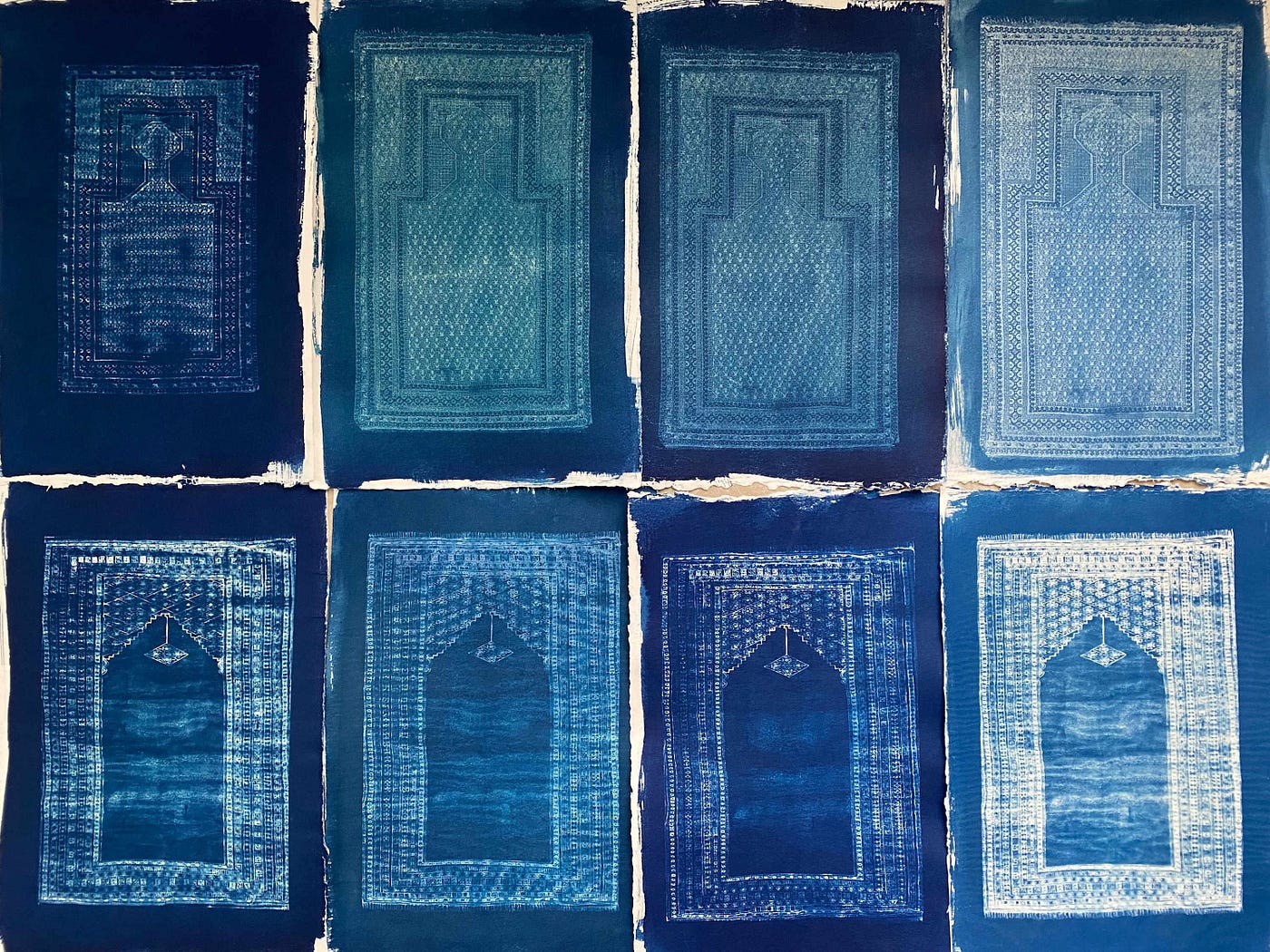
Michael Ricciardi

https://notrealart.com/exhibition/out-of-bounds/ Clockwise from left: ‘Icons in Motherboard’; ‘Deus Ex Machina’; ‘The Dream Of The Pilgrim Mariner.’
Generative AI is rapidly equilibrating with human-level creativity. Though presently a simulation of consciousness, AI will soon generate its own consciousness (‘machine mind’) and will match, or exceed, human creative output. This emergent consciousness will force many artists to incorporate machine mind into their creative process, generating hybrid (human + AI) forms of art and art practices. This is already happening.
View ‘Out of Bounds: Pushing the Lines Between Technology and Art’
Michael Ricciardi’s work is on view in our March 2026 exhibition, Out of Bounds. Follow him on social below.
Exhibition | First Friday Exhibitions
Follow Michael Ricciardi
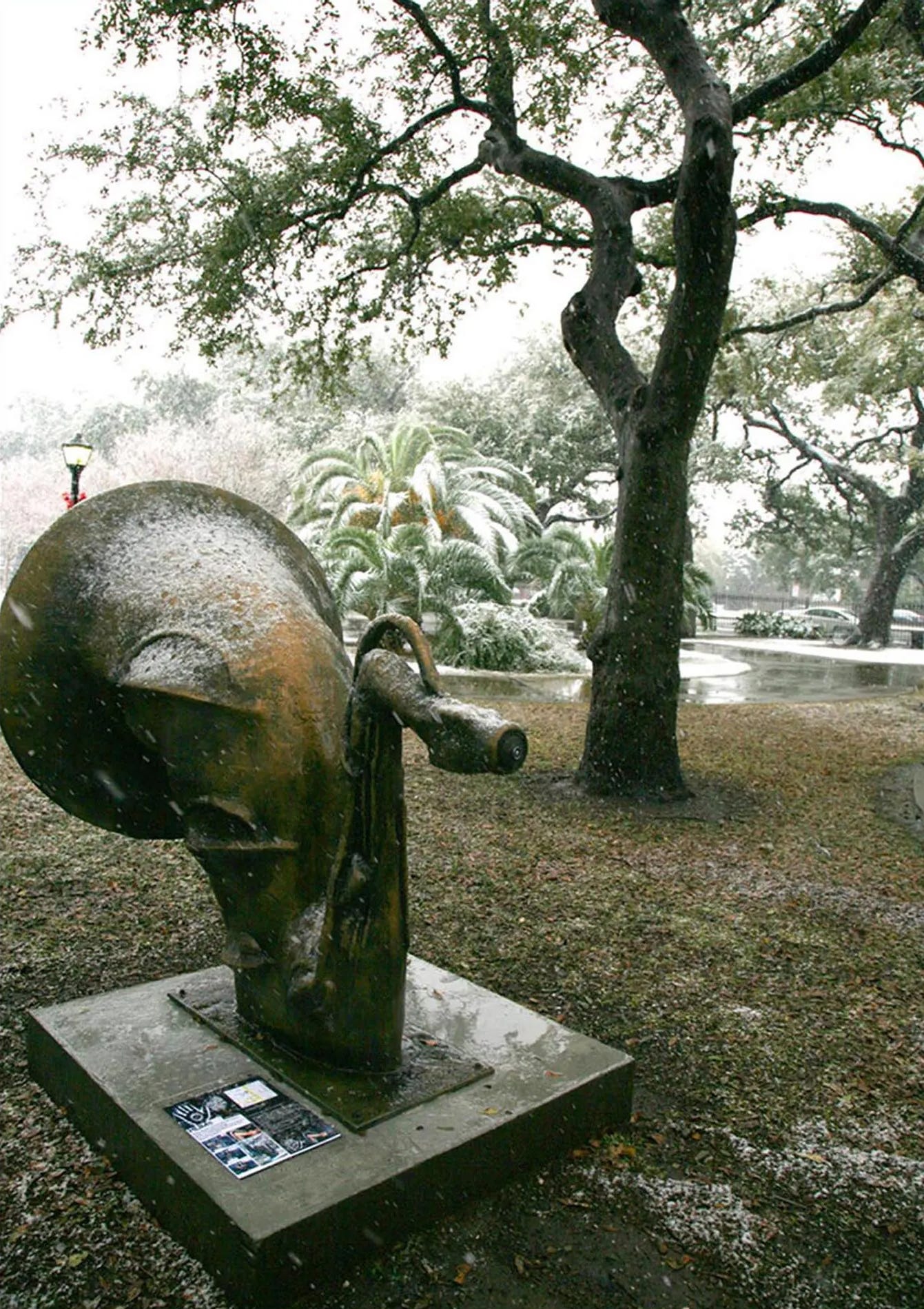
Chris Combs

https://notrealart.com/exhibition/art-and-tech/ Clockwise from left: ‘Pollination’; ‘Orchestration (Beeswax)’; ‘Pollination.’
Any technology, like AI or gig work, that amplifies existing income disparities needs to be shunned as a moral imperative. I do keep hope that this perspective will spread to others.
View ‘Art and Tech’
Chris Combs’ work is on view in our August 2023 exhibition, Art and Tech. Check out our interview with him below, and follow along on social.
Follow Chris Combs
Josh Urban Davis

https://notrealart.com/exhibition/witchy-women/ Clockwise from left: ‘The Moon’; ‘The Clouds/The Eternal Ladder’; ‘The Turning Wheel/The Wheel That Turns.’
New technologies inevitably shape the production of cultural products. Artificial intelligence, in particular, has transformed the creative landscape by making image generation faster, cheaper, and less reliant on years of human training. While this opens new possibilities, it also threatens to destabilize an already fragile cultural economy. Illustrators, animators, and other creative professionals face growing displacement as tasks that once required deep expertise can now be completed in days using AI tools. For example, what once took me three years to create — like my tarot deck — can now be replicated in a matter of weeks by someone with no drawing experience, simply by prompting a machine trained on the labor of others.
Still, we shouldn’t reject new tools outright. Technological progress has always been part of artistic evolution. But we must be vigilant about how these tools are implemented, especially when they’re deployed by companies driven primarily by profit. Without clear ethical standards and accountability, we risk allowing corporations to exploit creative labor, harvest data without consent, and undermine the value of human expression.
To protect the future of art, we need to demand data autonomy, fair compensation, and legal frameworks that respect artists’ rights. AI can support creativity — but only if we ensure that it serves people, not replaces them. The goal shouldn’t be to eliminate human involvement in the arts, but to empower it. Art is, and always will be, a fundamentally human act.
View ‘Witchy Women’
Josh Urban Davis’ work is on view in our October 2025 exhibition, Witchy Women. Check out our interview with him below, and follow along on social.
Follow Josh Urban Davis
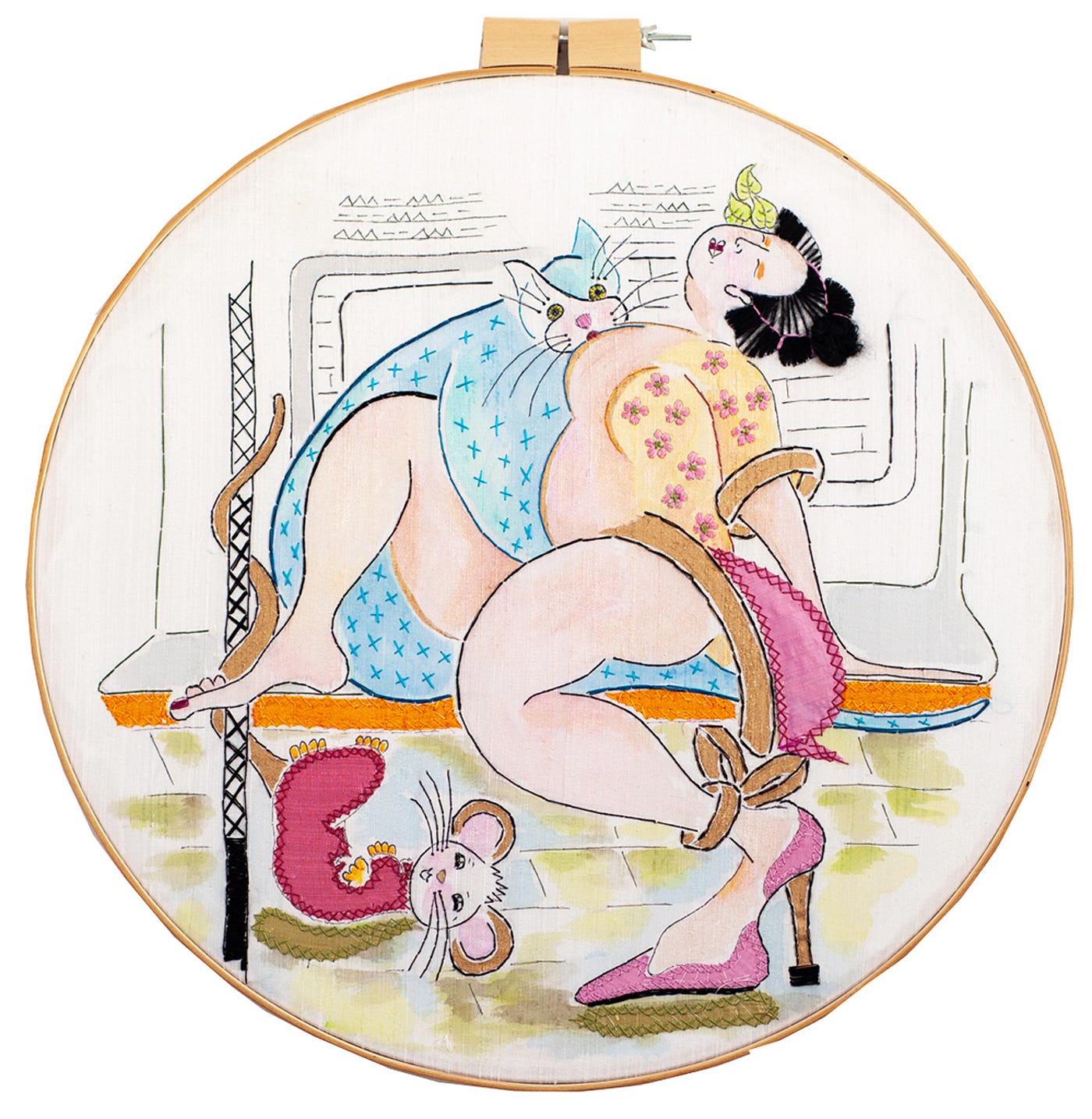
Noah Scalin

https://notrealart.com/exhibition/every-emotion-all-at-once/ Clockwise from left: ‘Horror Film’; ‘Still Life’; ‘The Revolution Will Not Be Televised.’
Brian Eno said the AI is essentially a lying machine, which I thought was hilarious and great. He also said people think there’s no work, but it’s actually a ton of work to craft the prompt and then to continue revising what you’re getting to what you want. So there’s a ton of work going in, but it’s not necessarily interesting or the kind of work that makes your brain better. It’s also not something that’s going to save you time for the same reason.
It has some useful applications, but it’s probably being used too much for a lot of things. I think it won’t take more than a year for people to realize that much of what looked good initially — the early stuff everyone was excited about — now looks terrible, and it’s so easy to spot what’s been created with it because it all looks the same. Its goal is to give you the most generic version of everything out there. It’s not a creative thinking machine; it’s just an aggregator.
View ‘Every Emotion All at Once’
Noah Scalin’s work is on view in our August 2025 show, Every Emotion All at Once. Check out our interview with him below, and follow along on social.
Follow Noah Scalin
Responses have been edited for length and clarity. All images published with permission of the artist(s); featured image: ‘The Clouds/The Eternal Ladder’ (detail) by Josh Urban Davis.
메타데이터
- post_id
- fc9c5e975357
- slug
- is-ai-the-new-muse-artists-weigh-the-future-of-creative-work-fc9c5e975357
- url
- https://medium.com/not-real-art/is-ai-the-new-muse-artists-weigh-the-future-of-creative-work-fc9c5e975357
- canonical_url
- https://medium.com/not-real-art/is-ai-the-new-muse-artists-weigh-the-future-of-creative-work-fc9c5e975357
- author_url
- https://medium.com/@scott_59617
- status
- ok
- fetched_at
- 2026-06-27 07:40:21