A Comparative Analysis of Online Journalism: The Washington Post and HuffPost
Introduction
A Comparative Analysis of Online Journalism: The Washington Post and HuffPost
Introduction
In the Internet era, the news media environment has also changed, giving birth to many digital media platforms. I will compare the two news platforms, HuffPost and The Washington Post, to compare how they report the same news and which one is more efficient.
Biographical information about the services and their user groups
The Washington Post
The Washington Post is one of the most influential news organisations in the United States, earning revenue mainly through digital subscriptions, advertising and partnerships. Founded in 1877, it is famous for its investigative news and in-depth political reports. Today, the agency operates as an important digital news platform while still maintaining its traditional newspaper identity. Currently, the owner of The Washington Post is Jeff Bezos, the founder of Amazon, who acquired the newspaper in 2013.
The characteristics of the target audience of The Washington Post can be found through the data of Similarweb. Its main audience is from the United States, accounting for 82.58% as of February 2026. The other readers mainly come from English-speaking countries. The gender ratio of readers is basically balanced, indicating that the media content is not targeted at a single gender. However, the overall age of the readers is relatively old, with the group aged 55 to 64 making up the largest proportion, while the proportion of young readers is relatively low.
In addition, readers mainly focus on news, media, education, finance, public affairs and other related content. Data shows that the majority of readers directly visit the website to obtain content, indicating that the media has a high brand recognition and a loyal readership. This phenomenon may be related to its long-term commitment to the content positioning of serious news and investigative reporting, as well as its subscription-based business model.
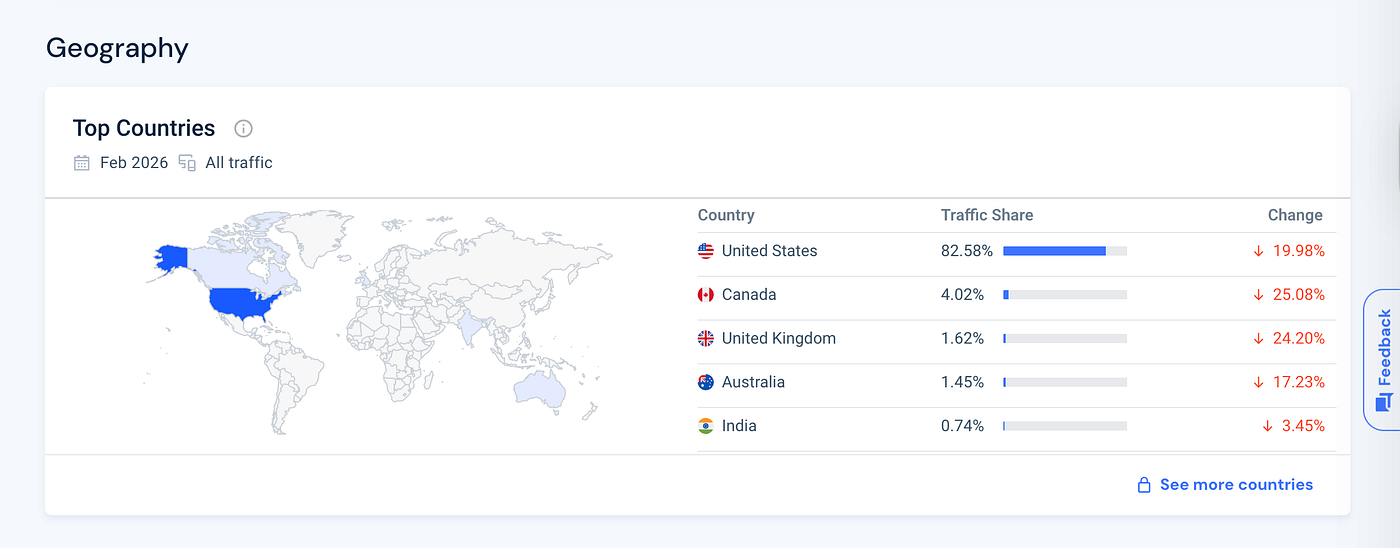
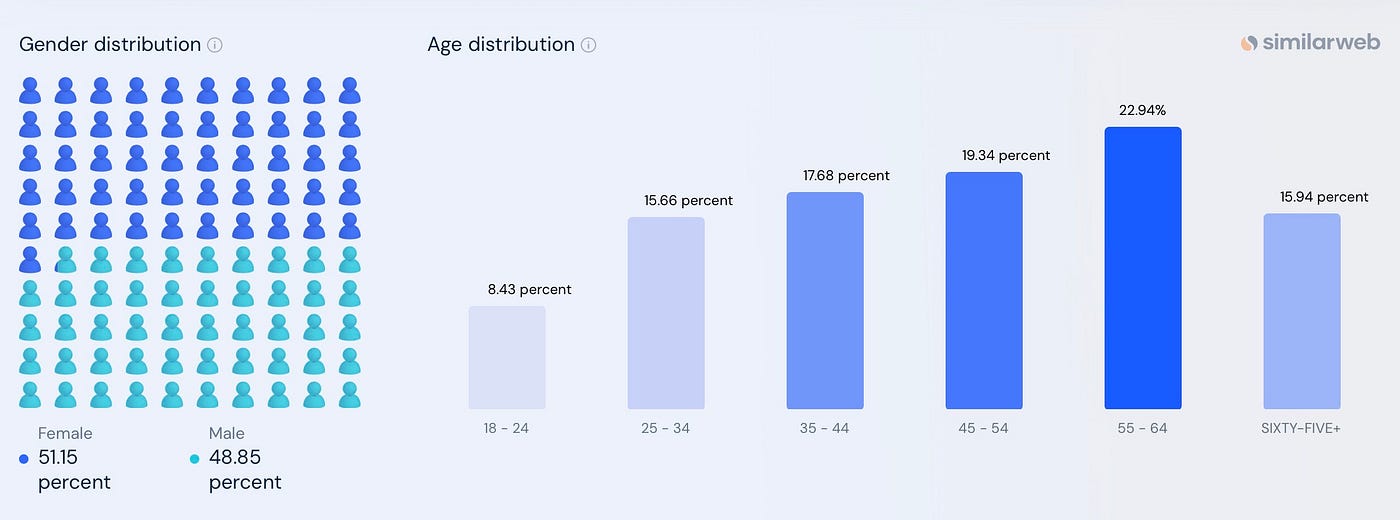
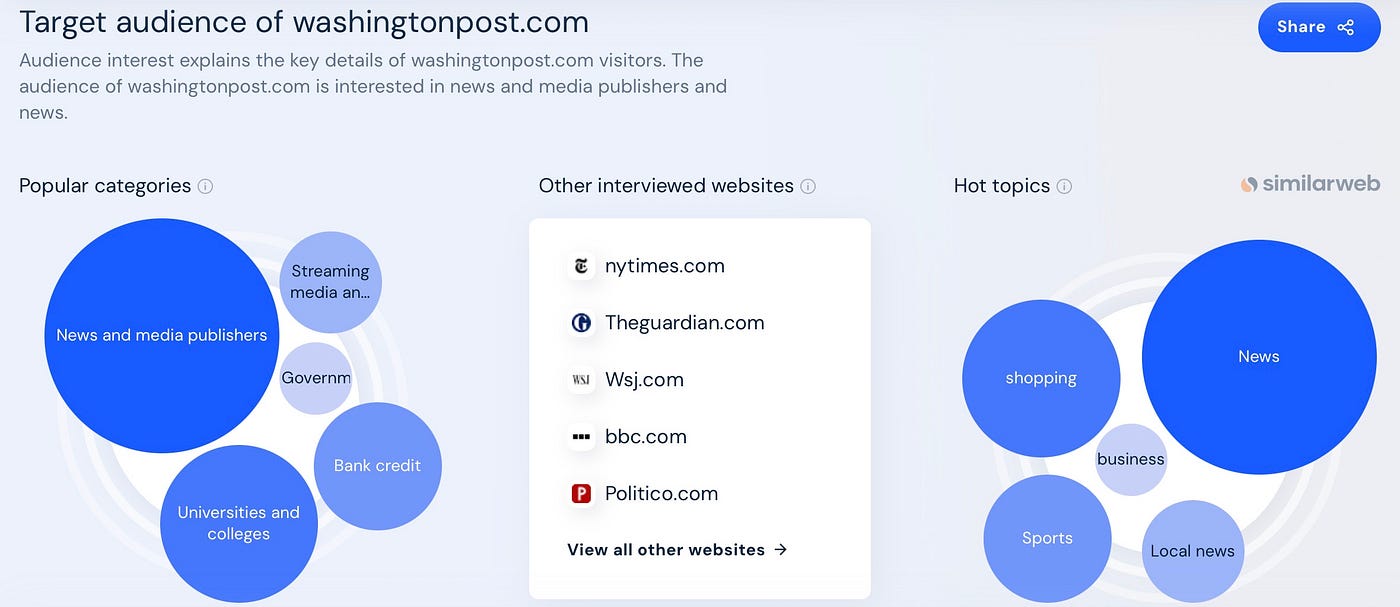
Target Audience of The Washington Post (Source from Similarweb)
HuffPost
HuffPost is a liberal website providing news and commentary in the United States, founded by political activist Arianna Huffington in 2005. This website is free for users and makes profits through advertisements. It is currently owned by BuzzFeed. Initially, HuffPost provided news and information, and in mid-2007, it expanded its coverage to the business and entertainment sectors. Since then, it has paid more attention to news reporting, especially in the political aspect. Unlike traditional newspapers, HuffPost was created specifically for the digital media environment, emphasising the shareability of content, a fast news cycle, and strong integration with social media platforms.
According to the data provided by Similarweb, the readers of HuffPost are mainly from the United States (85.56%), followed by English-speaking countries. The gender ratio of the readers is relatively balanced, and the overall age structure is older. Among them, the proportion of those aged 55 to 64 is the highest. Readers’ interests are mainly concentrated in fields such as news and media, banking and finance, online media, and computers. However, as it focuses more on political reporting, this will attract more political readers.
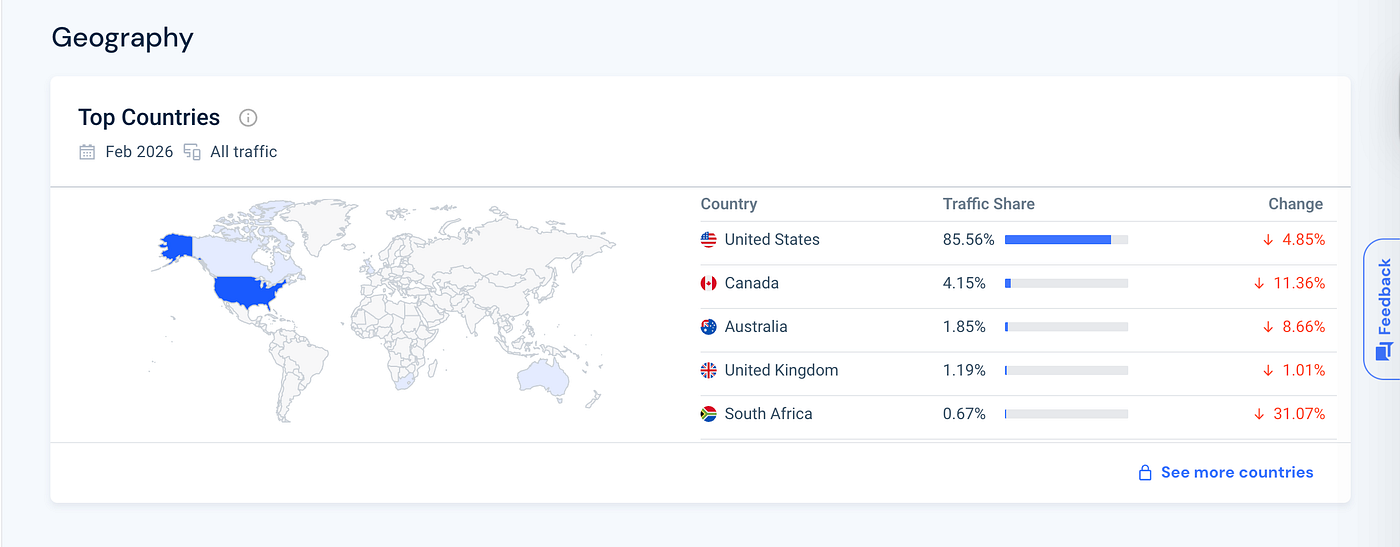
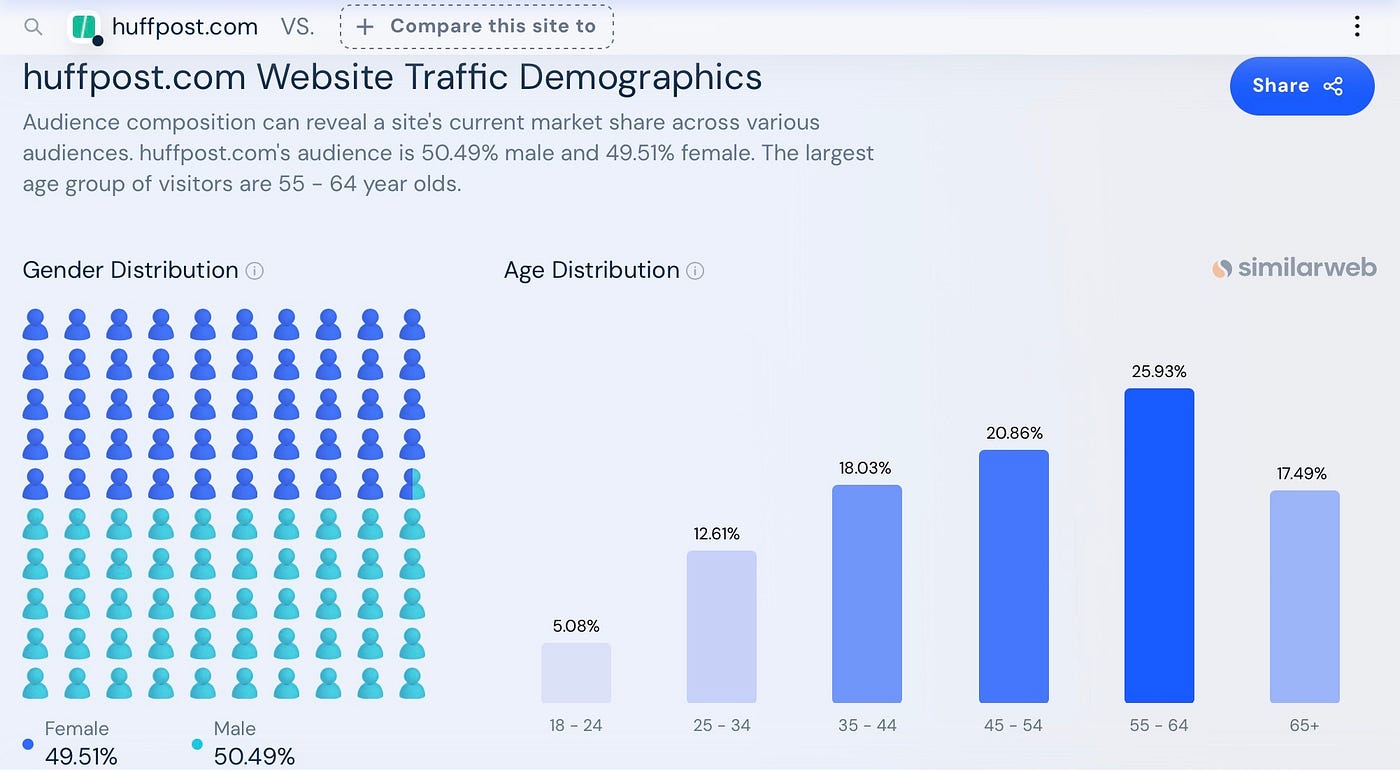
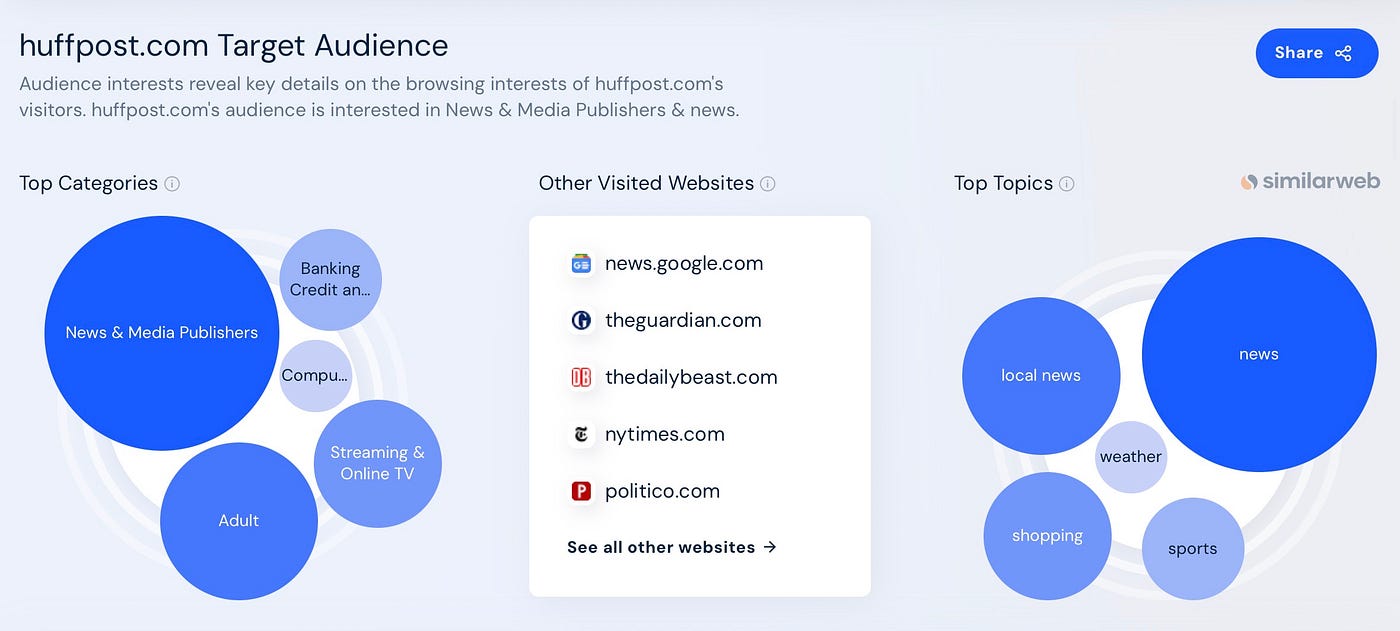
Target Audience of HuffPost (Source from Similarweb)
Although The HuffPost is generally regarded as relevant to a younger digital native audience, Similarweb’s audience data shows that its readership has a significant overlap with that of The Washington Post. These two media outlets mainly attract relatively older American readers, which indicates that the audience of digital native news platforms is not necessarily fundamentally different from that of traditional media. However, due to the differences between the two in terms of news production methods, content presentation forms and reporting styles, the audience interests and topics of concern they attract will still show certain differences.
Story comparison
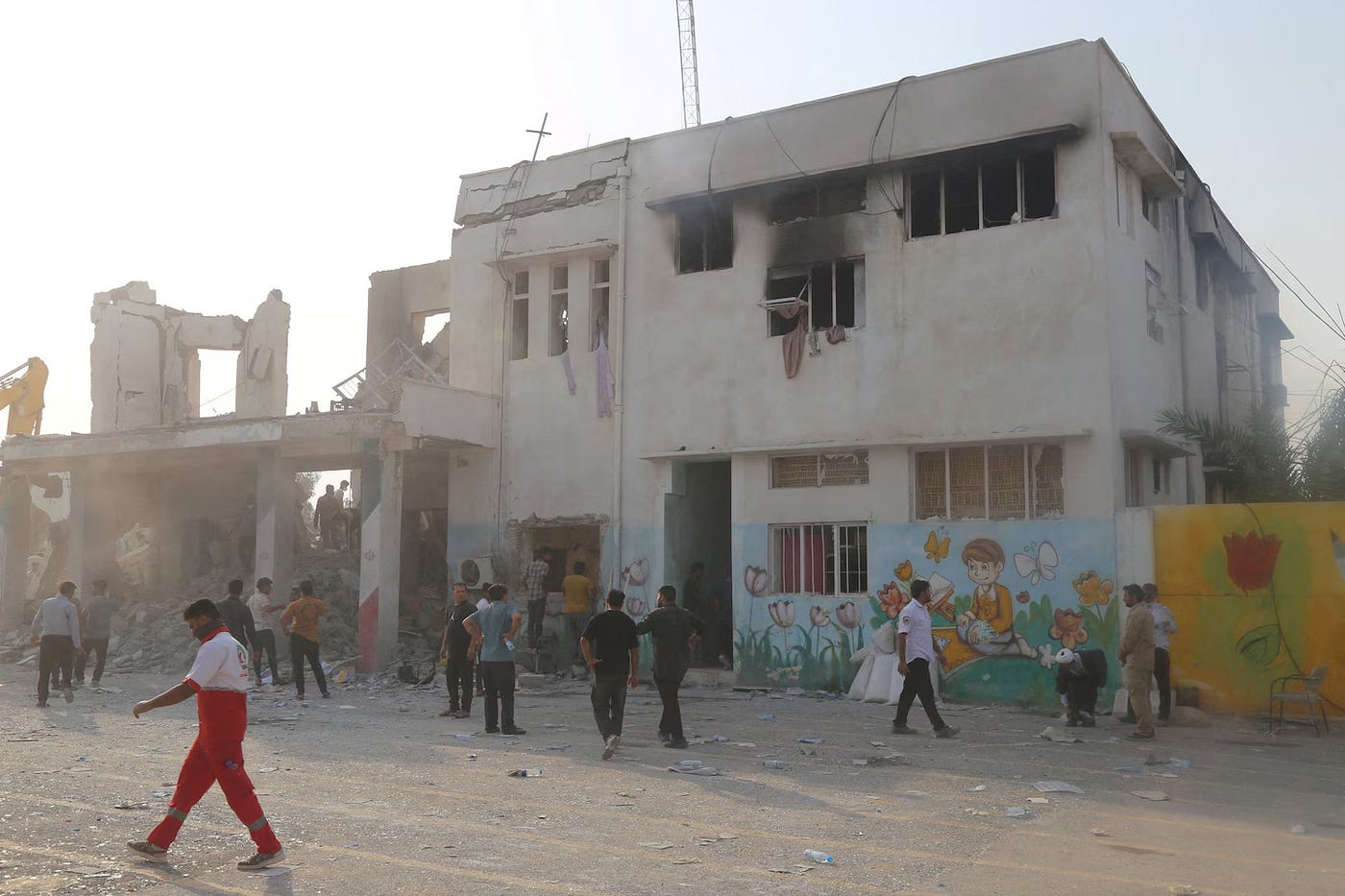
The aftermath of a strike on a school in Minab, Iran, on Feb. 28. (Abbas Zakeri/Mehr News/WANA/Reuters)
The Washington Post story analysis
This report from The Washington Post investigated an air strike that occurred in Iran. An Iranian primary school was once listed on the US strike target list and might have been mistaken for a military facility, resulting in an attack that killed at least 175 people, many of whom were children. The article explores the possible causes of this accidental attack by interviewing multiple informed sources, analysing satellite images, and citing the viewpoints of government officials and experts.
Writing and content production
This report demonstrates a high level of professionalism and investigative nature in terms of news writing and content production. Firstly, this report utilised information from various sources to enhance the accuracy of its news and the credibility of its sources. For instance, remarks from other informed sources, official statements, expert analyses, satellite images, etc.
Bradshaw proposed that journalists would triangulate between three categories of source, people, documents and data when reporting, which can not only provide a more complete perspective, but it can also help unlock new story clues and ensure reliable reporting.
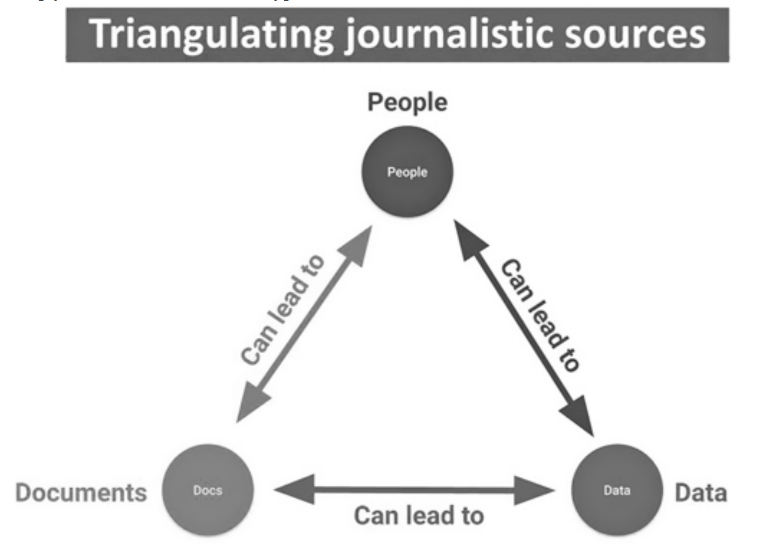
Triangulating journalistic sources
In terms of writing style, this article adopts an investigative reporting structure. It first introduces the attack incident and the casualties it caused, then gradually explains why the school was included in the list of targets for attack, and further discusses the potential role of artificial intelligence in military target recognition. The paragraphs of the article are short, and the information structure is clear, making it suitable for readers to read online. It conforms to the characteristics of online news writing that emphasise conciseness and scannability.
In addition, the article also uses many multimedia elements such as hyperlinks, pictures and videos to supplement the text content. The use of hyperlinks can provide readers with additional background information and ways to read further. For example, “a war crime investigation” was mentioned in the text and linked to another related report. Readers can learn more about the investigation progress and relevant evidence through this link. The author uses satellite images to show the spatial relationship between the school and the military base to help readers understand the geographical background of the incident more intuitively; the video embedded in the article dynamically presents the picture of the attack, so that readers can perceive the process and impact of the event more specifically, thus enhancing the explanatory and immersion of the report.
Online delivery
In terms of online delivery, this report makes full use of the interactive functions of digital news platforms. The article page provides a variety of reading functions for web pages and mobile terminals, such as clickable hyperlinks and embedded multimedia content, thus forming a non-linear reading experience. At the same time, the page also provides social media sharing buttons, which are convenient for readers to share reports to different platforms, thus expanding the scope of news dissemination in the network environment. In terms of interactivity, readers can not only interact with the content but also communicate with reporters and other readers. Readers can share their views in the comment section and discuss with other readers. At the same time, the author’s name in the article can also be clicked to enter the personal page. Readers can contact reporters by email or X (Twitter), and can also read the author’s past reports. This interaction channel between readers and reporters reflects the participation and communication emphasised by online news.
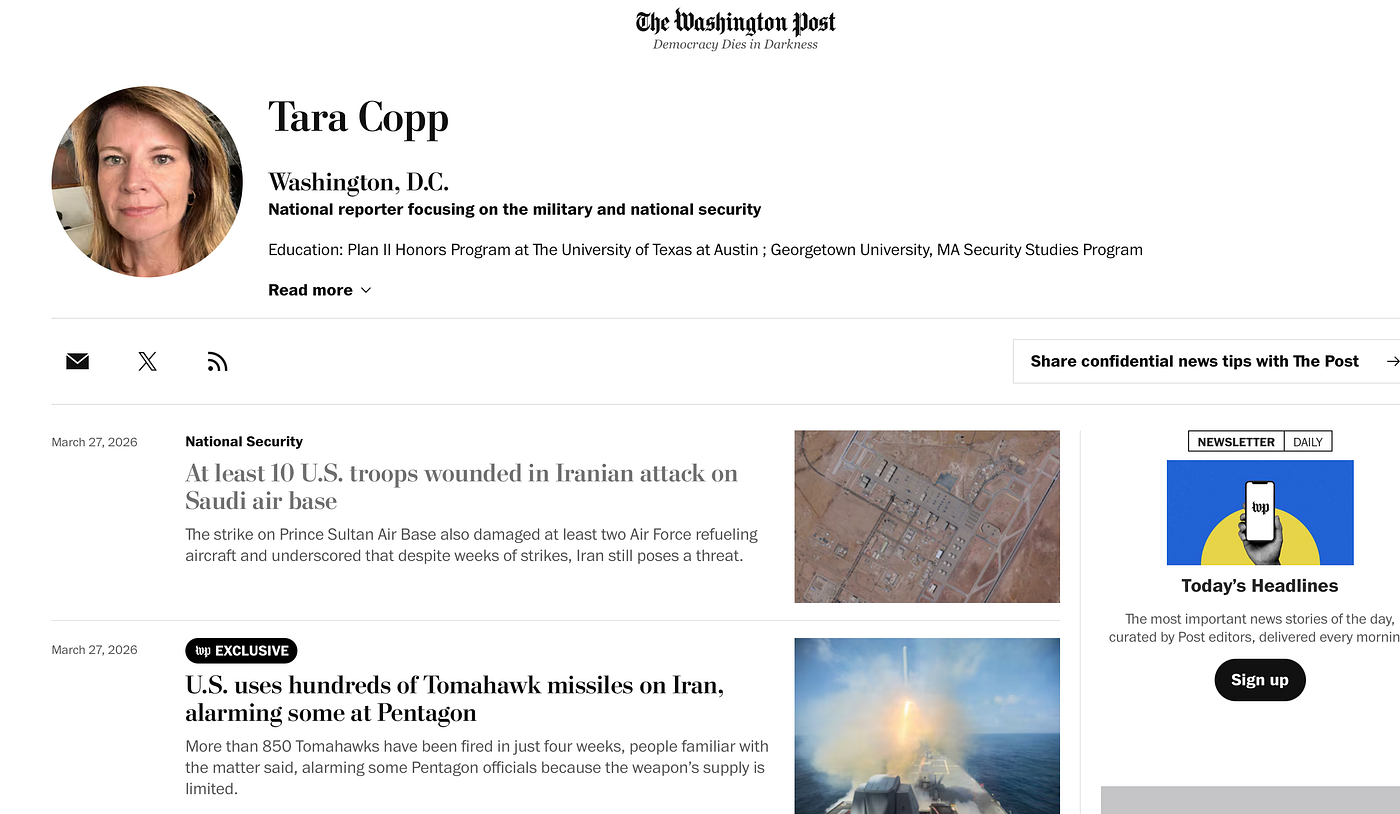
Screenshot of reporter’s personal page (Source from The Washington Post)
Technical delivery
In terms of technical delivery, the web design of The Washington Post as a whole has good usability and navigation. The page structure is clear. Readers can quickly locate information through subheadings and hyperlinks and freely jump between different contents, which improves the usability and reading efficiency of the website. The page offers a voice broadcast function, allowing users to directly listen to the news content, thereby enhancing the convenience and accessibility of information acquisition. The web page also offers an AI summary function, which helps readers quickly understand the main content of the article and thus decide whether to continue reading in depth.
In addition, the hyperlinks, multimedia content and embedded videos in the article all function properly, allowing readers to access relevant information or watch video content smoothly. This indicates that the website is operating well in terms of functionality. These technological designs jointly enhance the overall reading experience of readers and make information acquisition more efficient.
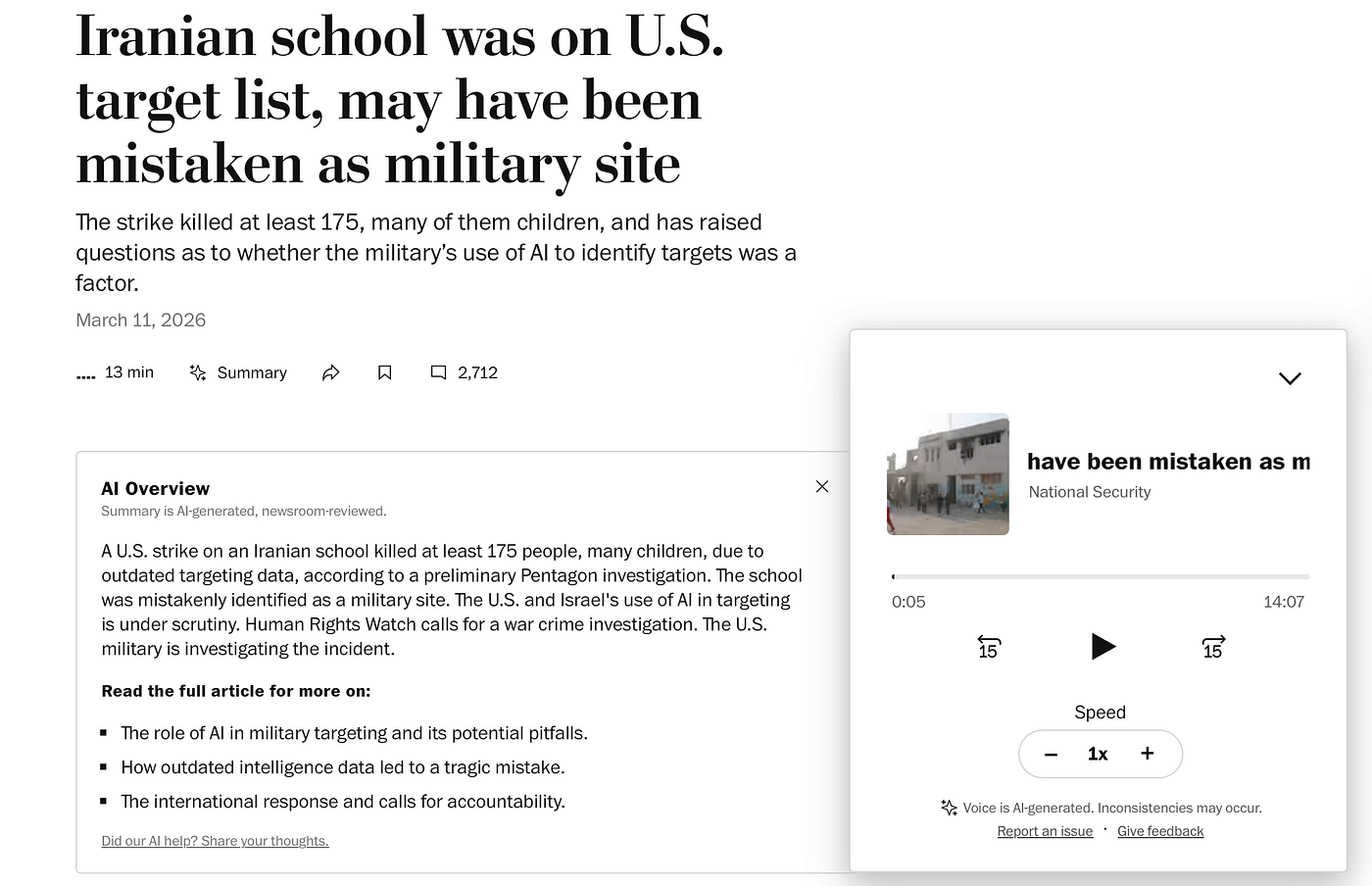
Screenshot of the voice broadcast function and AI summary function (Source from The Washington Post)
HuffPost story analysis
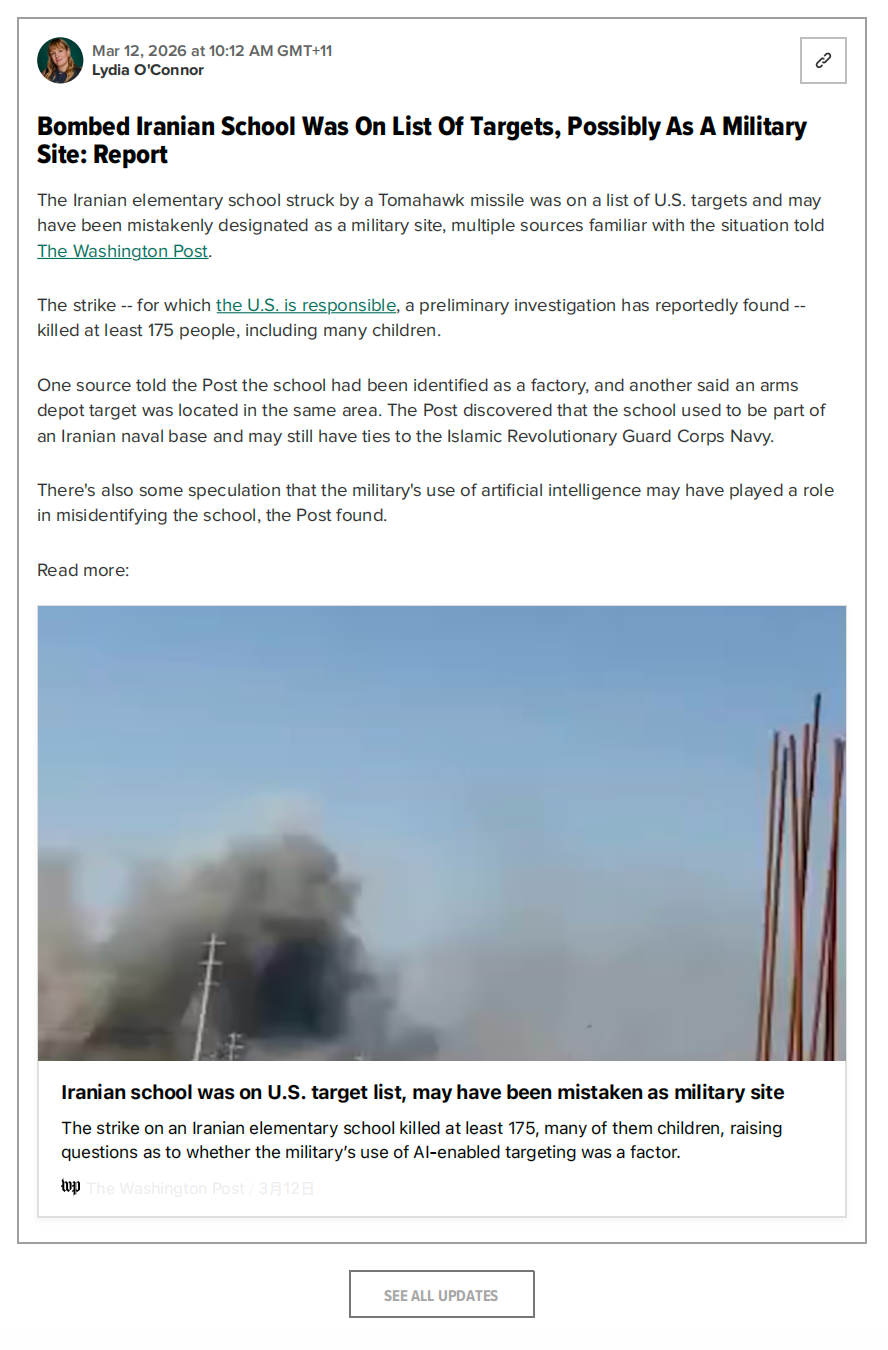
Screenshot of the news (Source from HuffPost)
This news article, published on HuffPost, was written by Lydia O ‘Connor and also reported on the air strikes in Iran. The report is mainly based on the investigation results of The Washington Post, summarising the core information of the incident and briefly mentioning the possible role that artificial intelligence may play in military target recognition.
Writing and content production
The reports of HuffPost belong to aggregation journalism. They mainly quote the investigative reports of The Washington Post and do not present multi-party interviews or independent investigations, indicating that HuffPost relies on existing news sources for information dissemination. Its writing features are being very brief, highly summarised in content, clear in structure, and suitable for online reading.
Hyperlinks in the article directly link to the original report by The Washington Post, providing readers with further reading options and information sources. In addition, another hyperlink in the article points to an article in the New York Times entitled “U.S. at Fault in Strike on School in Iran, Preliminary Inquiry Says”. This shows that the incident has been reported by several major news organisations. Therefore, the credibility of the information and the background of the story have been strengthened. Through these links, readers can compare the reports of different media and further explore this topic. This helps them have a more comprehensive understanding of the incident. As Bradshaw pointed out, hyperlinks in online news stories link to relevant information and sources, which improves the transparency and credibility of reports.
Online delivery
This article combines the online communication characteristics of a variety of online news to enhance the participation and interaction of the audience. For example, in the main title “Trump Tears Into News Outlets Over Iran Coverage, U.S. Under Strikes Key Iranian Island: Live Updates”, readers can click “see all updates” to access the collection of reports related to the same event. This function allows readers to track the development of relevant news stories and browse them quickly.
In addition, there is also a comment area on the page, where readers can share their views according to the collection of relevant news updates and discuss with other users. The web page also has a sharing icon. Readers can quickly share posts through platforms such as Facebook or email. These interaction and sharing functions are typical features of online news. The audience can not only consume news, but also participate in the circulation and discussion of news.
Technical delivery
This webpage originally contained an embedded video, which seems to be a compilation of multiple news clips on the subject. However, when the page is re-accessed, the video content can no longer be found. This indicates that there is a potential functional problem in the page. When the content of the embedded media is inconsistent, it will destroy the user experience and reduce the effectiveness of the multimedia narrative of the article.

The screenshot of the embedded video (Source from HuffPost)
Conclusion
Both articles report on the same news event and include hyperlinks that lead readers to related information and sources. This shows a common feature of online news: links help provide more context and guide readers to additional materials. However, the two articles differ in length, depth, and style.
The Washington Post provides a more detailed and comprehensive report. It also includes multimedia elements and contextual hyperlinks, which help readers better understand the background of the event. This approach suits its subscription-based audience, who often look for deeper and more thorough coverage.
In comparison, HuffPost presents a shorter and easier-to-read version of the story. Readers can quickly understand the main points of the news. Although the report is less detailed, hyperlinks still allow readers to access further information if they want to explore the topic more.
References
Barnes, J. E., Schmitt, E., Pager, T., Browne, M., & Cooper, H. (2026, March 11). U.S. at fault in strike on school in Iran, preliminary inquiry says. The New York Times. https://www.nytimes.com/2026/03/11/us/politics/iran-school-missile-strike.html
Bradshaw, P. (2023). The online journalism handbook: Skills to survive and thrive in the digital age. Taylor & Francis Group. https://ebookcentral.proquest.com/lib/usyd/reader.action?c=UERG&docID=7263854&ppg=86
Britannica Editors (2025, June 28). HuffPost. Encyclopedia Britannica. https://www.britannica.com/topic/The-Huffington-Post
Copp, T., Mekhennet, S., Kelly, M., Horton, A., & George, S. (2026, March 11). Iranian school was on U.S. target list, may have been mistaken as military site. The Washington Post. https://www.washingtonpost.com/national-security/2026/03/11/us-strike-iran-elementary-school-ai-target-list/
HuffPost. (2026, Mar 9). Trump Tears Into News Outlets Over Iran Coverage, U.S. Strikes Key Iranian Island: Live Updates. HuffPost. https://www.huffpost.com/entry/latest-news-live-updates_n_69ae9a51e4b0fe5c2e757cb8
O’Connor, L. (2026, March 12). Iran attacks commercial ships, global energy concerns grow: Live updates. HuffPost. https://www.huffpost.com/entry/latest-news-live-updates_n_69ae9a51e4b0fe5c2e757cb8/liveblog_69b1ef4ae4b0ab06e5f44abe
Similarweb. (2026a, February). Website performance: washingtonpost.com. https://pro.similarweb.com/#/digitalsuite/websiteanalysis/overview/website-performance/*/999/1m?webSource=Total&key=washingtonpost.com
Similarweb. (2026b, February). Website performance: huffpost.com. https://pro.similarweb.com/#/digitalsuite/websiteanalysis/overview/website-performance/*/999/1m?webSource=Total&key=huffpost.com
The Washington Post. (n.d.). Company history. https://www.washingtonpost.com/company-history/
메타데이터
- post_id
- fca01e8874f1
- slug
- a-comparative-analysis-of-online-journalism-the-washington-post-and-huffpost-fca01e8874f1
- url
- https://medium.com/@yulu0322/a-comparative-analysis-of-online-journalism-the-washington-post-and-huffpost-fca01e8874f1
- canonical_url
- https://medium.com/@yulu0322/a-comparative-analysis-of-online-journalism-the-washington-post-and-huffpost-fca01e8874f1
- author_url
- https://medium.com/@yulu0322
- status
- ok
- fetched_at
- 2026-07-13 06:23:13