Has the Oldest Light in the Universe Just Whispered New Physics?
A subtle rotation in the cosmic afterglow of the Big Bang may be our first glimpse of physics beyond the Standard Model.
Has the Oldest Light in the Universe Just Whispered New Physics?
A subtle rotation in the cosmic afterglow of the Big Bang may be our first glimpse of physics beyond the Standard Model.
For decades, cosmologists have treated the **Cosmic Microwave Background (CMB)** as the universe’s most reliable witness. It is the oldest light we can observe, a faint afterglow from when the cosmos was just 380,000 years old. But new measurements suggest this ancient light may not be behaving exactly as our best theories predict.
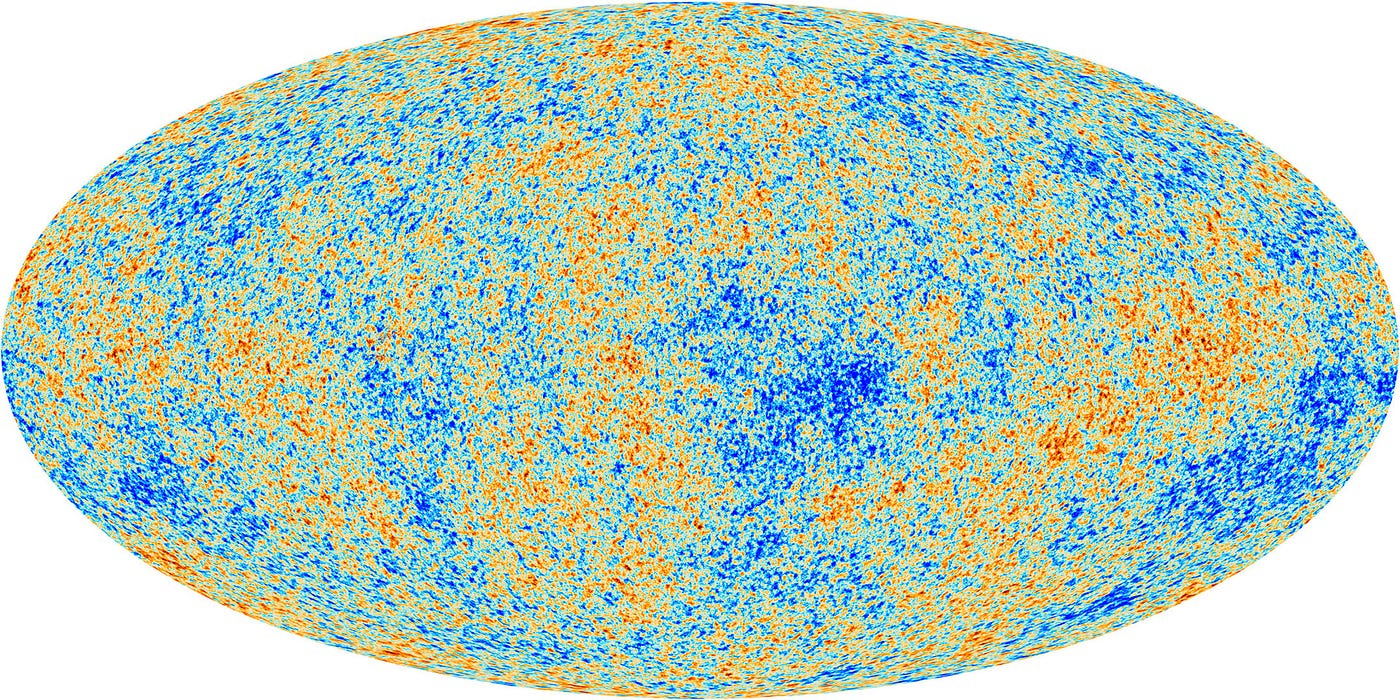
The anisotropies of the Cosmic microwave background (CMB) as observed by Planck. The CMB is a snapshot of the oldest light in our Universe, imprinted on the sky when the Universe was just 380 000 years old. It shows tiny temperature fluctuations that correspond to regions of slightly different densities, representing the seeds of all future structure: the stars and galaxies of today. CREDIT: ESA and the Planck Collaboration under ESA Standard Licence.
Several independent research teams, analyzing data from cutting-edge observatories, are reporting hints that the polarization of this primordial light may be rotated ever so slightly during its 13.8-billion-year journey to Earth. If confirmed, this phenomenon known as cosmic birefringence could signal entirely new physics beyond the Standard Model.
Let’s unpack what’s going on.
The Oldest Light in the Cosmos
The CMB is the thermal afterglow of the Big Bang — released when the universe cooled enough for electrons and protons to combine into neutral atoms. Before that moment, light was constantly scattered by free electrons, making the universe opaque. Once atoms formed, light could finally travel freely. That light is what we detect today as a nearly uniform microwave glow across the sky.
Experiments like Planck and WMAP have mapped this radiation in exquisite detail. While remarkably uniform, the CMB contains tiny temperature fluctuations and crucially for this story, it is also polarized.
Polarization describes the orientation of light waves. Think of it like the direction a rope vibrates when you shake it. The polarization pattern of the CMB carries deep information about the early universe, including its matter content, geometry, and evolution.
E-Modes, B-Modes, and Why They Matter
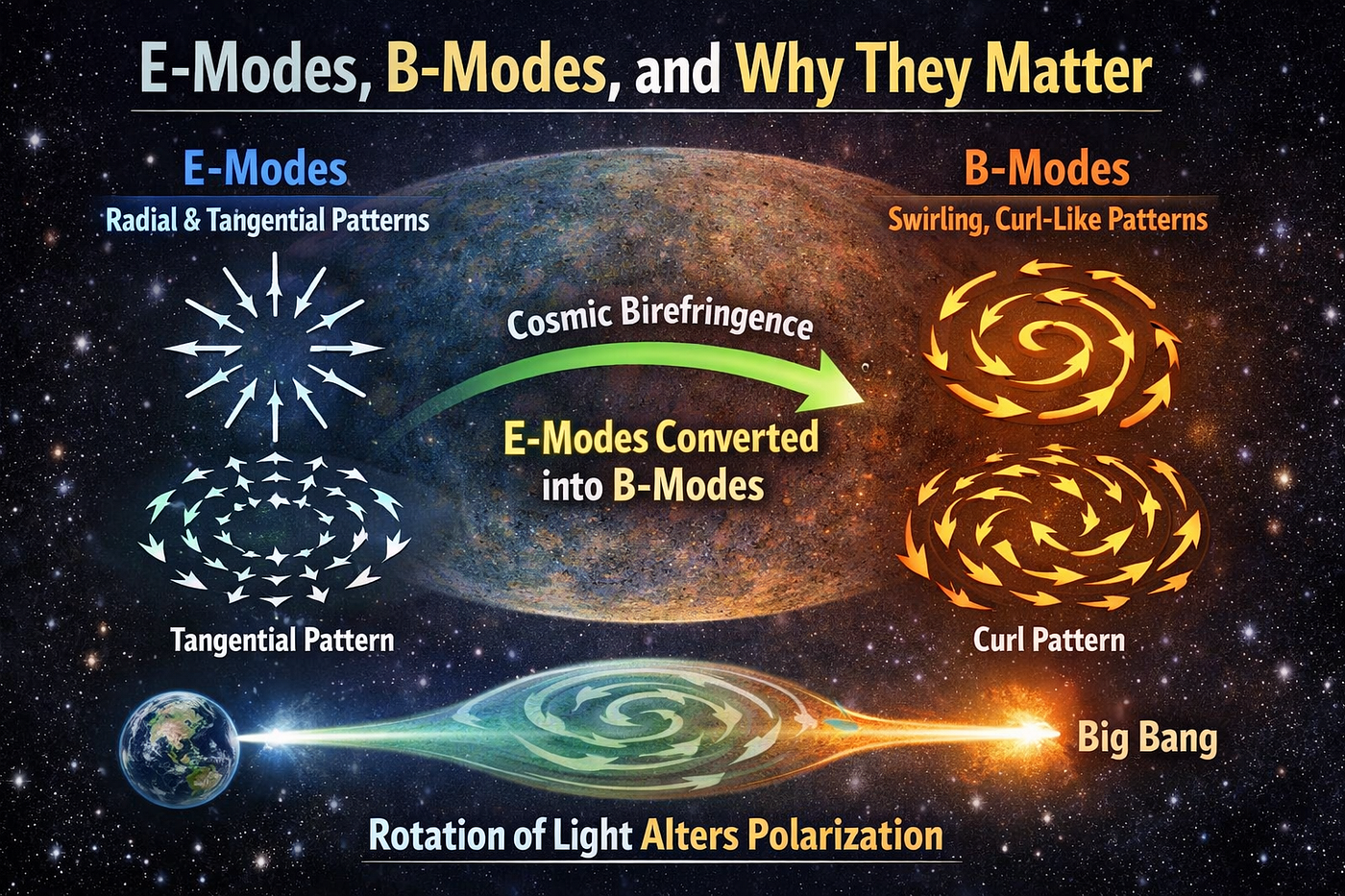
CMB polarization patterns can be mathematically separated into two types:
- E-modes — symmetric, radial or tangential patterns.
- B-modes — swirling, curl-like patterns.
In the standard cosmological model, these patterns arise from well-understood physical processes in the early universe. Importantly, under normal circumstances, the statistical relationship between E-modes and B-modes follows strict symmetry rules. There should be no unexpected mixing between them.
But if something rotates the polarization of light as it travels, even by a tiny fraction of a degree, it would convert some E-modes into B-modes. That’s the signature researchers are now looking for.
And that rotation is called **cosmic birefringence**.
What Is Cosmic Birefringence?
Birefringence is familiar in optics. Certain crystals rotate light polarization as it passes through them. Cosmic birefringence would mean that space itself behaves similarly as if the vacuum has subtle directional properties caused by new fields or particles.
If real, this would imply that the universe contains physics beyond the Standard Model. Possibilities include:
- Axion-like particles
- Interactions between light and dark energy
- Violations of fundamental symmetries like parity
Detecting such a signal in the CMB would be revolutionary. But the effect researchers are seeing is tiny — a rotation of only about 0.2 degrees.
Measuring that requires extraordinary precision.
So how strong are these results? A ~3 Sigma Hint

By The original uploader was Ahincks at English Wikipedia. — Transferred from en.wikipedia to Commons by Mike Peel using CommonsHelper., CC BY 3.0.
One of the strongest recent analyses comes from the **Atacama Cosmology Telescope (ACT)**, located high in Chile’s Atacama Desert.
Using high-resolution polarization data, the ACT team measured a polarization rotation of roughly:
β ≈ 0.2° ± 0.07°
Statistically, this corresponds to nearly 3 sigma (≈2.9σ) significance.
In physics, sigma (σ) measures how unlikely a result is to occur by chance:

So 3σ is intriguing and strong enough to raise eyebrows, but not strong enough to declare discovery. Physicists typically require 5σ before claiming something fundamental has been found.
The ACT team is cautious. Instrument calibration is extremely challenging, and even tiny systematic effects could mimic a rotation signal. Still, the result aligns intriguingly with earlier hints.
Is the Rotation the Same Everywhere?
**Another study** examined whether the rotation angle is uniform across the sky or varies with direction.
Using data related to the South Pole Telescope, researchers tested for anisotropic (direction-dependent) birefringence.
So far, the data are consistent with uniform rotation, but small directional variations cannot yet be ruled out. If anisotropy were confirmed, it could imply violations of parity symmetry on cosmic scales, something that would challenge deep assumptions in fundamental physics.
A Subtle but Crucial Detail: Why 180° Doesn’t Change Anything
There’s an important subtlety in all of this that often surprises people. Polarization is not like the direction of a compass needle. It’s an orientation, not a vector with an arrow. If you rotate polarized light by 180°, it looks physically identical to where it started. A full 360° rotation is also indistinguishable. In fact, because CMB polarization behaves mathematically like a so-called “spin-2” field, its observable patterns repeat every 180°, and some statistical properties even repeat every 90°.
So when researchers report a best-fit rotation like β ≈ 0.2°, that value is defined within a fundamental range (typically −90° < β < 90°). A result of 0.2° is mathematically indistinguishable from 180.2°, 360.2°, or −179.8°. These all produce exactly the same observable polarization pattern in the sky. In other words, the experiments are sensitive only to rotation modulo 180°.
This means scientists are not asking whether the universe rotated the light by 0° or 360° — that distinction simply does not exist observationally. Instead, they are testing whether the rotation differs from zero within the physically meaningful range. Right now, the data suggest that β may be slightly non-zero at about 3σ significance.
A truly different physical signal would require something more exotic. A rotation that varies across the sky, changes with time, depends on frequency, or breaks deeper symmetries of nature. A constant 180° offset, by contrast, would be observationally identical to zero.
So when we hear that “the oldest light in the universe may be rotated by 0.2 degrees,” what it really means is this: It may differ ever so slightly from perfect symmetry and that tiny deviation could point to entirely new physics.
So… Has the Universe Revealed New Physics?
Not yet. But it may be whispering.
Multiple independent analyses now hint at a tiny rotation in the oldest light in the universe consistent across datasets and theoretically plausible in models involving dark sectors or new fundamental fields.
It’s not confirmed. It’s not definitive. But it’s persistent.
And in cosmology, persistence is often the first sign that something profound is waiting to be uncovered.
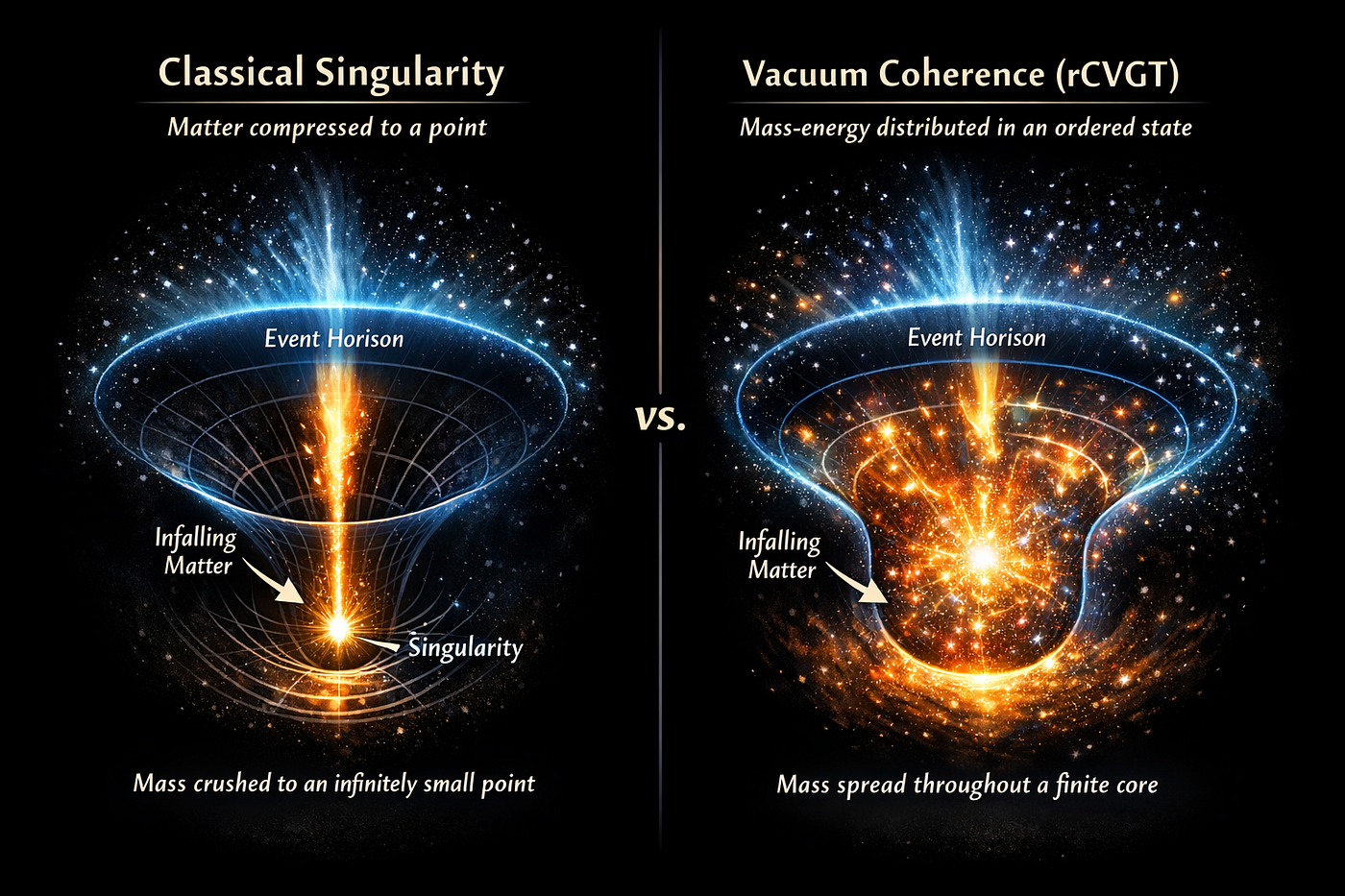
One intriguing possibility is that cosmic birefringence reflects subtle structure in the quantum vacuum itself. In rCVGT, cosmic birefringence appears as a natural possibility if electromagnetic waves propagate through a coherently structured vacuum, where small polarization rotations can accumulate over cosmological distances. If signals like these are confirmed, they could offer a rare observational window into the physical properties of the vacuum itself.
The next few years may tell us whether cosmic birefringence becomes a footnote or a gateway to physics beyond everything we currently know.
Future experiments promise dramatically improved precision. Two major upcoming projects include:
These missions are designed specifically to measure CMB polarization with unprecedented sensitivity and control over systematic errors.
If polarization rotation is real, they should push the signal toward or beyond the 5σ discovery threshold. If it vanishes, we’ll learn something equally important about the limits of current data.
메타데이터
- post_id
- fcab34f9d318
- slug
- has-the-oldest-light-in-the-universe-just-whispered-new-physics-fcab34f9d318
- url
- https://medium.com/the-idea-of-reality/has-the-oldest-light-in-the-universe-just-whispered-new-physics-fcab34f9d318
- canonical_url
- https://medium.com/the-idea-of-reality/has-the-oldest-light-in-the-universe-just-whispered-new-physics-fcab34f9d318
- author_url
- https://medium.com/@steen_m_n
- status
- ok
- fetched_at
- 2026-06-20 20:29:01