This Quiet Market Behavior Is Where Most of My Profits Come From
While everyone chases volatility in London and New York, I’ve been collecting profits in the silence of the Asian session.
This Quiet Market Behavior Is Where Most of My Profits Come From
While everyone chases volatility in London and New York, I’ve been collecting profits in the silence of the Asian session.
This Quiet Market Behavior Is Where Most of My Profits Come From
The loudest moments in markets are rarely the most profitable. This took me years to understand.
I spent my early trading career chasing breakouts, news events, and volatile sessions — convinced that opportunity lived where the action was hottest. I was half right. Opportunity did live there. But so did destruction. The net result was a series of exciting trades that slowly drained my account.
The real profits, I eventually discovered, came from much quieter places. Moments when the charts looked almost boring. Periods when the trading communities went silent about the instrument I was watching. Windows of time when most traders had packed up and moved on to something louder.
Those windows had a name: the Asian session.
This article is about that session — how I found my edge there, why it works, and what you need to think differently to profit from it.
The Noise Trap
Markets are designed to capture attention. Flashing lights, moving prices, breaking news — the entire infrastructure of financial media is optimized for engagement, not profitability. The more dramatic the price action, the more eyeballs it attracts. The more eyeballs it attracts, the more amateur money flows in. The more amateur money flows in, the more sophisticated players have someone to take the other side of their trades.
This isn’t conspiracy. It’s market structure.
Retail traders cluster around volatility — London open, New York open, NFP Friday. Institutional traders use that clustering to execute larger positions with minimal market impact. The volatility that looks like opportunity to newcomers is often just the execution environment for professionals who already positioned themselves hours earlier.
The noise trap works because it feels right. Our brains are wired to respond to movement, to novelty, to apparent urgency. A pair breaking to new highs feels like something you should be in. A currency moving fast after an economic release feels like a chance you can’t miss.
These feelings are real. They’re just not profitable.

How I Found the Asian Session Edge
My shift began accidentally. After a brutal month of volatility-chasing losses, I stepped back — not from the markets, but from my habits. When I returned, I had somehow built the patience to watch price without needing to be in it.
I started watching the Asian session differently. What I had previously dismissed as “nothing happening” began revealing structure I had never noticed. Price would drift sideways for hours. Volume would thin out. Ranges would compress almost to nothing. And then — almost always when nobody was paying attention — clean, directional moves would emerge with minimal noise and minimal retracement.
The moves that happened during quiet Asian session conditions were more predictable, more tradeable, and more profitable than anything I’d found chasing London or New York volatility.
So I started tracking systematically. For six months, I recorded every trade: the session, the volume conditions, the time, and the outcome. The pattern was impossible to ignore. My win rate during Asian session setups was nearly double my win rate during high-volatility conditions. My average profit per trade was higher. My drawdowns were smaller.
The data was clear. My behavior took longer to follow.

Why the Asian Session Works
The explanation isn’t mysterious. It comes down to participation and positioning.
During the Asian session, most Western retail traders are offline. Participation is low. This means less noise, less random movement, less aggressive stop-hunting. The price action that does occur is more likely to reflect genuine institutional flow or deliberate positioning rather than reactive retail speculation.
The Asian session also allows better trade execution. You’re not competing with thousands of retail traders piling into the same entry at the same time. You have the space to analyze properly, choose optimal entry points, and place stops where they logically belong — not where panic demands.
Most importantly: quiet markets reveal intention. When price moves meaningfully during low-volume Asian conditions, that movement is significant. It suggests a participant with real capital is deliberately positioning. That positioning often continues — or accelerates — when London opens and volume floods back in.
The Asian session is where the setup is built. London is where it pays out.
The Specific Behavior I Trade
The quiet market behavior I focus on has a clear structure:
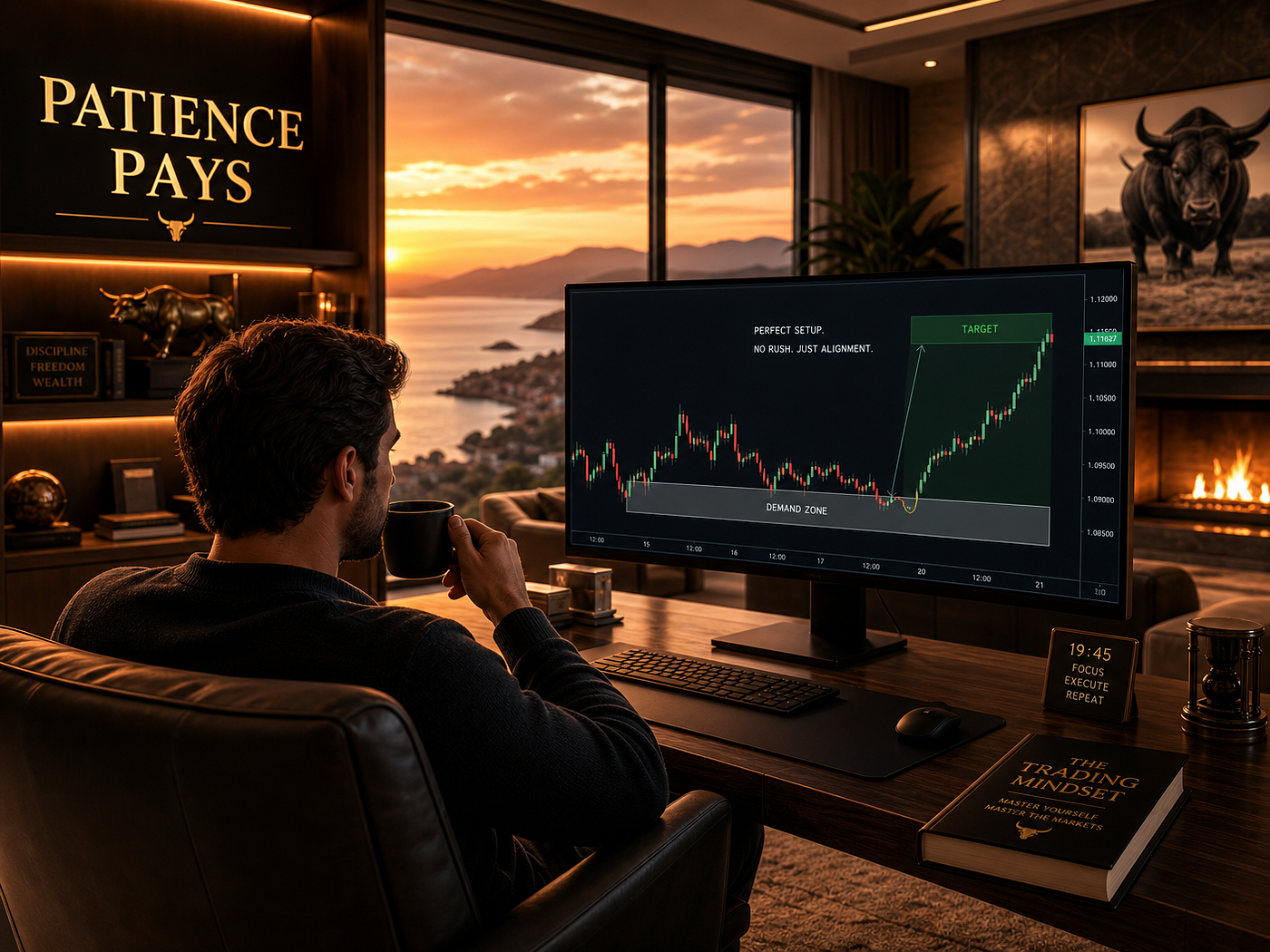
It begins with a directional move — not necessarily large, but clean and purposeful. This move establishes bias. Then comes the consolidation: volume drops, the range compresses, and price holds near the highs (for bullish setups) or lows (for bearish setups) through the quiet Asian hours.
The key insight is that this consolidation represents holding, not distribution. Whoever created that initial move is not exiting. They’re waiting. When London opens and volume returns, they resume, and the move extends.
I enter during the quiet consolidation phase, place stops beyond the range, and target extensions of the initial move using Fibonacci projections or measured move calculations. The risk-to-reward is favorable because my stop is tight and my target is anchored in established momentum — not hope.
This setup appears across multiple currency pairs and timeframes. The principles remain constant. What changes is position sizing to accommodate different volatility profiles across instruments.

Introducing the Goldmine Strategy: Built for the Asian Session
After years of testing and refining this approach, I formalized it into what I now call The Goldmine Strategy — a complete trading framework built specifically around Asian session conditions.
I won’t detail the exact rules here, but what I can tell you is this: The Goldmine Strategy was designed to do exactly one thing consistently — identify and capitalize on the quiet, high-probability setups that the Asian session produces before the rest of the market wakes up.
It includes:
- Precise parameters for identifying valid Asian session consolidation phases
- Specific entry triggers that confirm momentum resumption
- Structured exit rules that capture the London-driven extension while protecting profits
- A risk management framework calibrated to Asian session volatility profiles
The results I recorded over those six months of systematic tracking became the foundation of this system. It’s not built on theory. It’s built on documented evidence of what actually works in the quietest hours of the trading day.
If you’ve been grinding through volatile London and New York sessions with inconsistent results, The Goldmine Strategy offers a completely different path — one that trades less but profits more.
Get Instant Access to The Goldmine Strategy
The Discipline of Boredom
Trading the Asian session requires a specific psychological skill: the ability to stay engaged when nothing seems to be happening. This is harder than it sounds. Our attention drifts toward movement and away from stillness.
Maintaining focus during Asian session consolidation feels like wasted effort — until the moment it isn’t.
I developed three practices that built this discipline:
First, I changed my environment. Multiple monitors off. News feeds silenced. Anything creating artificial urgency removed. My trading station became intentionally boring. That was the point.
Second, I built routines for the quiet periods. Market analysis, journaling, system review — productive work that kept me mentally present without requiring trades. When setups appeared, I was ready. When they didn’t, I wasn’t desperate.
Third, I redefined what “good” trading looked like. I stopped measuring quality by trade frequency or excitement. I started measuring it by consistency, by drawdown management, by the quiet confidence of knowing your edge and having the patience to wait for it.
The Asian session rewards patience. It punishes boredom-driven impulsiveness. Learning to sit with the stillness is, itself, a significant part of the edge.
Risk Management in Quiet Conditions
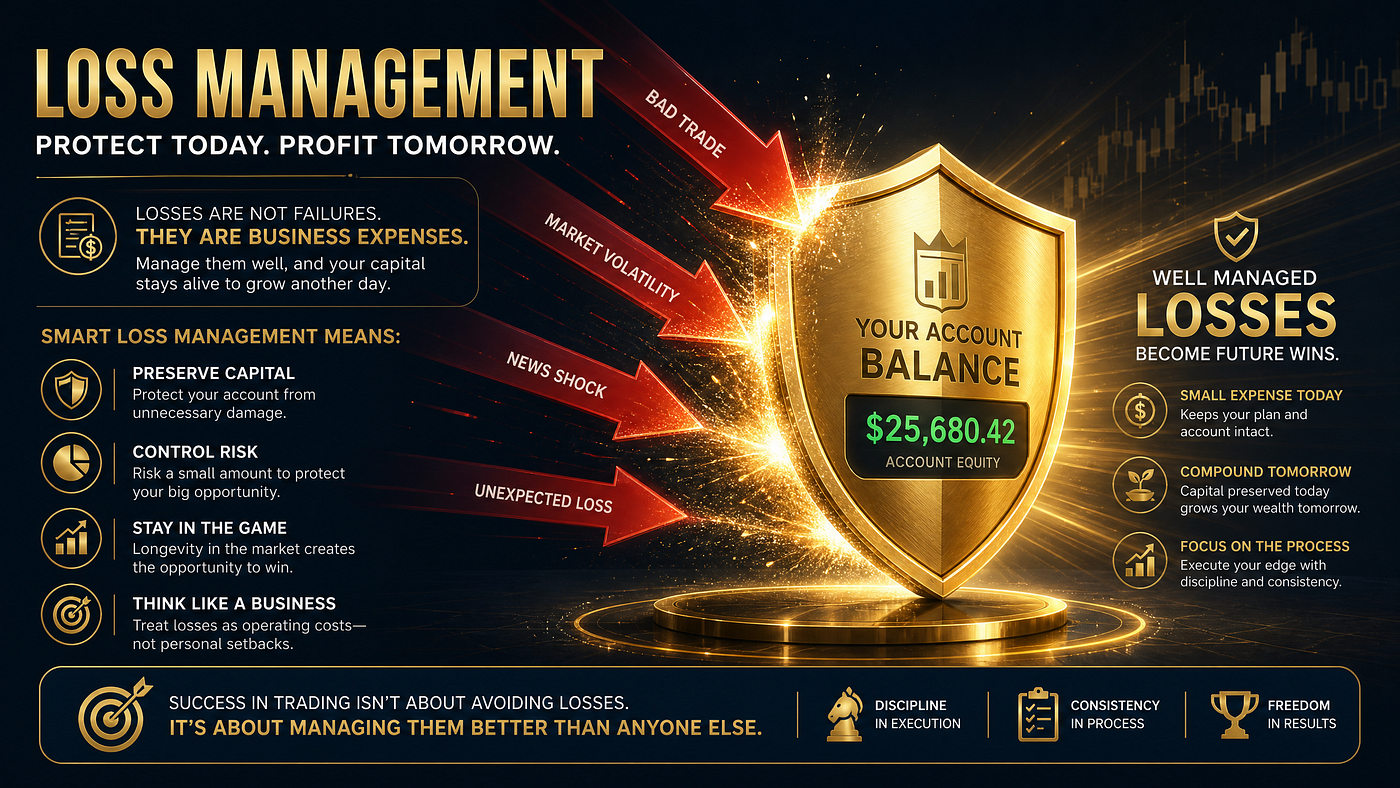
Some traders worry that low-volume sessions are dangerous — that thin markets invite manipulation and false moves. The concern isn’t entirely wrong, but it’s misapplied.
Yes, price can be moved more easily in thin Asian conditions. A large player can briefly push price to trigger stops or test a level. But manipulation requires effort, and effort implies intention. The real question isn’t whether price can be moved. The question is what that movement means.
In practice, manipulative spikes during the Asian session are brief and quickly reversed. They create single-bar anomalies, not sustained consolidation structures. The setups I trade require structure — hours of range compression and controlled holding. A manufactured spike doesn’t create that. It creates noise my filtering rules eliminate.
Counterintuitively, my risk management is simpler in quiet Asian conditions than in volatile sessions:
- Stops are tighter because price action is cleaner
- Position sizing can be slightly larger because execution probability is higher
- Overall risk profile improves, not deteriorates
The quiet session doesn’t amplify risk. Understood correctly, it reduces it.
Building Your Asian Session Approach
If you want to explore this for yourself, start with observation. Study the Asian session for your primary instruments over several weeks. Look at what the range does. Where does price hold? Where does it compress? What happens when London opens?
You’ll likely find that many of the cleanest moves in your chosen markets begin from Asian session consolidation that nobody was watching. The momentum everyone chases at 8am London time was quietly being constructed at 2am.
Document what you see. Build rules. Define what valid looks like versus what’s just random drift. Test it. Refine it.
The Goldmine Strategy accelerates this process significantly — providing the complete framework of filters, confirmations, and execution rules that distinguish genuine Asian session opportunities from noise. It’s the system I wish I had when I was six months into manual data collection.
For traders serious about mastering this edge, it provides everything needed to start applying it with structure and confidence.
The Social Cost of Trading Quietly
There’s an unexpected challenge to this approach that few discuss: it’s socially isolating.
Trading communities celebrate volatility. They share exciting London session charts, dramatic New York breakouts, big wins on high-impact news. When your approach involves waiting through quiet Asian hours for methodical, low-drama entries — you don’t have much to contribute to those conversations.
I’ve learned to accept this isolation as part of the cost of the edge. I’m not trading for social validation. I’m trading for a smooth equity curve and sustainable profitability. The traders who understand this are the ones worth connecting with. We recognize each other by results, not by stories.
If you’re relying on trading communities for motivation, ask honestly: is that community making you a better trader, or keeping you addicted to the excitement that destroys accounts?
The answer might be uncomfortable. It’s worth asking anyway.
Profits in the Silence Before Dawn
My trading transformed when I stopped chasing the noise of peak session volatility and started embracing the structured silence of the Asian session.
The quiet behavior that once bored me became my primary edge. The volatile sessions that once excited me became periods I either avoid or observe from a distance. The transformation required changing my environment, my routines, my metrics for success, and my relationship with trading communities.
Most importantly, it required accepting that the best opportunities often look like nothing — until they’re already moving.
The equity curve smoothed. The drawdowns shrank. The confidence grew. And most critically: trading became sustainable — something I could do for years without burning out or blowing up.
The Goldmine Strategy captures this philosophy in its complete form — the exact framework I use to identify, enter, manage, and exit these Asian session setups. Not theory. Documented, refined practice.
If you’re tired of the volatility chase, if you suspect the real edges are hiding in the hours everyone else ignores, I encourage you to explore what the Asian session can offer.
The silence before London opens might contain exactly what you’ve been searching for.
Ready to trade the Asian session with a structured edge?
Get The Goldmine Strategy Now!
If you’re not a fan of the asian session, check this trading strategies tailored for new york session and london session..
Browse FxM Brand Store and get access to top level stores. Below are our top selling strategies and systems ::
THE GOLDMINE TRADING ARSENAL
The complete 7-strategy system for traders who want consistent profits, passed prop firms, and financial freedom.
🚀 THE GOLDMINE ELITE SYSTEM
Your ALL-IN-ONE blueprint to unprecedented trading mastery! Includes strategy, AI automation, and mentorship. For Pro Traders ready to invest in top level systems and proven mentorship program guaranteed to pribt consistent income weekly.
The Ultimate FXM Trading Pack
The Bitcoin Goldmine Scalper + Goldmine Strategy + $20 Trader + Oracle AI System + Trading Journal.
The Goldmine Strategy
This is the core strategy of The Goldmine Strategy, it tailored for Gold trading and works during Asian session. The Goldmine Strategy V2 reveals the system we use to execute this strategy to other pairs. The V2 is included in both The Goldmine Trading Arsenal and The Ultimate FXM Trading Pack.
The Monarch FX Strategy 🏆
Scalp GBP/USD with precision using this specialized institutional system.
The Institutional Code System™
The ultimate premium Forex & Gold trading package for serious traders in 2025.
The Alpha Desk Fx System
This is a 3 Sessions Strategies — Each session has it strategy — The strategies are tailored for Asian Session, New York and London. With this, you can execute trades during any sessions that works with you.
Custom Offer — Goldmine VIP Signals
Get 1 month of high-probability signals based on the Goldmine Strategy.
👉 Explore the full store here: FXM Brand on Selar
메타데이터
- post_id
- fcadee8a7094
- slug
- this-quiet-market-behavior-is-where-most-of-my-profits-come-from-fcadee8a7094
- url
- https://medium.com/@fxmbrand/this-quiet-market-behavior-is-where-most-of-my-profits-come-from-fcadee8a7094
- canonical_url
- https://medium.com/@fxmbrand/this-quiet-market-behavior-is-where-most-of-my-profits-come-from-fcadee8a7094
- author_url
- https://medium.com/@fxmbrand
- status
- ok
- fetched_at
- 2026-06-09 15:37:30