Commentary on Relics of Kalinga in South India — Part I
“Relics of Kalinga in South India — Part I” is a landmark publication that reclaims a long-neglected chapter in India’s civilizational…
Commentary on Relics of Kalinga in South India — Part I
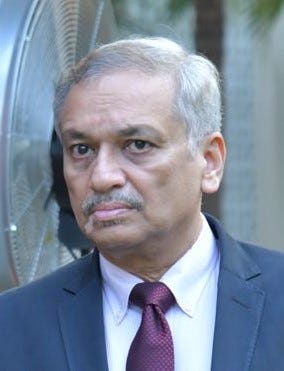
Charudutta Panigrahi, Author, Researcher, and Cultural Strategist
“Relics of Kalinga in South India — Part I” is a landmark publication that reclaims a long-neglected chapter in India’s civilizational narrative. Spearheaded by a young and committed team of researchers under the leadership of Deepak Kumar Nayak, and published by INTACH Odisha, this volume is a bold and necessary intervention into the mainstream historiography that has, for far too long, privileged the northern empires while relegating the southern and eastern dynasties to regional footnotes.

This work is not merely a catalogue — it is a cultural excavation. It documents 57 monuments across the southern Andhra districts of Srikakulam, Vizianagaram, Parvathipuram Manyam, Visakhapatnam, and Anakapalli, once part of the extended domain of the Matharas, Sailodbhavas, Imperial Gangas, and Suryavansis of Odisha. Through meticulous fieldwork and sensitive interpretation, the team has brought to light the architectural footprints of Odisha’s dynasties — temples, inscriptions, sculptures, and sacred sites that testify to a shared heritage between Odisha and Andhra Pradesh.
The book traces the evolution of Kalingan Temple Architecture, from its early expressions under the Sailodbhavas to its zenith under the Kesaris and Gangas, culminating in masterpieces like Mukteswar, Rajarani, Lingaraj, Jagannath, and Konark. It situates these monuments within the broader triad of Indian temple architecture — Nagara, Vesara, and Dravida — while highlighting Odisha’s unique synthesis and stylistic innovations.
But this volume does more than document stone and sculpture — it revives memory. It reminds the current and future generations of Odisha of the might and magnificence of the Kalinga empire, whose political reach once stretched from the Ganges in the north to the Godavari in the south. Kalinga was not just a military power — it was a civilizational force, shaping trade, culture, religion, and diplomacy across the eastern seaboard. Its legacy is etched not only in temples but in the very ethos of Odia identity.
This is a true, on-the-ground archival work — painstaking, sincere, and deeply rooted in cultural empathy. It rejuvenates Odia Asmita not through slogans, but through scholarship. Odia pride must be earned through such rigorous and heartfelt efforts, and not merely performed in rhetoric. Bravo, Deepak Nayak and team — you have done what institutions often fail to do: quietly, diligently, and with dignity, you have brought history home.
What makes this volume truly exceptional is its accessibility. Written in a lucid, non-technical style, and enriched with over 450 photographs, it invites not just scholars and archaeologists but also lay readers, heritage lovers, and policymakers to engage with the grandeur of Odisha’s cultural legacy. It is a model of inclusive scholarship — rigorous yet readable, rooted yet expansive.
As the author of this commentary and a lifelong advocate for cultural preservation and policy innovation, I urge the Culture Ministries of Odisha, Andhra Pradesh, and the Government of India to take serious note of this seminal work. It deserves wide dissemination, institutional support, and integration into national heritage programming.
This volume is not just a book — it is a call to conscience. It reminds us that history is not merely what is taught, but what is remembered, reclaimed, and re-inscribed into the collective imagination. Odisha’s story, long buried under layers of neglect, is now being told with clarity, conviction, and care.
Let this be the beginning of a broader cultural renaissance — where the relics of Kalinga are not just remembered, but revered.
메타데이터
- post_id
- fcc405291ecd
- slug
- commentary-on-relics-of-kalinga-in-south-india-part-i-fcc405291ecd
- url
- https://medium.com/@Charudutta./commentary-on-relics-of-kalinga-in-south-india-part-i-fcc405291ecd
- canonical_url
- https://medium.com/@Charudutta./commentary-on-relics-of-kalinga-in-south-india-part-i-fcc405291ecd
- author_url
- https://medium.com/@Charudutta.
- status
- ok
- fetched_at
- 2026-08-02 22:42:55