Three Warriors, Three Failures: What Ancient Epics Really Teach Men About Strength
Modern culture talks a lot about masculinity. Almost none of it is useful.
Three Warriors, Three Failures: What Ancient Epics Really Teach Men About Strength
Modern culture talks a lot about masculinity. Almost none of it is useful.
Some of it sells outrage. Some of it sells softness disguised as virtue. Most of it ignores the fact that men have been wrestling with the same internal problems for thousands of years.
The strange thing is that the answers have been sitting in plain sight the entire time.
The three most influential warrior stories in Western civilization are not motivational posters. They are warnings.
Achilles. Odysseus. Beowulf.
These men are elite. Capable. Dangerous. Respected. And each of them fails in a very specific way.
If you want to understand why so many modern men burn out, implode, or leave nothing behind, you do not need another influencer. You need to read the epics properly.
The Lie We Keep Repeating About Strength
Most men are taught that strength means being dangerous and intolerant of disrespect.
Be reactive. Take offense quickly. Never let anything slide.
That belief feels empowering early in life. It is also the fastest way to sabotage yourself long-term.
The ancient epics do not reward that mindset. They punish it.
Achilles: Rage as an Identity

In The Iliad, Achilles is the most lethal warrior alive. Everyone knows it. Especially Achilles.
His entire identity is wrapped around his status and reputation.
When Agamemnon insults him, Achilles does not respond strategically. He responds emotionally. He withdraws from battle, knowing full well that his absence will cost Greek lives.
This matters.
Achilles does not fail because he is weak. He fails because he is offended.
That is a pattern many modern men will recognize.
When ego becomes the organizing principle of your identity, effectiveness becomes secondary. You would rather be respected than useful. Right rather than responsible.
Achilles wins every fight he enters. But his rage costs everyone else.
The Iliad makes the lesson explicit. Achilles can choose a short life with eternal glory or a long, quiet life without it. He chooses glory.
That trade never ends well.
Rage feels powerful. It is also predictable. And predictable men are easy to isolate.
Odysseus: Survival Through Restraint

Where Achilles is explosive, Odysseus is controlled.
In The Odyssey, Odysseus survives not by overpowering everything in his path, but by adapting. He lies when necessary. He waits. He endures humiliation. He restrains himself.
This is a radically different model of masculinity.
Odysseus can tolerate boredom. He can tolerate anonymity. He can tolerate not being recognized.
Most men cannot.
That ability to endure is why Odysseus survives the war when greater warriors die.
But the poem does not let him off the hook.
Odysseus still suffers when his pride leaks. He boasts. He demands credit. He talks when silence would have saved him. Every time he does, people die.
The lesson is not that intelligence saves you. The lesson is that intelligence without humility still destroys things. Just more slowly.
Odysseus gets home. But survival is not legacy. Making it back is not the same as leaving something behind.
Beowulf: The Cost of Being Indispensable

If Achilles represents rage and Odysseus represents endurance, Beowulf represents duty.
In Beowulf, Beowulf is the man who steps up when others hesitate. He carries the load. He solves the problem personally.
Young Beowulf proves himself through strength. Old Beowulf fights because no one else can.
That should raise a red flag.
When Beowulf faces his final battle, almost everyone abandons him. One man stays. The rest watch from a distance.
That tells you everything you need to know about his leadership.
Beowulf did not build successors. He built dependence.
He dies victorious, and the poem immediately makes clear what comes next. His people will be attacked. They will lose. There is no one ready to replace him.
Beowulf wins his last fight and loses the future.
This is the fate of leaders who do everything themselves. Fathers who solve every problem instead of teaching. Founders whose businesses collapse the moment they step away.
Being needed feels noble. It is also selfish if you never prepare others.
The Pattern No One Likes to Admit
Each of these men embodies something admirable.
Achilles has power. Odysseus has intelligence. Beowulf has courage and duty.
And each of them fails because he clings to one trait too long.
Achilles has power without restraint. Odysseus has survival without legacy. Beowulf has legacy without continuity.
None of them succeed alone. That is not an accident.
Most modern men make the same mistake. They pick one archetype and double down.
They become the angry man. The clever man. The indispensable man.
And eventually everything breaks.
The Sequence Men Are Supposed to Follow
The epics quietly outline a progression.
First is the Achilles phase. You learn how to fight. You build competence. You become dangerous. If you skip this, you become harmless and resentful.
Second is the Odysseus phase. You learn restraint. You learn patience. You learn when not to fight. If you get stuck here, you become clever but small.
Third is the Beowulf phase. You stop proving yourself and start preparing others. If you never reach this phase, your legacy is imaginary.
Most men never make that transition. They keep fighting battles meant for younger versions of themselves.
The Modern Translation
If you are a fighter, there is a moment when proving toughness becomes avoidance.
If you are a founder, understand this clearly. If your company dies with you, you failed as a leader.
If you are a father, strength that is not transmitted becomes weakness in the next generation.
And if you lead people in any capacity, your real job is not to be needed. It is to make yourself replaceable.
The Line That Actually Matters
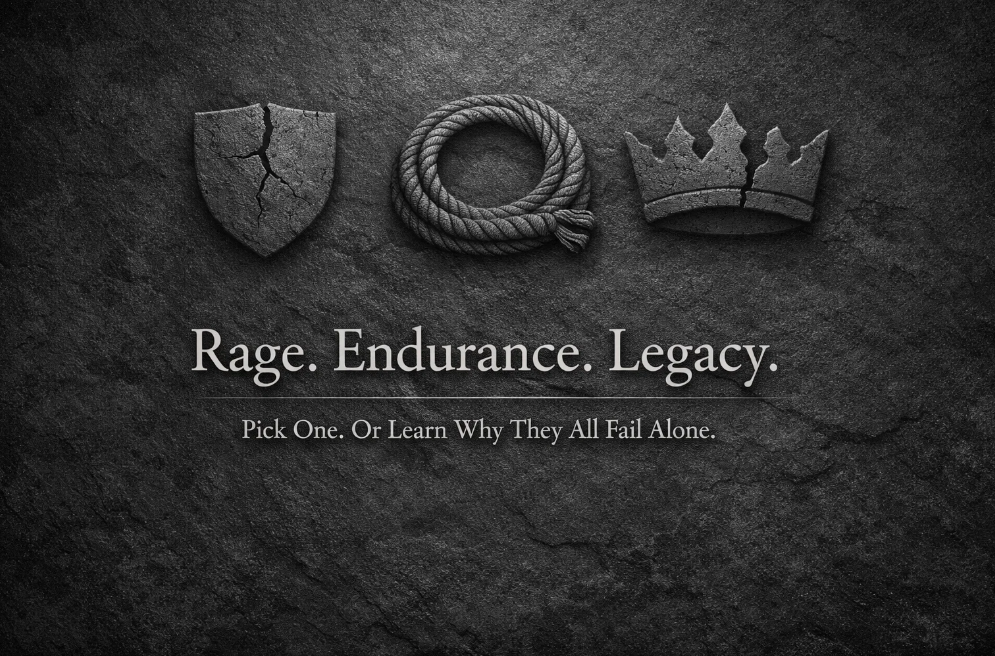
Rage burns hot and fast. Endurance wins quietly. Legacy collapses without successors.
The mature warrior is not the hero at the center of the story.
He is the one who ensures the story continues without him.
That is the lesson mythology has been trying to teach men for three thousand years.
Most of us are still not listening.
메타데이터
- post_id
- fce01b47fed2
- slug
- three-warriors-three-failures-what-ancient-epics-really-teach-men-about-strength-fce01b47fed2
- url
- https://medium.com/@genecrawford/three-warriors-three-failures-what-ancient-epics-really-teach-men-about-strength-fce01b47fed2
- canonical_url
- https://medium.com/@genecrawford/three-warriors-three-failures-what-ancient-epics-really-teach-men-about-strength-fce01b47fed2
- author_url
- https://medium.com/@genecrawford
- status
- ok
- fetched_at
- 2026-08-08 05:39:15