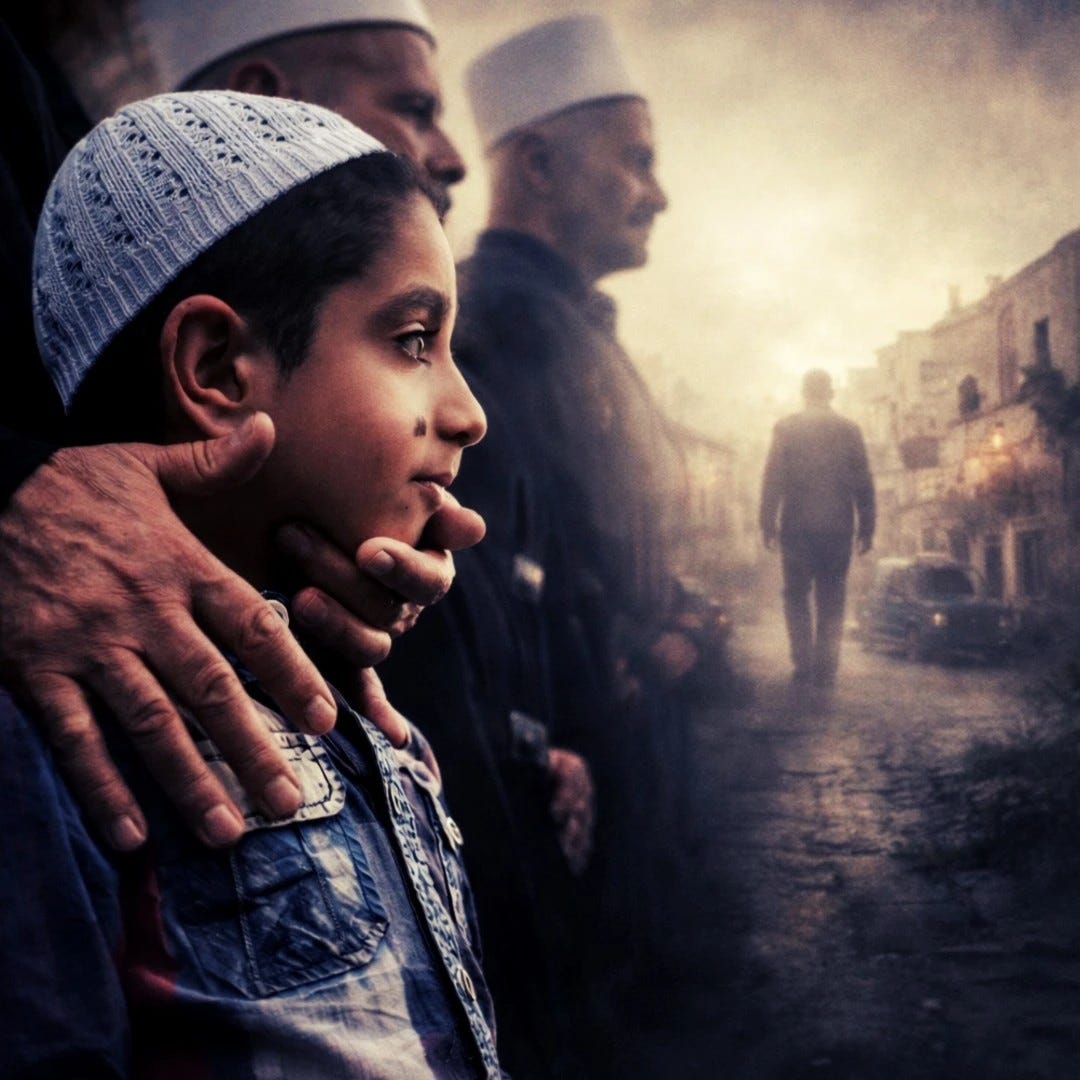
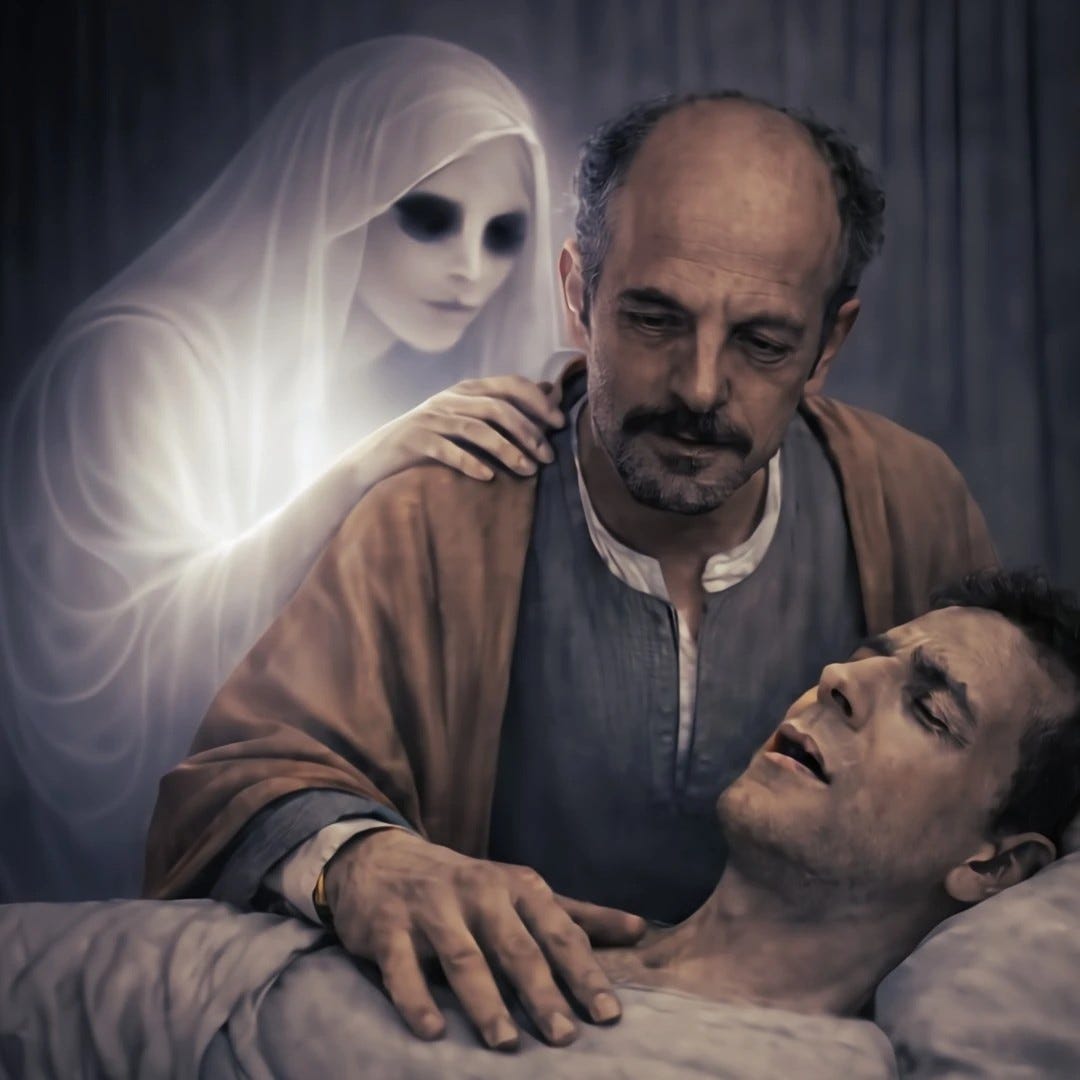
Why do most paranormal experiences seem to occur in religious households ?
In many Arab and Islamic communities, you’ll hear stories about people being possessed, black magic, and supernatural lovers. These stories…
Why do most paranormal experiences seem to occur in religious households ?
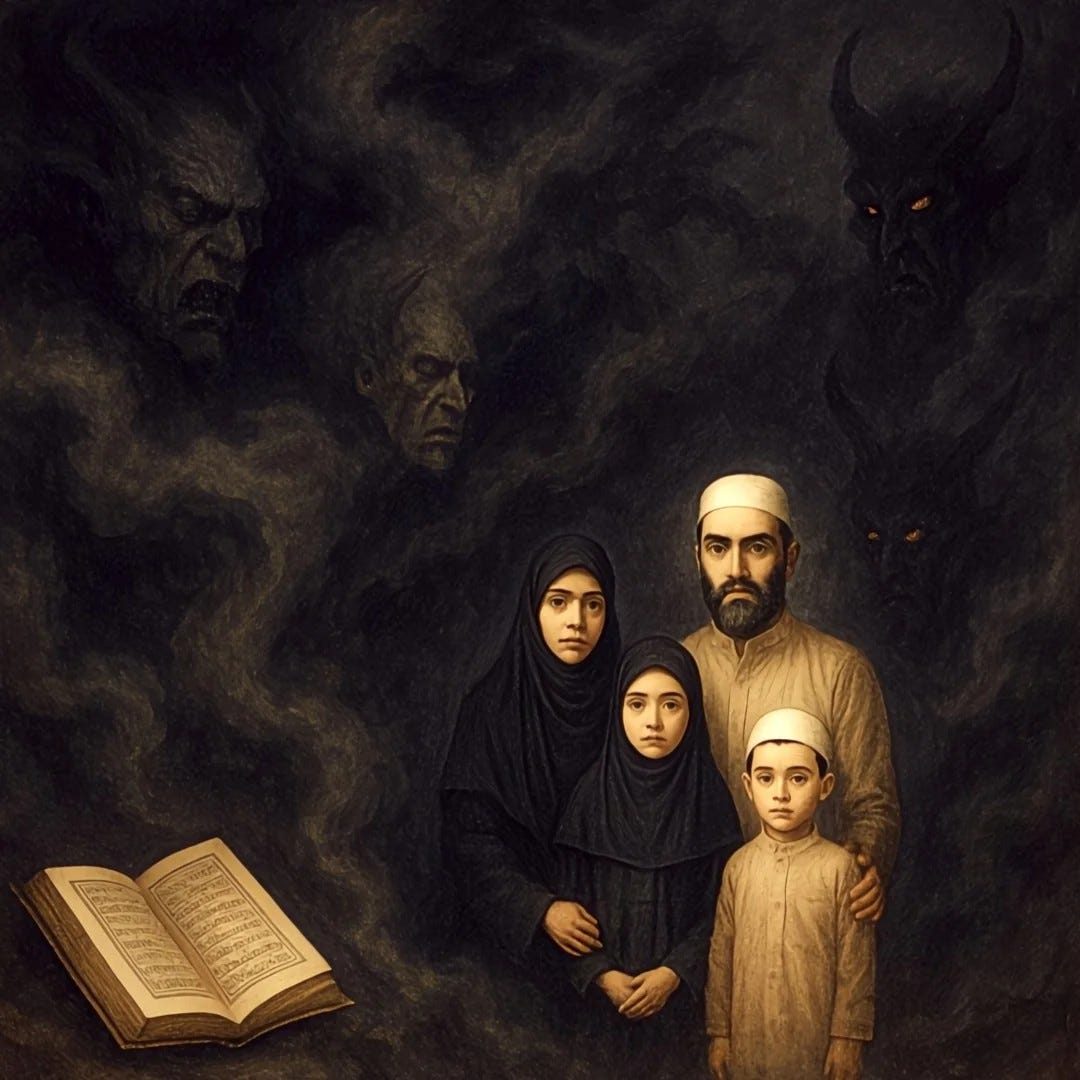
In many Arab and Islamic communities, you’ll hear stories about people being possessed, black magic, and supernatural lovers. These stories are often shared by religious and traditional families who look to the spiritual world for answers when science and reason can’t explain something. They turn to the unseen world to make sense of things that can’t be understood by medicine or logic alone.
As a researcher in the paranormal, I’ve spent over a decade collecting hundreds of firsthand accounts. Most come from religiously observant communities where faith shapes their worldview.
It’s really interesting to see how people who go through these things often turn to their faith for comfort — they pray, say special verses to keep themselves safe, and listen to readings from the Quran. Some people even become more serious about their faith when they’re going through tough times. But this makes you wonder: does being really into your faith actually keep these things from happening, or can it sometimes make it more likely for them to happen? Maybe faith can be a double-edged sword — it can give people strength and protection, but it can also make them more open to certain experiences, depending on how they understand and practice their faith.
Religion as a Framework for the Unseen
In Islam, having faith in things you can’t see is a basic part of the religion. This way of thinking has been around for centuries and has helped shape a view of the world where what’s real and what’s spiritual are closely connected. When people are faced with something they don’t understand or are feeling really stressed, they often jump to conclusions like “it’s a curse,” “they’re possessed,” or “someone’s jealous of them.”
Religion doesn’t necessarily make supernatural things happen, but it helps people make sense of them. For example, kids who grow up hearing stories about jinn, curses, and evil eyes are more likely to think of these things when something strange occurs. It’s like their brain is already wired to connect the dots between the weird event and the stories they’ve been told. This way of thinking can shape how they understand and explain things that can’t be easily explained.
Religious Upbringing and Fear of Straying
In really religious families, when someone does something wrong, it’s like they’re opening the door to bad spirits. The guilt and fear of being punished by a higher power can be overwhelming. When people bottle up their emotions or feel really uneasy, their psychological issues can start to feel like they’re being controlled by supernatural forces — like demons, evil voices, or curses that stop them from getting married or achieving their goals. It’s easier to blame these external forces than to take responsibility for their actions, but it can also keep them trapped in a never-ending cycle of fear and superstition. This can be really damaging, because instead of dealing with their real problems, they’re focusing on fighting off evil spirits. It’s like they’re stuck in a constant battle against the devil, and it’s hard for them to break free from that mindset.
The Conservative Community and Collective Memory
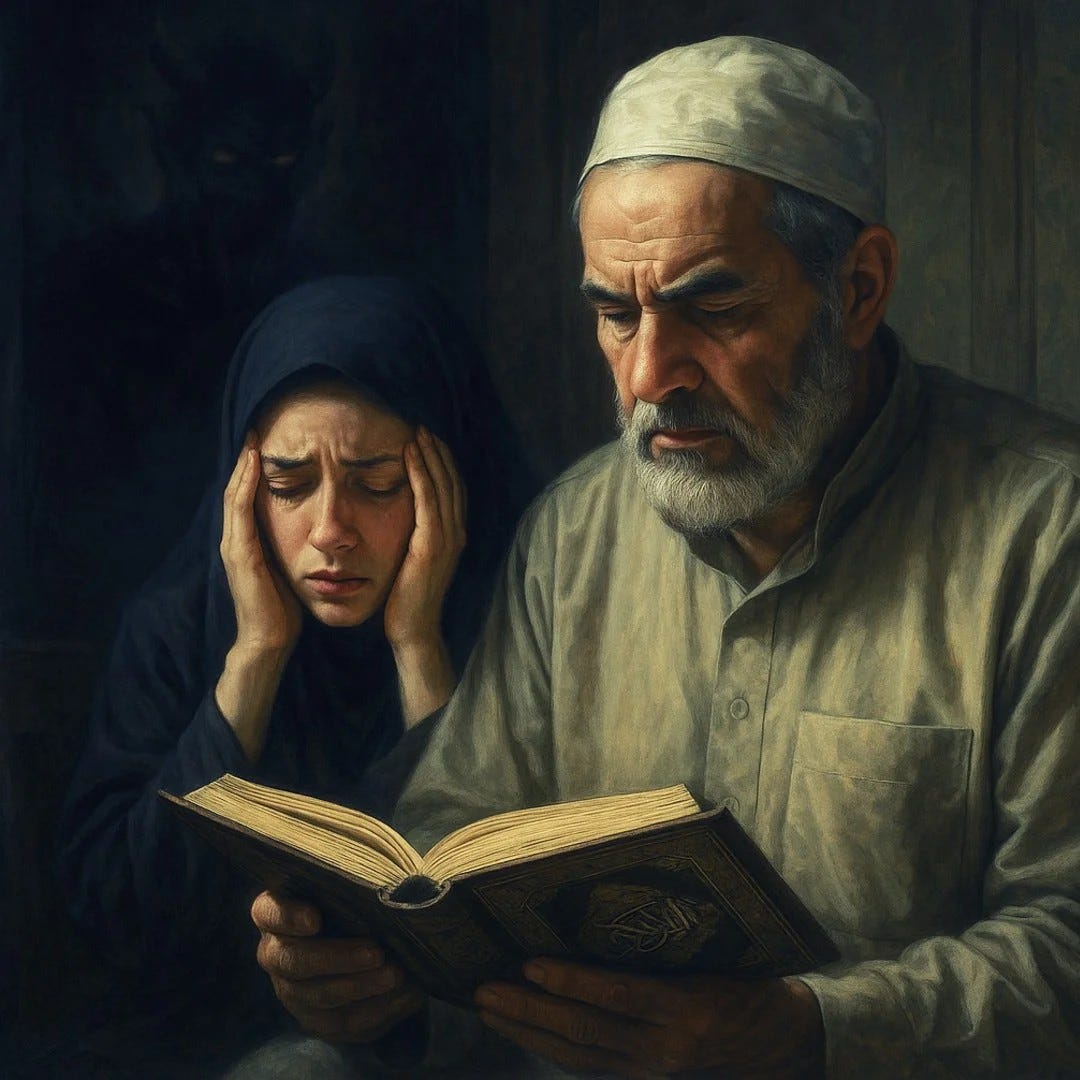
In some traditional communities, people don’t often talk about mental health problems. They might think someone with depression is possessed by an evil spirit, or that someone with anxiety is under a witch’s spell. They could even believe that schizophrenia is the result of a demon’s influence. These ideas get passed down from one generation to the next, and become a part of the community’s shared beliefs. In families like these, relatives might try to diagnose a mental health issue before a doctor even gets a chance to examine the person. For example, they might say something like, “Our daughter is being controlled by a jinn that’s made her fall in love — that’s why she screams when we recite the Quran.” But a medical professional might look at the same situation and see that the person is actually having panic attacks or struggling with a mental disorder.
Societies with Little Emphasis on the Paranormal
In some parts of the world, like Scandinavia and East Asia, you don’t often hear about people being possessed or seeing magic everywhere. This isn’t because these things don’t exist there, but rather because people in these cultures don’t usually turn to supernatural explanations when they’re struggling. When someone’s feeling really overwhelmed, they’re more likely to go see a doctor than a faith healer. The idea is that their problems are medical, not spiritual, and can be treated in a clinic rather than a church. This approach is really different from what you might see in other cultures, where supernatural beliefs play a big role in everyday life.
Education and Culture: The Silent Safeguard
Higher education and awareness reduce the tendency to attribute mysterious events to the supernatural. Educated individuals recognize that hallucinations can have medical causes, and that dreams and visions aren’t always messages from another realm.
On the other hand, low levels of education make it difficult to distinguish between metaphor and reality, blending psychological suggestion with religious belief, creating immersive ‘paranormal’ experiences in people’s minds.
A Common Family Scenario
In lots of Arab families who follow a religion, moms will say some special words from the Quran to their daughters before they go to sleep. This is to keep them safe from bad dreams or things they can’t see. The kids learn to say these words every night, like a magic shield to stop the bad guys, like the “jinn”, the evil eye, or other spirits that might hurt them.
Although the idea behind it is meant to be spiritually uplifting and bring a mother and child closer together, it can actually have a negative effect on the child’s mind. It can make them feel like they’re always in danger from things they can’t see, and that can be really scary. Instead of sleeping soundly, the child might start to imagine all sorts of frightening things lurking in the shadows, just waiting for them to relax their guard. This can be really damaging to a child’s sense of security and well-being.
It’s really important to help kids feel calm and confident, and to teach them to trust in God without being scared. When kids are always afraid of things they don’t understand, it can lead to big problems like anxiety or other mental health issues. Sometimes, parents might think their kids are acting strange because of supernatural things, but really it’s just because they’re struggling with their emotions. By teaching kids to feel safe and trust in God, we can help them grow up to be happy and healthy. This way, they can develop a strong sense of faith without being held back by fear.
Faith isn’t about living in constant fear of evil. It’s about trusting that goodness is stronger than fear, and true protection comes from inner peace rather than constant dread.
Culture-Bound Syndromes
In cultural psychology, there’s a condition known as Culture-bound syndrome, which refers to patterns of mental disturbance closely tied to a particular cultural or religious background.
In these cases, it’s not the experience itself that’s unusual, but the way it is understood. Our minds interpret what we encounter not in a vacuum, but through the cultural filters we inherit.
When culture is saturated with supernatural ideas — jinn, magic, the evil eye — any psychological or bodily disturbance can be interpreted as something mystical.
And so, anxiety, hallucinations, nightmares, and dissociation become ‘possession’ or ‘black magic,’ not because these forces are truly present, but because cultural beliefs dominate collective consciousness.
This interplay between culture and the mind creates the unique landscape of paranormal experiences in Arab and Islamic societies, where religious teachings mix with popular myths, forming a worldview that can be impenetrable for conventional psychiatry without cultural awareness.
Psychiatry: An Ally to Faith, Not Its Opponent
Faith and psychiatry don’t have to be on opposite sides. In fact, they can work together. Understanding how our minds work can actually help us understand our spiritual experiences better. It’s not about choosing between faith and science, but about using faith to guide how we use science in a responsible way. We don’t have to give up on our beliefs, but we should be open to the idea that some things we think are miraculous might actually be our own minds trying to tell us something. This doesn’t mean we dismiss the possibility of something greater, but rather we try to understand how our own thoughts and feelings play a role in our spiritual lives. By looking at things this way, we can deepen our understanding of ourselves and the world around us.
For people who are deeply religious, their faith can be a great source of comfort and strength. But it’s also important to remember that not knowing about science and how the world works can lead to misconceptions and false beliefs. The key to a balanced life is finding a way to bring together spiritual and medical care. This means using prayer and religious rituals, like Ruqyah, alongside therapy and medical treatment. It’s about combining the teachings of the Quran with the knowledge of medicine, and having faith while also using reason and common sense. Not everything that seems strange or unexplainable has a supernatural explanation — sometimes it’s just that we don’t understand ourselves or the world around us very well. By being open to learning and growing, we can gain a deeper understanding of the world and ourselves, and live more fulfilling lives.
The fact that many people in religious households have supernatural experiences doesn’t mean their faith is weak. Instead, it shows how much culture and the idea of the unseen can shape what we think and believe. When we look at how our minds and spirits work together, we can see that paranormal things aren’t about breaking the rules of nature, but more about showing us what’s inside us, our culture, and what we’re afraid of. This can be a pretty deep mirror, reflecting our inner thoughts and feelings, and helping us understand ourselves and our place in the world better.
메타데이터
- post_id
- fcf09bbcba0a
- slug
- why-do-most-paranormal-experiences-seem-to-occur-in-religious-households-fcf09bbcba0a
- url
- https://medium.com/@kamal_56228/why-do-most-paranormal-experiences-seem-to-occur-in-religious-households-fcf09bbcba0a
- canonical_url
- https://medium.com/@kamal_56228/why-do-most-paranormal-experiences-seem-to-occur-in-religious-households-fcf09bbcba0a
- author_url
- https://medium.com/@kamal_56228
- status
- ok
- fetched_at
- 2026-06-23 17:05:31