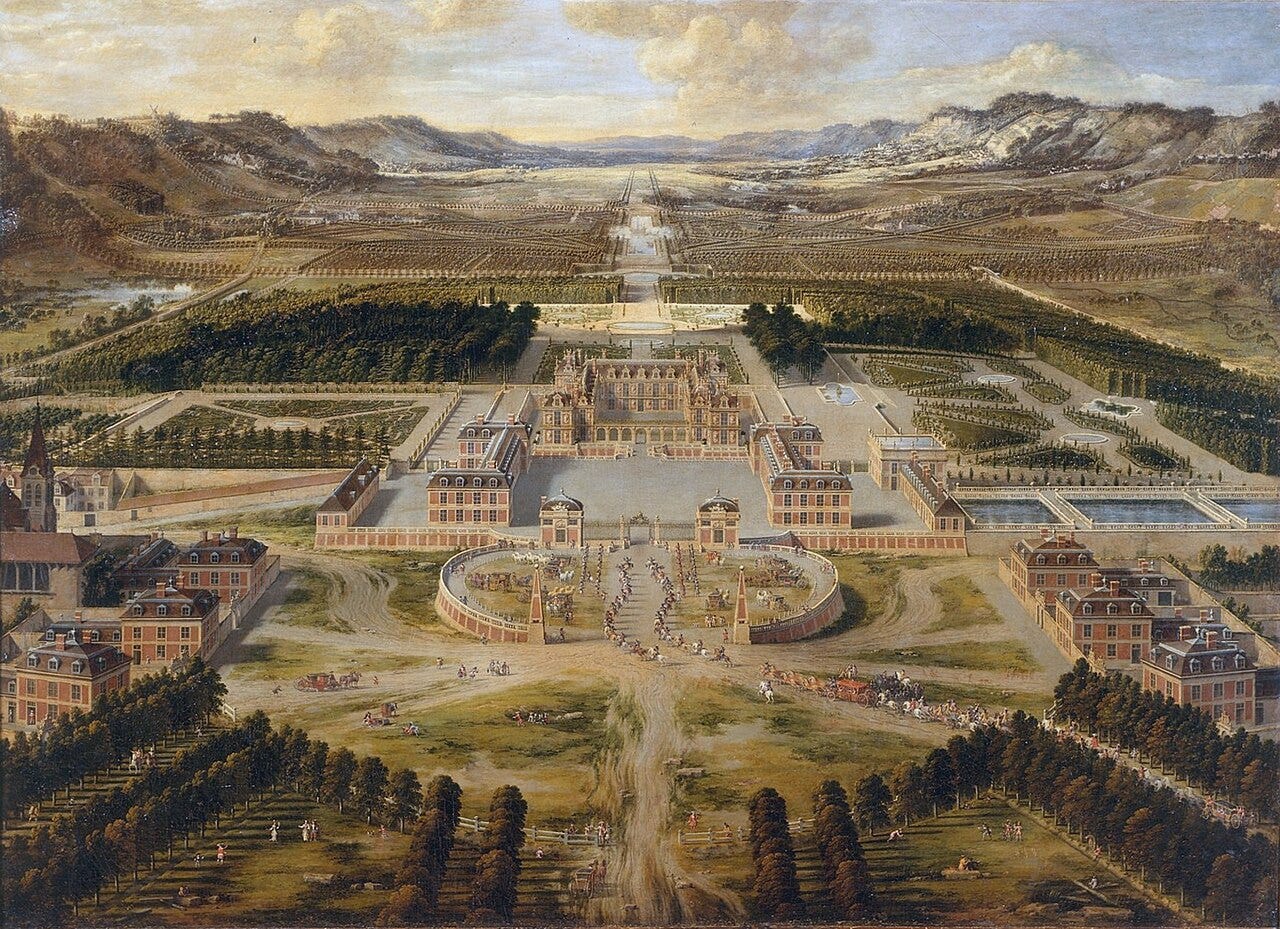
The Auction That Built the Modern Art Market
Paris, 24 March 1875
The Auction That Built the Modern Art Market
Paris, 24 March 1875
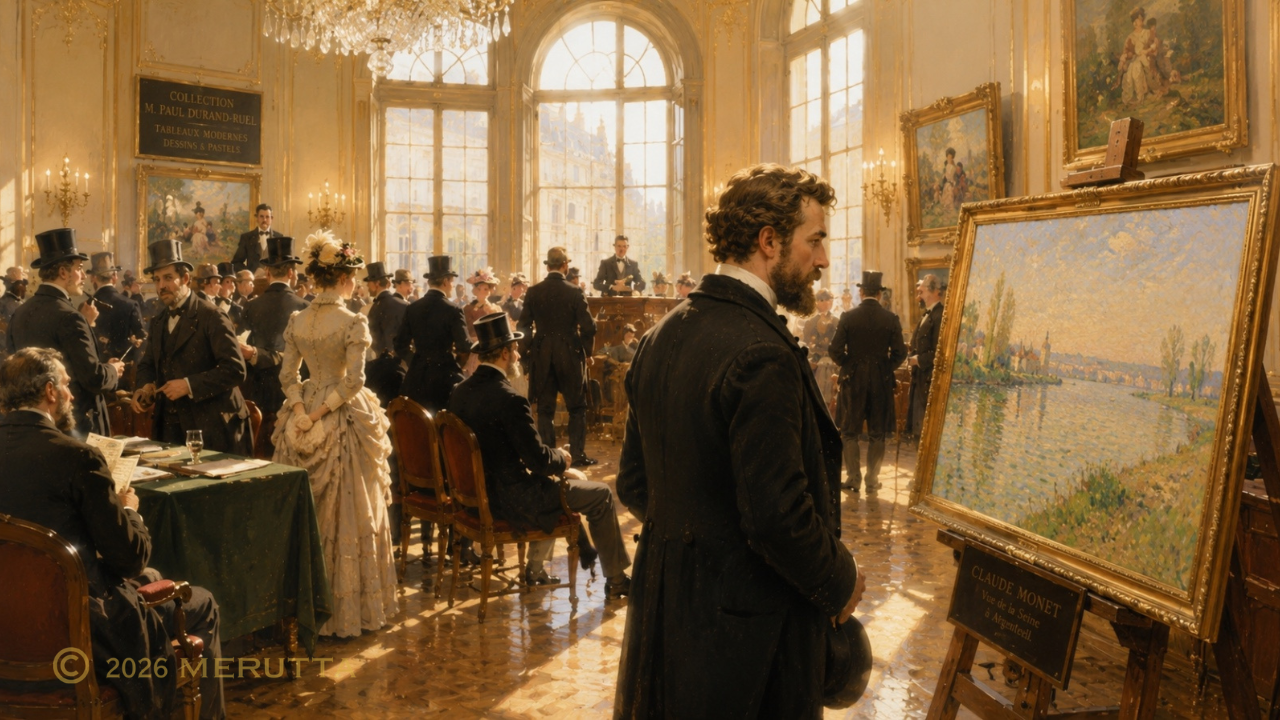
The standard account of the Hôtel Drouot sale of 24 March 1875 is an account of failure. Seventy-three paintings by Claude Monet, Berthe Morisot, Auguste Renoir and Alfred Sisley were offered to a crowd that had come principally to laugh. The auctioneer Charles Pillet was obliged to summon the police to protect the works from physical assault. Average prices hovered around 157 francs. Contemporary sources called it a fiasco. The artists returned home with receipts that did not cover their expenses.
This account is accurate as far as it goes. What it omits is the identity of the most consequential buyer in the room, and what he was actually doing there.
Paul Durand-Ruel attended the auction and bought eighteen paintings at the prevailing prices of humiliation. He did so while his own business was in acute financial distress: his London gallery would close before the year was out, and he was servicing debts he later described as usurious. And yet he bought. The question of why — and what he understood himself to be doing — is the real subject of the afternoon of 24 March 1875. It is also the question that unlocks the origins of the modern art market.
Durand-Ruel was not a disinterested champion of artistic genius. He was a dealer with a system, refined across two decades and tested against the market for Barbizon painting, which he had helped create almost single-handedly in the 1860s. The logic was precise: identify artists whose work was undervalued by the existing critical consensus; acquire as large a proportion of their output as possible before the consensus shifted; control the supply; then, through exhibitions and the cultivation of collectors, engineer the shift itself. He maintained a virtual monopoly on the works of his artists through systematic auction purchases, using his own bids to sustain prices at whatever level he determined they should occupy.
He had concluded by 1871, when he first encountered Monet and Pissarro in wartime London, that the same logic applied to these painters — with the crucial difference that the gap between current prices and eventual value was, if anything, far larger. The greater the hostility of the establishment, the cheaper the acquisition costs, and the more complete the monopoly he could establish before the market turned.

What the crowd at the Drouot understood as mockery, Durand-Ruel understood as an opportunity. He employed strategies that would become foundational to the modern art market: bidding on his own artists’ works at auction to prop up prices; purchasing paintings in bulk, sometimes before all of them were executed; and intervening on aesthetic grounds to shape the direction of the work itself. The eighteen canvases he acquired on 24 March 1875 were not an act of charity. They were a position taken at the precise moment of maximum negative sentiment.
The artists believed they had witnessed a public humiliation.
Durand-Ruel believed he had just made one of the most important purchases of his career.
Continue reading on →
메타데이터
- post_id
- fcfbcf28d0ad
- slug
- the-auction-that-built-the-modern-art-market-fcfbcf28d0ad
- url
- https://medium.com/@MERUTTA/the-auction-that-built-the-modern-art-market-fcfbcf28d0ad
- canonical_url
- https://medium.com/@MERUTTA/the-auction-that-built-the-modern-art-market-fcfbcf28d0ad
- author_url
- https://medium.com/@MERUTTA
- status
- ok
- fetched_at
- 2026-06-12 07:40:50