Architecting Scalable ETL Pipelines in IBM DataStage: Lessons from Real Production Systems
Enterprise data engineering has evolved rapidly over the last decade, but some technologies continue to run the backbone of…
Architecting Scalable ETL Pipelines in IBM DataStage: Lessons from Real Production Systems
Enterprise data engineering has evolved rapidly over the last decade, but some technologies continue to run the backbone of mission-critical systems. IBM DataStage being one of them. Despite the rise of cloud-native ETL (Extract-Transform-Load — or ELT in modern cloud native terminology) tools, DataStage remains deeply embedded in banking, financial services, insurance, and Fortune 500 companies.
Having worked on multiple large-scale DataStage implementations — including migration projects, performance tuning, and end-to-end data platform modernization — I’ve seen what actually works in production and what fails when datasets grow, schedules tighten, and SLAs become unforgiving.
This article captures the key architectural lessons that help DataStage pipelines scale reliably in real enterprise environments.
1. Start with a Layered ETL Architecture
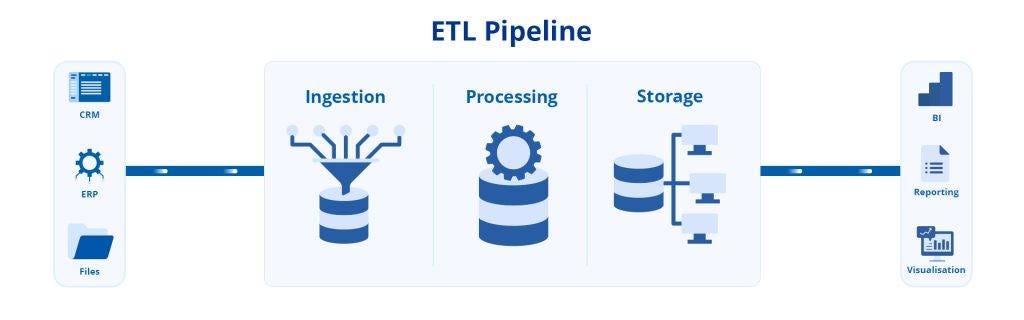
A scalable ETL system always begins with the right data architecture, not the job design. The most durable pattern I’ve seen is a multi-layered approach:
✔ Landing
Raw source data as-is. No transformations. This is a place to simply connect to your source, pull and dump data in your system. This way you quickly disengage from source systems without much overload.
✔ Staging
Cleaned and standardized; type-casting applied. This is where you apply basic data cleansing and standardization techniques like keeping the date format consistent, removing duplicates, consistent state abbreviations etc.
✔ Enriched
This is where the real transformation work takes place. Business rules are applied, multiple tables or files are joined, and reference data is incorporated to support downstream analytics. This layer also manages slowly changing dimensions — such as geography, products, or customer attributes — to maintain historical accuracy. The goal is to prepare a clean, consistent, and fully enriched dataset that contains all KPIs and metrics required for the next analytical layer
✔ Reporting / Consumption / Marts
This is the final presentation layer where data becomes actionable. Clean, enriched datasets are transformed into subject-specific marts or semantic models designed for dashboards, reports, and analytical applications. At this stage, KPIs are standardized, aggregations are pre-computed, and data is structured for high-performance querying. The focus is on delivering business-ready insights — whether through Power BI, dashboards, APIs, or downstream applications — ensuring end users receive accurate, timely, and reliable information.
Why this matters:
- Each layer has a clear purpose
- Reprocessing becomes easy
- Errors don’t cascade
- Performance tuning is isolated to specific segments
- Team ownership becomes clearer
DataStage works best when it is part of a well-defined data lifecycle, not a monolithic “do everything in one job” design.
2. Using DataStage Parallelism the Right Way
Parallelism is DataStage’s biggest strength, but also the biggest source of hidden mistakes.
The three forms of parallelism:
✔ Pipeline parallelism
Multiple stages processing rows concurrently.
✔ Partition parallelism
Splitting data across nodes for faster processing.
✔ Component parallelism
Executing multiple links or stages at the same time.
What works well:
- Use hash partitioning when joining large datasets
- Use same partitioning to avoid unnecessary shuffles
- Use auto partitioning only for non-critical transformations
- Always read from sequential files using adequate buffering
- Avoid unnecessary sorts
What causes slowdowns:
- Wrong partition keys
- Data skew (everything landing on 1 partition)
- Cascading sorts
- Partition → Collect → Partition loops
Good DataStage architecture means structuring the job so that the engine can do maximum work in parallel with minimal repartitioning.
3. Build Reusable, Metadata-Driven Frameworks
Hardcoded values are the fastest way to make DataStage impossible to maintain.
The most successful projects use:
✔ Parameter sets
✔ Shared containers
✔ Job templates
✔ Centralized lookup files
✔ Environment variables
✔ Naming standards
This enables:
- Faster new job development
- Standardized error handling
- Easier onboarding of new team members
- Consistency across hundreds of jobs
If you build DataStage pipelines the same way you write good software — with modularity and reuse — you immediately gain scalability.
4. Focus on Error Handling and Restartability
Real production systems fail. Jobs halt. Files arrive late. A join fails because upstream sent bad data.
A scalable ETL pipeline is one that can recover quickly and safely.
Key must-haves:
✔ Reject handling (bad records go to a quarantine path)
✔ Checkpoints and restart positions
✔ Logging framework with job start/end timestamps
✔ Notification system integrated with email/SMS/Teams
✔ One-click re-run capability
✔ Versioning and job promotion discipline
Without restartability, even the fastest DataStage job becomes a bottleneck under production pressure.
5. Design Jobs for Large Volumes (Not Happy Path Data)
Most DataStage performance issues come from:
- Large sequential file reads
- Heavy joins
- Multi-gigabyte lookups
- Broad transformations within one massive job
Some rules of thumb based off my experience:
✔ Break large jobs into multiple smaller, logically-separated jobs
✔ Prune fields early to reduce object size
✔ Avoid reference lookups for huge datasets
✔ Push down transformations to source/target when possible
✔ Use native connectors (oracle/DB2) wherever applicable (bulk write modes)
✔ Avoid unnecessary data conversions inside Transformer stages
Scaling DataStage is about controlling and balancing IO, sorting, memory, partitioning.
6. Build a Proper Scheduling & Orchestration Layer
Most enterprises pair DataStage with:
- Control-M
- Autosys
- Tidal
- Airflow (in hybrid architectures)
DataStage itself has its own basic scheduling capabilities but not recommended for enterprise grade workload scheduling.
Key design patterns:
✔ Use the scheduler for orchestration, dependencies, SLAs
✔ Use DataStage for pure transformations
✔ Keep job sequences simple and externalize complexity
This separation of concerns is critical to operating at scale.
7. Monitor Everything
A healthy DataStage ecosystem involves proactive monitoring:
- Job run times
- Failure trends
- Job concurrency
- Workload distribution
- Resource utilization
- Partition statistics
- Data growth
Many enterprises ignore monitoring until there is a crisis. A simple dashboard can prevent hours of monthly firefighting.
8. Build with Migration & Modernization in Mind
No DataStage environment stays the same for long.
Cloud migrations (Azure, AWS), modernization (ADF, Snowflake, Synapse), containerization — even if not planned today — will happen eventually.
That’s why scalable ETL pipelines should be:
- Modular
- Documented
- Version-controlled
- Metadata-driven
- With clear logic separation
This makes future migrations 10× easier.
Conclusion
Scalability in DataStage doesn’t come from “just tuning the job” It comes from:
- Data architecture discipline
- Proper partitioning
- Metadata management
- Error handling
- Restartability
- Clear orchestration
- Monitoring
- Planning for long-term adaptability
These are the lessons only real production environments teach.
By applying these principles, DataStage evolves from a legacy ETL tool into a highly scalable, predictable, and enterprise-grade data processing engine — capable of powering mission-critical workloads reliably for years.
Thanks for stopping by! If this article added value or sparked ideas, consider following me here on Medium or connecting on LinkedIn. Your thoughts and feedback are always welcome.
메타데이터
- post_id
- fcfbe778c88c
- slug
- architecting-scalable-etl-pipelines-in-ibm-datastage-lessons-from-real-production-systems-fcfbe778c88c
- url
- https://medium.com/@saqibk0510/architecting-scalable-etl-pipelines-in-ibm-datastage-lessons-from-real-production-systems-fcfbe778c88c
- canonical_url
- https://medium.com/@saqibk0510/architecting-scalable-etl-pipelines-in-ibm-datastage-lessons-from-real-production-systems-fcfbe778c88c
- author_url
- https://medium.com/@saqibk0510
- status
- ok
- fetched_at
- 2026-07-22 19:50:38