Cocopeat-amended leaf mould compost yields quality potted dahlia specimens under shade net…
From Firenze University Press Journal: Advances in Horticultural Science
Cocopeat-amended leaf mould compost yields quality potted dahlia specimens under shade net intercepting one-third sunlight
From Firenze University Press Journal: Advances in Horticultural Science
S. Singh, Department of Floriculture and Landscaping, Punjab Agricultural University
Aradhna, Department of Floriculture and Landscaping, Punjab Agricultural University
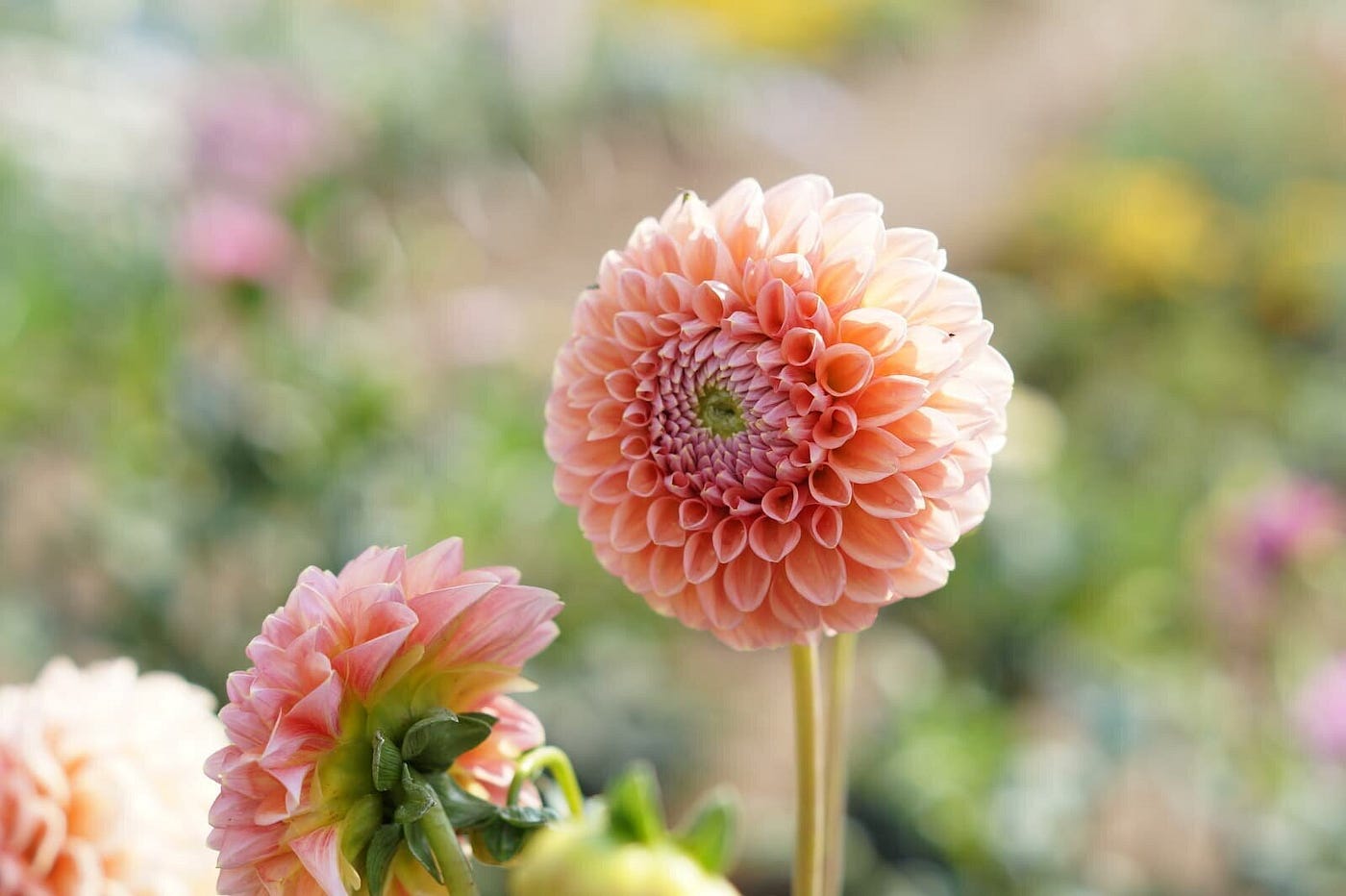
Dahlia variabilis (Desf.), a member of the ‘Asteraceae family, is a popular tuberousrooted flower native to Mexico and parts of Central and South America (Dalda Sekere and Gülşen, 2016). People prize Dahlia flowers for their exquisite blooms, which display a variety of inflorescence styles and blossom colours (Evans, 1998; McClaren, 2004; Romer, 2008). Dahlia is commercially grown in Australia, France, Germany, Italy, Japan, Mexico, New Zealand, South Africa, the United States, and The Netherlands (Marina, 2015). Every year, the Dutch dahlia producers host the “Holland Dahlia Event” throughout the country to showcase the wide variety of flowers and export about 50 million dahlia tubers annually. Dahlia cultivation for the domestic flower market in India is restricted to the plains of the northwestern and central areas (De and Bhattacharjee, 2011; Bhattacharjee et al., 2019). The dahlia prefers temperatures between 18 to 23°C, relative humidity between 75% to 78% and welldrained, medium fertility sandy loam soils rich in organic matter with a pH range between 6.0 to 8.0 for their successful growth and reproductive development (De Hertogh and Le Nard, 1992; Marina, 2015). Dahlia cultivation in pots and as bedding has grown in popularity recently to beautify community parks and residential gardens (Yazici and Gunes, 2018). In addition to conventional field cultural practices, the capacity of potted dahlia to sustain growth and flower production is largely dependent on the growing media (GM) composition and the amount of sunlight received. The physical and chemical characteristics of the GM ingredients are essential for creating a favorable root zone environment that supports plant growth in a finite volume of pot. The physical and chemical characteristics of GM have a substantial impact on the ability to retain water, provide aeration, and maintain nutritional status in a finite pot volume (Younis et al., 2014). Furthermore, throughout a plant’s life cycle, the amount of light it receives influences its growth, development, and other physiological processes. The quality and intensity of light influence leaf expansion, stem length, branching patterns, flowering, and tuberization in dahlia, besides shaping the overall architecture of the plant (Hamrick, 2003). An adequate light intensity induces transition from vegetative to flowering phase and thereafter influences the presentable life of flowers with varying hues of colour (Paik and Huq, 2019). Growers in tropical and subtropical regions face certain challenges in cultivating potted dahlias because of the higher light intensities (above 70,000 Lux) under open field conditions. Particularly during the afternoon, dahlia leaves exhibit scorching, fading of flower and leaf colour, and may often reveal temporary wilting of plants when exposed to sun for an extended time period. In subtropical locales, high air temperatures (exceeding 40oC) coinciding with heat wave events throughout summers are prevalent. Because of the much lower humidity levels (less than 40%), these hot and dry weather conditions scorch dahlia leaf margins and attract thrips and mite attack. Although dahlias require full sunlight, they also benefit from moderate shade, provided by shade nets that block heat waves, particularly during the afternoon (Menzel, 2016). The vegetative growth, reproductive development, and tuber production of dahlia are significantly influenced by edaphic factors, including the texture and structure of GM, nutrient composition, water retention capacity, total porosity, and airfilled porosity of medium in a finite pot volume (Reddy et al., 2023). The purpose of this study is to examine how different levels of shade affect Dahlia x hybrida growth, flowering, and tuber formation in relation to different GM formulations. To date, there is no scientific research that supports the aforementioned claim. Therefore, our study hypothesis suggests that growing potted dahlia in GM amended with organic manures will impact the plant’s development, flowering, and ability to produce tubers at different shade levels. With this research, we hope to provide valuable insights and practical recommendations for improving potted dahlia cultivation in regions receiving higher sunlight intensity, inducing leaf scorching, especially during afternoon hours.
DOI: https://doi.org/10.36253/ahsc-15900
Read Full Text: https://oaj.fupress.net/index.php/ahs/article/view/15900
메타데이터
- post_id
- fcfe96976642
- slug
- cocopeat-amended-leaf-mould-compost-yields-quality-potted-dahlia-specimens-under-shade-net-fcfe96976642
- url
- https://medium.com/@universityofflorence/cocopeat-amended-leaf-mould-compost-yields-quality-potted-dahlia-specimens-under-shade-net-fcfe96976642
- canonical_url
- https://medium.com/@universityofflorence/cocopeat-amended-leaf-mould-compost-yields-quality-potted-dahlia-specimens-under-shade-net-fcfe96976642
- author_url
- https://medium.com/@universityofflorence
- status
- ok
- fetched_at
- 2026-07-19 17:30:06