Why Household Robots Fail (and How Persistent Object Memory Changes the Game)
Theoretical framing inspired by Stanford AI Index 2026: “Robots still fail at most household tasks, even as they excel in controlled…
Why Household Robots Fail (and How Persistent Object Memory Changes the Game)
Theoretical framing inspired by Stanford AI Index 2026: “Robots still fail at most household tasks, even as they excel in controlled environments.”
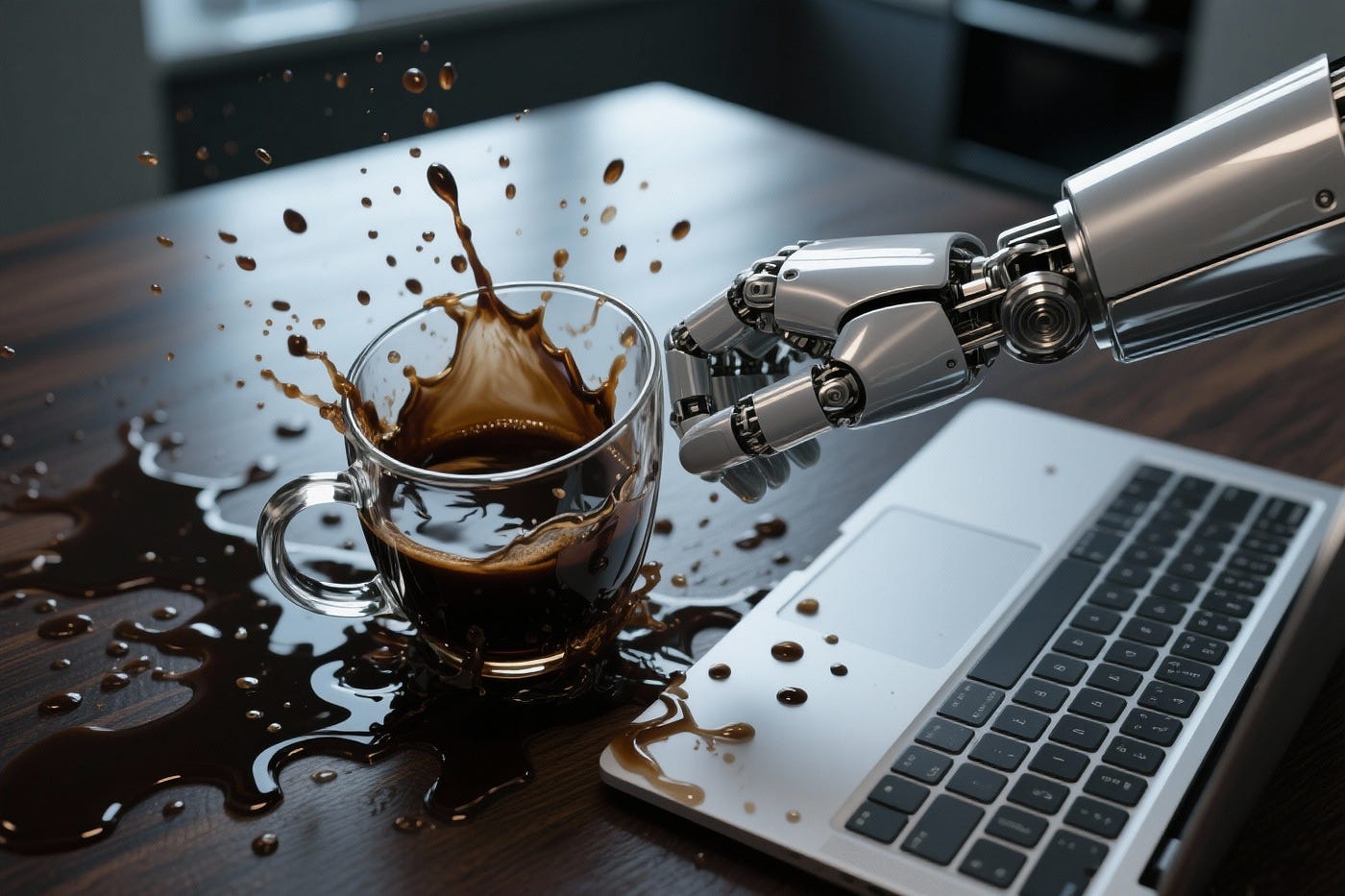
The Problem: Controlled Environments Reward Perception; Homes Reward Memory
The Stanford AI Index 2026 highlights a persistent paradox: robots achieve > 90% success on benchmark tasks in lab settings (Pick-and-Place, NAVIGATION in empty rooms), yet drop to < 35% success in real homes [Stanford AI Index 2026]. Why?
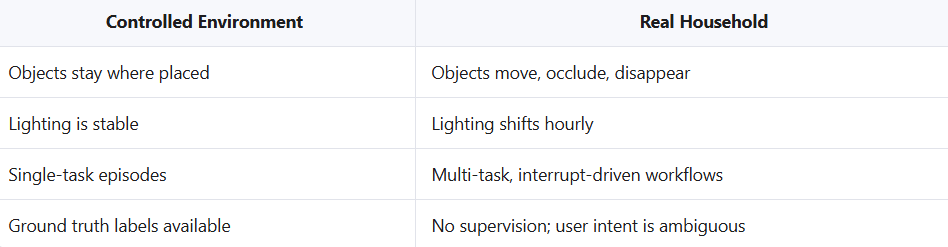
Current robotics stacks optimize for frame-level perception accuracy. But household tasks require temporal object cognition: remembering where the keys were placed, tracking the mug through cabinet occlusion, inferring that “the thing under the towel” is likely the remote.
Theoretical framing: This is not a perception problem — it is an embodied memory problem. Human infants develop object permanence around 8 months [Piaget]; robots remain at the “out of sight = out of existence” stage.
FOUR Ways CORE Addresses the Household Gap
- From Frame-Level Detection → Persistent Object Files (Cognitive Psychology Grounding)
Theory: Kahneman & Treisman’s Object Files theory posits that human vision maintains transient, object-specific representations that integrate features across time. CORE operationalizes this via UUID-level kernels with GRU state.
Implementation example:

Theoretical contribution: This implements the object token hypothesis: identity is maintained not by visual similarity alone, but by a persistent neural representation that integrates new evidence conditionally.
2. From Static Affordances → Dynamic Relational Affordance Inference
Theory: Gibsonian affordances are not static properties of objects, but relations between agent capabilities and environmental structure [Gibson, 1979]. CORE’s GNN enables dynamic affordance inference via relational context.
Implementation example:
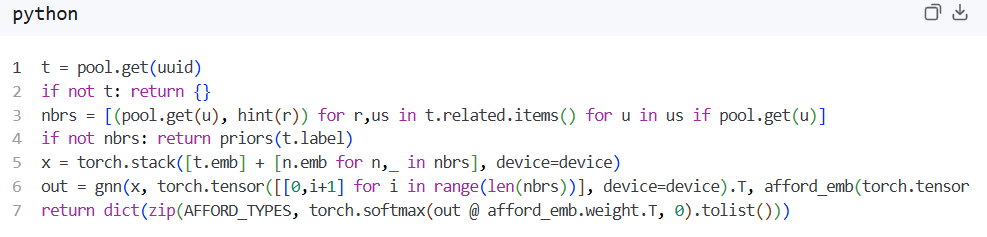
Theoretical contribution: Affordances are not pre-labeled; they emerge from the relational graph. A “cup” on a table has high containable confidence; the same cup on a high shelf has high fragile + hard_to_reach (inferred via GNN propagation).
3. From Task-Specific Policies → Generalizable Memory-Conditioned Planning
Theory: Household tasks share latent structure: locate object → navigate → manipulate → verify. CORE’s queryable kernel pool enables a single planning module to condition on memory state rather than relearning per task.
Implemtation example:
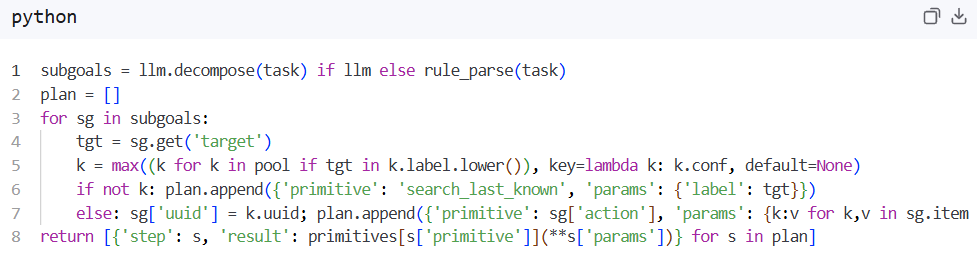
Theoretical contribution: Planning is memory-grounded, not perception-grounded. The planner queries “where was X?” before “where is X?”, enabling recovery from occlusion and object displacement.
4. From Episodic Learning → Continual Kernel Adaptation (Lifelong Household Learning)
Theory: Households are non-stationary environments: new objects arrive, layouts change, user preferences evolve. CORE’s kernel pool supports continual adaptation without catastrophic forgetting via uncertainty-gated updates.
Implementation example:
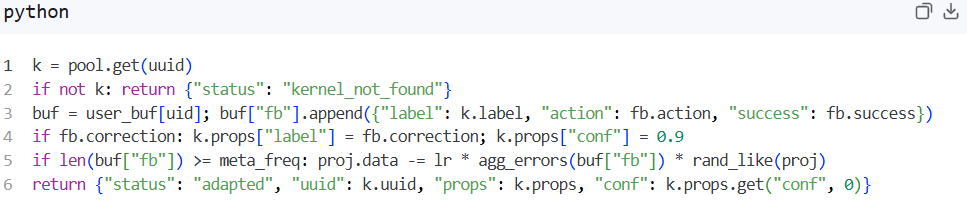
Theoretical contribution: Adaptation is gated by uncertainty: high-confidence observations drive fast updates; ambiguous observations trigger slow meta-learning. This implements the stability-plasticity dilemma [[Grossberg, 1980]] in a principled, deployable form.
To access the full implementation code for the household robots and the COREWorldModel, visit https://coreworldmodel.com
메타데이터
- post_id
- fd1a6851f41b
- slug
- why-household-robots-fail-and-how-persistent-object-memory-changes-the-game-fd1a6851f41b
- url
- https://medium.com/@boltzmind/why-household-robots-fail-and-how-persistent-object-memory-changes-the-game-fd1a6851f41b
- canonical_url
- https://medium.com/@boltzmind/why-household-robots-fail-and-how-persistent-object-memory-changes-the-game-fd1a6851f41b
- author_url
- https://medium.com/@boltzmind
- status
- ok
- fetched_at
- 2026-06-09 15:37:30




