KXDU Interviews Voxtrot’s Ramesh Srivastava
By: Anya McCann & Sofia England
KXDU Interviews Voxtrot’s Ramesh Srivastava
By: Anya McCann & Sofia England

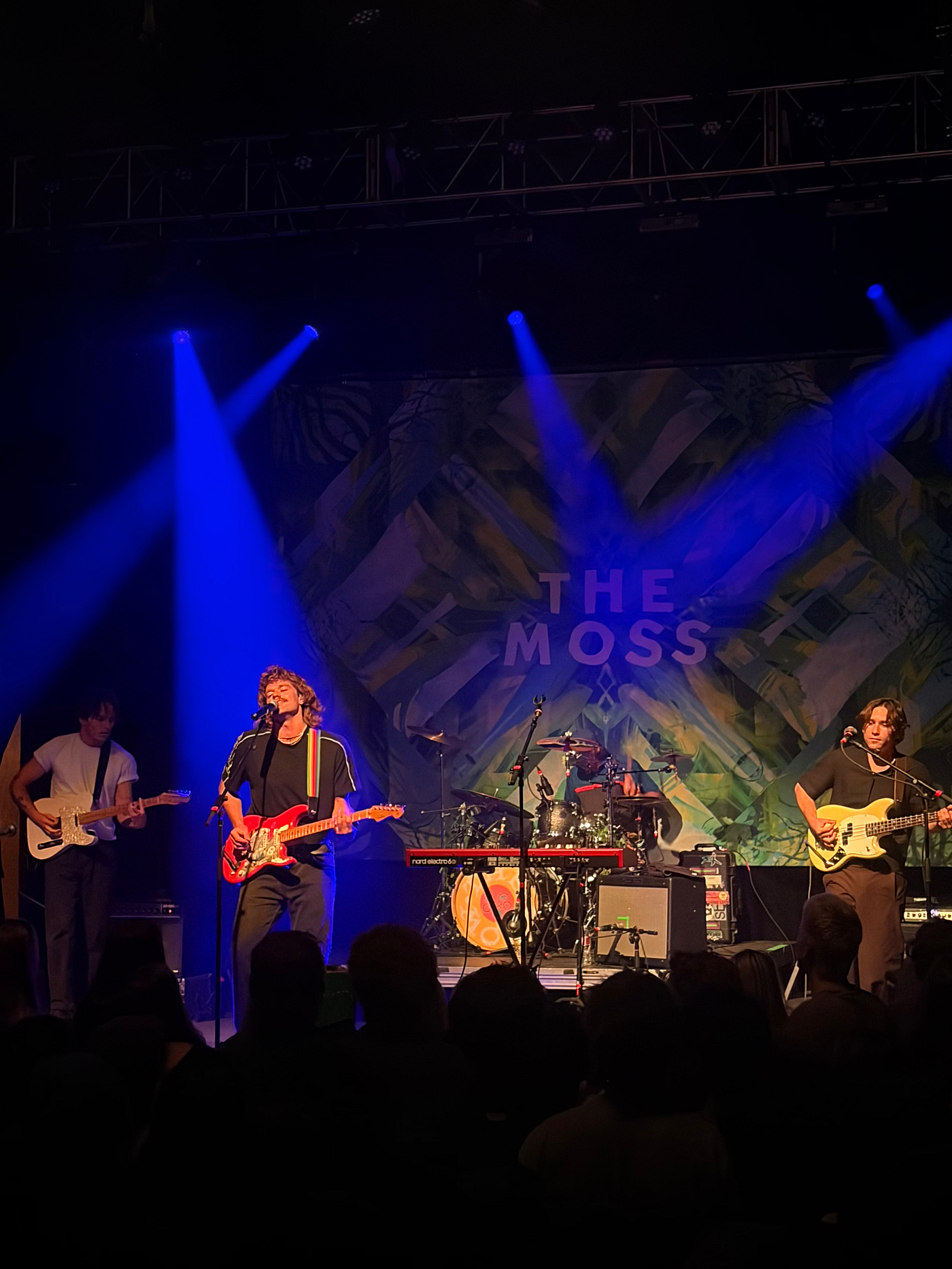
Voxtrot at the Bluebird Theatre
April 1st, 2026.
Prior to their April 3rd performance at Denver’s Bluebird Theatre, KXDU’s Anya McCann sat down with Voxtrot frontman and founder Ramesh Srivastava to talk about Voxtrot’s first album in 19 years: Dreamers in Exile.
Anya: Hi, good morning! How are you?
Ramesh: Hi, I’m good. Surprisingly, I just woke up, actually, which is unusual for me…but, um, everything has shifted into strange hours here on tour, so…
A: Right, I bet. You’ve been going for a week now, is that right?
R: Right, yeah, yesterday is exactly one week.
A: How’s that been feeling so far?
R: It’s feeling good. I mean, it feels like, as others on the tour have said, it feels like it’s finally settling into the rhythm. It’s truly like, if you’ve never been in a touring band, it’s just a completely specific experience that people have done it understand. But it’s awesome.
A: I’ve never done something in that regard, so it’s interesting to think about. I think I would definitely have a hard time for a while…I’ll go ahead and start off our interview by introducing myself, and KXDU. My name is Anya, I’m with KXDU, which is one of Denver’s college radio stations based at the University of Denver. We’re thrilled to be doing this interview!
R: Nice, that’s awesome.
A: We already talked a bit about how tour has been so far, but what are you excited about for the rest of the tour?
R: Well, basically, I feel like each part of the country has it’s own specific essence. We’re about the leave the West Coast this morning, and that’s been awesome. Every city in the West is so different as you move up through the different climates, so I’m looking forward to what I would call the mountains? The mountains and the valleys. I think of this as, like, the next third [of the tour] now. We actually haven’t played in Denver in 19 years, I think…
A: Really? Wow.
R: Yeah…I don’t think the Bluebird was the last place we played, but we definitely played it at some point, and I actually played it as a solo opening act for another band called The Generationals 3 years ago, so…it was nice to be back there. I love that theatre. We used to play a lot at a place called Hi-Dive? If it’s still there.
A: Yes! We love Hi-Dive. A lot of local DU bands have played there, so KXDU is definitely familiar. Love Hi-Dive, shoutout.
R: Oh, awesome. Nice.
A: Has anything memorable or funny happened on tour?
R: Ooh…
A: You can complain, your bandmates aren’t here.
R: Honestly, it’s not a funny answer, but the most memorable thing so far has been the crowds. Like, I just, wasn’t really expecting, like a ton of energy, because this isn’t the reunion tour, you know, this is an official tour with a new album. But the crowds, every night, even in places like Portland, where we haven’t had a huge draw, back in the day, had a, like, actual crowd, there were tons of people there, and they’re all crazy enthusiastic. A lot of them are really young.
A: That’s awesome. Why do you think that is?
R: Well, we knew from the last tour that a significant portion of the audience were new fans, but we honestly didn’t know who would show up this time, but I would say it’s an even bigger percentage of the audience now is pretty young, which is great. And they’re dancing and moving and, like, very vocal, which is awesome. I love that stuff, it makes playing so much more enjoyable.
A: That’s so interesting. I wonder if it’s because your genre of, like indie pop. I think the younger generation, like, even younger than me, really loves things like bedroom pop. I don’t know if you’ve heard of that. [Voxtrot] predates that, but it kind of originates from that.
R: Yeah, I guess it’s…streaming is the most, democratizing technology, you know? The age of a song is not so important anymore.
A: Yeah, that’s great. I wanted to talk about your album, Dreamers in Exile, which is your first in 19 years. What made you guys decide it was time to release new music? What was the catalyst?
R: It started with [the reunion tour] four years ago. I always wanted to release new music, um, it felt like there was no point in reuniting if we weren’t going to do that, but that wasn’t the perspective of everyone at first. We talked about it, but decided to not make an official decision until the end. But, energetically, I always felt like it would go that way. I can’t speak for the rest of Voxtrot, but I think the excitement of that tour showed everyone that there was still interest. The decision for me was just the correct trajectory of that energy.
A: That’s beautiful. Do you think the rest of Voxtrot was more hesitant before that tour, or were they also feeling that trajectory of energy?
R: I think they were, but, I was trying to play it cool…like, I was trying not to, like, force anyone’s hand with that decision, and let everyone come to that of their own accord. But I was having lots of, um, side meetings throughout the tour, getting like, a litmus test from each member about how they were feeling. It’s a trust fall.
A: Yeah, definitely. So, as an artist myself, I know that sometimes you can create a product that other people love but I’m not too happy with. Has there any been a Voxtrot track, or project, that you felt that way about?
R: Well, I’ve had stuff that I’ve worked on that I felt like, that I did just to do it. I guess the first… and then turned out to be wrong, but the first example that comes to mind is…In 2015, I did this song, like, I was assigned to a publishing company at the time, and they do this… well, you probably know this, they do this thing where they just put two writers together who don’t know each other, and have them work together and make a song. I was just trying to, like, grow my career however I could, and I think I was visiting a friend in Los Angeles. So I met up with this guy, Amin Zurukian, and we wrote the demo of this song. It’s called Changing Colors. It’s released under Ramesh and Amin.
A: Everyone go listen!
R: For a while, it was just there. Some friends would be like, this is cool, and then it ended up being used in a video about Grand Theft Auto, and it ended up getting millions of views, and…now that song has millions of plays on all the different platforms and stuff, and it’s almost been licensed for some really big stuff. It came out of… I was not thinking that that was gonna go towards anything big.
A: Yeah, the internet is awesome in that way. I wanted to talk about the history of Voxtrot. What’s the origin story?
R: The band was originally created as a recording project with basically no intention of being, like, a proper functioning band, you know? Like, just to record demos. And then it it just kind of stuck. I started the band right before I moved to Scotland, which is where I went to college.
A: That’s so cool, I was just studying abroad there! I was at the University of Glasgow.
R: Yeah, that’s a great school. I loved it. But I knew I was going there, and I just wanted to record these songs, kind of to have demos to, like, start another band there. Summer break and the Christmas break when I would come home, we would play shows, and it just kind of, like, grew. So, um… at some point, we we had to come up with a band name. That’s it, like, we just, uh…
A: That’s hilarious. You were already a band, but you hadn’t thought, like, hey, maybe we need a name.
R: Yeah. I remember we just had a few names, and I honestly couldn’t even say, like, why Voxtrot popped into my head. Obviously foxtrot is a dance…Vox is, like, vocal, here’s a few obvious things that can be pulled out of it, but it was not with any great intention.
A: That’s really funny. It’s funny, the Scotland part, cause your band, now that I’m thinking about it, kind of reminds me of music from Glasgow indie scene. Like, that’s really cool. Was there anything [in Scotland] that specifically inspired you when you came back to make music with Voxtrot?
R: Well, I mean, I, for sure moved there, because I’m, like, the world’s biggest Belle and Sebastian fan on Earth, but I ended up in that scene a little bit. I actually discovered, like, electronic music in this whole other world that I hadn’t really known existed before I went, so that was actually the most eye-opening thing. It might not present so obviously in Voxtrot, but actually that discovery of something more modern was hugely influential.
A: Yeah, the accessibility of their music scene, especially like the electronic music scene there is really interesting.
R: It’s cool because I… I don’t know how it was for you, but, at that time, I would say, in the United States, listening was more segmented, meaning that if you listen to indie slash guitar music. But there, as you know, the two worlds are completely melded, like, indie kids who listen to guitar music go to those clubs on the weekend, and they know these DJs, and they know electronic artists, it’s way more blended, so I think that made a big difference.
A: Super interesting. Back to your album, how was the recording process? How has the style or sound of your music changed across this 19 year period? Is there anything that was new for this album that you hadn’t tried before in previous projects?
R: This album was recorded by our bass player, Jason, who, has always been a record collector, but has started collecting studio gear, and, like, built this really nice studio behind his house, and gotten really into the recording process, so that just made a huge difference. He did a beautiful job recording it. I guess we’ve always been a very DIY machine But in this case, was kind of us pushing that even farther. We worked with some other engineers, but for the most part, especially once we got deep into it, it really ended up just being us there, together, working on this.
A: What was your, like, timeframe on making the album? Do you think it went faster than some other things you’ve worked on, or do you think you could kind of take your time and enjoy it?
R: I think it went actually pretty fast, considering the way that we did it. We started out doing it the way we’ve always done it, which is to have all 5 people playing together, and to capture as much as possible. before doing the overdubs. But because only Matt, Jason, and I live in Texas, and the other two original members don’t, over the two and a half years, they kind of gradually stopped coming. At the very end, it was just Matt, Jason, and I finishing it. We were moving quickly to finish it, we wanted to finish it by certain times so that we could tour by a certain time, since you have to, of course, have the vinyl production, and there’s, like, every part of that timeline is long, you know, so we were hurrying to finish it, but it was super enjoyable. Those last months when we were just in there together, doing that was extremely, extremely enjoyable for me. I loved it.
A: That’s great. To have such a positive experience making an album after so long, too, with that band, I’m really… I’m glad it was great. That’s awesome.
A: What is some of your musical inspiration, and what kind of sounds have you tried to almost emulate?
R: Well, in the past, it was all stuff from the 60s, and bands like Bella and Sebastian. The first time we were a band, that’s what I wanted to emulate. We had more of a casual, almost ramshackle approach to stuff, when the band started. We were not trying to be too professional. In making this album, I would actually say… and Jason has said this, that the sound kind of went from the 60s into the 70s. I would say, like, yeah, because the great thing about 70s albums is it’s when the fidelity is the highest. It’s, like, before things turn really cold and digital, and everything is just really warm.
A: Yeah, and every track is kind of on the same, like, volume, so it kind of just sounds like everything is the same instrument.
R: The raw sound is so good that you can… I guess that’s probably the birth of, like, audiophiles, you know? They’re just listening to stuff on incredible high-fis and hearing all this kind of crystal clear. I was, aesthetically, was inspired by lots of 70s stuff, like 70s fashion, 70s films, but still trying to bring modernity to it, so there is a lot of use of synthesizers. I’m not sure if it sounds like that much of a sonic departure for long-time Voxtrot listeners, but it feels that way for me, that, you know, we were able to try stuff that.
A: That makes sense. Do you think you would ever push it farther and go, like, full 70s?
R: Oh, I would. Well, I would actually just push it farther to, like, a completely electronic thing, because I love electronic music so much.
A: Have you seen any of your inspiration bands live? Have there been any live performances you’ve seen that you’ve either kind of drawn from for your music, or just for the way you present yourself on stage?
R: I’ve seen a lot of my favorite bands live, I’m grateful to say. In terms of presenting myself on stage, probably the thing that impressed me the most was when I saw U2 on the Joshua Tree anniversary tour. It was just really, something to aspire to, because, like, obviously that’s a tight unit of… four people that have played together since high school, essentially. So they themselves are, of course, like, a very professional type band, but to me, that it was the best use of huge production value. It’s in a stadium, with like, 300-foot LED screens and all this stuff, but it was just so beautifully done. It was, like, a really, um intelligent film, you know? Because that album is so tied to Americana and American imagery, and this was right when Donald Trump had first gotten elected. They did such a great job of poetically making statements just about the state of the world.in a way that, like, was still, like, very entertaining and enjoyable, you know, it’s an enjoyable experience. It’s entertainment, but it’s, like entertainment with heart and soul. I was just really, really impressed. That to me is like, if I could keep going further with my career, I would love to create something like that one day.
A: Yeah, that’s very cool. That that kind of reminds me of how, on a smaller scale, the 1975 presents themselves on stage. They’re, like, projection mapping, because it’s not…they’re not, like, selling out stadiums, but it’s the smaller version of that, I feel.
R: I agree, that’s great. I was really impressed when I saw them live. They were awesome.
A: Alright, so we’re gonna start wrapping up here, since I’ve had you on call for 30 minutes now, and you probably wanna go eat some breakfast. So far on your tour, you’ve hit cities in Arizona, California, Washington, and Oregon. Which city has had the best crowd so far?
R: Wow, this is not a cop-out answer. This is the truth. Literally every single one, like, we were saying this last night after this show, because normally expect…normally expect, like, California is our strongest market, numerically, so we expect that to be, like, the most energetic, best crowd, whatever, and it’s on the weekend, but actually every single night has been, a big surprise. Last night in Portland, we historically, 20 years ago, did not draw particularly well there. So, we didn’t have that kind of enthusiastic reception in the past, but it was like any other night where the energy was nuts, and everyone was dancing, and they were, like, screaming for an hour, so it’s honestly been hit after hit, it’s pretty awesome.
A: That’s great. Do you think the crowd energy has helped you keep up the energy on this tour, especially since you’ve had a short little break halfway in between?
R: Well, it is, a little bit of an unknown, especially in the middle for us. Things are farther apart, in the middle, so you don’t have that same, like, energy. It’s sort of these long drives through mountains, and to arrive at a new world. But, Denver specifically, that is a place that I always think of as, like: “Okay, we made it through this long, difficult passage, and we know that this sort of uh, oasis is coming in the middle, basically”.
A: Yeah. Alright, so I’m gonna wrap up. I’m gonna open the floor to you. Do you have any, like, closing notes, and anything that you want to plug?
R: We have another video coming out soon. We have a new album, and we’re playing at the Bluebird on April 5th. We do like meeting people, so we always try to come out to the merch booth at the end and to say hi to everybody, and so we encourage people to say hi.
A: It was so great talking to you, thank you for spending the time to talk to me, I’m very excited for this. We’ll have the the show coverage and some photos posted after April 5th.
R: That sounds great. Thank you.
Listen to Voxtrot’s new album, Dreamers in Exile, below:
[embed]
메타데이터
- post_id
- fd433b5adbee
- slug
- kxdu-interviews-voxtrots-ramesh-srivastava-fd433b5adbee
- url
- https://medium.com/@duradiostation/kxdu-interviews-voxtrots-ramesh-srivastava-fd433b5adbee
- canonical_url
- https://medium.com/@duradiostation/kxdu-interviews-voxtrots-ramesh-srivastava-fd433b5adbee
- author_url
- https://medium.com/@duradiostation
- status
- ok
- fetched_at
- 2026-06-09 15:37:30