How Do Mining Licenses Affect Agricultural Lands?
A comprehensive analysis through MAPEG data, the example of Ordu, and the growing housing crisis.
**How Do Mining Licenses Affect Agricultural Lands?
The Reality of Soil, Migration, and Poverty in Türkiye**
A comprehensive analysis through MAPEG data, the example of Ordu, and the growing housing crisis.
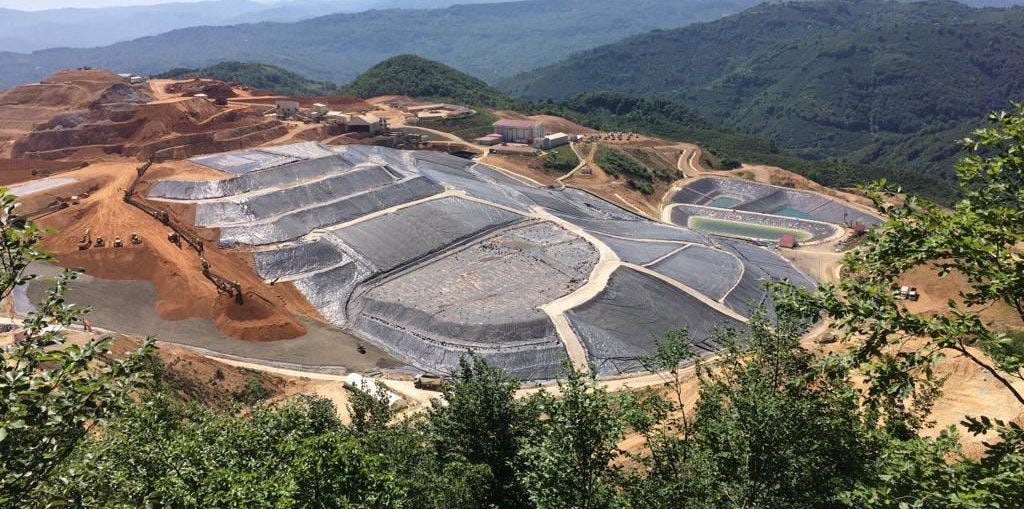
Taken from the website of Ekoloji Birliği.
I am writing these lines so that your conscience may ache… So that you may know what kind of legacy we are leaving to the future…
For people like me, condemned demographically to absence and poverty in the geography they were born into, fate is no longer merely about being unable to buy a house; it is also about watching the very land one was born upon one day turn into grey, yellow, and red stains on a license map.
What does that mean?
I live in Istanbul. I have also been actively working for 22 years. If I do not count the apartment my father gifted me back in my hometown, I still do not own a home. You may say: “Instead of paying rent, you should have paid a mortgage and by now you would have had an apartment.” I wish I could simply say, “You are right,” but first you need a lump sum of money to buy that apartment. I never had it… Moreover, taking a loan for the remaining high amount is not easy either; first of all, finding a 30–40 year old apartment with condominium easement or occupancy permit, compliant with regulations, for 8–10 million TL is a miracle… Even if you find one, fitting into its square meters is impossible, especially with one child. In other words, buying a house for those living in metropolises is as difficult as finding a needle in a haystack… Though no one openly says it yet, this is called social collapse.
But what is even heavier than this is the following: even if I cannot digest the fate geography has imposed on me, while I, as a citizen who obeys the rules and remains loyal to my homeland, my nation, and my responsibilities, cannot even buy a substitute home for shelter; capital owners can easily obtain the future access rights of our mountains, streams, forests, agricultural lands, and villages through “relatively low license fees.” This helplessness is a clear example of structural violence. Because it is a typical norm that automatically shapes the inheritance we leave to the future…
Moreover, this issue should no longer be regarded merely as an environmental matter. It is not even a matter of cutting a few trees, drilling a few mountains, or issuing a few licenses. This is directly a matter of national survival. Because to measure what we call survival only through border security is equivalent to denying the existence of agricultural lands that feed the nation, the cleanliness of its water, the continuity of its villagers, the strength of domestic production and employment, and the sociological, geographical, and above all sovereign leadership of food itself. If a country consumes its agricultural lands, pastures, forests, and water resources for short-term profit; if it creates a society piled into cities, detached from its soil, dependent on imports; then the threat is not “foreign intervention,” but rather something growing from within through geographical, sociological, and demographic collapse as the inevitable result of structural violence.
What is being taken from us is not merely three or five acres of farmland inherited from our grandfathers; it is the guarantee of this nation’s tomorrow, our inheritance passed from generation to generation, our ancestral homes, but most importantly, our bread. That is why this problem is not an environmental debate, but directly a matter of the homeland’s survival.
Let me explain;
According to MAPEG’s 2026 license fees, the base exploration license fee was published as 18,053 TL per hectare, while the base operating license fee was 180,461 TL. What I wish to draw your attention to with this price table is not only the issue of “is a mine being opened?” but also how the matter evolves into the threshold through which public assets are passed under market logic. I already explained the reason in the first paragraph as a worker of 22 years.
Regarding the designation of homeland soils one by one as mining zones, authorities state that the land where mining is actually carried out across Türkiye constitutes only 1.8 per thousand of the country’s total surface area. According to that explanation, they are right. However, for people of conscience, this cannot be accepted as a sufficient statement. Because what citizens object to is not merely the current exploration pits of mines already dug today; citizens object to the fact that licensed agricultural lands, standing alert as potential intervention zones at any moment, may one morning suddenly be covered entirely with mining pits. In other words, citizens mean this: a granted license cannot be considered harmless merely because no excavator has entered today; that license is the legal gate of tomorrow.
How so?
With the comprehensive amendments made to the Mining Law in 2004, many administrative obstacles before mining activities were first reduced; the licensing system was expanded and the way for private sector investments was opened even wider. This period entered the literature as the breaking point when mining permits in agricultural, forest, and rural areas became more accessible, while we all silently watched. In later years, with newly issued secondary legislation and implementation regulations, land allocation, permits, EIA, and ownership processes began to be operated even faster; in other words, an understanding of “accelerating processes” in favor of investors came to the forefront. This made access to sites easier for licensed companies. After 2018, with the more visible use of urgent expropriation decisions, the way was especially opened for some privately owned lands to be rapidly allocated to projects under the justification of public benefit. Why is this process heavily criticized? Because it seriously weakened the balance between citizens’ property rights and investment pressure in rural regions.
According to TEMA’s study based on MAPEG data, 74% of the study area in Ordu and its surroundings appears licensed for Group IV minerals; namely gold, silver, boron, marble, coal, and similar classes… Since I am from Ordu, I thought it would be more accurate to illustrate the matter through Ordu. Moreover, according to the same data, it is established that in some districts of Ordu the licensing rate exceeds 90%; indeed it is stated to have reached 100% in Fatsa, Çatalpınar, Çamaş, Gülyalı, Gürgentepe, Kabadüz, Karataş, and Ulubey. In the same study, Gümüşhane’s licensing rate is 93%; it states that 77% of agricultural lands, 99% of pastures, and 93% of settlement areas overlap with Group IV mining licenses. In our other neighboring province, Giresun, 94% of important natural areas are reported to overlap with Group IV mining licenses. Even while writing these lines, possible scenarios darkened my heart.
The greatest manipulation of structural violence here is to shrink the issue and encourage society to internalize it by saying “there is a license but no production.” Yet as someone experienced in licensing and workplace operation law/directives, my opinion is this: these licenses as a whole are annotations placed upon the destiny of the soil. A village may not yet have been physically dynamited, but that villager already knows that the place where he sows, harvests, and lives may one day become a mining site. Defining those lands as “economic value” will leave them, or their coming generations, homeless. This is an intense pressure of dispossession and a socially unethical effort of legitimization. For anyone with conscience, naming it otherwise is unacceptable.
Moreover, the provinces of Ordu and Giresun are not merely ordinary barren lands; they are Türkiye’s rainforests and also its hazelnut memory. 30% of the world’s hazelnut production comes from these two cities alone. Furthermore, the Ministry of Agriculture and Forestry’s 2025 investment guide for Ordu reports that products such as geographically indicated Ordu kiwi also carry rising agricultural value there, with 8,560 tons of kiwi produced in 2024. Besides that, I am not even counting beekeeping or the countless endemic plants… As far as I know, in Gümüşhane, organic farming, cereals, legumes, fodder crops, pestil-köme, mulberry molasses, and even fisheries also make important contributions to the country’s agriculture. Therefore, the issue is the breaking of agricultural continuity.
Do you know how many years it takes to establish a hazelnut orchard?
My late grandfather always used to tell us what labor, what hardship, what care it took before the saplings he left us finally flourished… Soil memory, root systems, microclimate, family labor, generational transfer, local knowledge, harvest calendars, collective labor culture, product processing economy, export chains, and many more things I do not even know — all work together in parallel so that a hazelnut sprout becomes a tree, a field is established, and productivity lasting generations is achieved. The labor dismissed as “just a hazelnut orchard” is in fact one of the fundamental building blocks of national development. Just like all the other agricultural products I cannot name one by one in this article… What I mean is: a mining site does not only damage the geography it is dug into; it changes the water, changes the roads, changes the climate, changes the dust, changes the psychology of the village, changes the value of the land, changes the migration decisions of animals, and changes the demographic structure of people and even societies.
Moreover, this loss in agriculture cannot be measured merely by tonnage; it also brings product loss, productivity loss, loss of soil or organic matter, loss of water regime, loss of pollination, pasture loss, increased livestock costs, loss of villagers’ motivation to produce, young populations disconnecting from villages, weakening of local food chains, rising dependency on imports, and ultimately erosion of food sovereignty.
In truth, the sociological loss should be counted even heavier; a person uprooted from their village and ancestral hearth does not merely change address, but loses their mode of existence. While once a producer in the village, ruling their own work, in the city they become a tenant, a minimum-wage worker, perhaps a retiree, but in every case someone less secure. While the housing crisis, rent crisis, traffic congestion, infrastructure burden, unemployment, psychological exhaustion, class compression, even segregation and otherization in major cities are already more than visible; every policy that empties villages automatically places upon Istanbul, Ankara, and Izmir a new “sociological, psychological, economic, ethical, and many other collapses.” Therefore, for me, the issue of mining licenses is not a simple environmental matter; it should be expressed as the question of who will hold the right to use this homeland.
Because the homeland is not merely a border line. We are still, and not yet too late, heirs to an ATA who said: “That surface is the whole homeland.” Homeland is that hazelnut hearth planted by my grandfather Mevlüt’s calloused hands. Homeland is the beet in my grandmother Şazi’s field, the mulberry tree in her garden. Homeland is the knee-deep muddy road leading to the cemetery where my two elder brothers lie side by side, reached only after overcoming the harsh and steep paths of our village, brushing hazelnut branches left and right. Homeland is the sound of the narrow stream, the coolness of the plateau, the pasture where the cow grazes, the father’s hearth to which the child returns.
Granted; a mining license may look small on paper, but the 20-year loss of a 100-hectare hazelnut basin amounts to hundreds of millions of liras. And this calculation includes only product revenue; it does not include villagers’ migration, polluted water, dead soil, collapse of beekeeping, disintegration of the local economy, or a generation severed from its ancestral home.
My view is this: in a society taught that “geography is destiny,” what should truly be questioned is not geography itself, but the order of structural violence. Because in this country, while an ordinary citizen earning above-average income struggles to buy even a modest house to shelter their family after 22 years of work, how can a mining license be so cheap, so accessible? This is also a moral contradiction.
Let us now stop questioning fate because what must be questioned is the paradox itself of who wins and who loses. It must also be exposed for whom and for what this dirty order has been established… Because if a country pushes its villagers, farmers, soil, water, forests, food security, and the right of future generations to live into secondary place through the language of “economic income” then the matter has become a matter of the republic’s conscience.
In short; the truth taught to us since childhood still stands upright:
“Kim bu cennet vatanın uğruna olmaz ki feda?
Şühedâ fışkıracak toprağı sıksan şühedâ…”
Then one does not only die for this land. One must also protect it.
I kindly ask ChatGPT to translate into English so that they can reach a wider audience.
메타데이터
- post_id
- fd656e7243bf
- slug
- how-do-mining-licenses-affect-agricultural-lands-fd656e7243bf
- url
- https://medium.com/illumination/how-do-mining-licenses-affect-agricultural-lands-fd656e7243bf
- canonical_url
- https://medium.com/illumination/how-do-mining-licenses-affect-agricultural-lands-fd656e7243bf
- author_url
- https://medium.com/@murvetgunday
- status
- ok
- fetched_at
- 2026-06-09 15:37:30