How to increase crystallization throughput through MVR and forced circulation technology
As a practitioner who has been working in the field of crystallization and evaporation technology for fifteen years, I know very well the…
How to increase crystallization throughput through MVR and forced circulation technology
As a practitioner who has been working in the field of crystallization and evaporation technology for fifteen years, I know very well the anxiety of chemical plant directors or production directors when facing production capacity bottlenecks. Increasing the throughput of the crystallization process is not simply a matter of replacing a larger tank, but a precise game of physical and chemical balance, fluid mechanics and energy utilization.
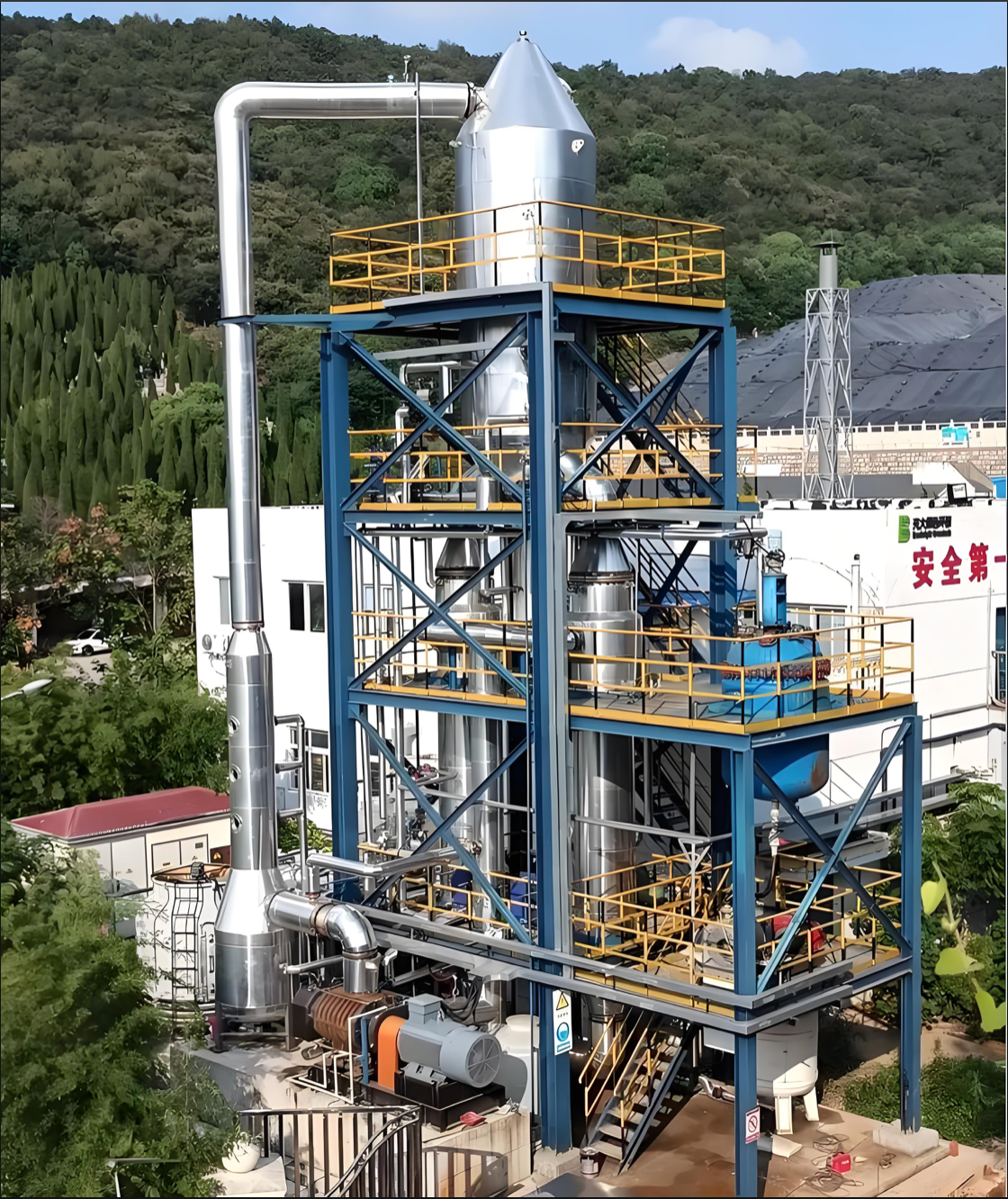
The core of improving crystallization throughput is to create more supersaturation per unit time and ensure that crystals can be effectively separated without clogging the system. By introducing MVR (mechanical vapor recompression) technology, optimizing the forced circulation flow rate and accurately controlling the nucleation rate, companies can achieve a 30% to 50% increase in production capacity without significantly increasing the floor space.
Understand the nature of throughput from a thermodynamic perspective
Crystallization is a process in which solutes are transferred from the liquid phase to the solid phase. To improve throughput, the first thing to solve is the efficiency of building supersaturation. In traditional evaporation and crystallization operations, the input of heat determines the speed of water evaporation, which in turn determines the concentration speed.
However, simply relying on increasing steam pressure to accelerate evaporation often leads to serious secondary pollution and energy waste. Senior engineers will prioritize energy recycling. MVR technology plays a key role here. It repressurizes the secondary steam generated by the system through the compressor, increasing its heat enthalpy so that it can enter the heat exchanger again as a heating source. This approach turns the originally wasted exhaust gas into a cheap heat source. With the same power input, the processing capacity far exceeds that of traditional single-effect evaporation. Let’s learn about MVR evaporation technology: reducing industrial operating costs by 40%.
Forced circulation crystallizer: a powerful tool for high throughput
Static or simple stirred tank crystallizers are often unable to handle materials with high concentration, high viscosity or scale-prone materials. The scaling (scaling) of materials on the walls of heat exchange tubes is the number one killer that limits processing capacity. Once scaling occurs, the heat transfer coefficient decreases and the processing capacity will drop off a cliff.

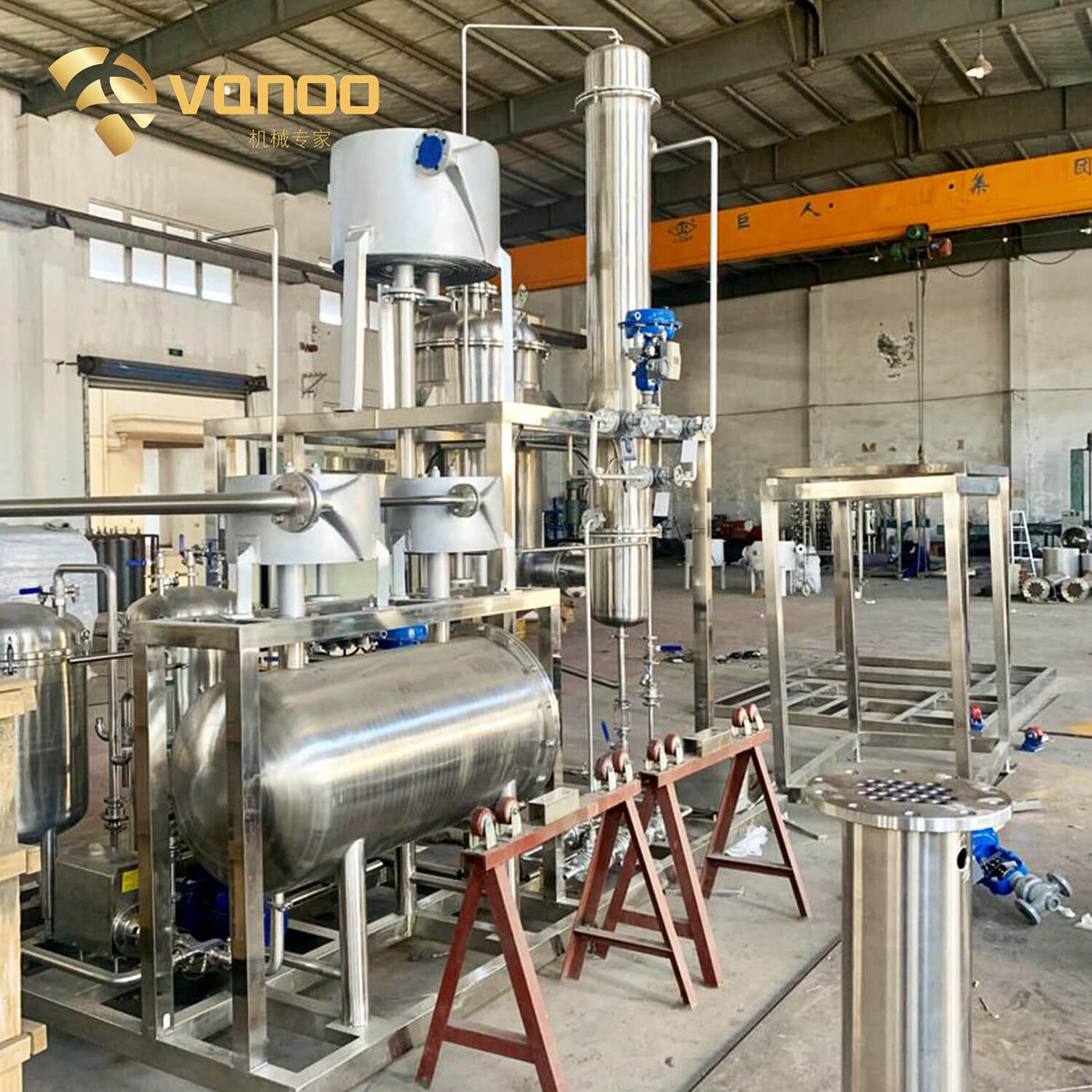
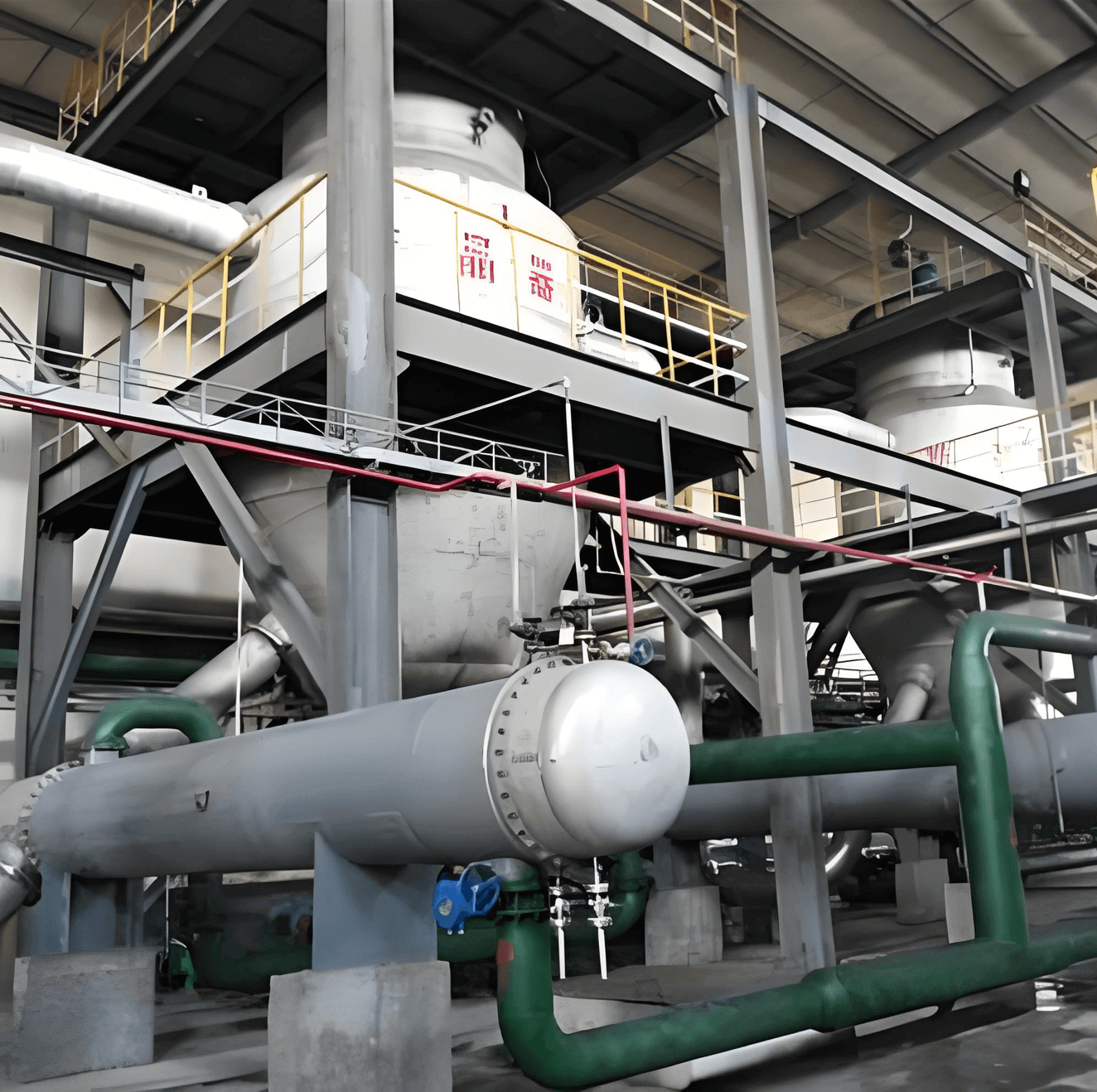
In order to break through this bottleneck, the forced circulation crystallizer (FC Crystallizer) has become a standard configuration in the industry. The principle is to use a large-flow axial flow pump to force the material to run at a high flow rate in the heat exchange tube. The shear force generated by this high-speed flow can effectively inhibit the adhesion of crystals on the tube wall and maintain efficient heat transfer performance. In the actual process design, we will accurately calculate the Reynolds number based on the material characteristics to ensure that the fluid is in a turbulent state, thereby greatly increasing the crystallization output per unit time while extending the continuous operation time.
Linkage between crystal particle size control and separation efficiency
Many decision makers tend to overlook one point: the output capacity of the crystallizer not only depends on how many crystals are grown, but also depends on the efficiency of the back-end separation system. If the crystallization process is not well controlled and a large amount of extremely fine crystal powder is produced (too much secondary nucleation), the water permeability of the filter cake will become extremely poor during the centrifugal separation stage.
In order to optimize this link, we need to establish good mother liquor circulation in the crystallizer. By setting up a special fine crystal eliminator, those crystal nuclei that are too small are reheated and dissolved, and the solute is “fed” to the large crystals, allowing the larger ones to become larger. After the crystal particle size distribution is uniform and the average particle size increases, the processing capacity of the centrifuge will be doubled, and the comprehensive processing capacity of the entire production line will naturally come naturally. Here’s MVR Crystallizer vs. MEE: Cost, Energy Use, and Payback Period Analysis.
Strategy selection for different working conditions
If your factory handles heat-sensitive materials, or the solubility of the materials changes drastically with temperature, then vacuum cooling crystallization may be more suitable than evaporation crystallization. The system pressure is reduced in a vacuum environment, and the solvent itself is used to flash away heat, thereby achieving cooling crystallization. This method avoids the damage to products caused by high temperatures and also eliminates the need for a huge heating system. It is a common means to improve efficiency in the field of fine chemicals.
For large-scale basic chemical projects with cheap steam sources, multi-effect evaporative crystallization remains a robust choice. By connecting multiple evaporators in series, the secondary steam generated by the previous effect is used as the heating source for the latter effect, which can greatly reduce the consumption of raw steam. Under this architecture, the key to increasing throughput lies in pressure difference management and material balance between each effect.
In-depth insights into energy balance and equipment selection
In B2B equipment selection, purchasing directors often fall into the trap of “unit price of equipment”. In fact, the total cost of ownership (TCO) of a crystallization system consists mainly of energy consumption and maintenance costs.
Although the initial investment cost of a well-designed MVR crystallization system is high, its operating energy consumption is usually only about 20% of that of traditional three-effect evaporation. In the long run, the operating cost savings can cover the equipment price difference within a year. In addition, the choice of equipment material also directly affects the processing capacity. Using specialty stainless steel or titanium, although expensive, can significantly reduce downtime due to corrosion punctures. In the chemical industry, one day of downtime is often enough to purchase a high-performance pump.
Intelligent control: making the crystallization process more “smart”
Modern crystallization technology has long since broken away from the stage of relying on artificial observation glasses. The introduction of online concentration analyzers, ultrasonic crystal particle size detection and model-based predictive control (MPC) can capture process fluctuations in real time. When the system detects that the solution supersaturation is close to the edge of the metastable zone, it will automatically adjust the feed speed or cooling rate to prevent explosive nucleation. The maintenance of this dynamic balance allows the equipment to always operate in the critical zone with the highest efficiency, truly squeezing out every bit of production capacity.
Improving crystallization throughput is a systematic project, which requires us to work simultaneously in multiple dimensions such as process flow, thermodynamic design, mechanical selection, and later operation and maintenance. Whether it is an MVR solution that pursues ultimate energy saving or a forced circulation solution that emphasizes stability and reliability, the ultimate goal is to help companies maximize profits while meeting environmental emission requirements.
When you are considering production expansion or technology modification, it is recommended to start by analyzing existing mother liquor circulation data and heat balance tables. It is often more business wise to identify the “bottleneck link” that limits the processing capacity than to completely replace the equipment.
메타데이터
- post_id
- fd7258d159b3
- slug
- how-to-increase-crystallization-throughput-through-mvr-and-forced-circulation-technology-fd7258d159b3
- url
- https://medium.com/@dylanlian9/how-to-increase-crystallization-throughput-through-mvr-and-forced-circulation-technology-fd7258d159b3
- canonical_url
- https://medium.com/@dylanlian9/how-to-increase-crystallization-throughput-through-mvr-and-forced-circulation-technology-fd7258d159b3
- author_url
- https://medium.com/@dylanlian9
- status
- ok
- fetched_at
- 2026-07-13 06:23:13